
Anthropic released Claude Fable 5.2 on November 9, 2026, and for once a frontier model launch reads as if it were written for hardware people. Next to the usual coding scores, Anthropic reports a hardware-engineering benchmark on which the new model nearly doubles its predecessor, and a demo in which Claude designed three working electronic devices, 3D-printed enclosures included, from a one-paragraph prompt (Anthropic).
For a mechanical engineer, the real question is simpler: what changes in your CAD work, on your parts, this week? This article separates the facts from the launch noise: what is new in Fable 5.2, what it means for modeling, drawings and automation, what it does not change, and how to use it today.
MecAgent has already put it to work on two CAD jobs in SOLIDWORKS, Text-to-CAD and CAD-to-Drawing, both filmed in our demo library.
What's New in Claude Fable 5.2
Fable 5.2 is the same underlying model as Claude Mythos 5.2. The difference is access: Fable ships with cybersecurity and biology safeguards and is generally available, while Mythos 5.2 is reserved for organizations vetted through Anthropic's verification programs. Anthropic also says outputs are up to 30% faster than with Fable 5.1.
| Fable 5.2 | As of November 2026 |
|---|---|
| Released | November 9, 2026 |
| API price, per million tokens | $8 input, $40 output (Fable 5.1: $10 and $50) |
| Fast mode | Up to 2.5x faster output, at $16 and $80 per million tokens |
| Context window | 1M tokens, with up to 128k output tokens |
| Thinking | Always-on adaptive thinking, steered by 5 effort levels: low, medium, high, xhigh, max |
| Default effort | High on the API, medium in the Claude apps and Claude Code |
| Where to use it | Paid Claude plans, the Claude API (claude-fable-5-2), AWS, Google Cloud, Microsoft Foundry |
| Data retention | 30 days, required; zero data retention only if Anthropic authorizes it |
Sources: Anthropic's announcement, product page and developer docs. The docs add a useful hint for anyone paying per token: most of the capability gain is already there at high effort, and max is meant for measuring the model's ceiling.
The Benchmarks That Matter for CAD Work
Anthropic's launch table covers more than a dozen tests. These are the ones closest to engineering work, as reported by Anthropic:
| Benchmark | What it measures | Fable 5.2 | Fable 5.1 | Opus 5.5 |
|---|---|---|---|---|
| BenchCAD 2.1 | Hardware engineering: designs against reference geometry and circuits | 83.5 (max effort) | 44.4 | 65.3 |
| FrontierCode 2.0 | Agentic coding | 49.1% (xhigh) | 32.4% | 45.5% |
| FrontierSWE v2 | Agentic coding | 69.9% | 56.3% | 62.3% |
| OSWorld 2.1 | Computer use | 89.3% | 83.5% | 87.2% |
| Chartography | Reading charts, without tools | 73.4% | 44.8% | 64.4% |
| RoboDojo Sim | Robotics, in simulation | 64.9% | 27.6% | 39.4% |
The same table puts Fable 5.2 ahead of OpenAI's GPT-6 Astra on every one of these rows that lists both.
Read them as vendor numbers on vendor-chosen tests. The row to watch is BenchCAD 2.1, which Anthropic describes as measuring how closely designs match reference geometry and circuits: Fable 5.2 nearly doubles Fable 5.1's score there. Effort matters too. Anthropic reports that at high effort, Fable 5.2 roughly matched the best FrontierCode score of Claude Opus 5.5 for about half the cost per task.
The Hardware Demo: Three Devices from One Paragraph
The most telling part of the launch is not a score. Anthropic describes Claude designing three electronic devices, a home voice-assistant hub, a USB speakerphone and a handheld virtual pet, from a one-paragraph prompt.
It wrote the specifications, picked components from US distributors, routed four-layer circuit boards and modeled the 3D-printed enclosures in CAD. Each board was ready for manufacturing in under a day, and all three devices worked without electrical modifications (Anthropic).
Two caveats keep it in proportion. These are electronics in printed housings, not machines with fits, loads and tolerance stacks. And it is Anthropic's own demo, not an independent test. The direction is still clear: frontier models now treat a physical product as an engineering project, from requirements to manufacturing files.
What Fable 5.2 Changes for Mechanical Engineers
1. CAD scripts and macros get more dependable
Much of CAD automation is code: SOLIDWORKS VBA macros, Inventor iLogic rules, Python scripts. Coding is where Fable 5.2 gained the most, from 32.4% to 49.1% on FrontierCode 2.0. A better coder writes cleaner, better-structured scripts, but it still has to call the CAD software's API correctly, on a model it can't see from a chat window.
2. Long CAD jobs become an agent's job
Anthropic's examples run for days: agents on an earlier version of the model migrated a production service from Python to Rust, and in another run the model coordinated more than 1,000 subagents for eight days to build an operating system. In CAD terms, that is the stamina for jobs that eat a week: drawing packages, library cleanups, checks across a whole assembly. In MecAgent, this is what Background Tasks are for: long jobs that run while you keep modeling.
3. Better eyes on images and documents
Anthropic's product page says Fable 5.2 reads images and PDFs, and its score on chart reading jumped from 44.8% to 73.4%. Engineers feed AI exactly that: drawings, datasheets, photos, screenshots of the CAD view. Chart reading is not drawing reading, though: views, tolerances and callouts still deserve a human check.
4. Cost and effort become dials
At $8 and $40 per million tokens, Fable 5.2 costs 20% less than Fable 5.1, and five effort levels let you trade depth for speed and cost. The habit to build: high effort for a hard modeling plan, low effort for a rename or a quick property change. MecAgent works the same way, with a model selector and Low, Medium and High effort levels.
What It Does Not Change
- A chatbot still can't see your model. Pasted into a chat window, a request gets code written blind. To act on a real part, a model needs tools that read the feature tree, run features and check the result, whichever model sits behind them.
- Clicking is not modeling. Fable 5.2's 89.3% on OSWorld 2.1 means Claude drives desktop apps well. In industrial CAD, a June 2026 arXiv study found that frontier models driving the graphical interface reached near-zero success, while working through the software's programming interface gave substantial gains (arXiv). We covered this in AI for SOLIDWORKS: 15 tasks.
- The engineer still signs. Tolerances, GD&T, validation and release stay human calls, as MecAgent's own user guide says plainly.
- Your data policy still applies. Fable 5.2 requires 30-day data retention and isn't available under zero data retention unless Anthropic authorizes it. Check with IT before you send proprietary geometry through the API.
- It's not the default for everything. Anthropic itself recommends starting most coding and knowledge work on Claude Opus 5.5, and moving up to Fable 5.2 for the most ambitious, open-ended technical work.
How to Use Claude Fable 5.2 for CAD Today
There are three routes, from the quickest to the most integrated:
- In the Claude apps, on a paid plan: engineering questions, calculations, datasheet reading, a first draft of a macro you review before running.
- Through the API, as
claude-fable-5-2, in your own scripts and tools. Start at high effort, the API default. - Through a CAD agent that works inside your CAD software. That is MecAgent's job: it acts through dedicated CAD tools, reads the model, runs the features, checks the result and corrects itself.
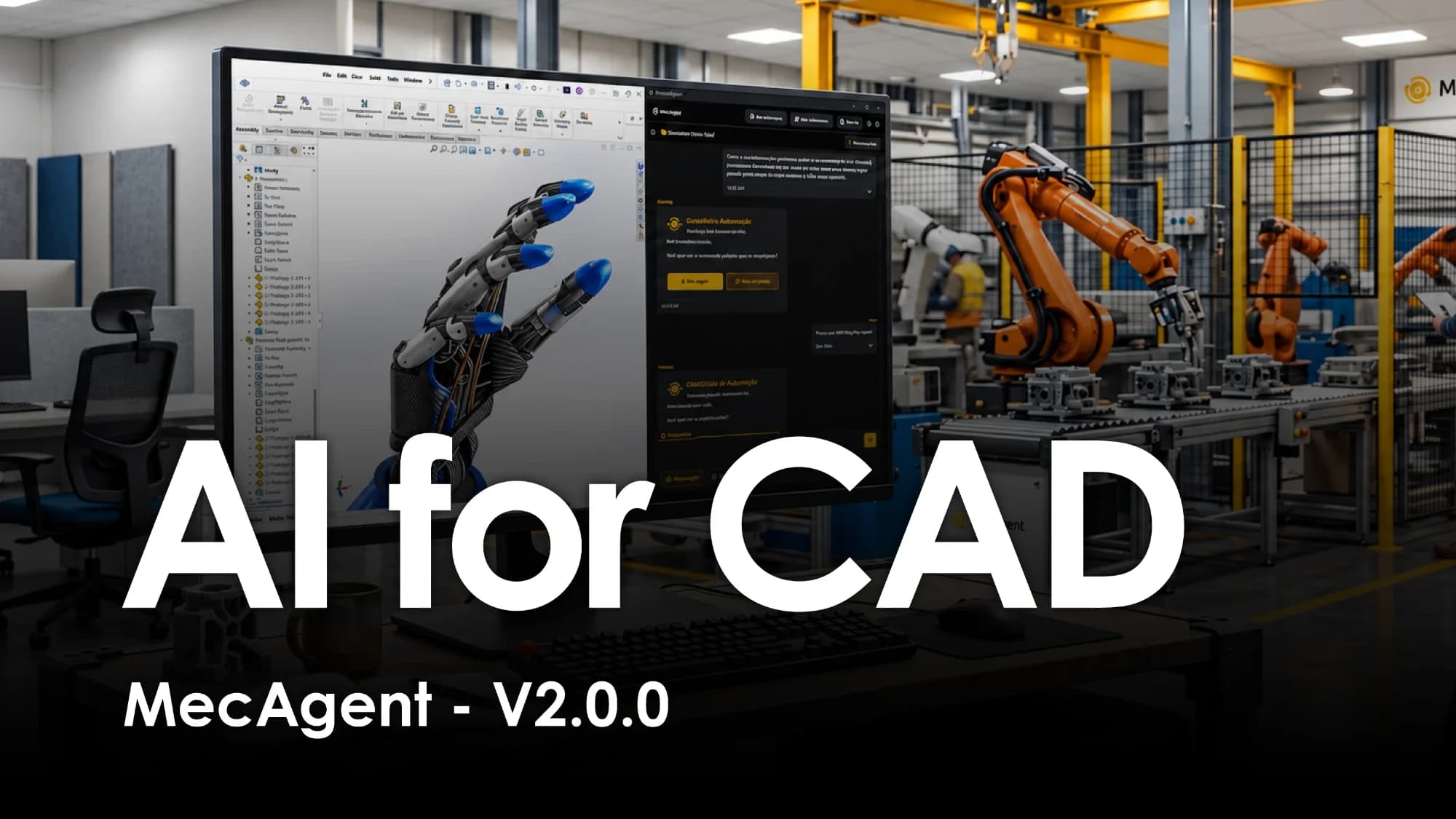
We filmed Fable 5.2 working through MecAgent V2.0 in SOLIDWORKS on two jobs: Text-to-CAD, modeling a part feature by feature in the open session, and CAD-to-Drawing, producing a dimensioned drawing. Both videos are in the demo library. Two requests to try in MecAgent:
Model a turbine wheel Ø120 mm with 6 blades, 6 splitter blades and a Ø12 H7 bore with keyway.
Make an A3 ISO drawing of this turbine wheel, fully dimensioned.
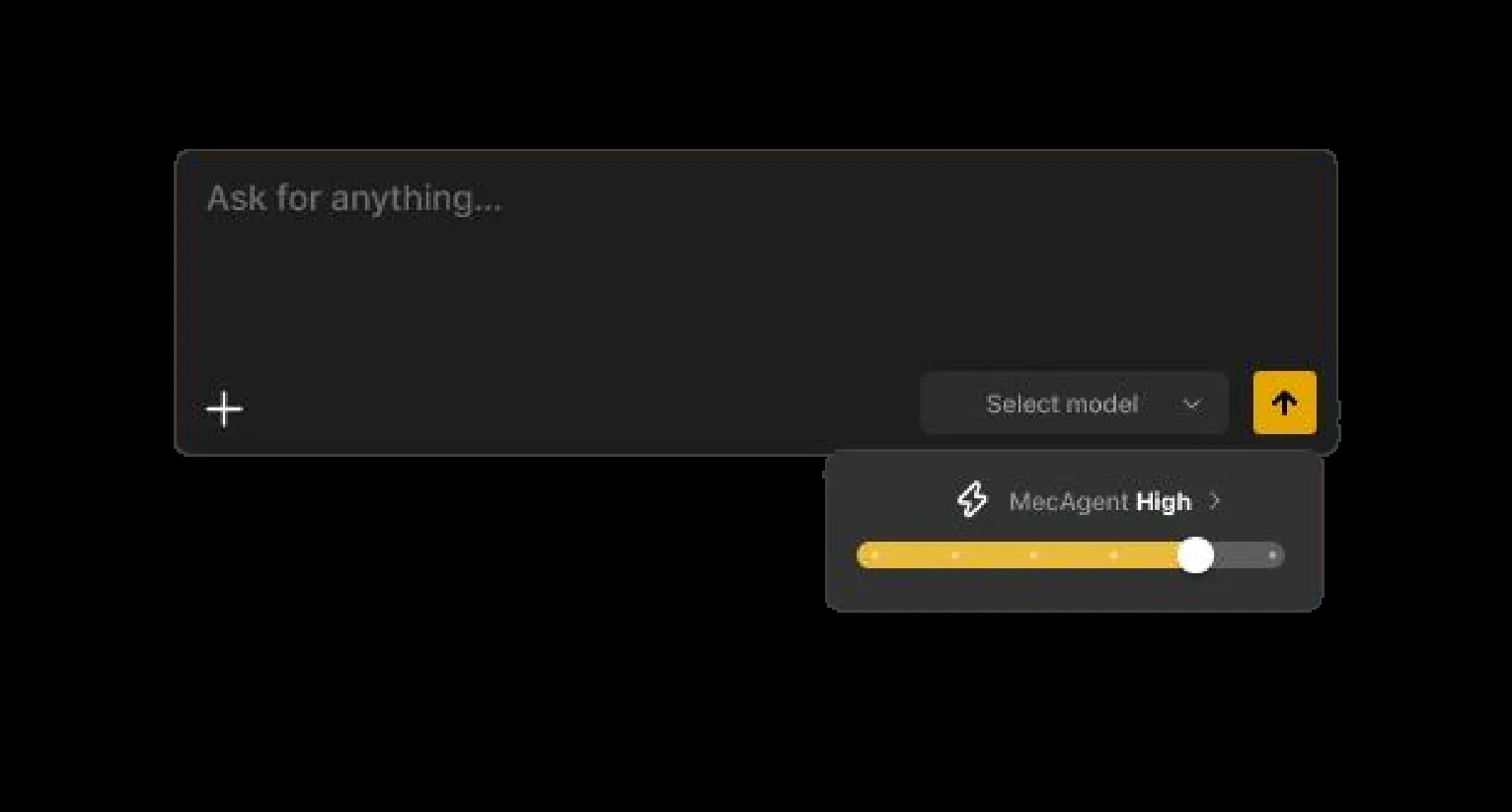
In MecAgent, you don't pick an AI vendor. You pick a MecAgent model, from Max for long multi-step jobs to Fast for quick answers, with High as the default, and an effort level (models).
Curious how earlier models did on the same kind of work? See our tests of Claude Fable 5, Claude Opus 4.8 and GPT-5.6. To try it on your own parts, download MecAgent with a free account: it runs on Windows 10 or 11 with SOLIDWORKS 2024, 2025 or 2026.
Bottom Line
Fable 5.2 is a real step for mechanical engineering work: stronger code, sharper eyes, more stamina, a lower price, and a first serious showing on hardware design. It does not turn a chat window into a CAD system. The gains land where a model works inside your CAD software, with tools that let it check its own work, and an engineer who signs the release.
FAQ
What is Claude Fable 5.2?
It is Anthropic's model for the hardest coding and technical work, released on November 9, 2026. It shares its underlying model with Claude Mythos 5.2 but ships with cybersecurity and biology safeguards, which is why anyone on a paid Claude plan or the API can use it.
How much does Claude Fable 5.2 cost?
On the API, $8 per million input tokens and $40 per million output tokens, down from $10 and $50 for Fable 5.1. Fast mode costs $16 and $80 for up to 2.5x faster output, and batch processing costs $4 and $20. In the Claude apps, it comes with paid plans (Pro, Max, Ultra, Team and Enterprise).
What is the difference between Claude Fable 5.2 and Claude Mythos 5.2?
Same model, different access. Anthropic says they share the same specs and capabilities; Mythos 5.2 is limited to organizations verified through its cybersecurity and life-sciences programs, while Fable 5.2 keeps safeguards in those two areas and is generally available.
Can Claude Fable 5.2 create CAD models?
It writes CAD code, and in Anthropic's demo it modeled 3D-printed enclosures in CAD. On BenchCAD 2.1, which compares designs with reference geometry and circuits, Anthropic reports 83.5 against 44.4 for Fable 5.1. To build a part with a feature tree directly in your CAD software, a model needs an agent with CAD tools, such as MecAgent in SOLIDWORKS.
Should I use Claude Fable 5.2 or Claude Opus 5.5?
Anthropic recommends starting most coding and knowledge work on Opus 5.5, and moving up to Fable 5.2 for the most ambitious, open-ended technical work, such as long agent runs and hard multi-step design problems.
Is it safe to use Fable 5.2 with proprietary CAD data?
Check your policy first: Fable 5.2 requires 30-day data retention for safety monitoring. If you work through a CAD tool, ask how it handles your files. For MecAgent, an independent SOC 2 examination is complete (the report is available under NDA), paid plans include a privacy mode, and Enterprise customers can run it on-premise or in a private cloud (Enterprise).
Sources
- Anthropic: Fable 5.2 and Mythos 5.2 announcement (November 9, 2026), Fable 5.2 product page
- Claude Platform docs: What's new in Fable 5.2, release notes
- Claude Help Center: Fable 5.2 launch offers
- Ai et al., ComAct: Reframing Professional Software Manipulation via COM-as-Action Paradigm, arXiv, June 2026
- MecAgent: demo library, user guide, release notes