

Wire drawing
Pull a rod through ever-smaller dies
Wire drawing pulls a metal rod through a series of ever-smaller holes until it becomes wire. Electric cables, paper clips, springs, fences and the steel cords inside car tires all start this way. It is also the first step in making a screw: the wire you see here feeds the machines of the next two lessons.
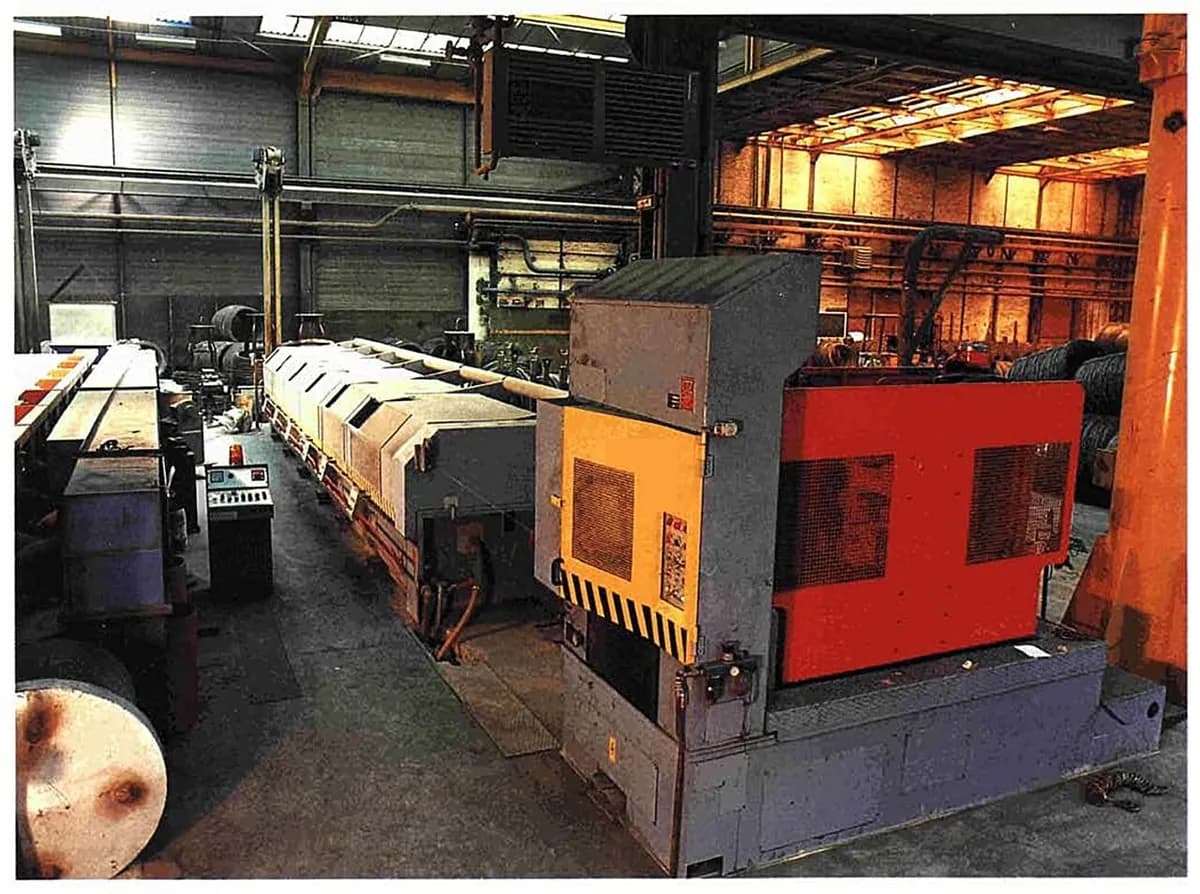
How it works
Prepare the rod. The starting material is hot-rolled rod, typically about 5.5–8 mm thick, delivered in coils. It is cleaned of scale, and its tip is pointed (made thinner) so it can be threaded through the die.
Lubricate. The rod passes through a box of soap powder or a bath of oil. The lubricant cuts friction and heat inside the die.
Squeeze in the die. The die is a very hard nib (tungsten carbide, or diamond for fine wire) with a cone-shaped hole. The cone squeezes the metal, and a short straight section called the bearing sets the final diameter.
Pull with a capstan. A capstan (a powered drum) pulls the wire through the die. Pulling, not pushing, is what makes this work: the wire comes out thinner, longer and faster than it went in.
Repeat through many dies. One die can reduce the cross-section only by about 15–30%, or the wire would snap under the pull. So a drawing machine chains many dies and capstans, each die slightly smaller than the last.
Anneal and spool. Drawing makes the metal harder and stiffer (work hardening). Copper wire is usually annealed (heated to soften it again), then wound onto spools; steel wire for screws is coiled for the next step.
Key facts
- Materials
- Copper, aluminum, low- and high-carbon steels, stainless steel, tungsten, gold and other precious metals
- Typical parts
- Electrical wire, wire for screws and nails, spring wire, fencing, tire cord, welding wire, guitar strings
- Part size
- From about 25 mm rod or bar down to wires thinner than a hair (around 0.01 mm)
- Precision
- Diameter typically within about ±0.01–0.05 mm; very fine wire much tighter
- Surface finish
- Smooth and bright; shiny on copper, often coated with leftover lubricant on steel
- Batch size it suits
- Very high volume; lines run for hours on one coil weighing a tonne or more
- Tooling and machine cost
- Dies: tens to hundreds of dollars each (diamond dies more). Multi-die machines: hundreds of thousands of dollars or more
- Speed
- Steel wire often leaves the last die at several meters per second; fine copper wire at tens of meters per second
Strengths and limits
Strengths
- Very precise, round and smooth wire at low cost per kilogram
- Drawing cold makes the metal much stronger (useful for springs and tire cord)
- Fast, continuous and highly automated
- Cheap, long-lasting dies, easy to swap for a new size
Limits
- Only long, thin products with a constant section
- Each die removes only a little, so many passes are needed
- The metal hardens and often needs annealing between stages
- Dirt, poor lubrication or a flaw in the rod can snap the wire
Where it's used
- ElectricalCopper and aluminum conductors for cables, motor windings, power lines
- FastenersSteel wire for screws, bolts, rivets and nails
- AutomotiveTire cord, springs, seat frames, brake and clutch cables
- ConstructionPrestressing wire for concrete, fencing, mesh, binding wire
- Consumer goodsPaper clips, coat hangers, guitar and piano strings, jewelry chain
How to recognize it
- A perfectly round, smooth wire with a constant diameter along its whole length.
- Fine, straight lines along the wire under a magnifier, left by the die.
- A slightly dull or greasy film on steel wire, from the drawing lubricant.
- Bright, springy metal: drawn wire bends back more than soft, annealed wire.
Compare with
Watch it
Mecholic - For Mechanical Engineering · The whole process, explained step by step
Fundamentals of manufacturing processes · Die shape and how much each pass can reduce
International Wire Group · A real wire plant: drawing, annealing and spooling
Bekaert · Industrial drawing of steel wire
See real photos
- Wikipedia: Wire drawing — principle, dies, lubrication and multi-die machines, with photos
- Wikimedia Commons photo search
Remember
- Wire drawing pulls a rod through cone-shaped dies; each die makes it a little thinner and longer.
- Many dies in a row turn a thick rod into fine wire, with annealing to soften it when needed.
- Drawn steel wire is the raw material for screws, the subject of the next two lessons.
More in Bulk forming
All 100 processes
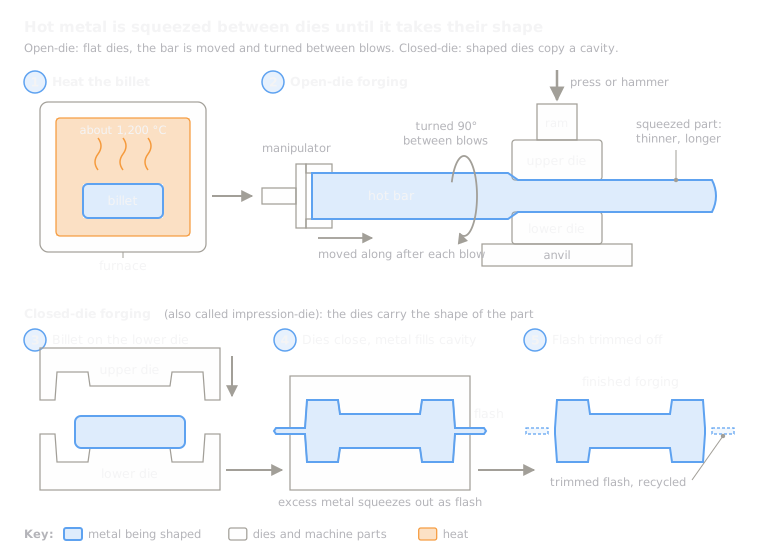 3.1ShortForging (open-die and closed-die)Squeeze hot metal between flat or shaped diesOpen the lesson
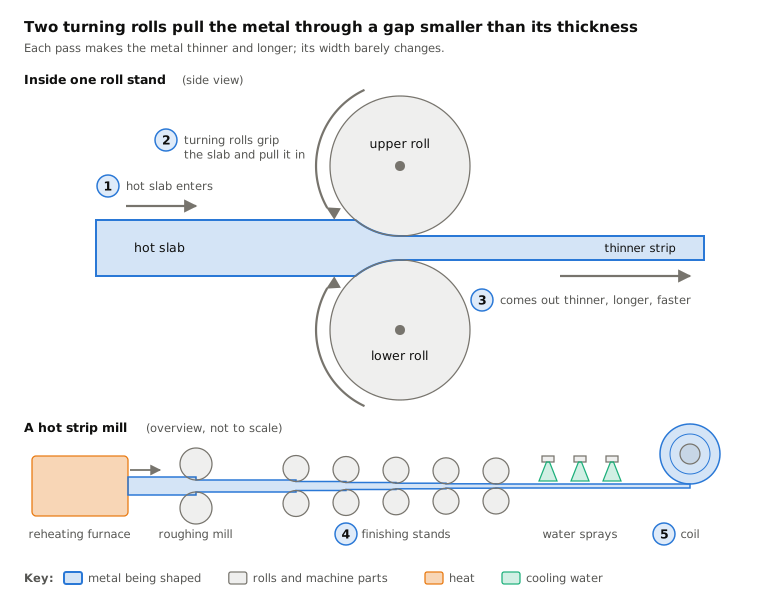
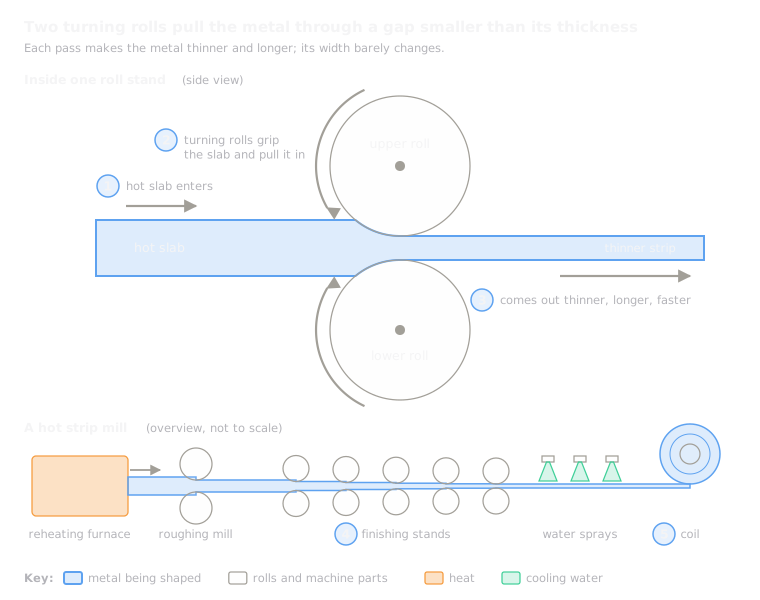 3.2RollingPull metal through the gap between turning rollsOpen the lesson
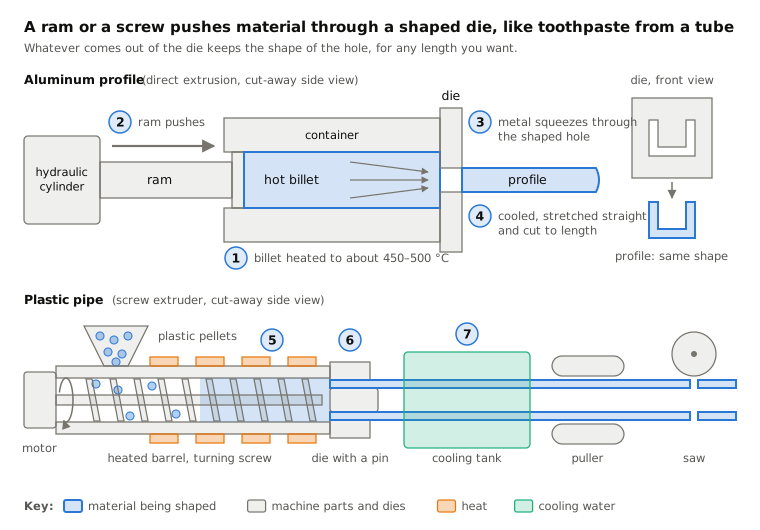
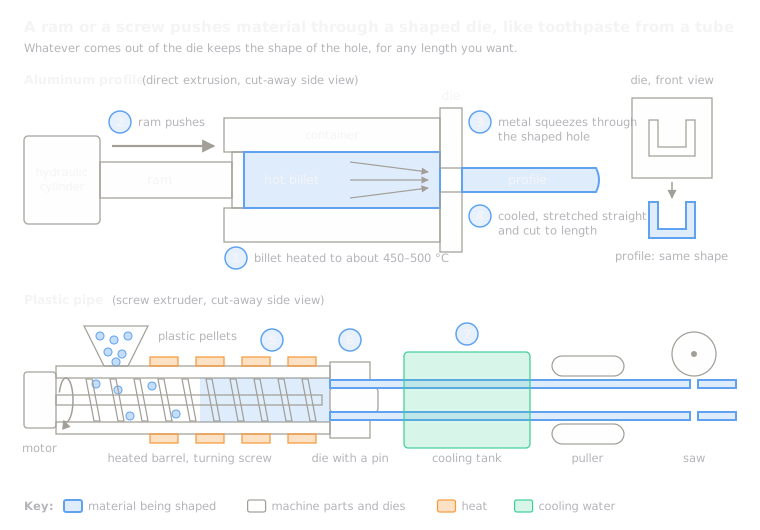 3.3Extrusion (aluminum profiles and plastic pipes)Push metal or plastic through a shaped dieOpen the lesson
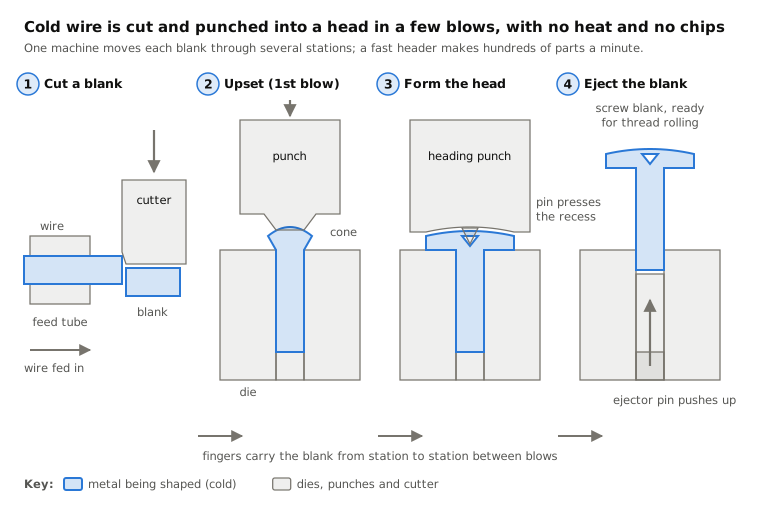
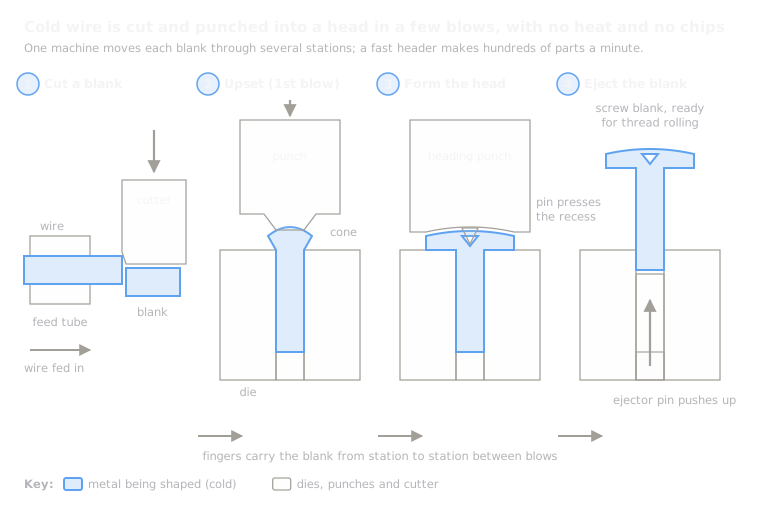 3.5Cold headingCut wire into blanks and punch a head, coldOpen the lesson
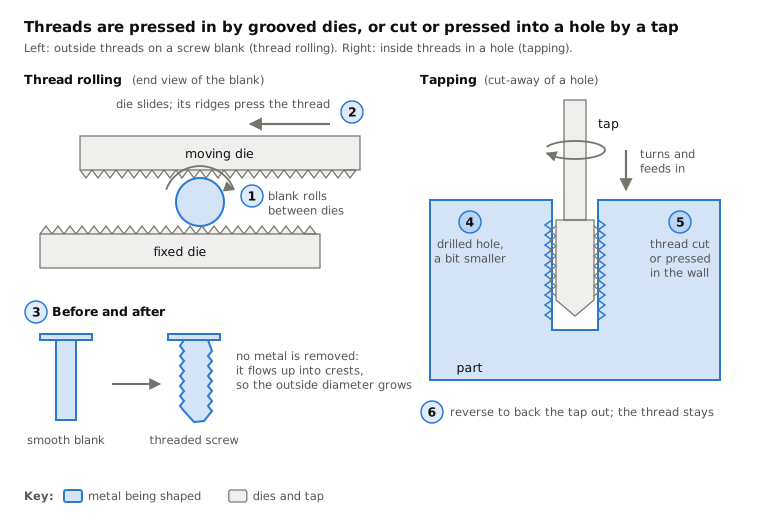
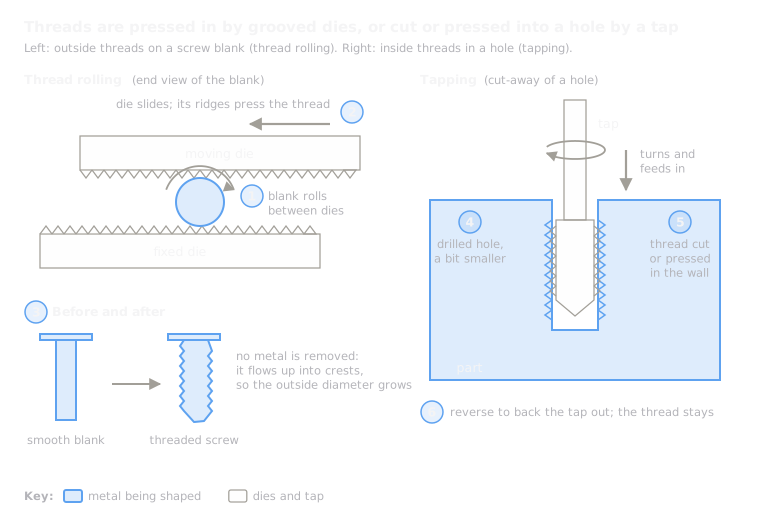 3.6Thread rolling and tappingPress a thread onto a blank, or cut or press one in a holeOpen the lesson
Try it
Put AI to work in your CAD.
Model parts, generate drawings and automate the repetitive work inside your CAD software.