

Forging (open-die and closed-die)
Squeeze hot metal between flat or shaped dies
Forging shapes a solid piece of metal by squeezing or hammering it, usually while it glows red-hot. Wrenches, car crankshafts and aircraft landing-gear parts all start this way. The metal is never melted, so its grain (the fiber-like pattern of its crystals) follows the part's outline, which makes forgings very tough.
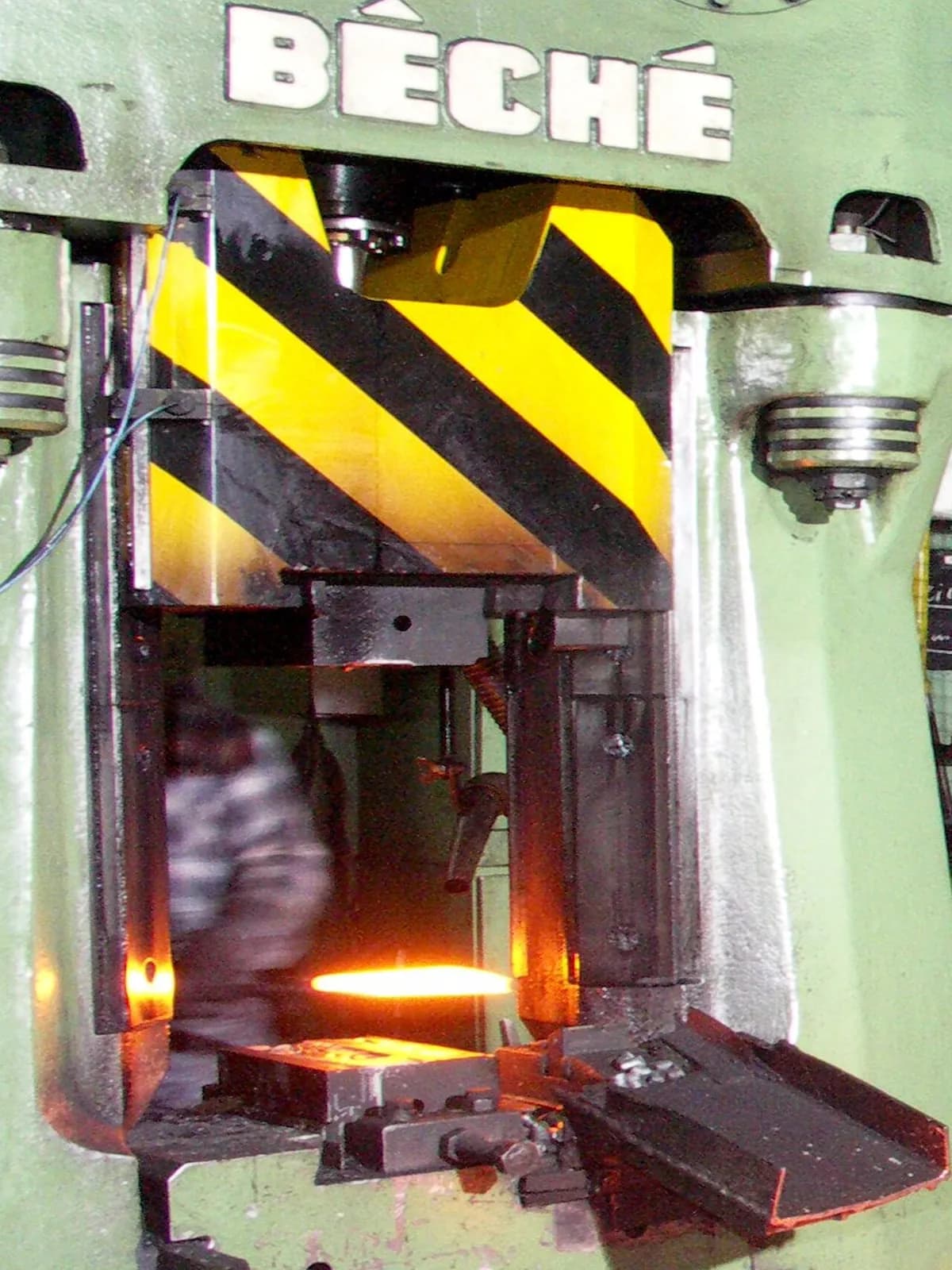
Forging (open-die and closed-die) in a minute, by MecMade
How it works
Heat the billet. A billet (a cut length of bar) goes into a furnace. Steel is typically heated to about 1,100–1,250 °C, until it glows orange-yellow and is soft enough to flow.
Open-die forging: squeeze, turn, repeat. Flat dies (hardened steel blocks) press or hammer the hot bar one section at a time. A manipulator (a large mechanical gripper) turns and moves the bar between blows. Bit by bit, the bar is stretched, flattened or upset (squashed shorter and fatter).
Closed-die forging: place the billet. For mass production, the hot billet sits on a lower die that carries half of the part's shape as a cavity. The upper die carries the other half.
Close the dies. A hammer or press drives the upper die down in one to a few strokes. The metal flows into every corner of the cavity. The excess squeezes out between the dies as flash (a thin fin of surplus metal).
Trim and finish. A trimming press shears off the flash, which is recycled. The part is then usually cleaned of scale (the dark oxide skin), heat-treated, and machined wherever a precise fit is needed.
Key facts
- Materials
- Carbon and alloy steels, stainless steel, aluminum, titanium, copper alloys, nickel superalloys
- Typical parts
- Crankshafts, connecting rods, gears, hand tools, flanges, turbine disks, ship and generator shafts
- Part size
- Closed-die: from a few grams to hundreds of kilograms. Open-die: up to shafts and rings of over 100 tonnes
- Precision
- Closed-die: about ±0.5 mm. Open-die: several millimeters, then machined
- Surface finish
- Rough, scaly skin; cleaned by shot blasting, with critical faces machined
- Batch size it suits
- Open-die: one-offs to a few dozen. Closed-die: thousands to millions
- Tooling and machine cost
- Closed-die sets: thousands to tens of thousands of dollars. Big presses and hammers: millions
- Speed
- Closed-die: seconds to about a minute per part. Open-die: minutes to hours per part, with reheating
Strengths and limits
Strengths
- Very strong and tough: the grain follows the shape and there are no hidden holes
- Closed-die work is fast and repeatable for big runs
- Open-die can make huge parts that few other processes can
- Material-efficient: the flash and offcuts are recycled
Limits
- Loose tolerances and a rough skin, so most forgings need some machining
- Closed dies are costly and take weeks to make, so small batches are expensive
- Heating uses a lot of energy, and the work is hot, loud and heavy
- Hollow insides, undercuts (overhanging shapes) and very thin walls are hard or impossible
Where it's used
- AutomotiveCrankshafts, connecting rods, gears, steering knuckles, wheel hubs
- AerospaceLanding-gear beams, turbine disks, engine mounts, wing fittings
- EnergyGenerator and turbine shafts, pressure-vessel rings, valve bodies, wind-turbine flanges
- Tools and hardwareWrenches, hammers, pliers, chisels
- Oil, gas and miningDrill-bit bodies, pipe flanges, heavy hooks, chain links
How to recognize it
- A thin band around the part where the flash was trimmed off, often slightly rough or ground (the parting line).
- Rounded edges and gently sloped sides (draft, a slight taper that lets the part leave the die).
- A dark or matte, slightly pitted skin on unmachined areas, with bright machined faces only where parts fit together.
- Raised letters or part numbers, copied from markings cut into the die.
Compare with
Watch it
Scot Forge Company · How a forge heats, presses and turns metal in open dies
Shubham Kola · The main forging types explained side by side
CFS Forge · A crankshaft forged in closed dies, then trimmed of its flash
HBEPRESS · The sheer scale of open-die forging on a glowing ingot
See real photos
- Wikipedia: Forging — photos of hammers, presses and hot forgings
- Wikimedia Commons photo search
Remember
- Forging squeezes solid, usually red-hot metal into shape; nothing is melted or cut away.
- Open dies shape big or one-off parts bit by bit; closed dies copy a cavity quickly for mass production.
- Choose forging when a part must not break: crankshafts, landing gear, hand tools.
More in Bulk forming
All 100 processes
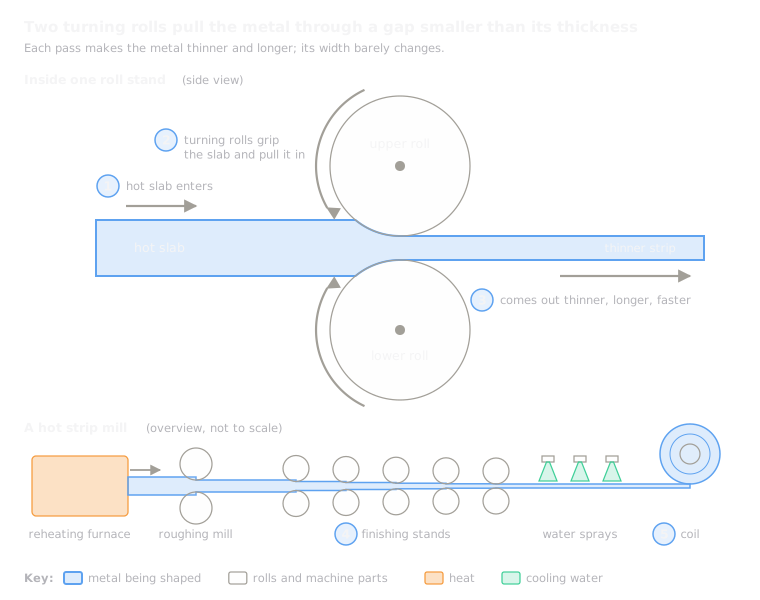 3.2RollingPull metal through the gap between turning rollsOpen the lesson
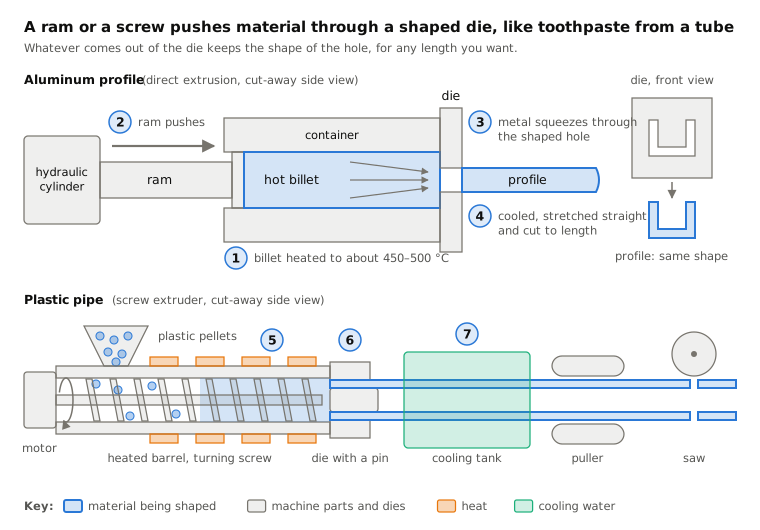
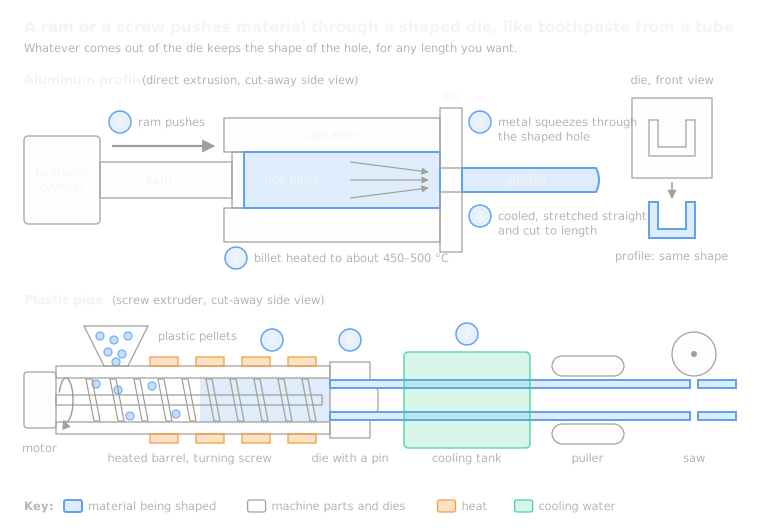 3.3Extrusion (aluminum profiles and plastic pipes)Push metal or plastic through a shaped dieOpen the lesson
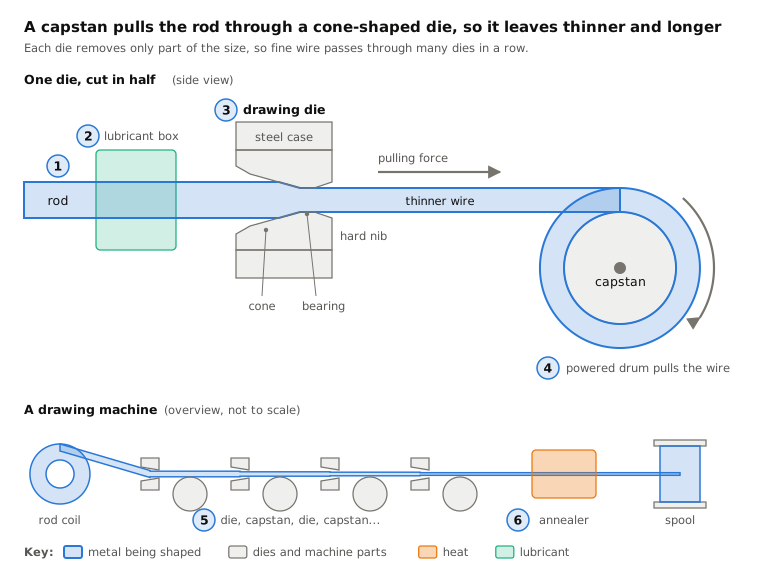
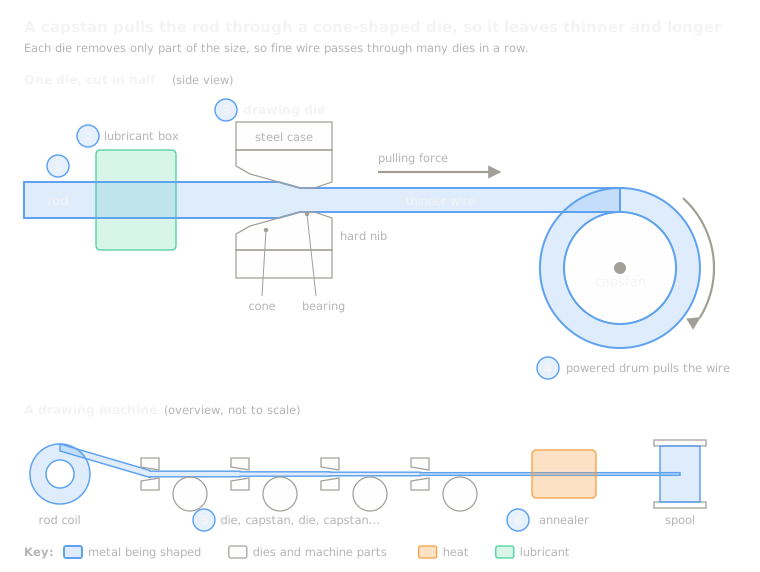 3.4Wire drawingPull a rod through ever-smaller diesOpen the lesson
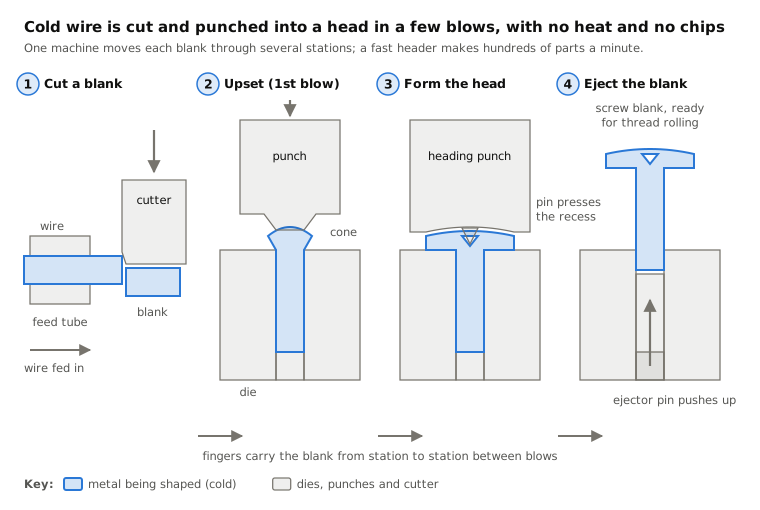
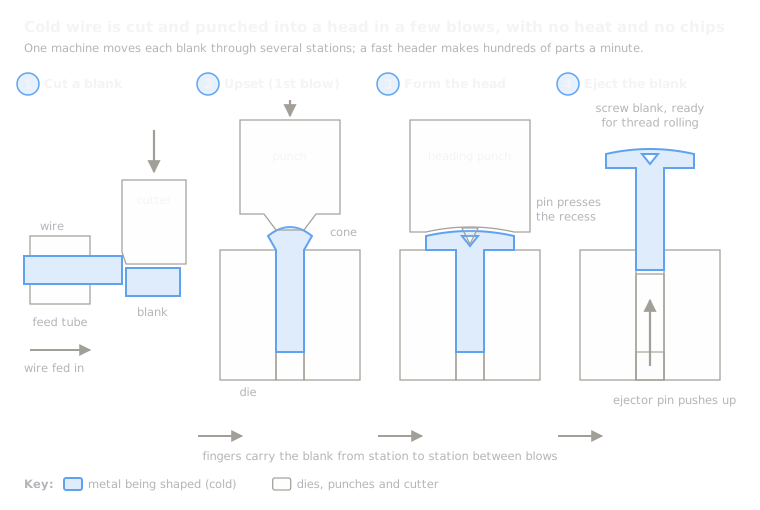 3.5Cold headingCut wire into blanks and punch a head, coldOpen the lesson
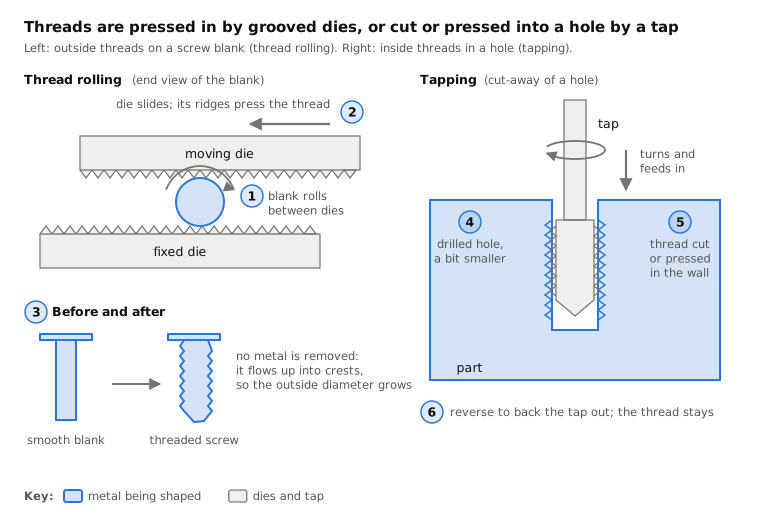
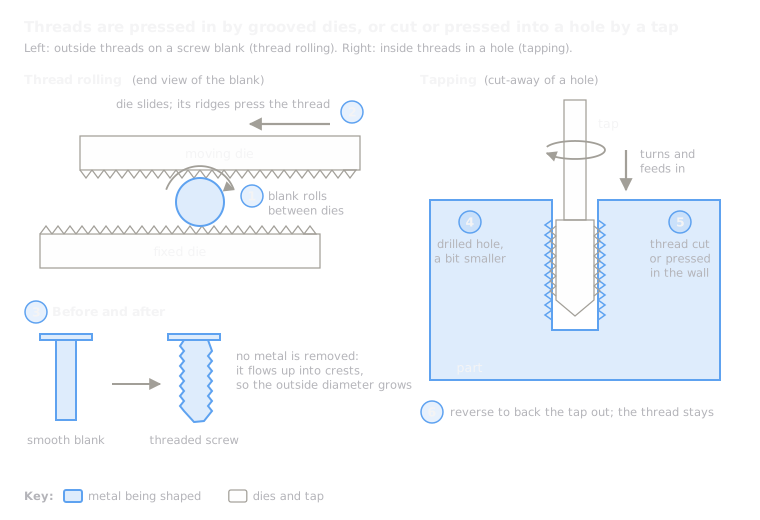 3.6Thread rolling and tappingPress a thread onto a blank, or cut or press one in a holeOpen the lesson
Try it
Put AI to work in your CAD.
Model parts, generate drawings and automate the repetitive work inside your CAD software.