

Free course · 13 chapters
Manufacturing processes, explained
How everyday objects and industrial parts are actually made: 100 processes, explained from zero, grouped by family, each with a diagram, real photos where possible, and videos to watch.
- processes
- 100
- processes
- families
- 13
- families
- diagrams
- 100
- diagrams
- videos
- 390+
- videos
MecMade shorts
Each process in a minute
The big picture
Six jobs, every process
Before learning 100 processes one by one, learn the six jobs they do. Every process in this course does one of these six things to a material. It is the same split engineers use in the German standard DIN 8580.
Shape
Gives a liquid, paste or powder its first solid form
Deform
Changes the shape of a solid without removing material
Cut
Removes unwanted material with a blade, sparks, a jet or chemistry
Join
Turns several parts into one by melting, heating or pressing them together
Treat
Changes how hard, strong or tough the material is, not its shape
Coat
Adds a thin layer that protects, decorates or adds a function
Micro & nano
Uses all six jobs at the scale of microns and atoms to make chips and sensors
All processes
Pick a process, see how it works
Every lesson follows the same plan: what it is, a diagram with numbered steps, key facts, strengths and limits, where it is used, how to recognize it, and videos of the real machine.
How to read the diagrams: 4 colors, 3 marks, the same in all of them
Casting
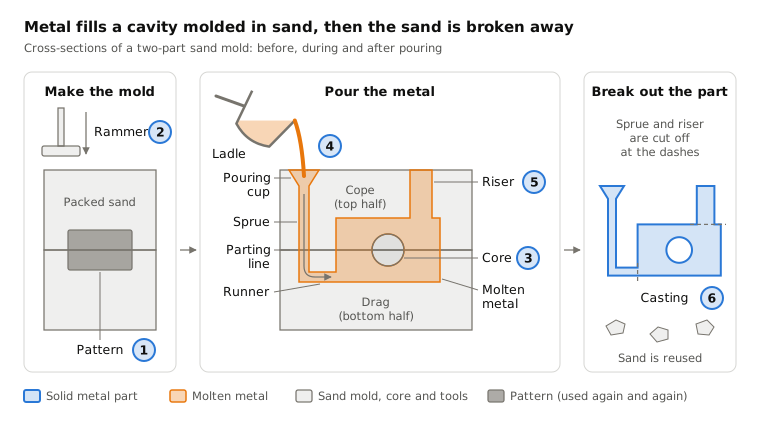
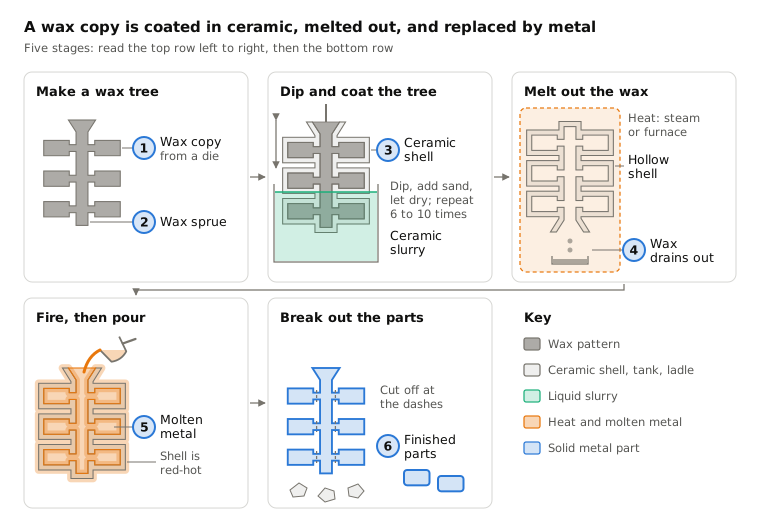
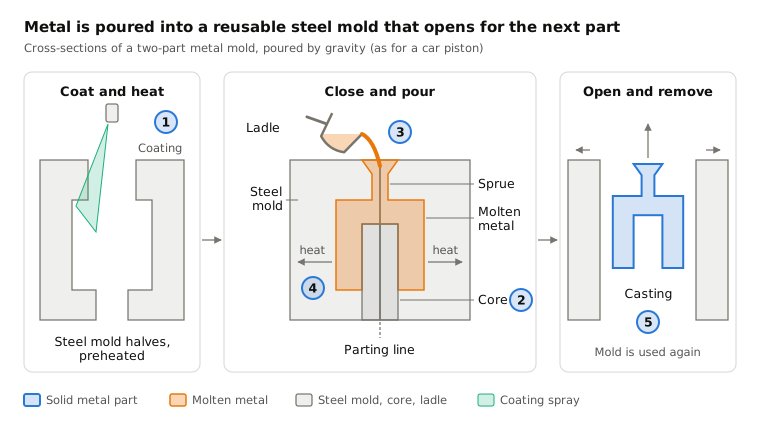
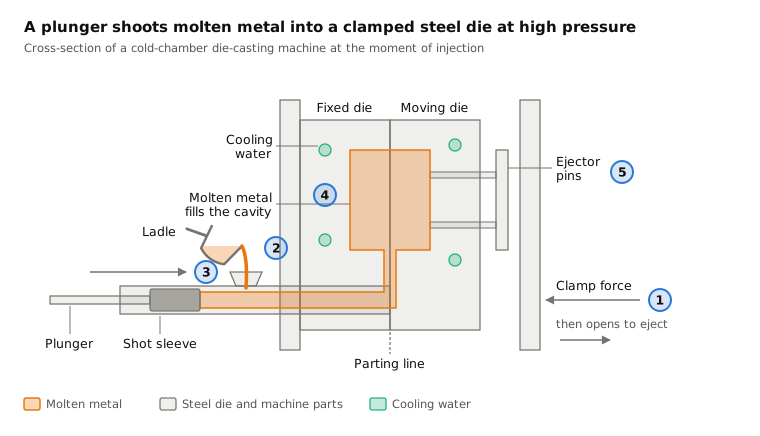
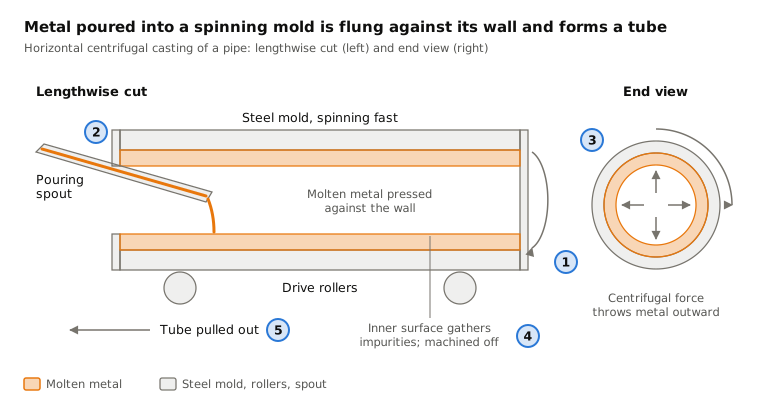
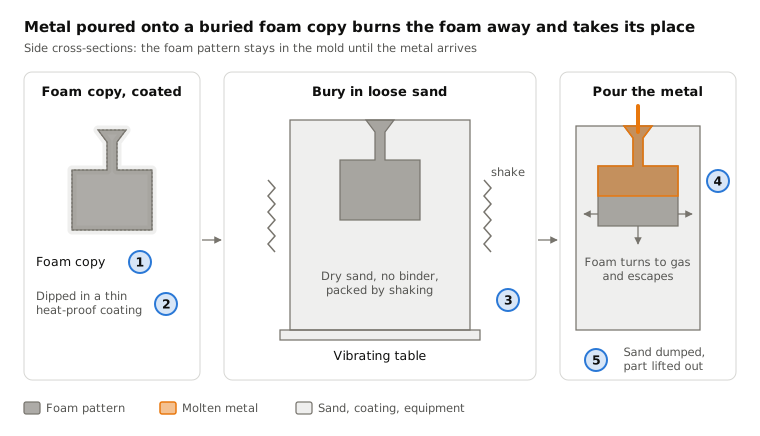
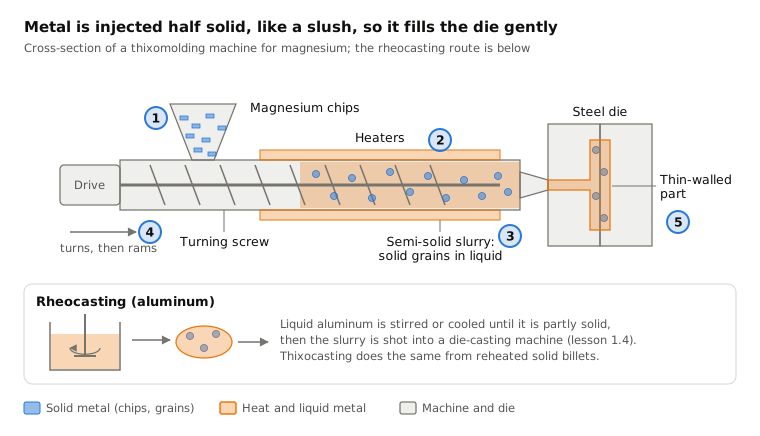
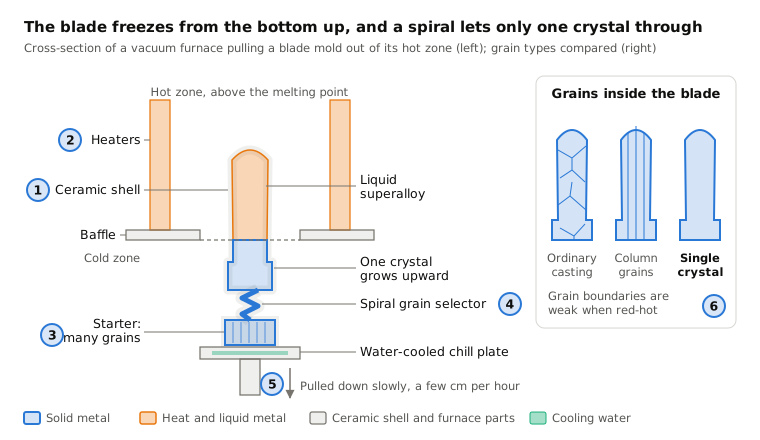
Casting makes a part by melting metal, pouring or pushing it into a hollow the shape of the part, and letting it freeze. Every process in this chapter shares that principle; they differ in what the mold is made of,…
Molding plastics and rubber
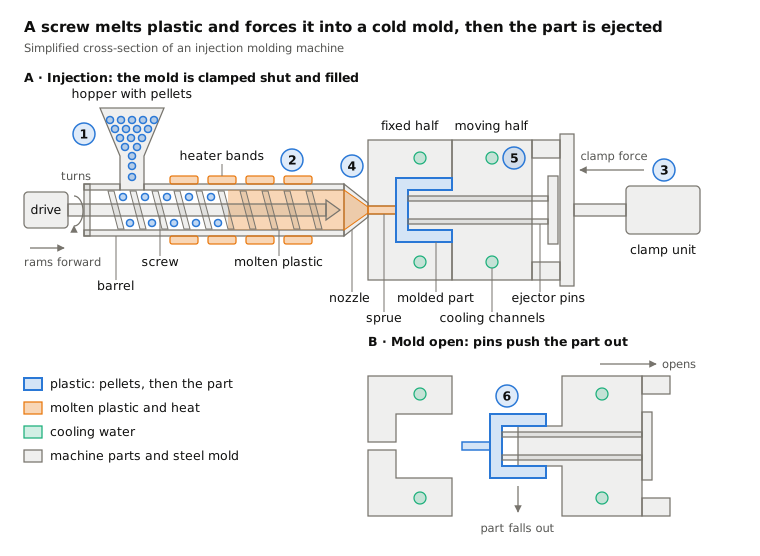
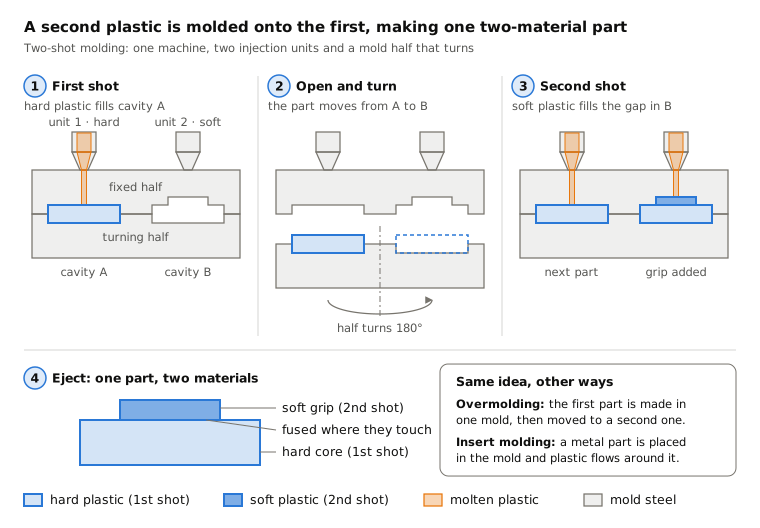
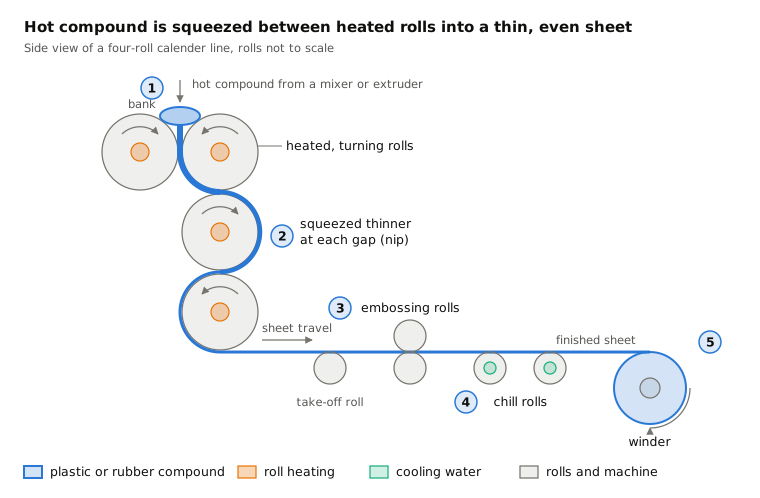
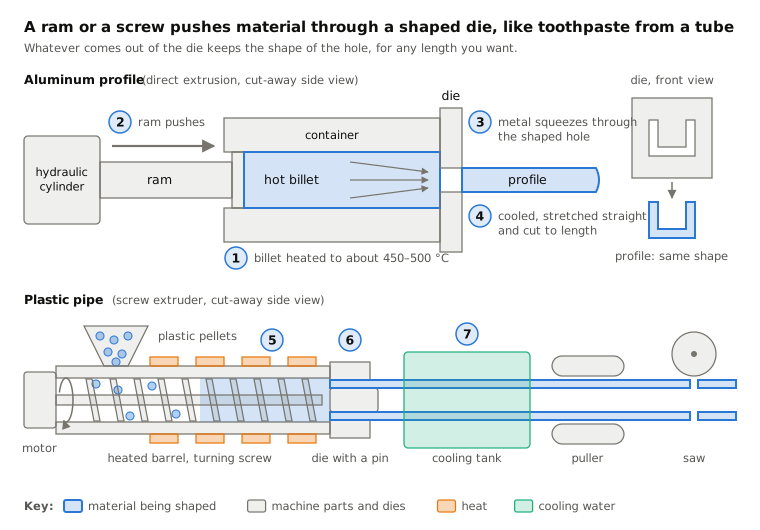
Plastics and rubbers are shaped while they are soft, then made to hold that shape. Every process in this chapter softens the material with heat, forces it against a mold or between rolls, then sets it by cooling…
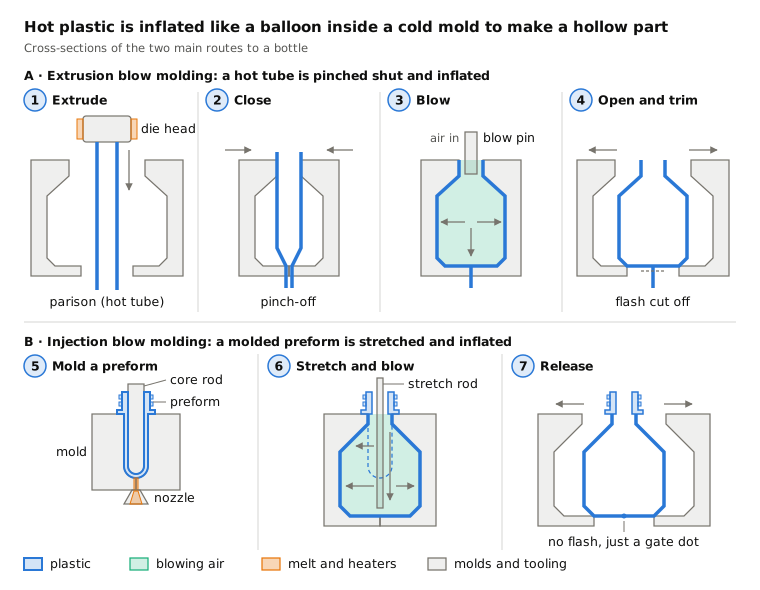
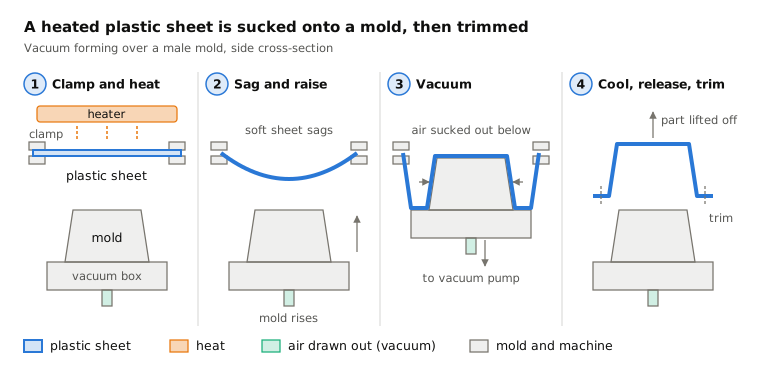
Bulk forming
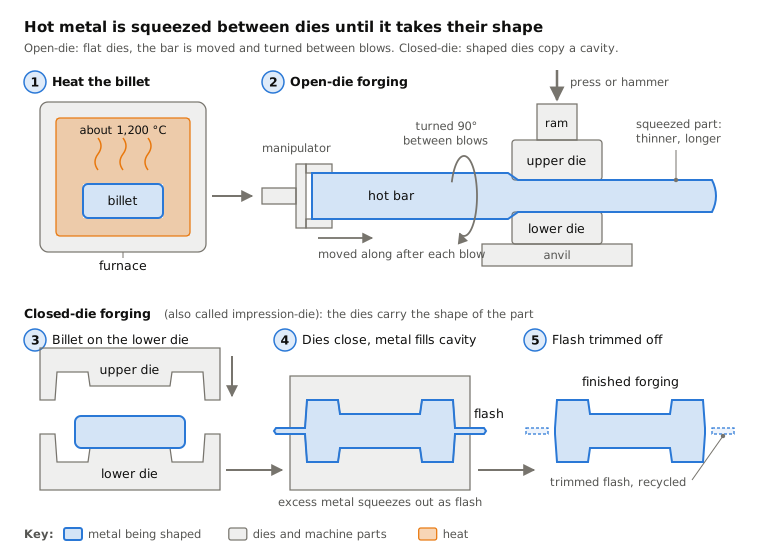
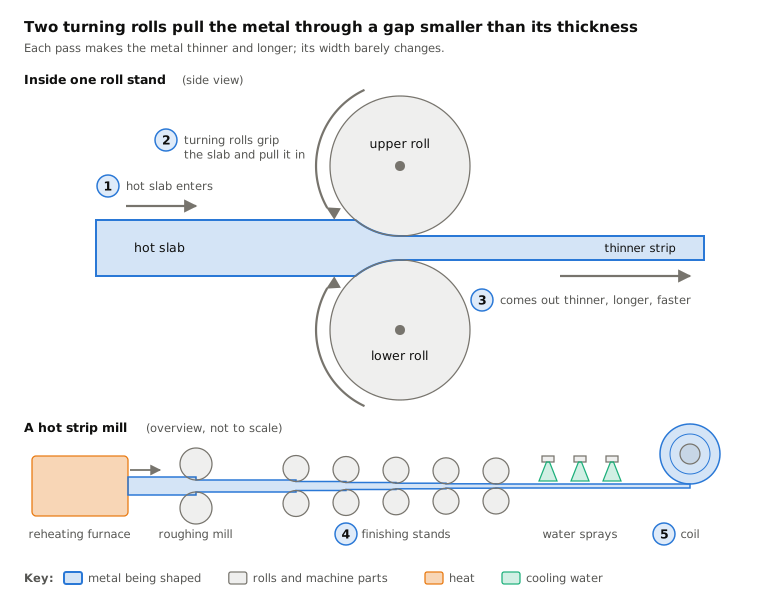
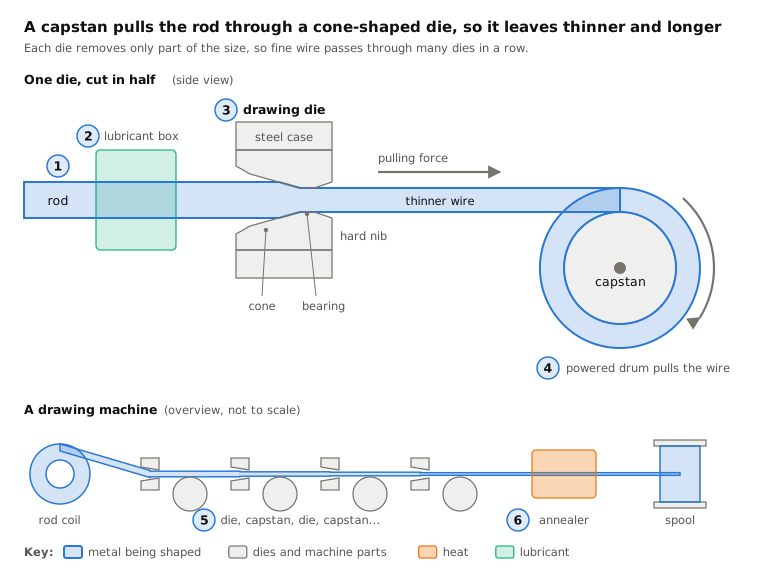
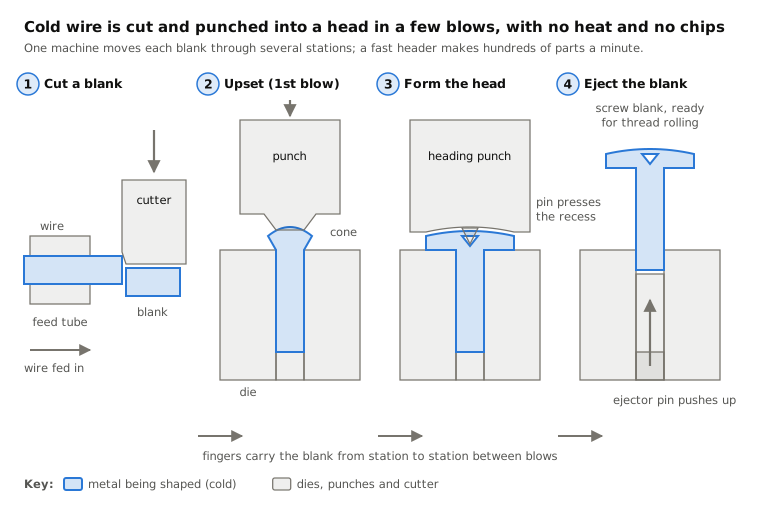
Bulk forming shapes a solid piece of metal by squeezing, hammering, pushing or pulling it, without melting it and without cutting chips away. The metal flows like very stiff clay into a new shape, so almost none of it…
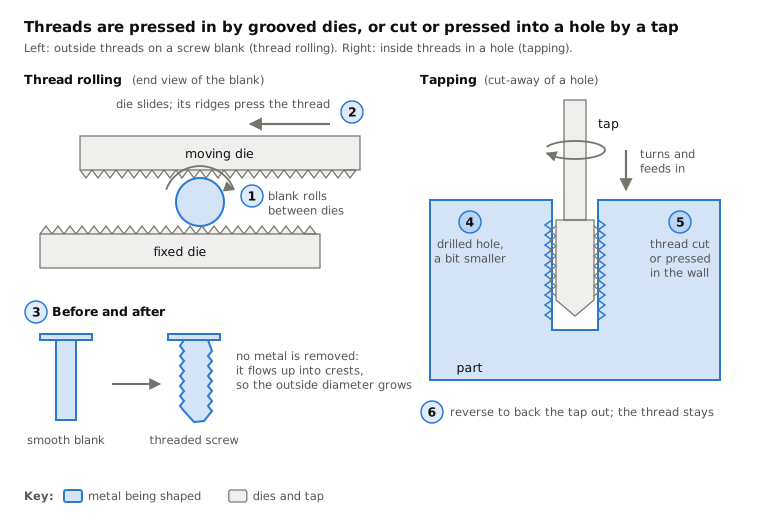
Sheet and tube forming
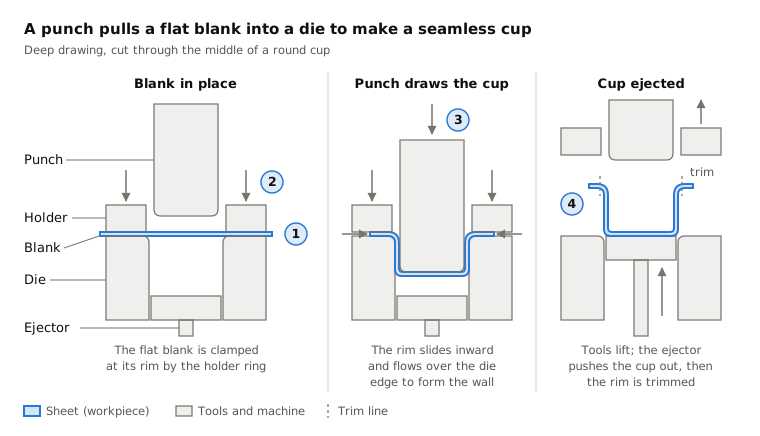
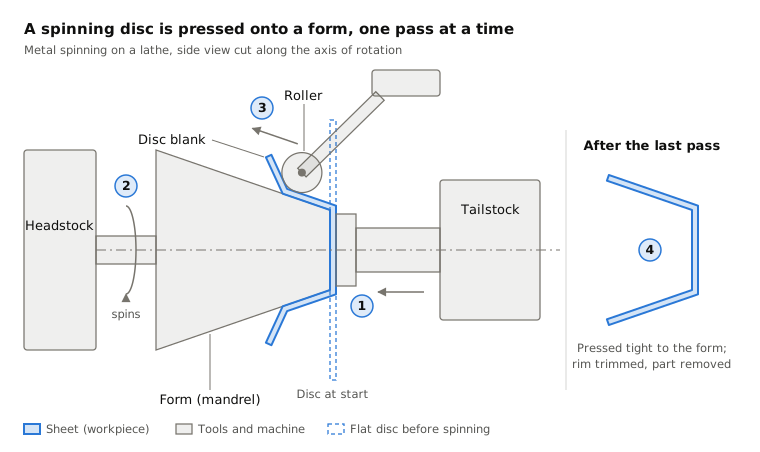
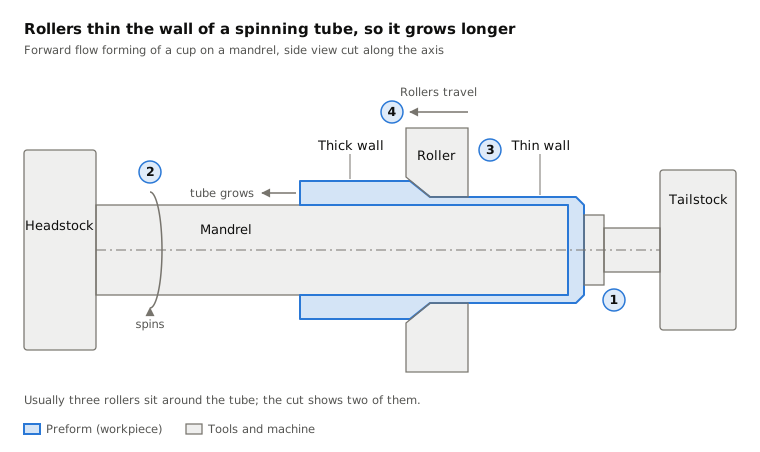
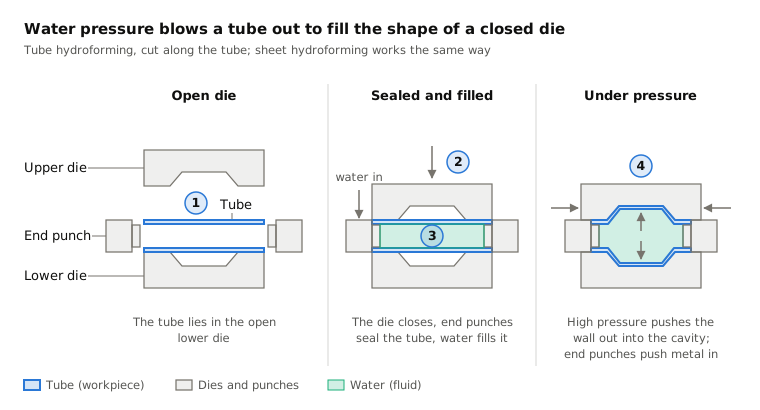
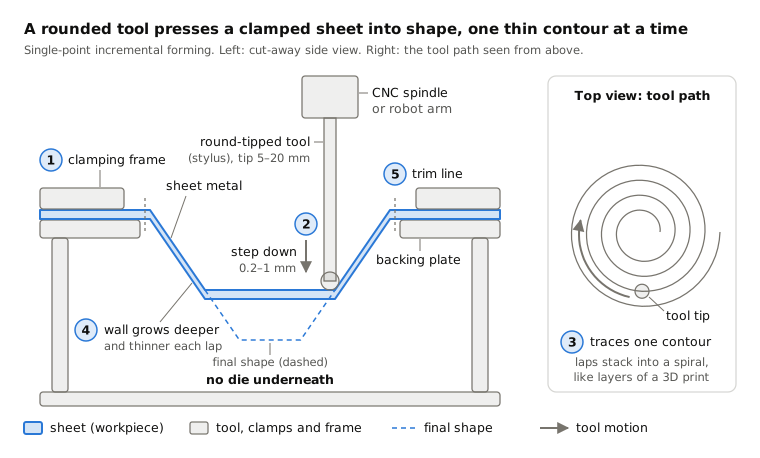
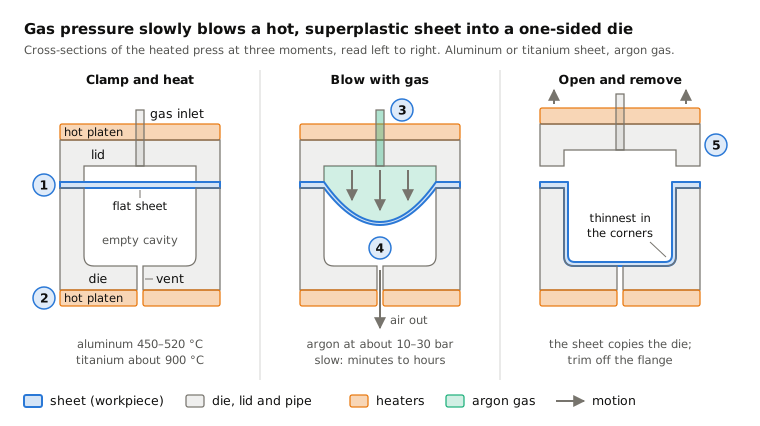
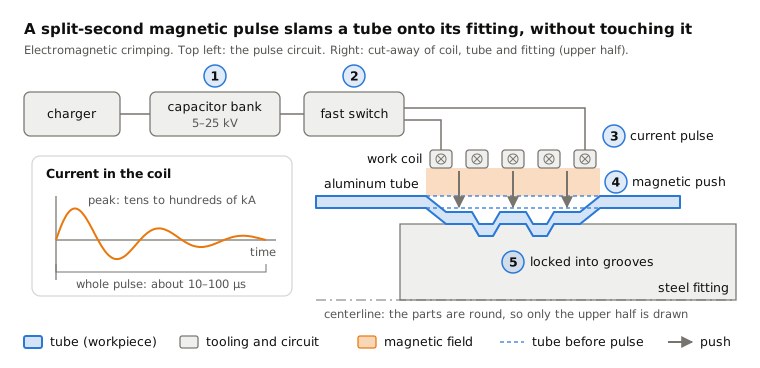
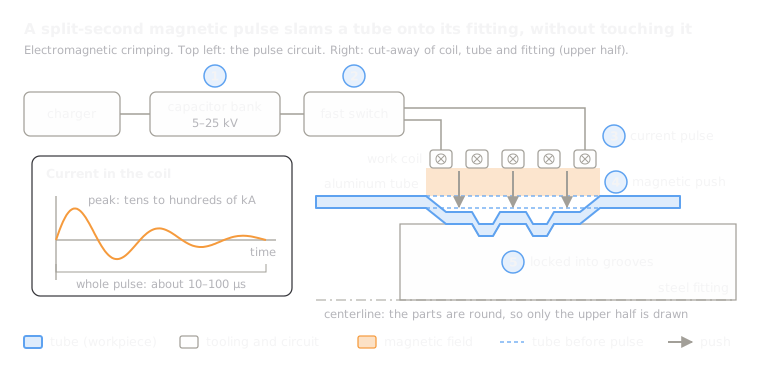
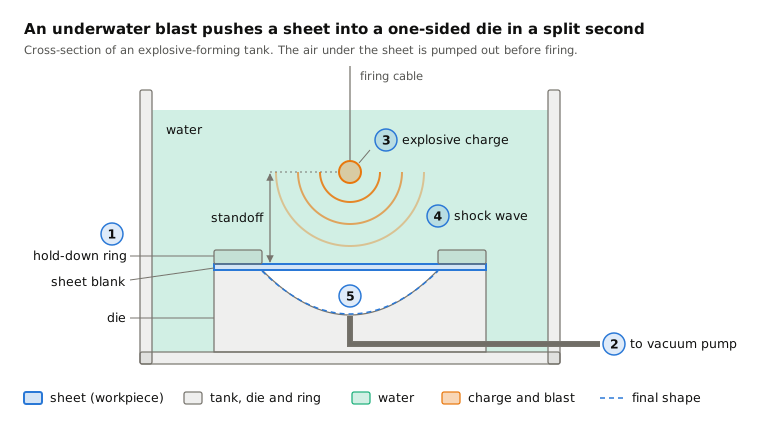
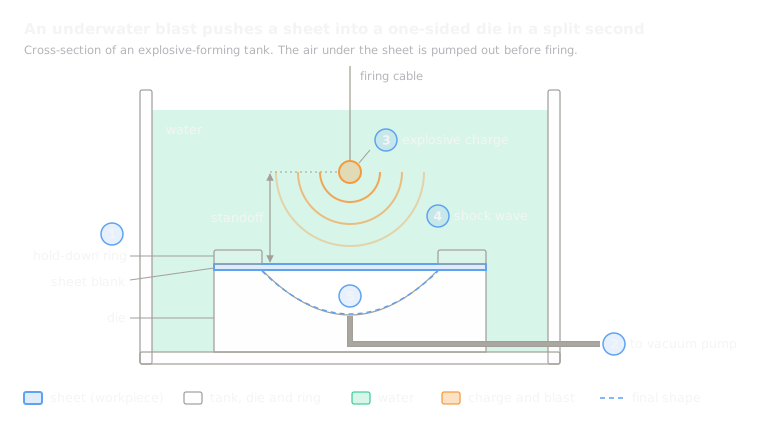
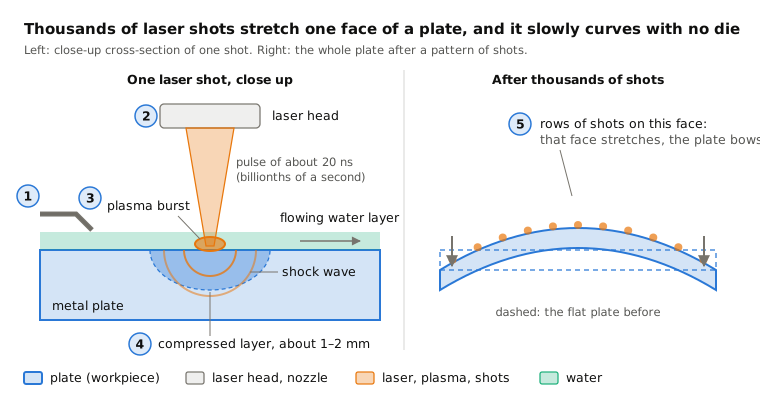
Sheet and tube forming turns thin flat sheet or tube into 3D shapes without removing any material. Every process in this chapter bends or stretches the metal past its elastic limit, so it keeps the new shape; they…
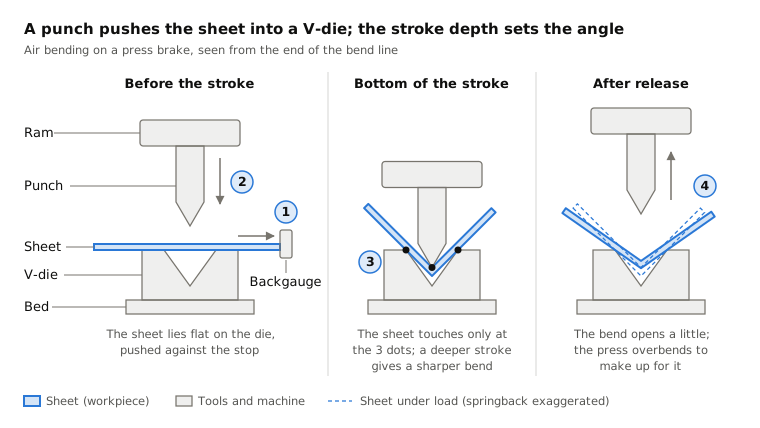
Machining
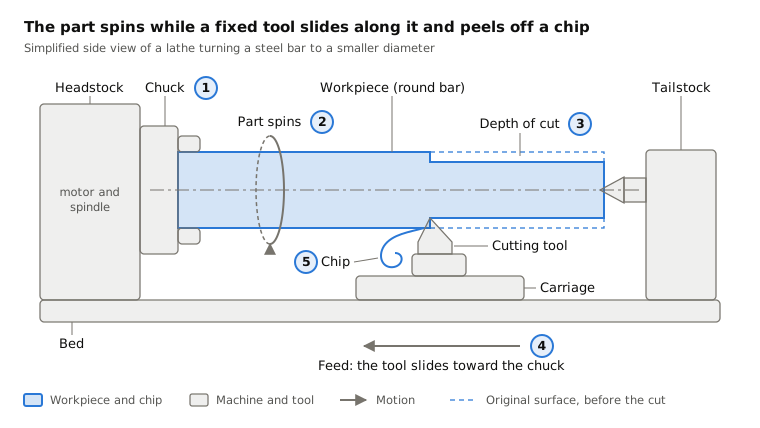
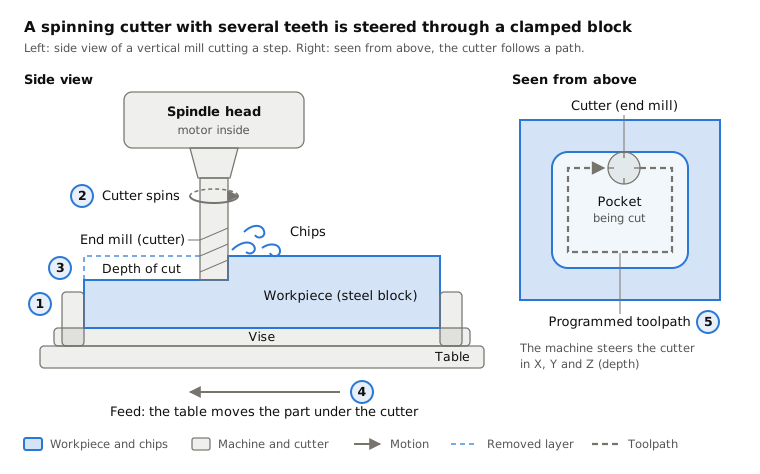
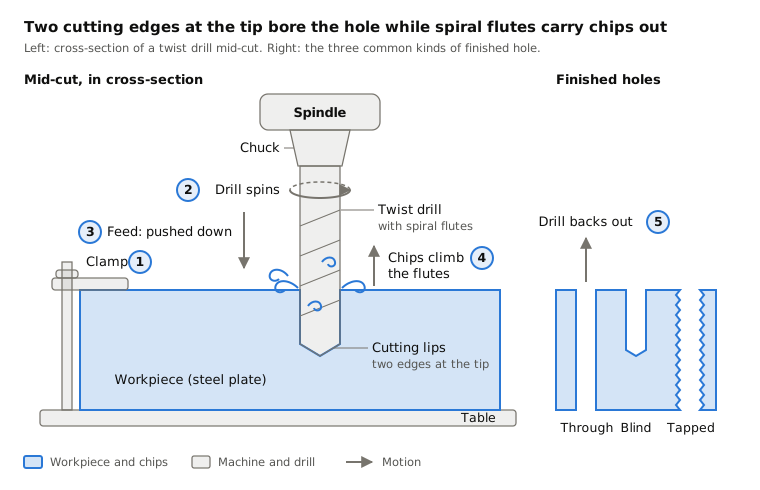
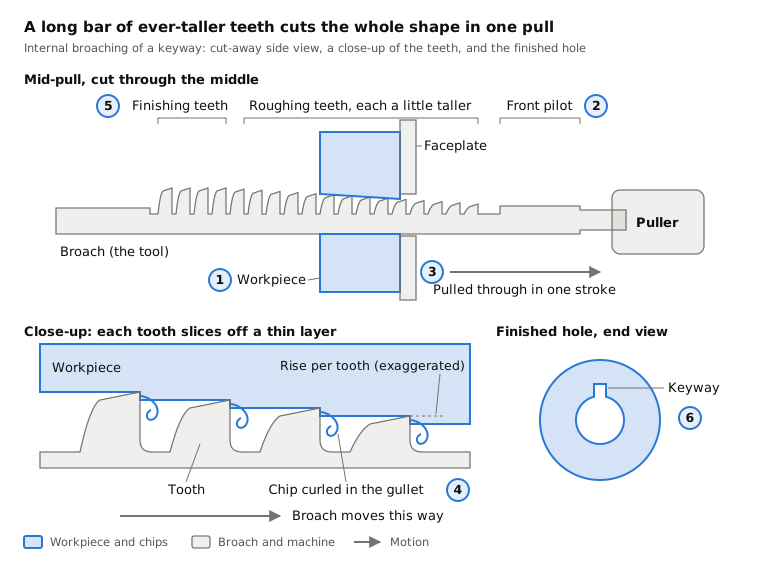
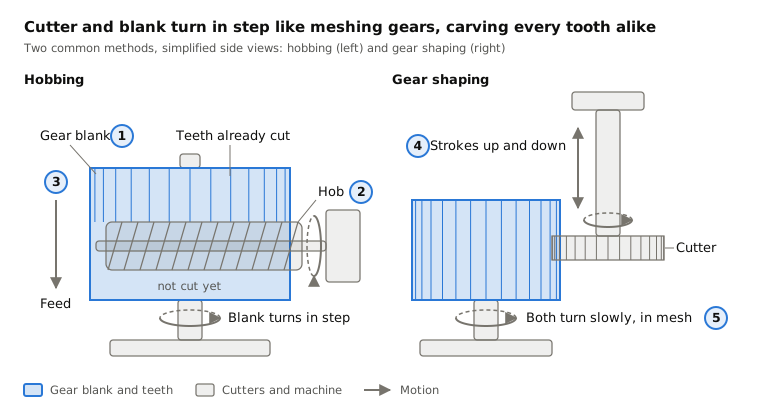
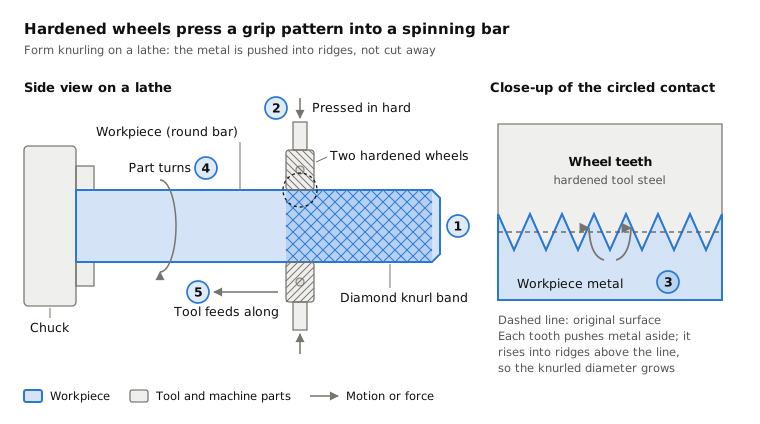
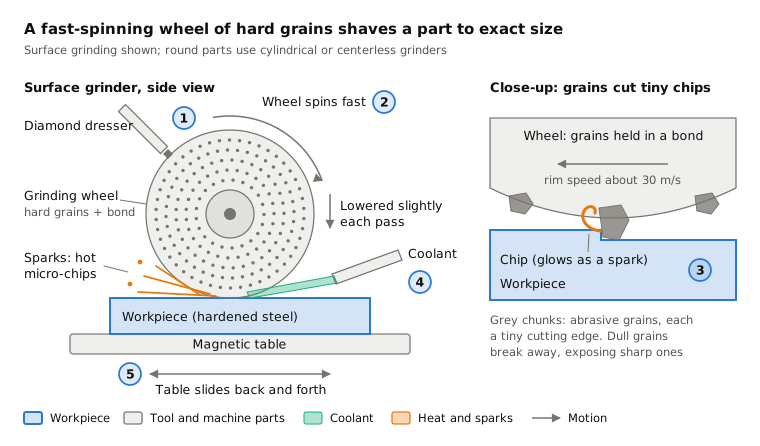
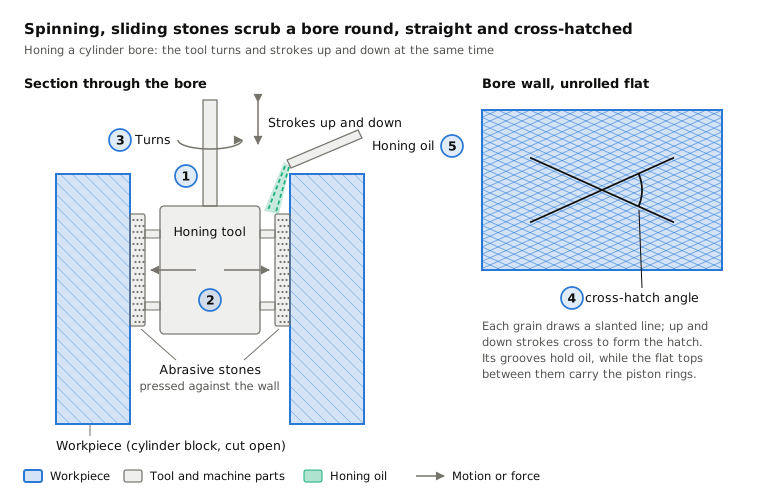
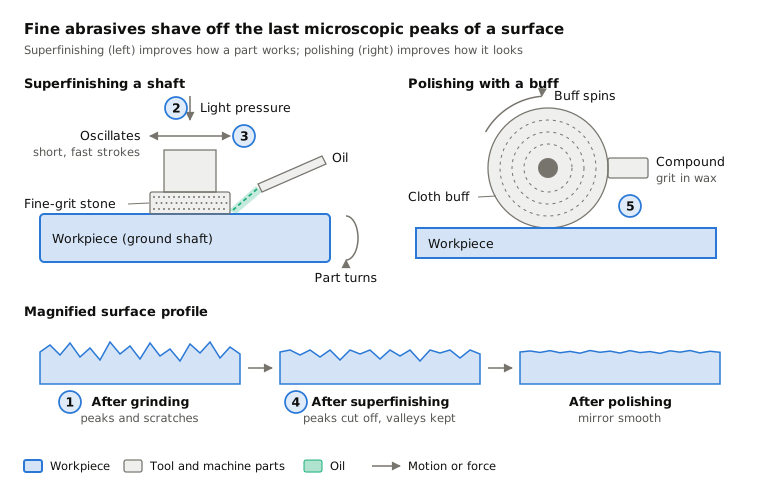
Machining makes a part by removing material from a solid block, bar or casting until only the wanted shape is left. Every process in this chapter does it the same way: something harder than the workpiece is pushed…
Cutting and non-traditional machining
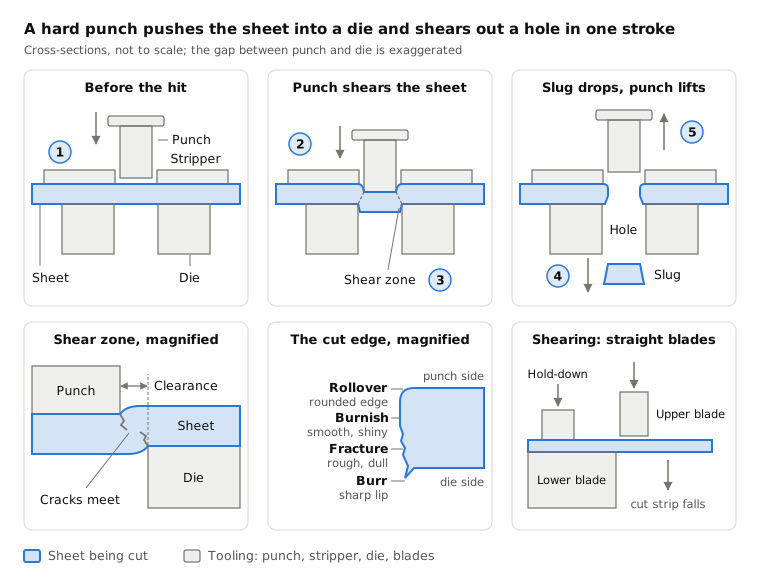
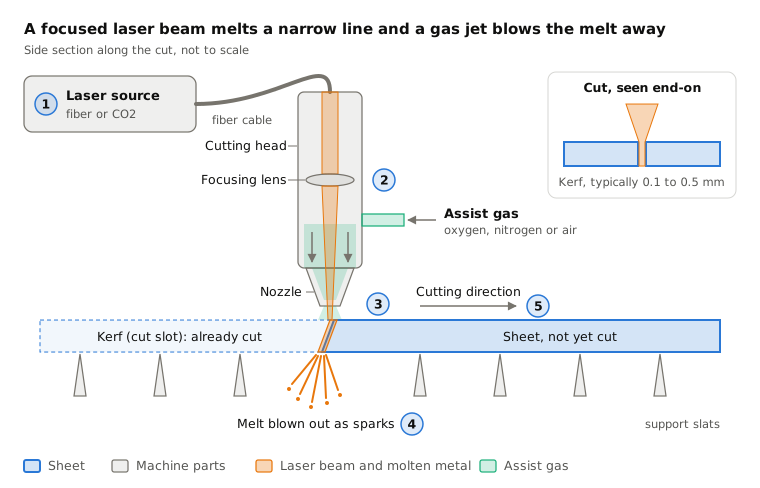
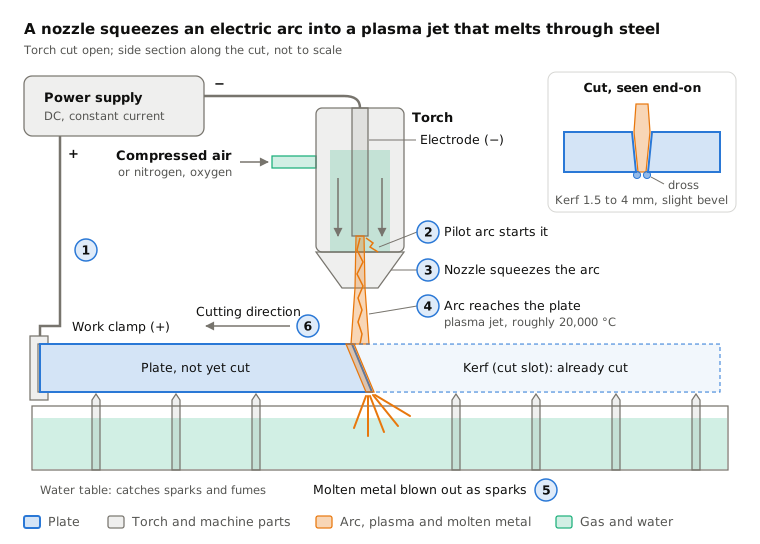
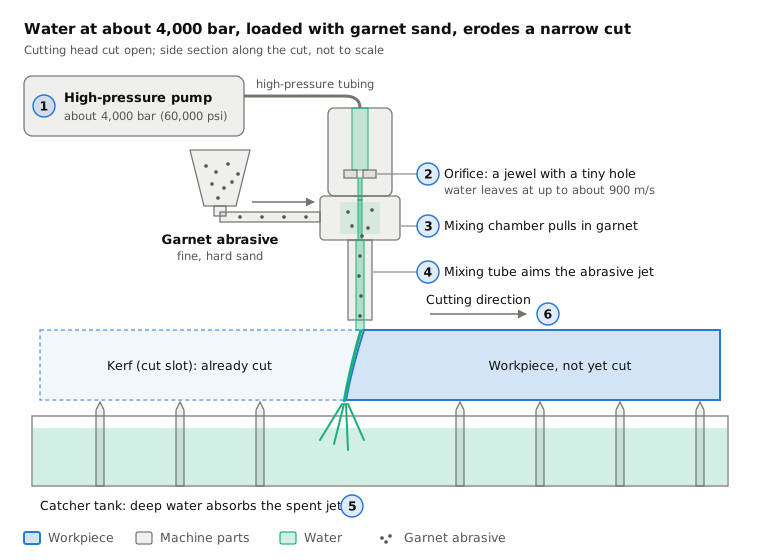
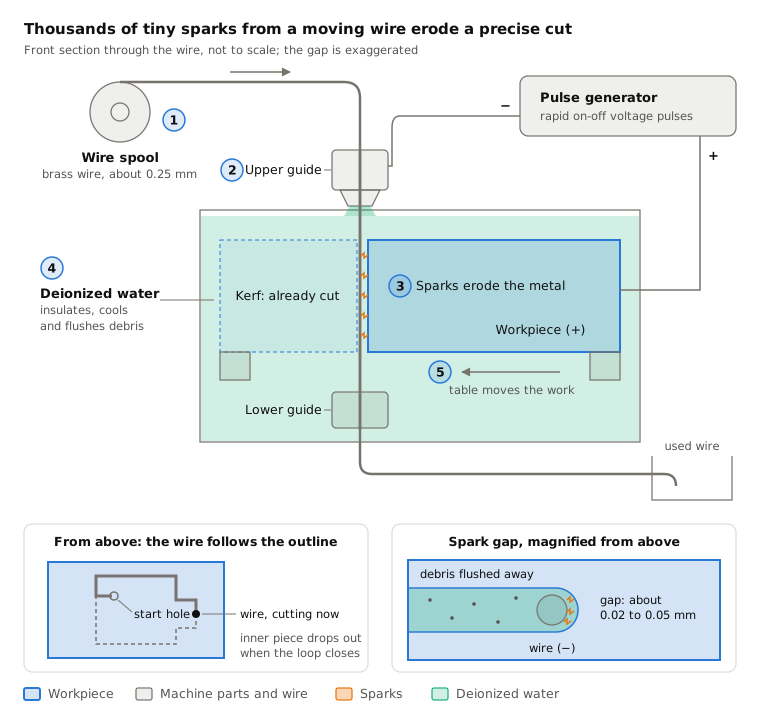
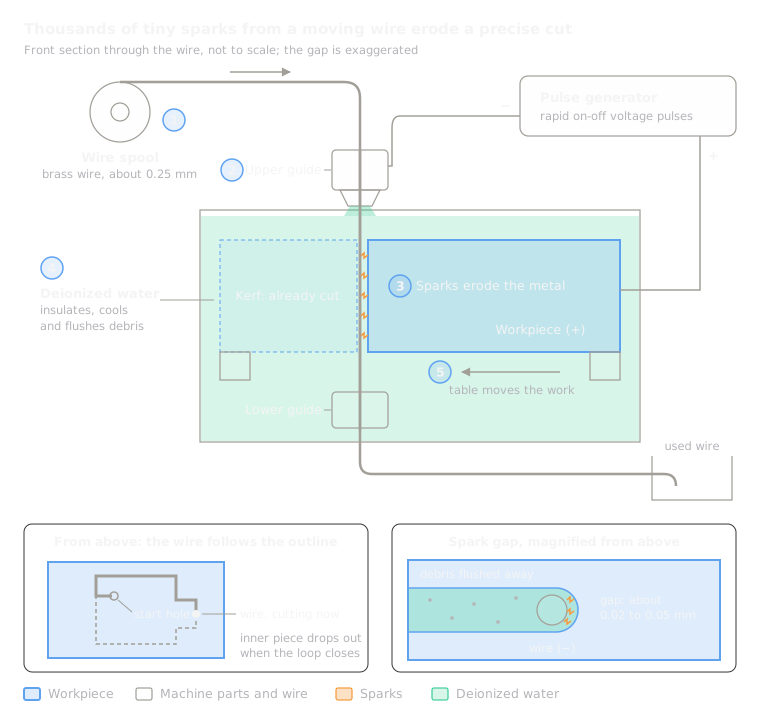
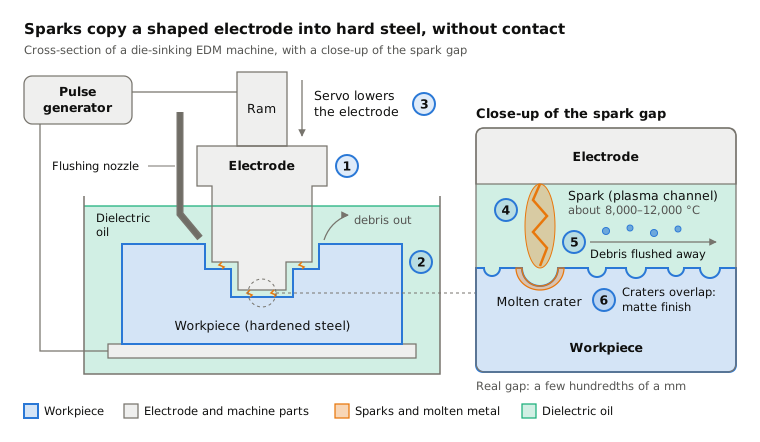
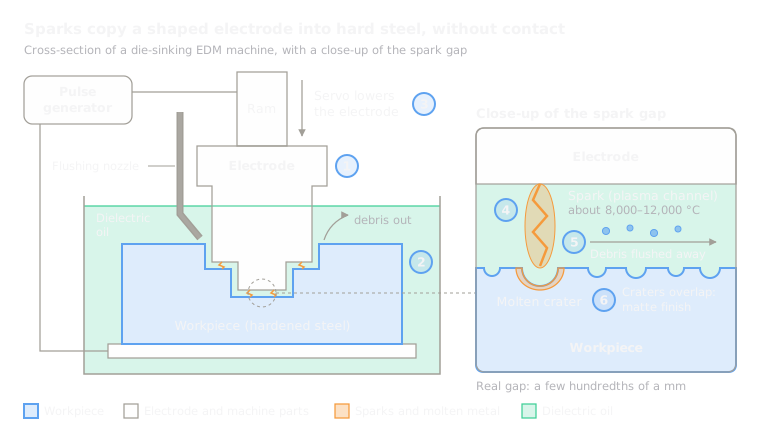
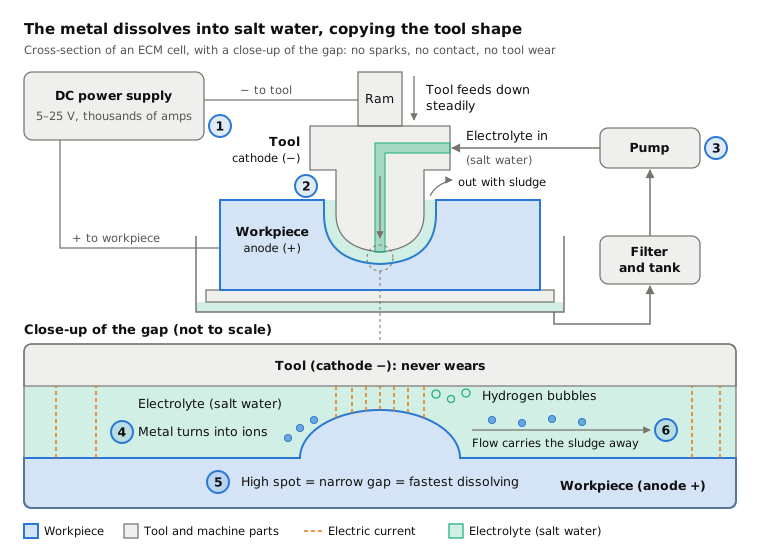
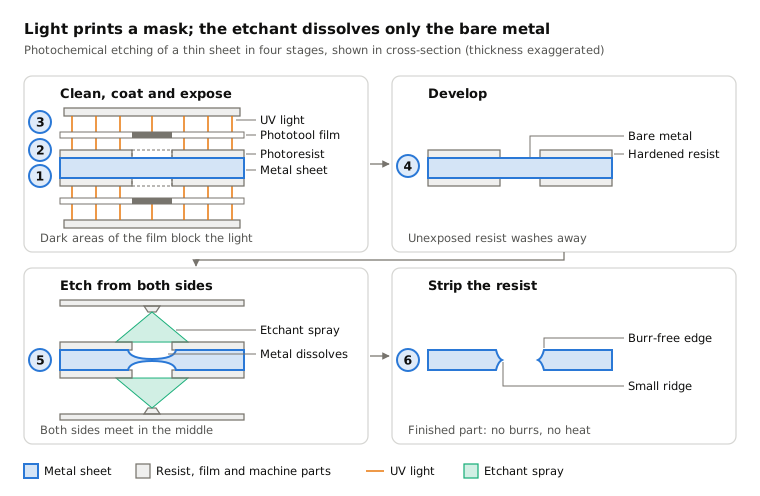
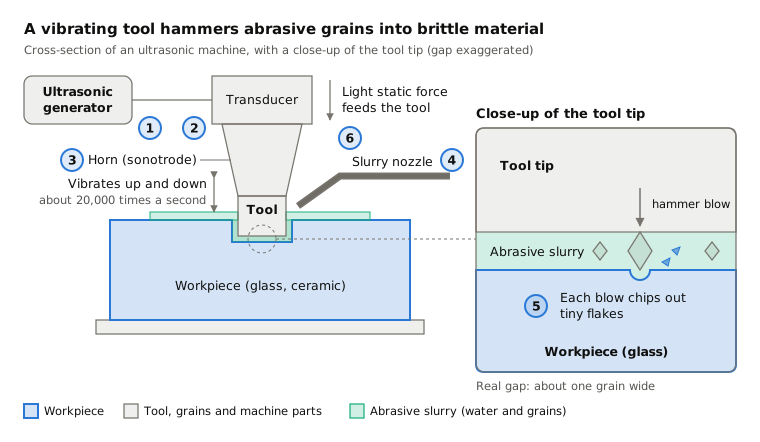
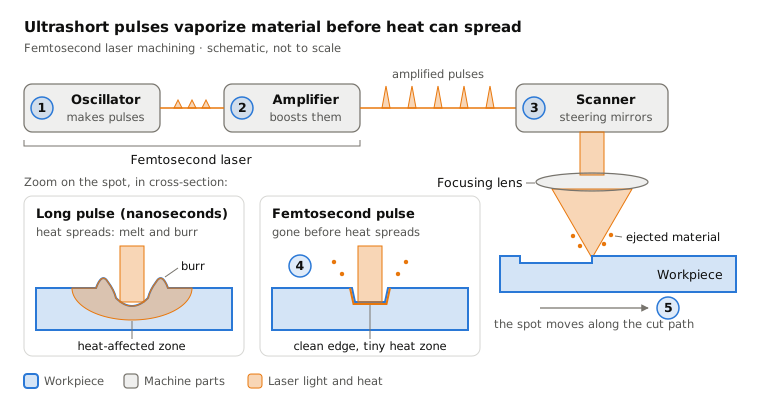
This chapter covers nine ways to cut through sheet and plate, or to remove material where a turning or milling cutter cannot reach or cannot survive. They share one principle: deliver concentrated energy to a small…
Joining
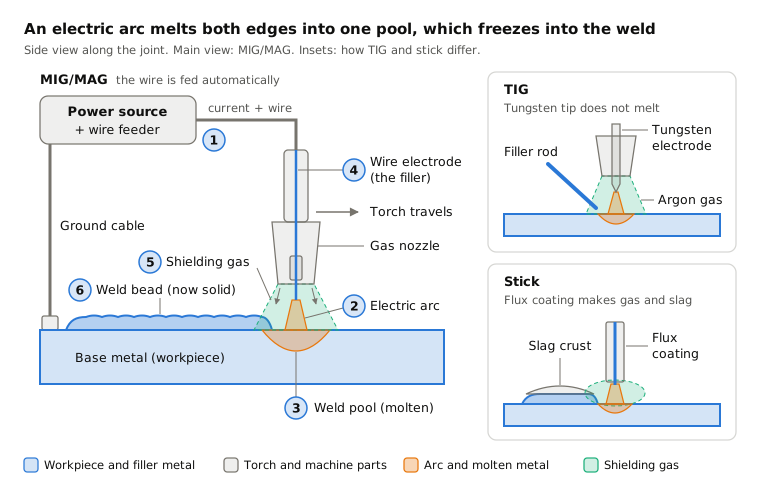
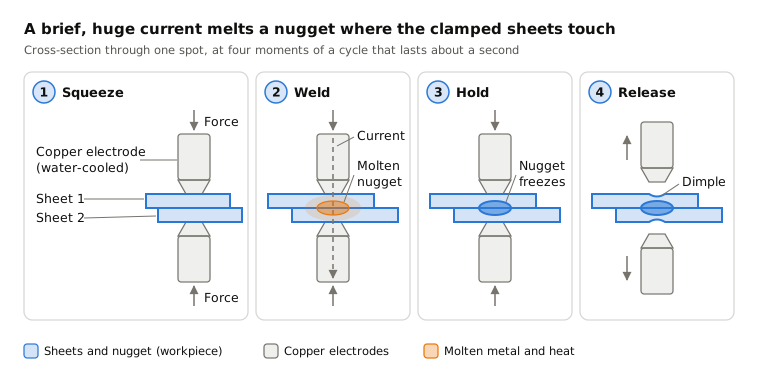
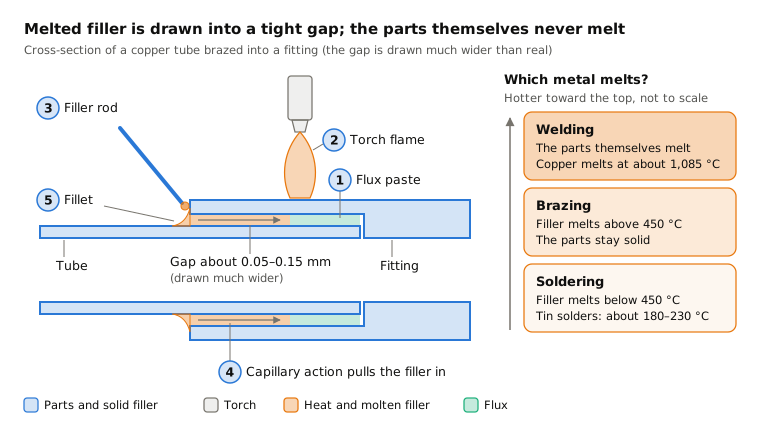
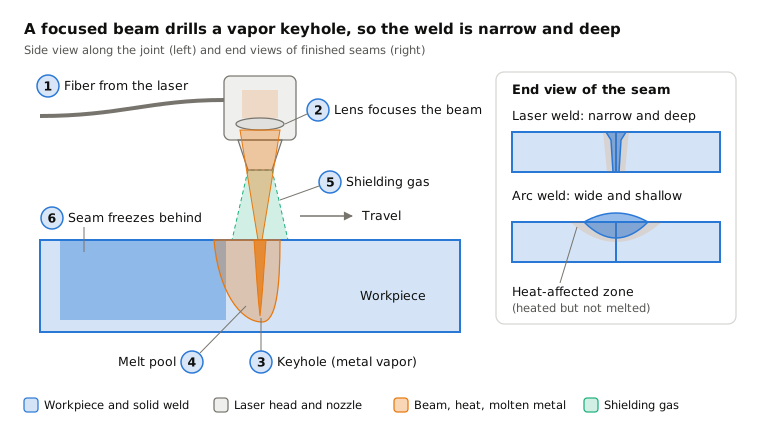
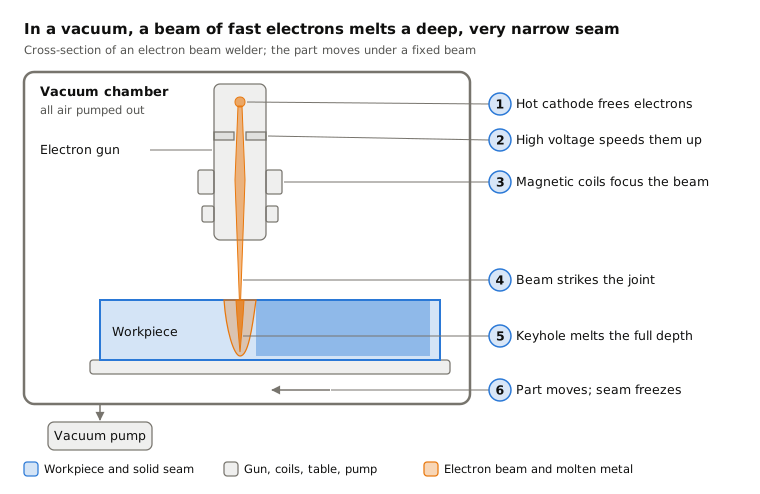
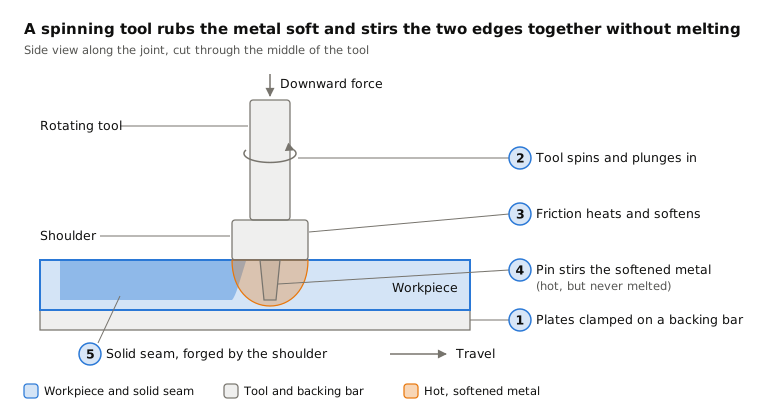
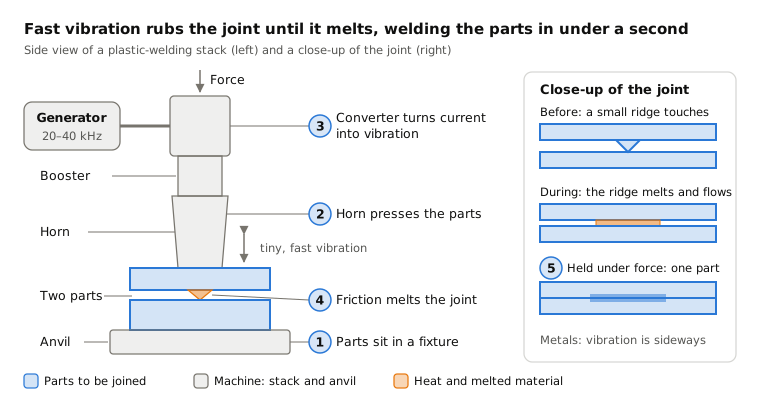
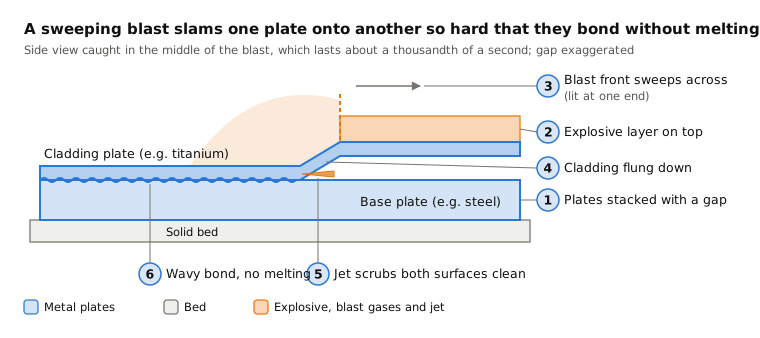
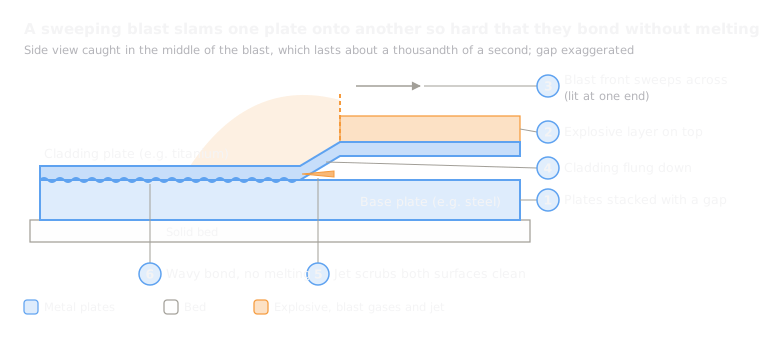
Joining processes make one permanent part out of several, so that the joint carries load as if it were solid metal or plastic. They all share one principle: bring clean atoms of the two parts so close that they bond.…
Additive manufacturing
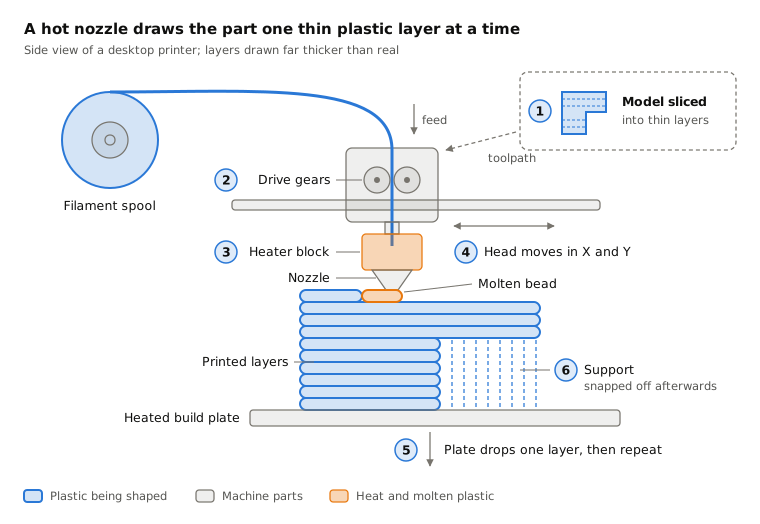
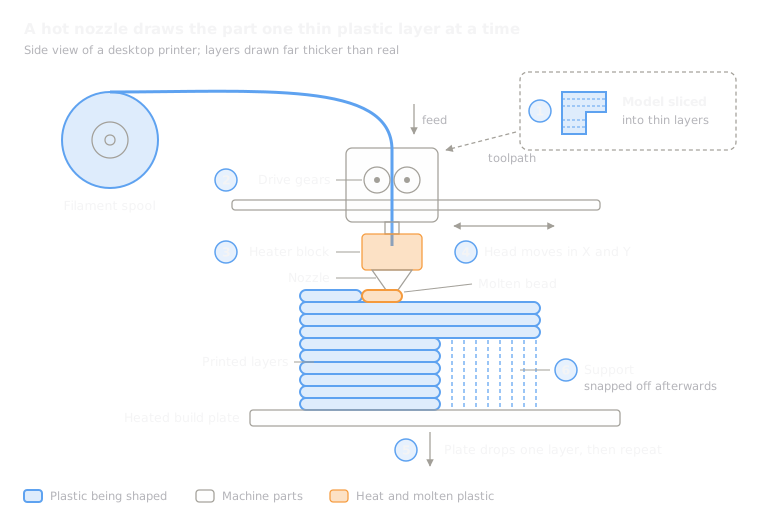
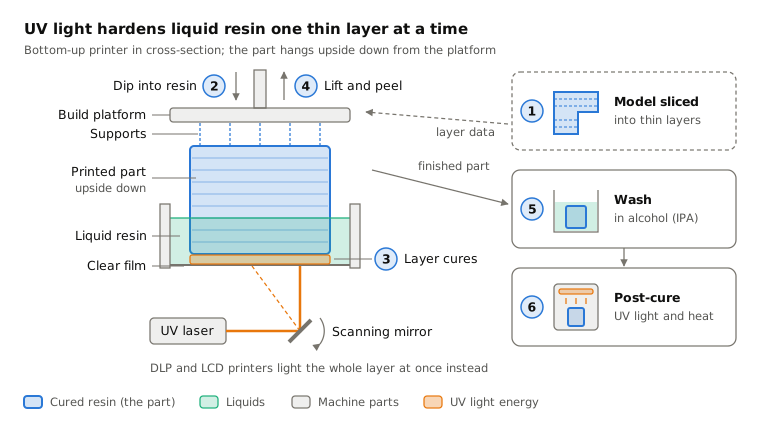
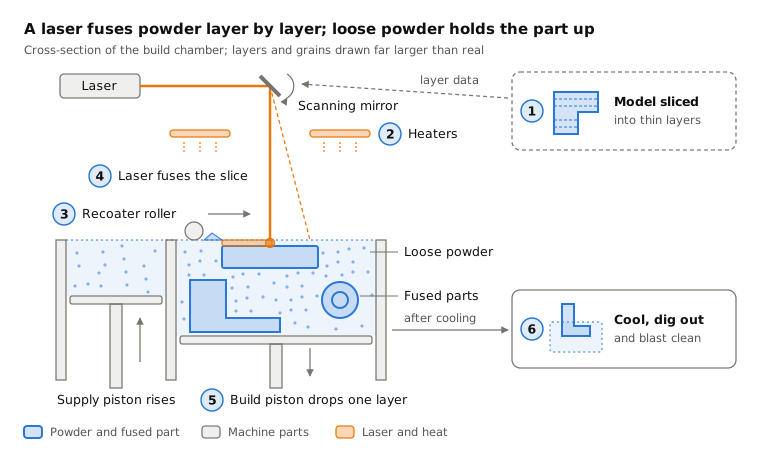
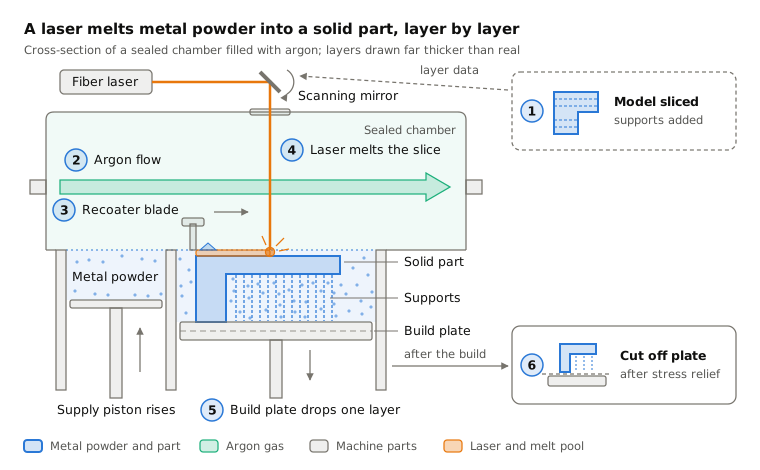
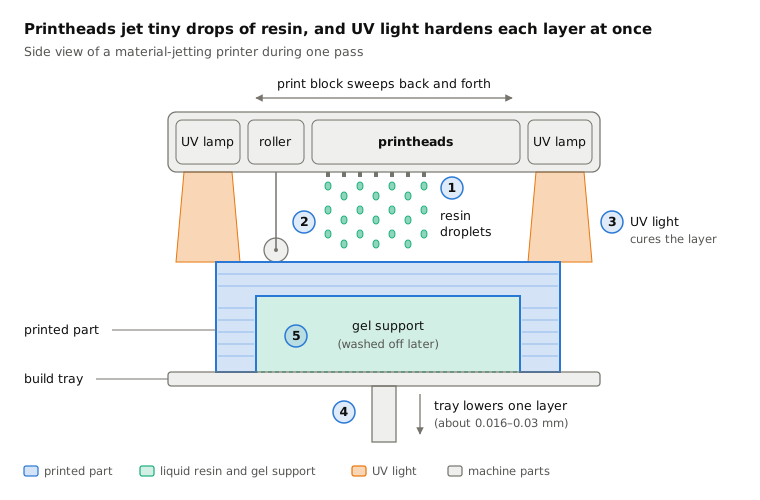
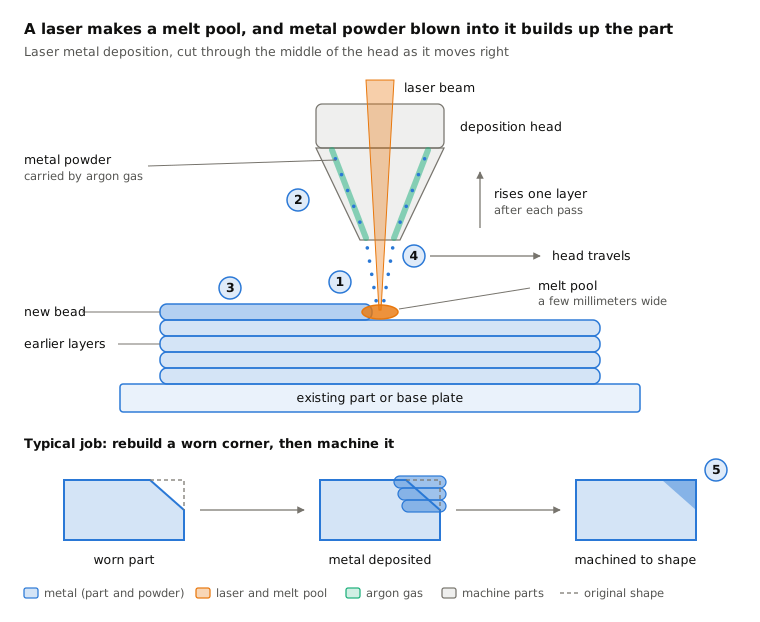
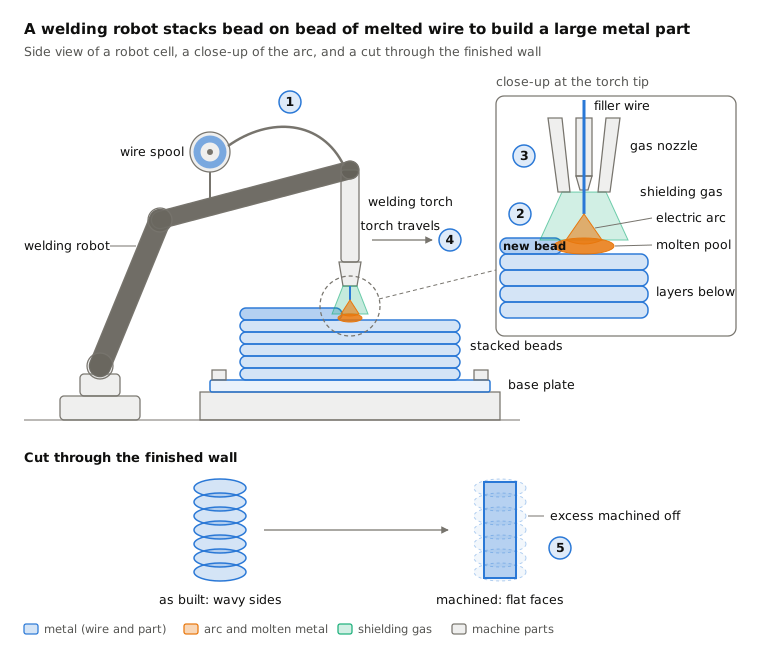
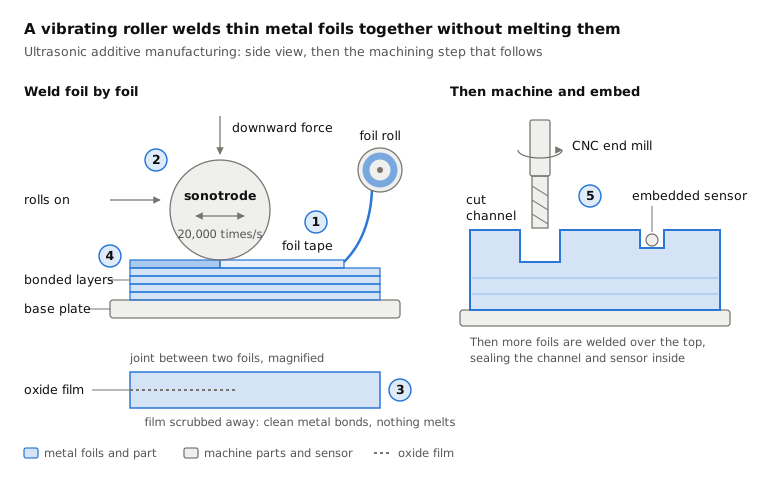
Additive manufacturing, better known as 3D printing, builds a part by adding material only where it is needed, usually one thin layer at a time, straight from a computer model. No mold, die or cutting tool is shaped…
Powders and ceramics
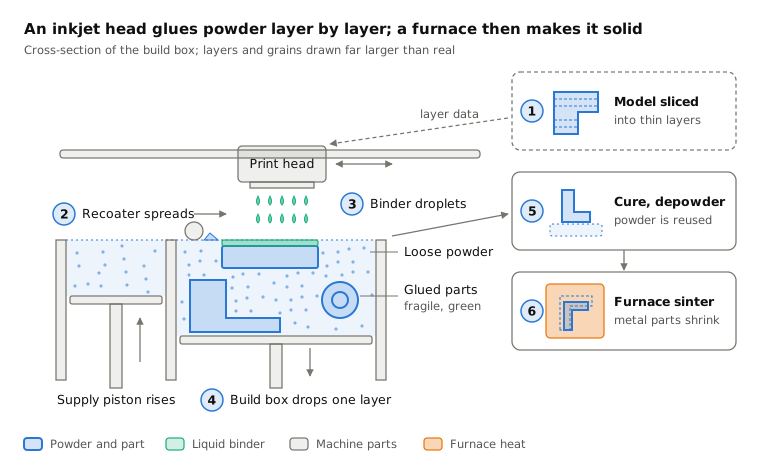
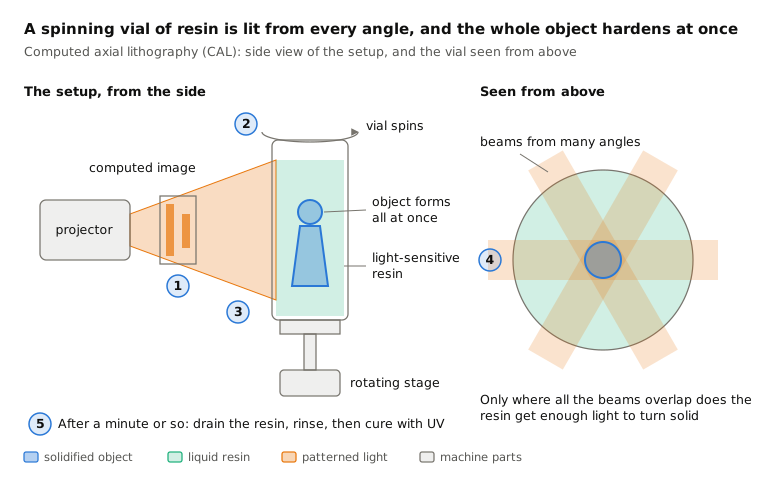
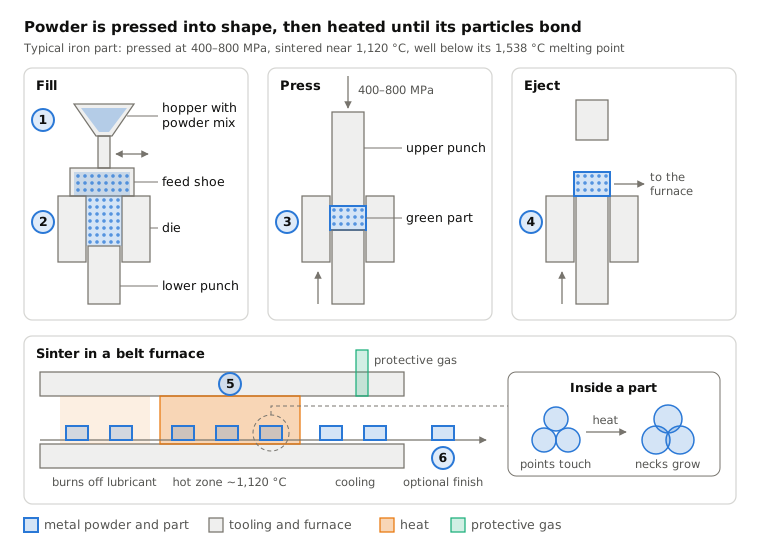
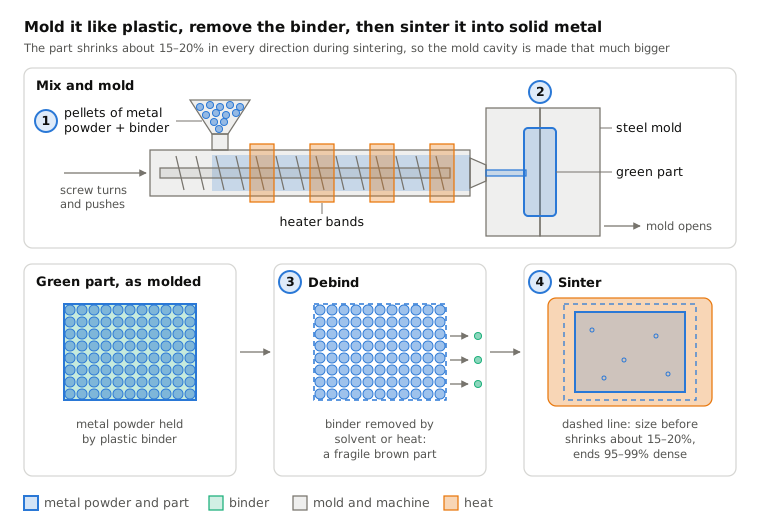
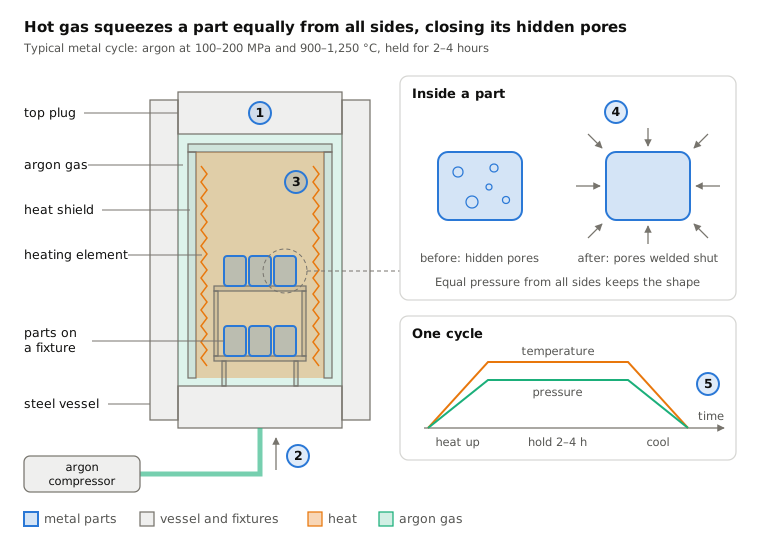
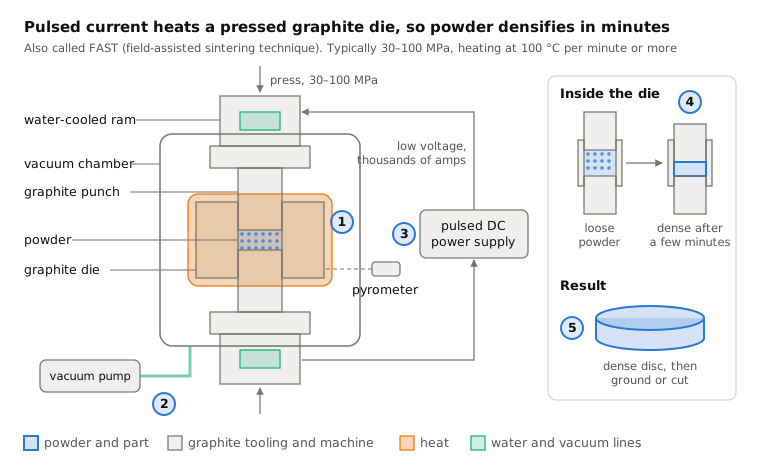
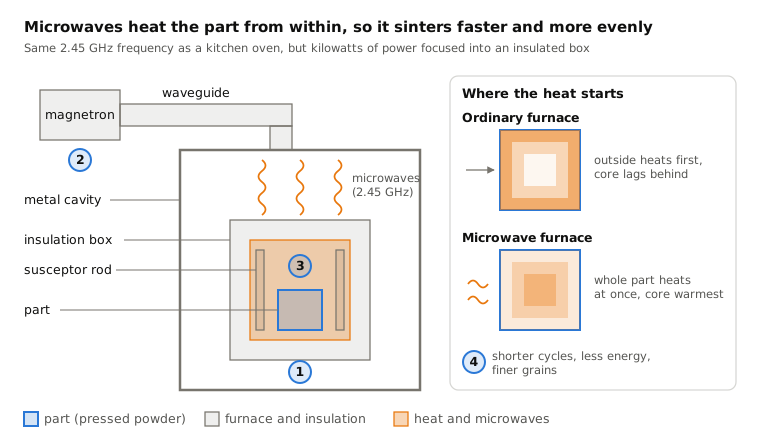
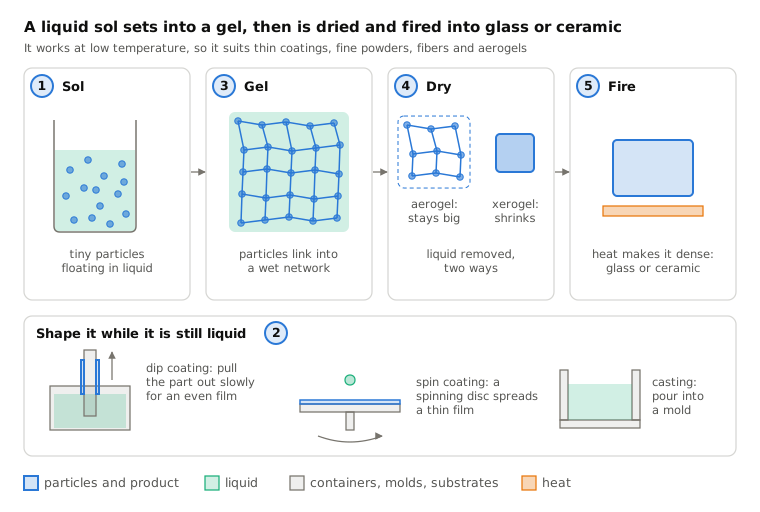
These processes build solid parts from powders or liquids instead of melting metal or cutting a block. They all rely on sintering: heating packed particles below their melting point until they bond into one solid. What…
Composites
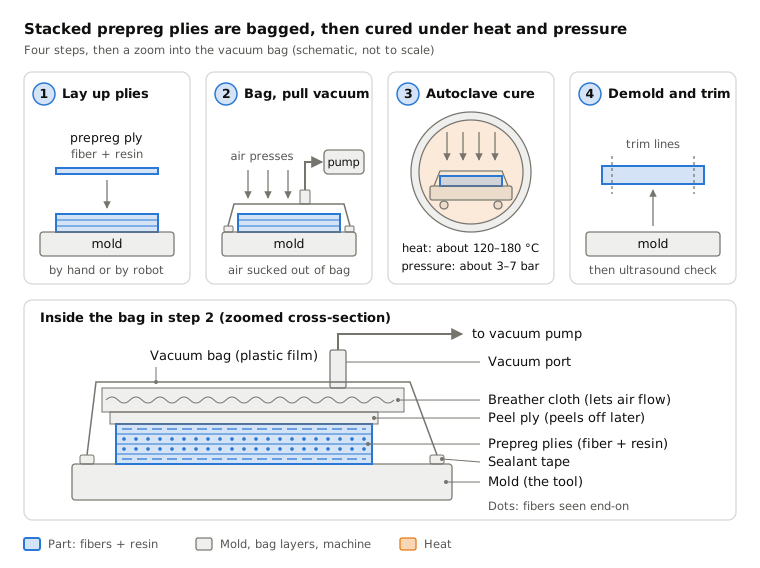
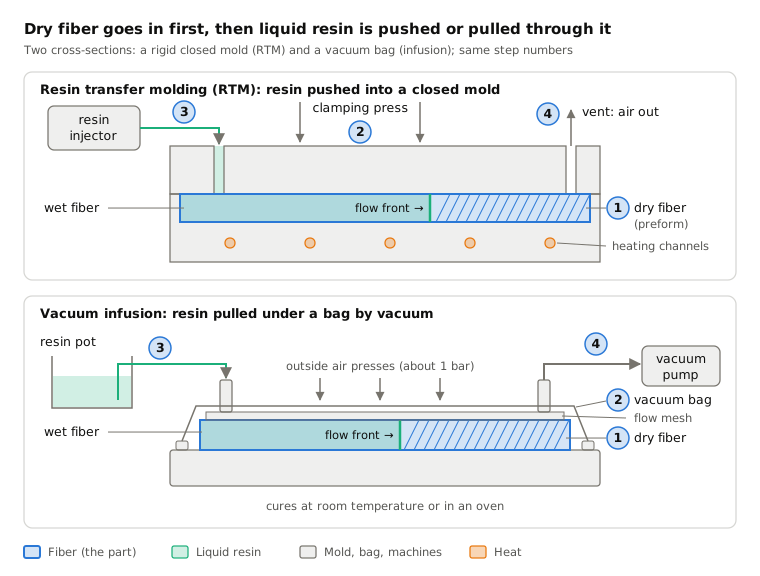
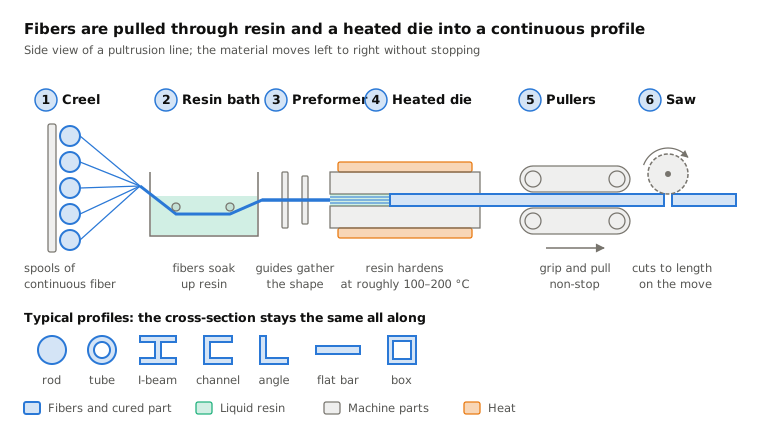
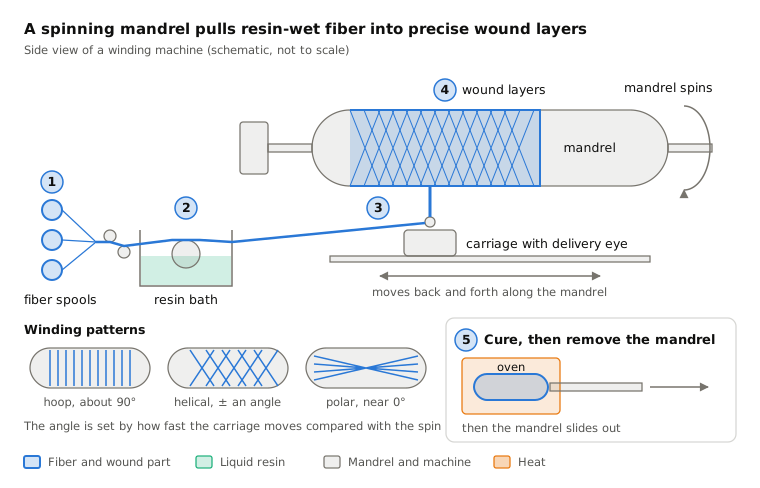
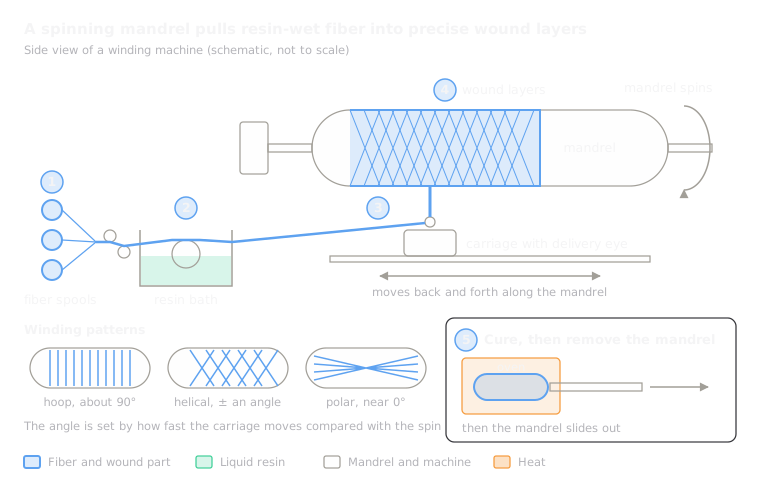
Composites combine strong fibers (glass, carbon or aramid) with a resin that holds them in place and hardens. The four processes in this chapter differ in how the fibers are placed and how the resin gets to them. Each…
Coatings and surface finishing
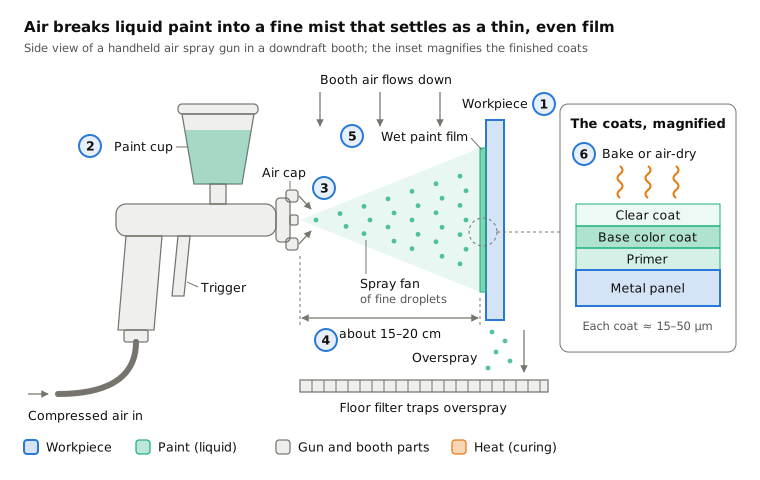
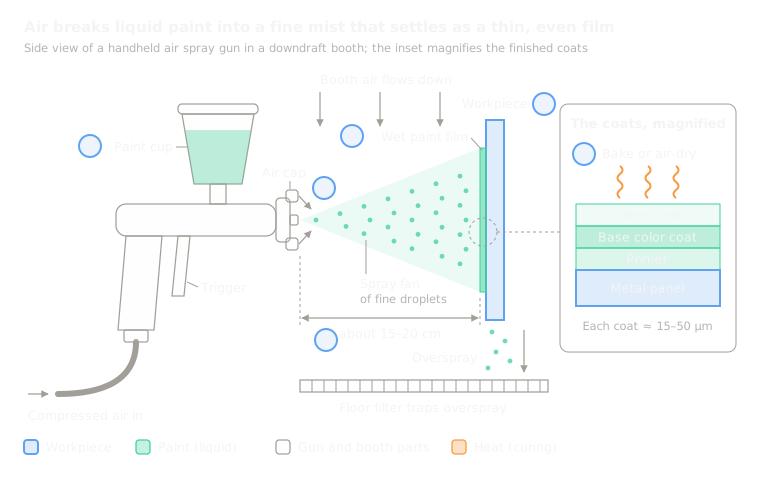
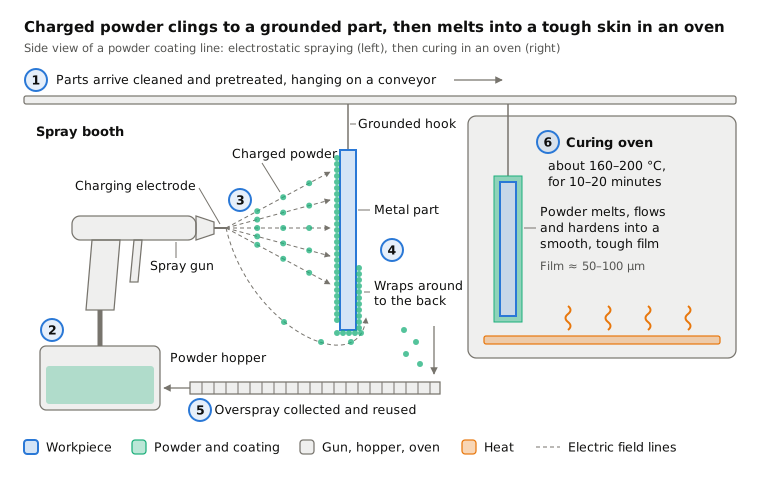
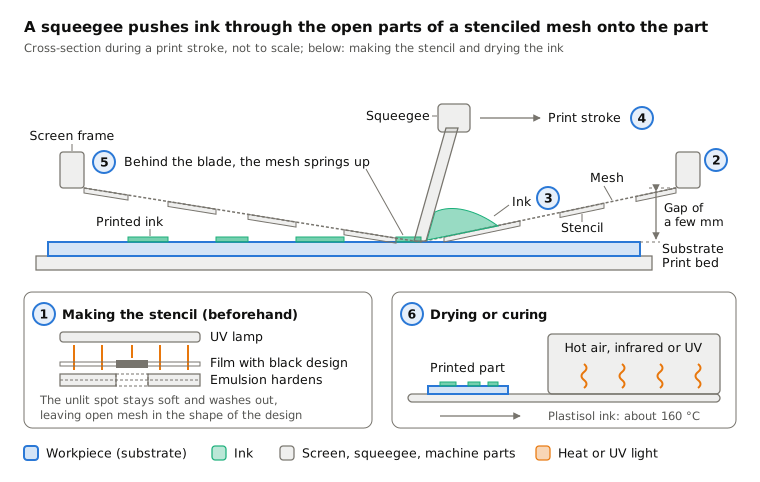
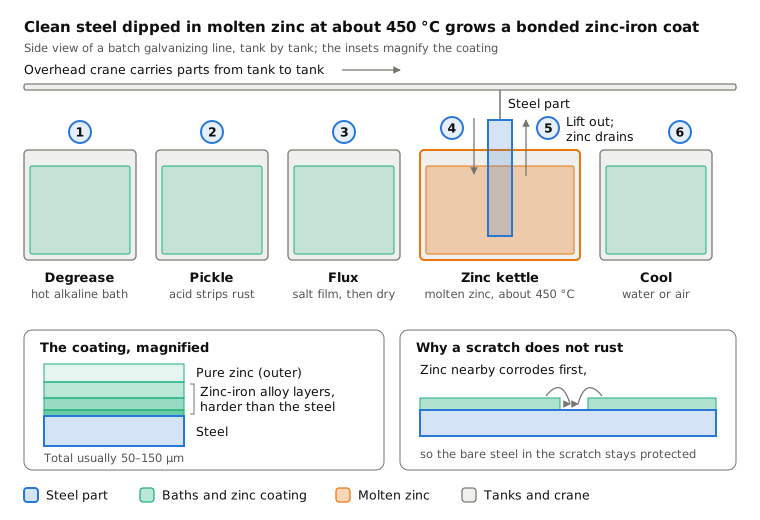
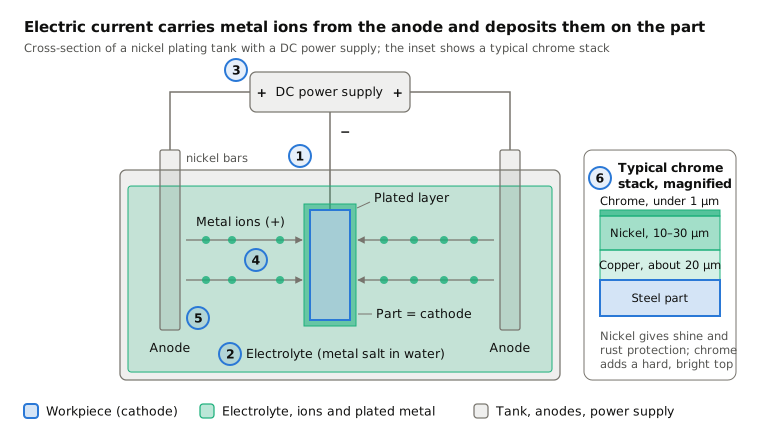
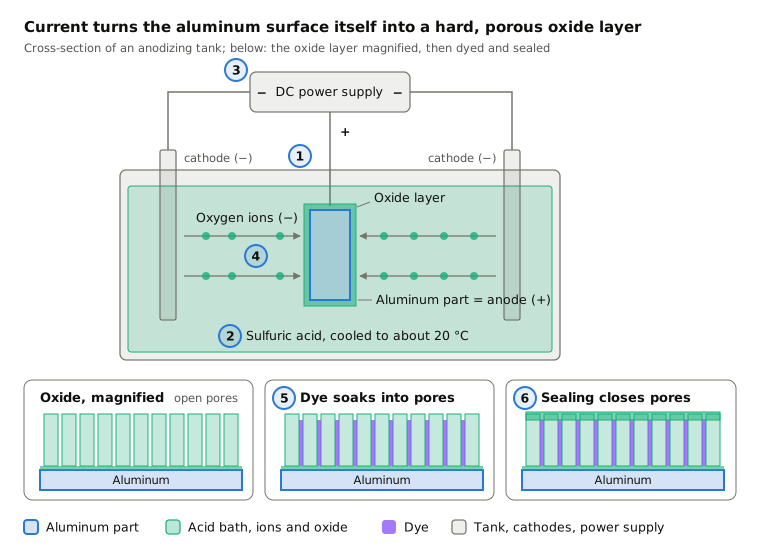
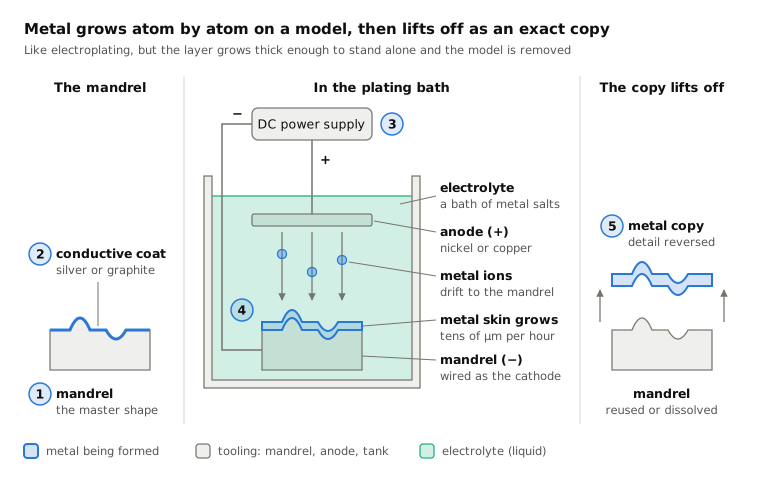
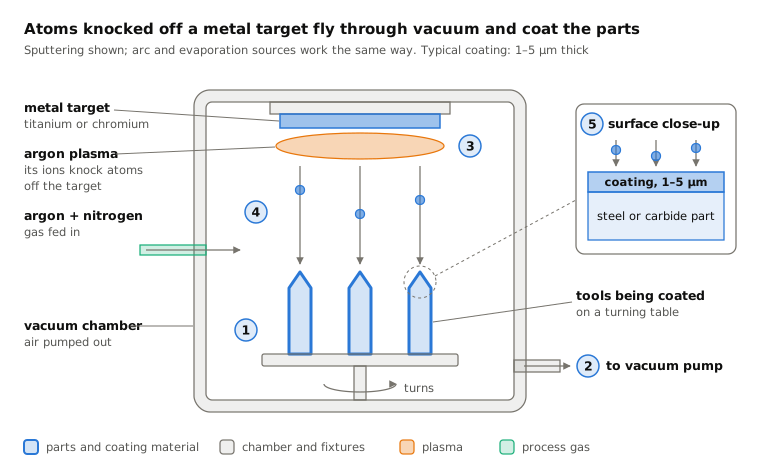
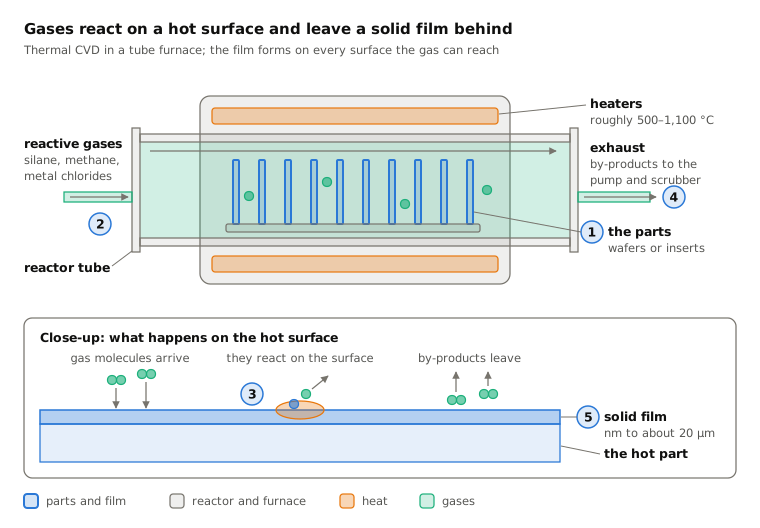
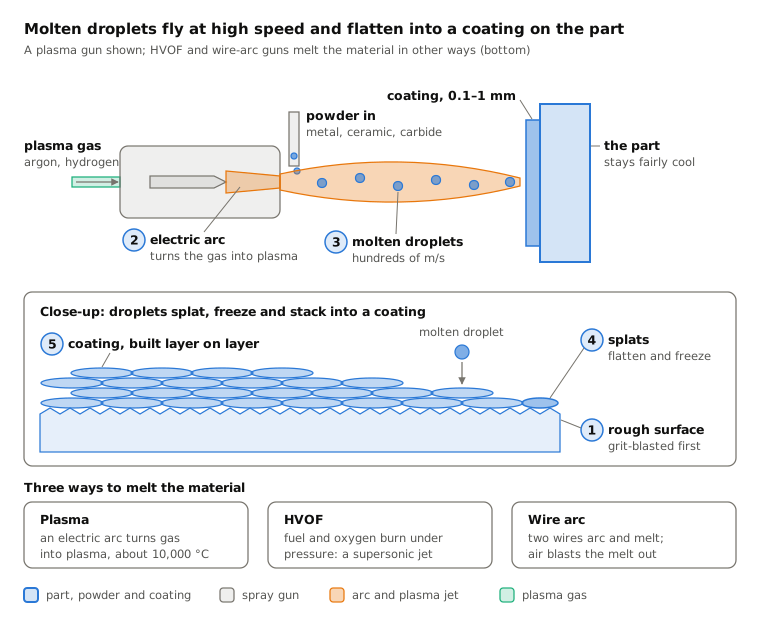
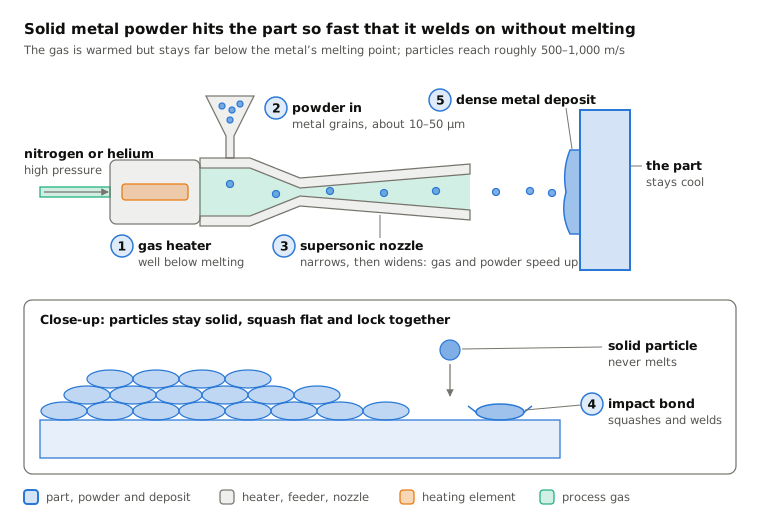
Coatings add a thin layer on top of a finished part to protect it, harden it or give it color, without changing its shape. Every process in this chapter answers two questions: how does the layer form, and how thick…
Heat treatment and surface hardening
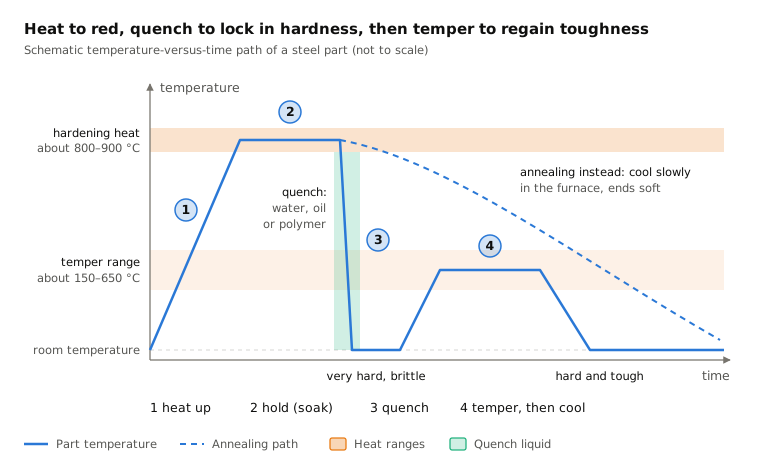
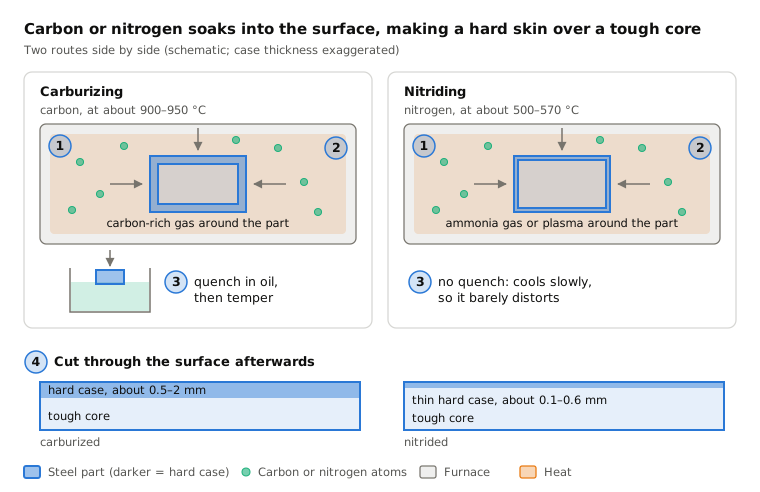
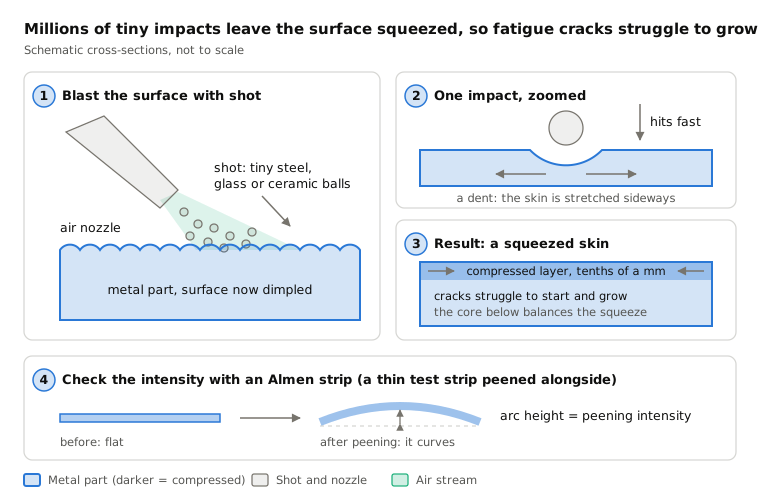
These processes change what a finished metal part can do, not its shape. Controlled heating and cooling, atoms soaked into the surface, or millions of tiny impacts make parts harder, tougher or longer-lasting under…
Micro- and nanofabrication
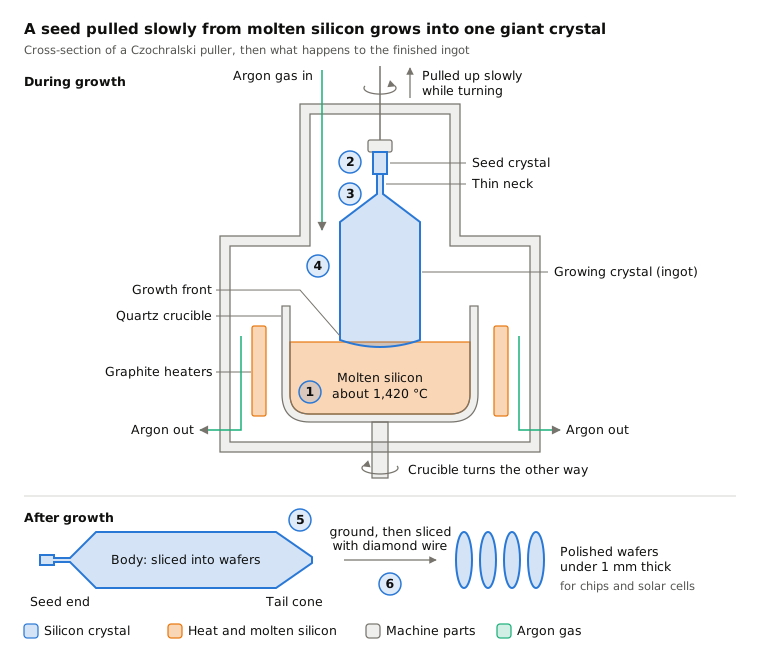
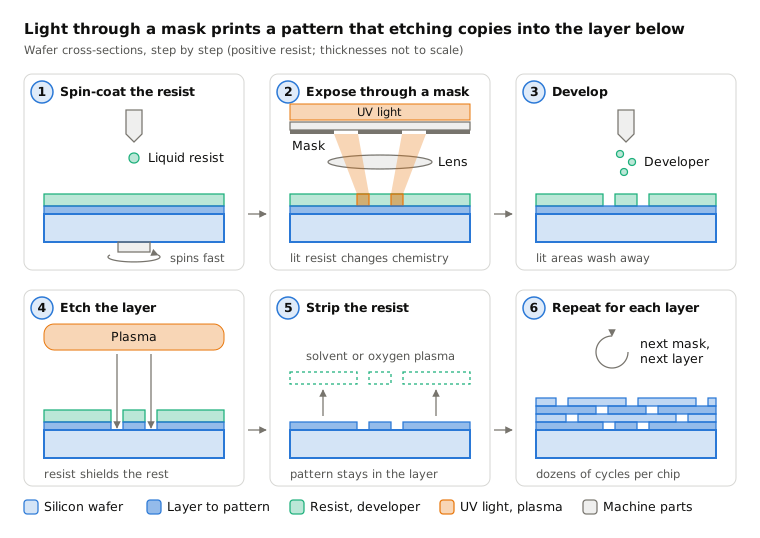
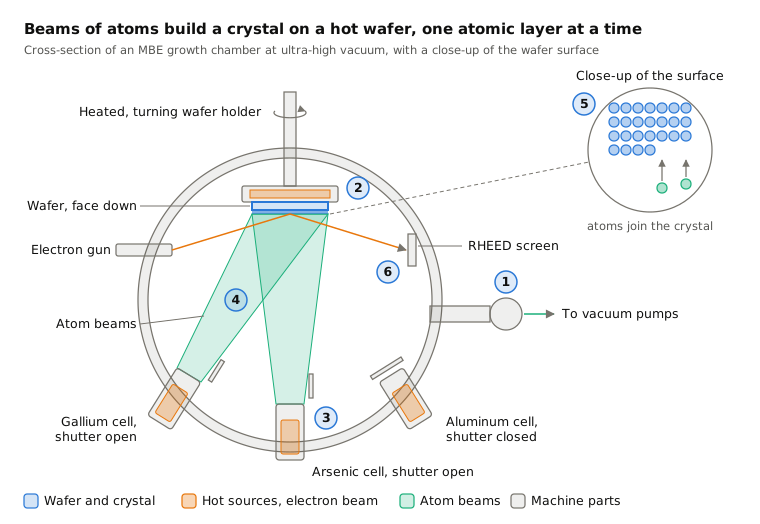
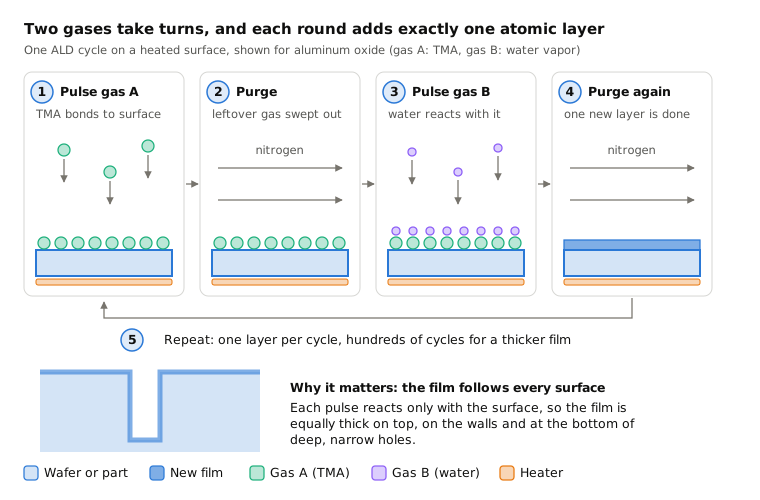
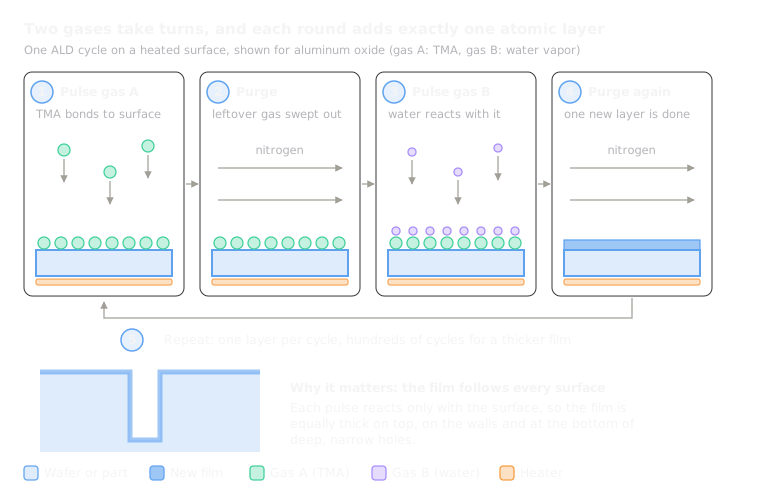
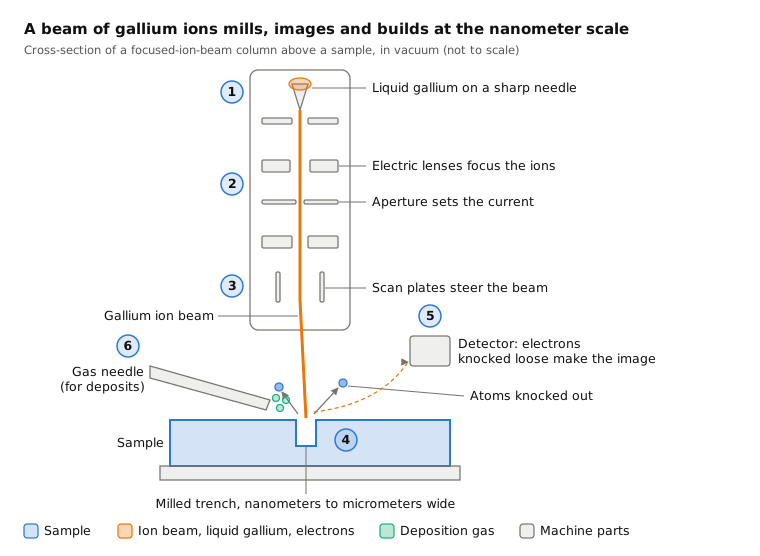
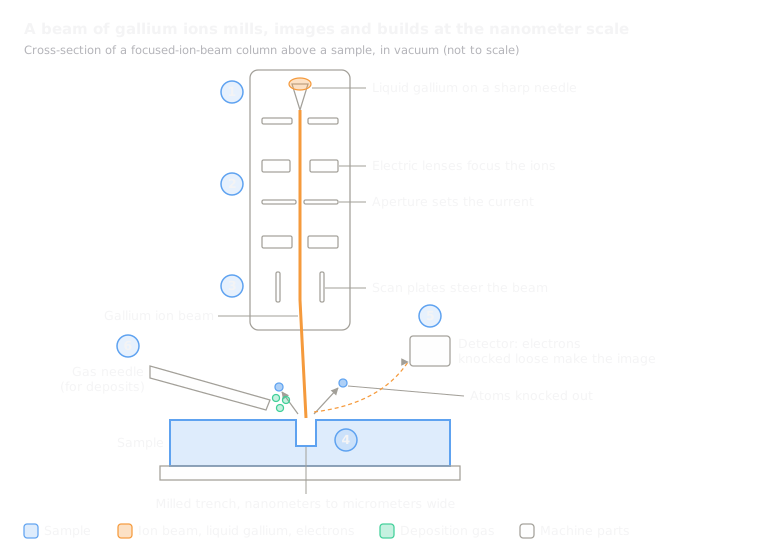
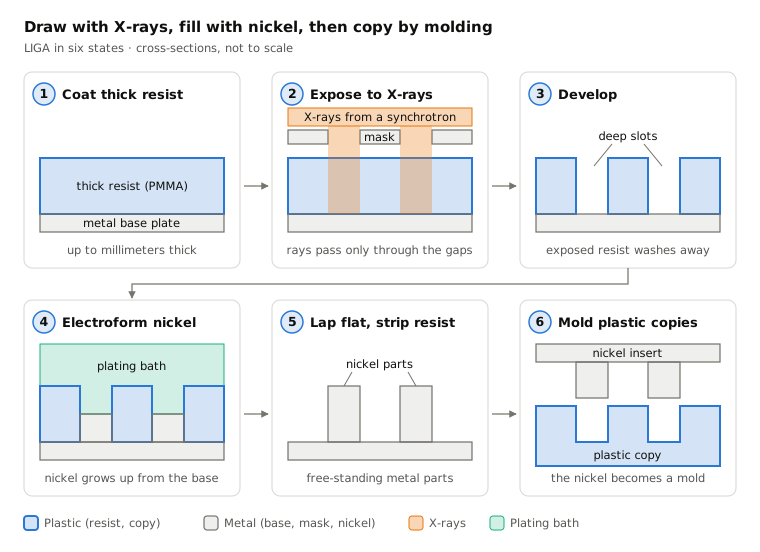
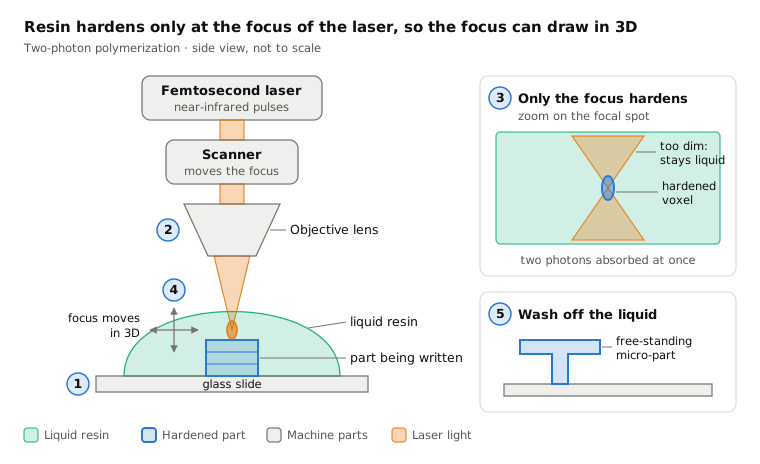
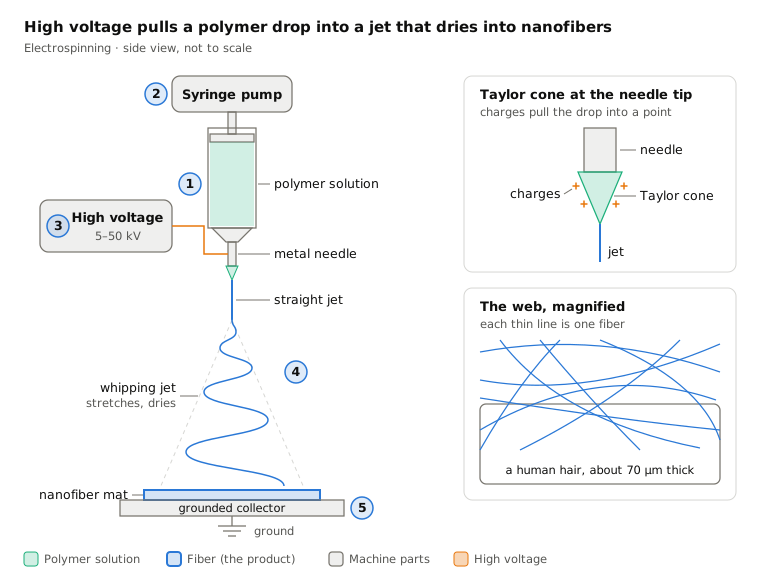
Micro- and nanofabrication makes structures far smaller than a hair: the transistors in a chip, the gears of a watch, the fibers in a filter. Instead of cutting or squeezing bulk material, these processes grow, draw,…
Try it
Put AI to work in your CAD.
Model parts, generate drawings and automate the repetitive work inside your CAD software.