

Femtosecond laser machining
Removes material with ultrashort laser pulses, without melting
Femtosecond laser machining cuts, drills and textures material with laser flashes lasting less than a trillionth of a second. Each flash vaporizes a thin layer before heat can spread, so edges come out clean instead of melted. Makers of heart stents, phone cover glass and fuel injectors use it where even slight heat damage matters.
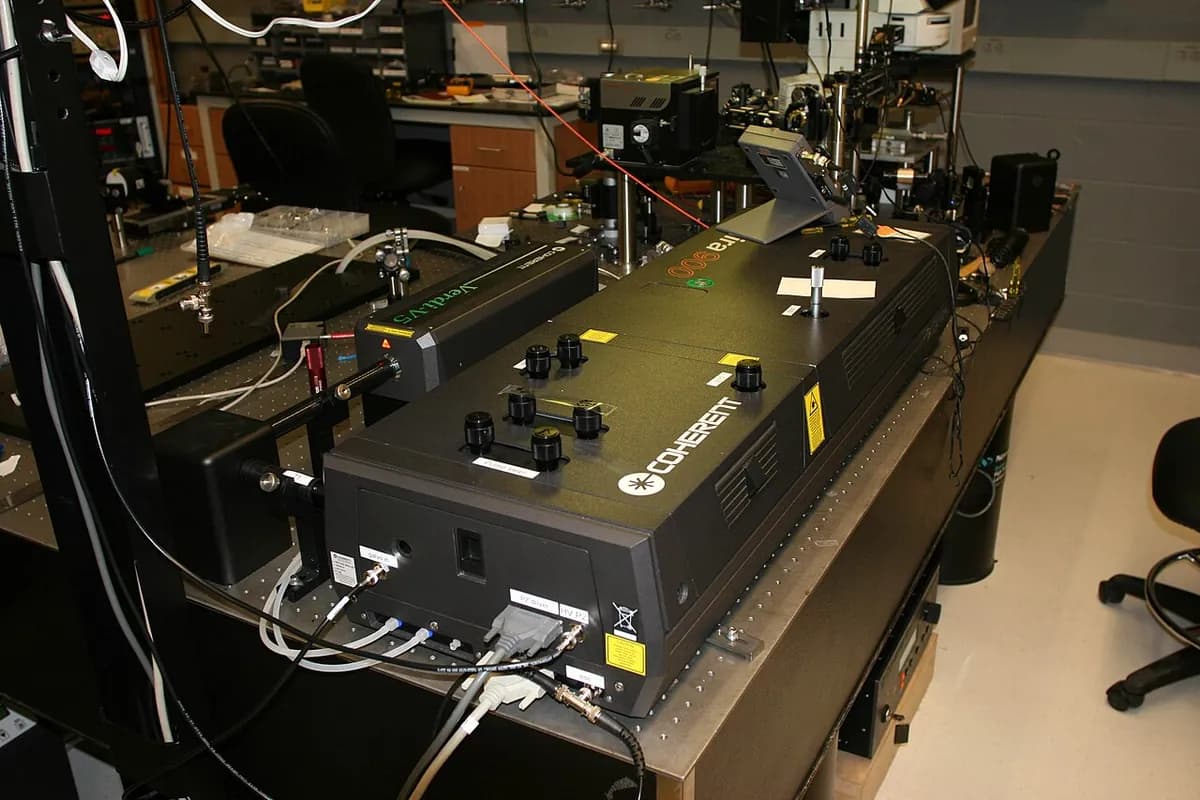
How it works
Make ultrashort pulses. An oscillator (the laser's pulse-making core) emits a steady train of weak pulses. Each lasts tens to hundreds of femtoseconds (a femtosecond is a millionth of a billionth of a second).
Amplify them. An amplifier stretches each pulse, boosts its energy, then squeezes it short again. This trick, chirped pulse amplification, won the 2018 Nobel Prize in Physics.
Aim and focus. A scanner (two fast-turning mirrors) steers the beam. A lens focuses it to a spot a few microns wide (a micron, or µm, is a thousandth of a millimeter).
Cold ablation. The pulse dumps its energy faster than atoms can pass heat to their neighbors. A thin layer is ablated, meaning blasted off as vapor and plasma (hot, charged gas), with almost no melting.
Scan the path. Hundreds of thousands of pulses per second or more trace the programmed path, layer by layer, to cut, drill or texture. Focused inside clear glass, the pulses can even write channels without touching the surface.
Key facts
- Materials
- Almost anything: steel, titanium, nitinol (a shape-memory alloy), glass, sapphire, ceramics, polymers, even eye tissue
- Typical parts
- Heart stents, micro-holes in fuel injectors and circuit boards, cutouts in phone cover glass, textured surfaces
- Part size
- Features from about 1 µm to millimeters; parts usually small or thin (tubes, sheets, foils)
- Precision
- Typically a few microns; features down to about 1 µm
- Surface finish
- Clean, burr-free edges with almost no heat-affected zone (the band of material altered by heat)
- Batch size it suits
- Prototypes to large series of high-value parts (stents, phone glass, battery foils)
- Tooling and machine cost
- No tooling; a laser workstation typically costs several hundred thousand dollars
- Speed
- Hundreds of thousands of pulses per second, yet slow bulk removal: typically cubic millimeters per minute
Strengths and limits
Strengths
- Almost no heat damage: no burrs, melted rims or cracks
- Works on glass, sapphire, ceramics and heat-sensitive plastics
- Micron-scale detail, with no tool contact and no tool wear
- Can modify the inside of glass without touching its surface
Limits
- Removes material slowly compared with conventional lasers
- Laser sources are expensive and complex
- Tuning pulse energy, rate and overlap is delicate
- Suits small parts and thin sections; fumes need extraction
Where it's used
- Medical devicesCoronary stents, catheters, micro-needles
- Consumer electronicsPhone cover glass, sapphire camera covers, display cutouts
- ElectronicsMicro-vias (tiny holes linking circuit-board layers), wafer dicing
- BatteriesCutting and structuring electrode foils
- Eye surgeryCorneal flaps for LASIK, steps of cataract surgery
- Automotive and aerospaceFuel-injector holes, cooling holes, friction-reducing surface textures
How to recognize it
- Usually you can't: the features are microns wide and end up hidden inside stents, phones, circuit boards and engines.
- Cut edges on glass or metal that look perfectly clean, with no burn color, no burr and no beads of re-solidified metal.
- Under a magnifier, crisp round micro-holes, often slightly tapered (wider on the side the laser entered).
- Laser-textured metal that shimmers with rainbow colors: the pulses leave ripples fine enough to split light into colors.
Compare with
Watch it
SME Media · A plain overview of what ultrashort pulses can do
CMS Laser · Cutting stent-like patterns from thin metal tubes
Spectra-Physics an MKS Brand · Close-ups of clean micro-cuts and holes
TRUMPFtube · Drilling circuit boards at production speed
See real photos
- Wikipedia: Laser ablation — how pulsed lasers remove material; few photos
- Wikipedia: Ultrashort pulse — what femtosecond pulses are and how they are made
- Wikimedia Commons photo search
Remember
- Pulses shorter than the time heat needs to spread remove material without melting it.
- It machines almost any material, glass and tissue included, with micron detail.
- The price is costly lasers and slow removal, so it suits small, high-value parts.
More in Micro- and nanofabrication
All 100 processes
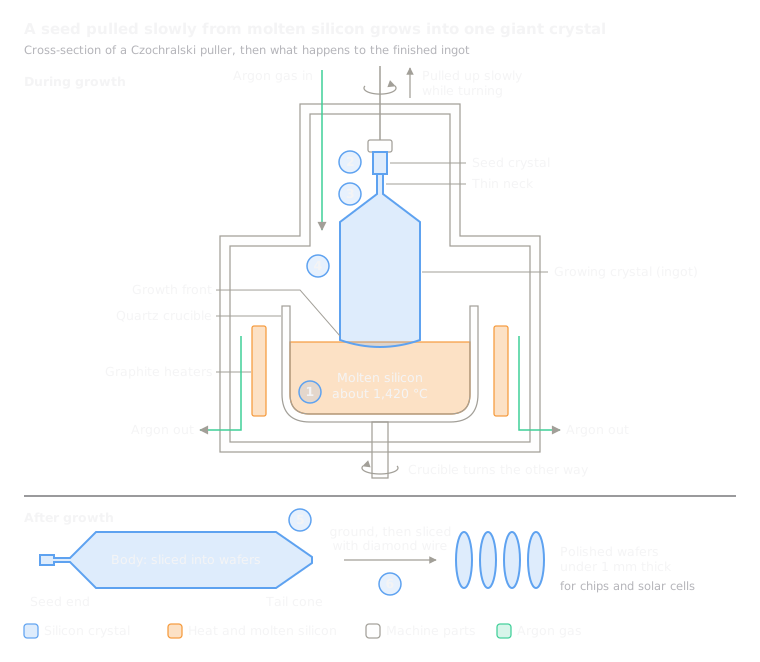 13.1Czochralski crystal growth (silicon wafers)Pulls a giant single crystal of silicon slowly out of a meltOpen the lesson
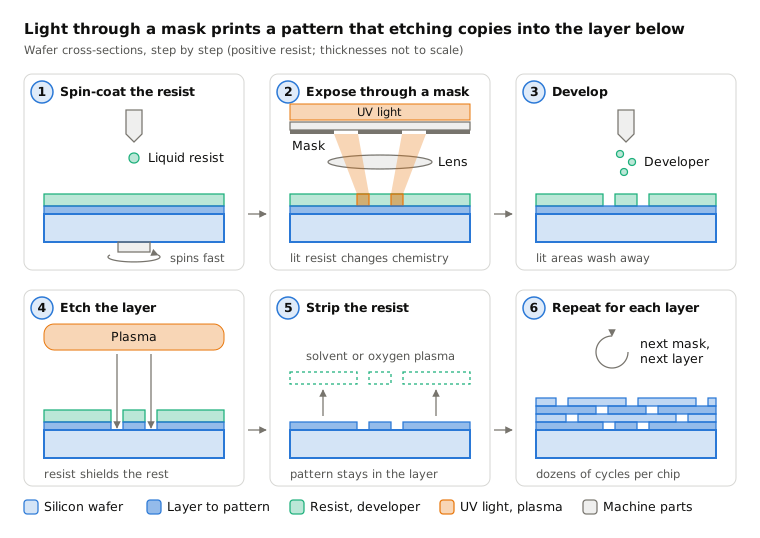
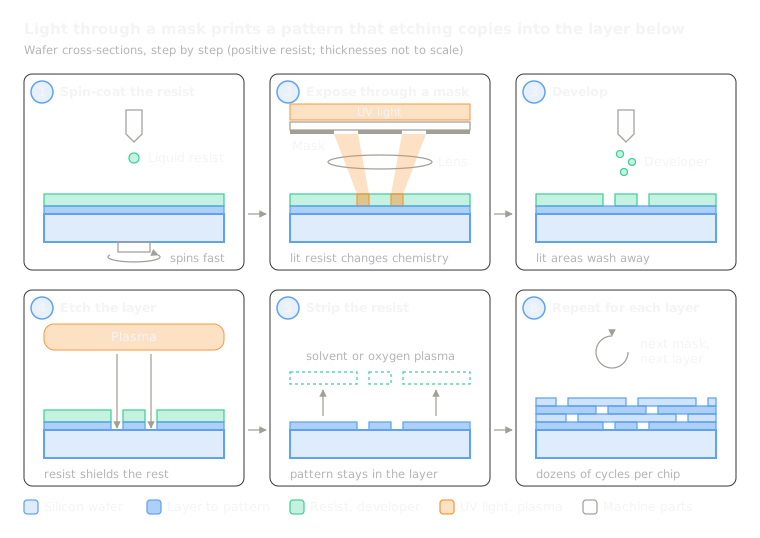 13.2PhotolithographyProjects a pattern with light onto a light-sensitive coating, then etches itOpen the lesson
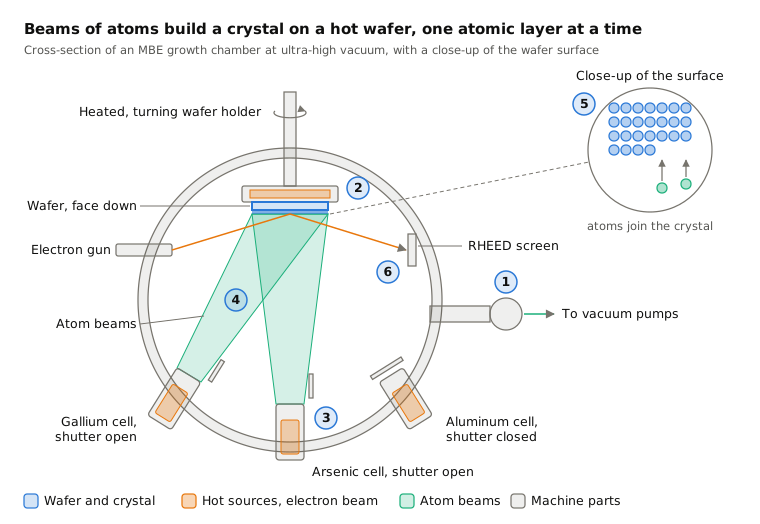
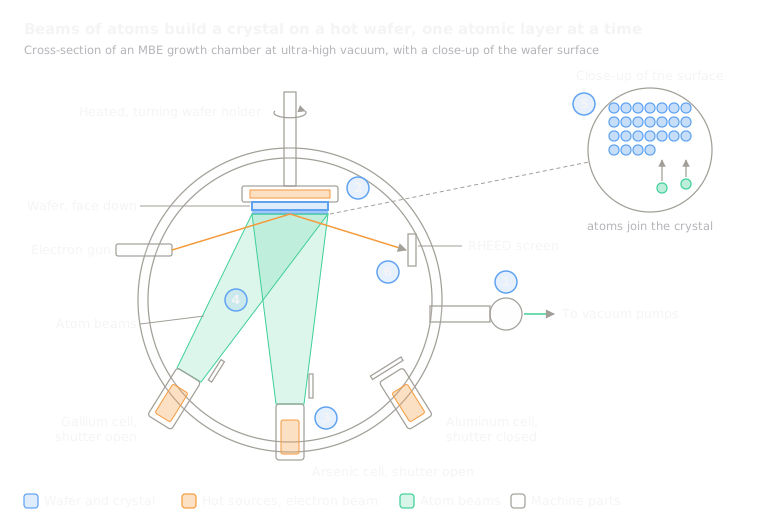 13.3Molecular beam epitaxy (MBE)Grows a crystal one atomic layer at a time from beams in ultra-high vacuumOpen the lesson
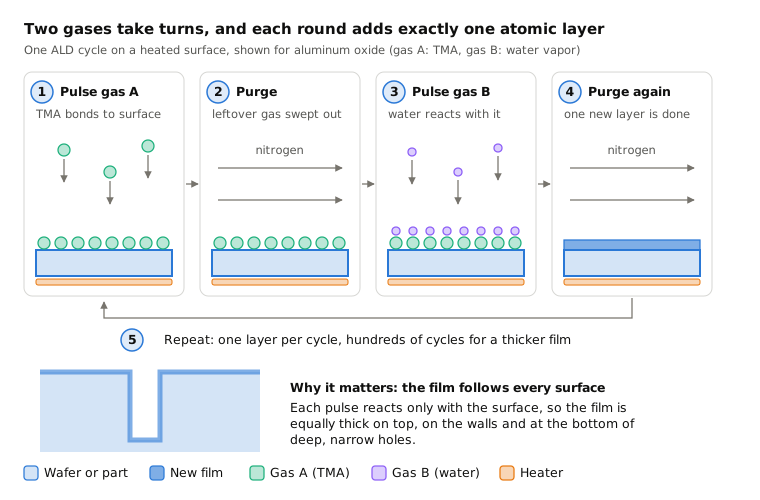
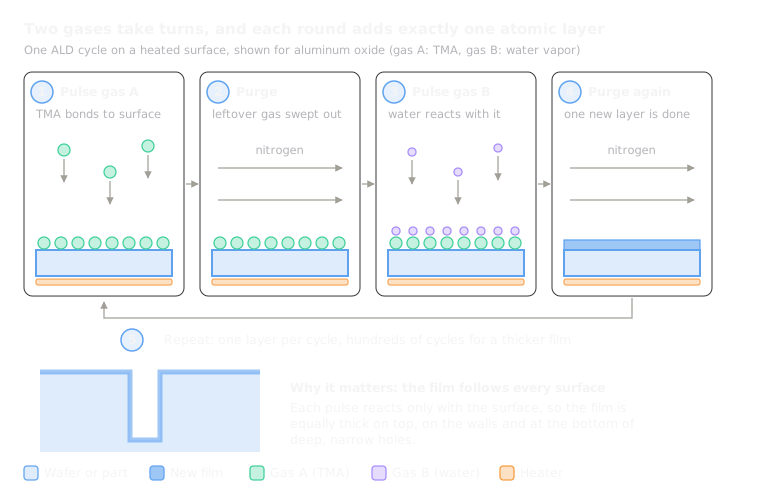 13.4Atomic layer deposition (ALD)Coats a surface one atomic layer per cycle with alternating gasesOpen the lesson
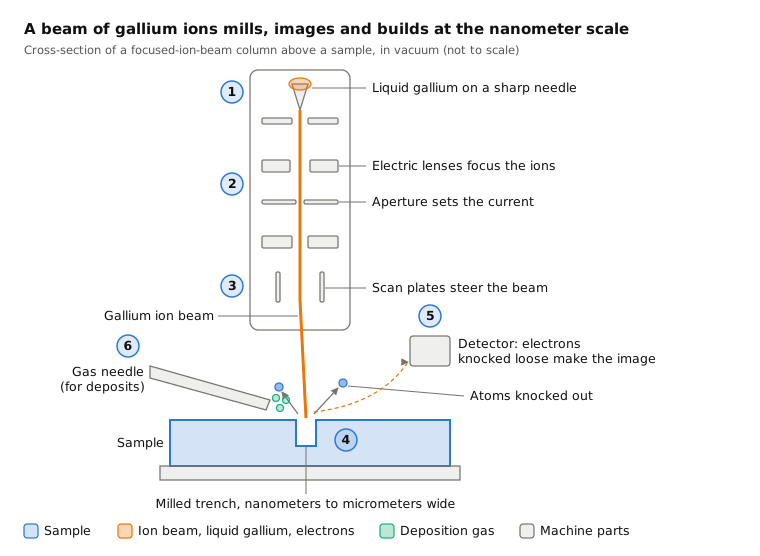
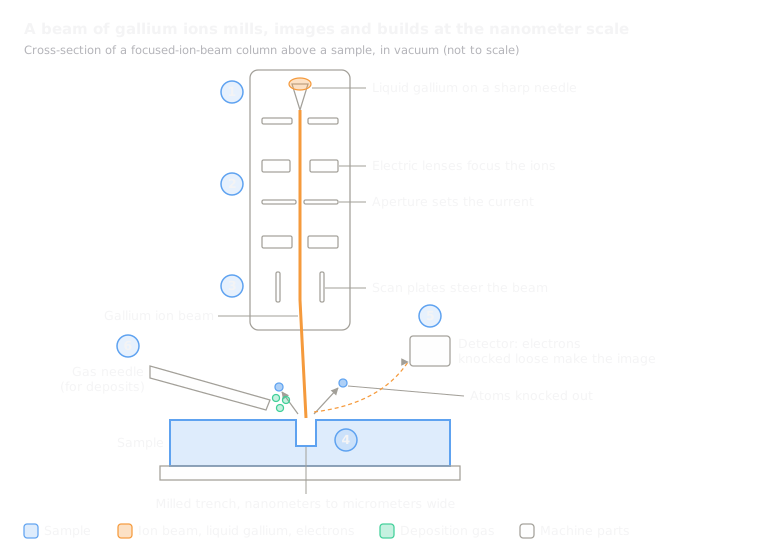 13.5Focused ion beam (FIB)Mills or adds material with a beam of ions under a microscopeOpen the lesson
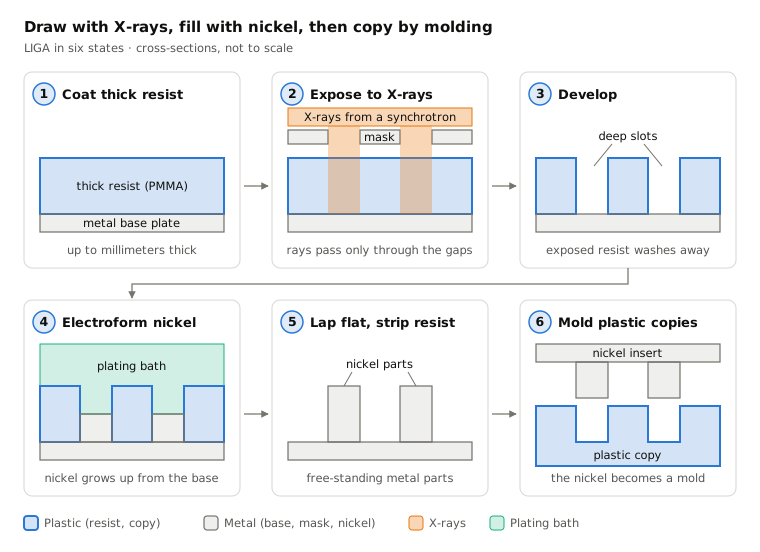
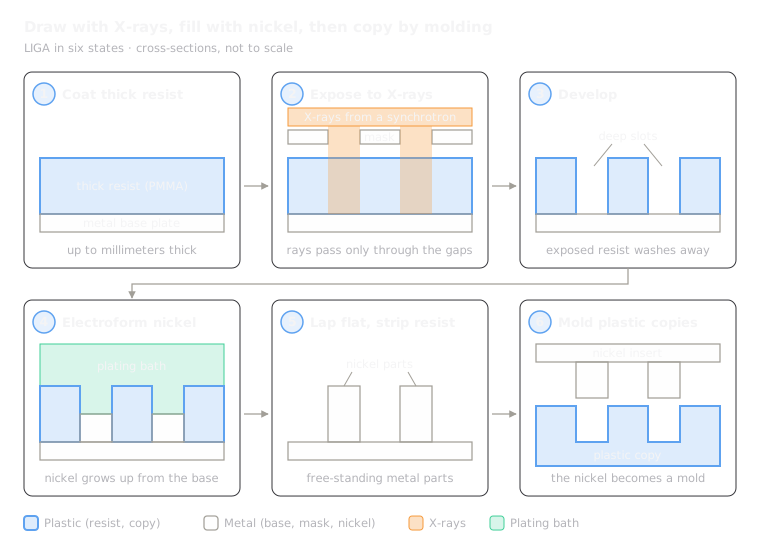 13.7LIGADraws deep slots with X-rays or UV, fills them with nickel, then molds copiesOpen the lesson
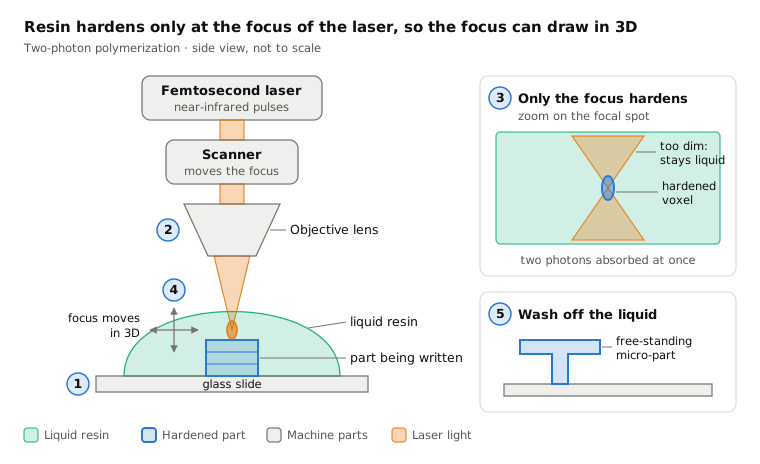
 13.8Two-photon polymerizationHardens resin only at a laser focus to print 3D micro-partsOpen the lesson
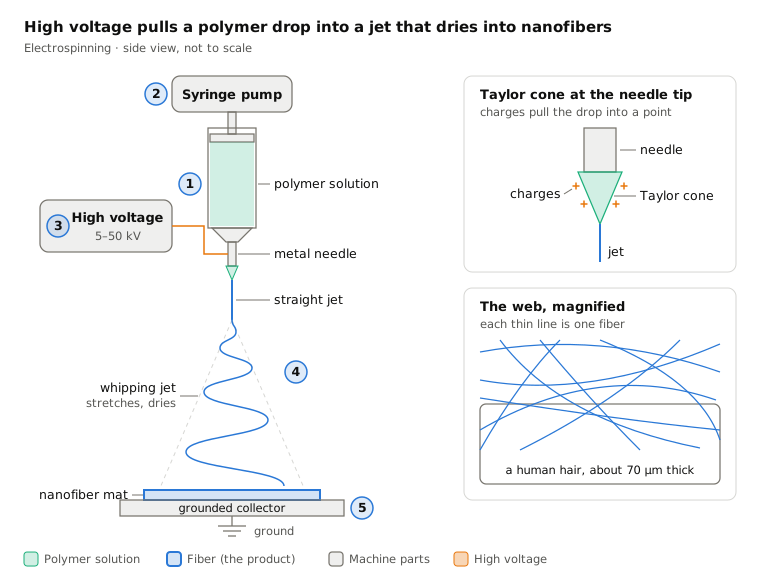
 13.9ElectrospinningPulls a polymer jet into nanofibers with high voltageOpen the lesson
Try it
Put AI to work in your CAD.
Model parts, generate drawings and automate the repetitive work inside your CAD software.