

LIGA
Draws deep slots with X-rays or UV, fills them with nickel, then molds copies
LIGA makes tiny metal parts with tall, perfectly straight walls, such as the gears and springs inside some mechanical watches. Its name abbreviates the German words for lithography (drawing a pattern with light), electroplating and molding, the three steps it chains together. It reaches shapes too small and too deep for any cutting tool.
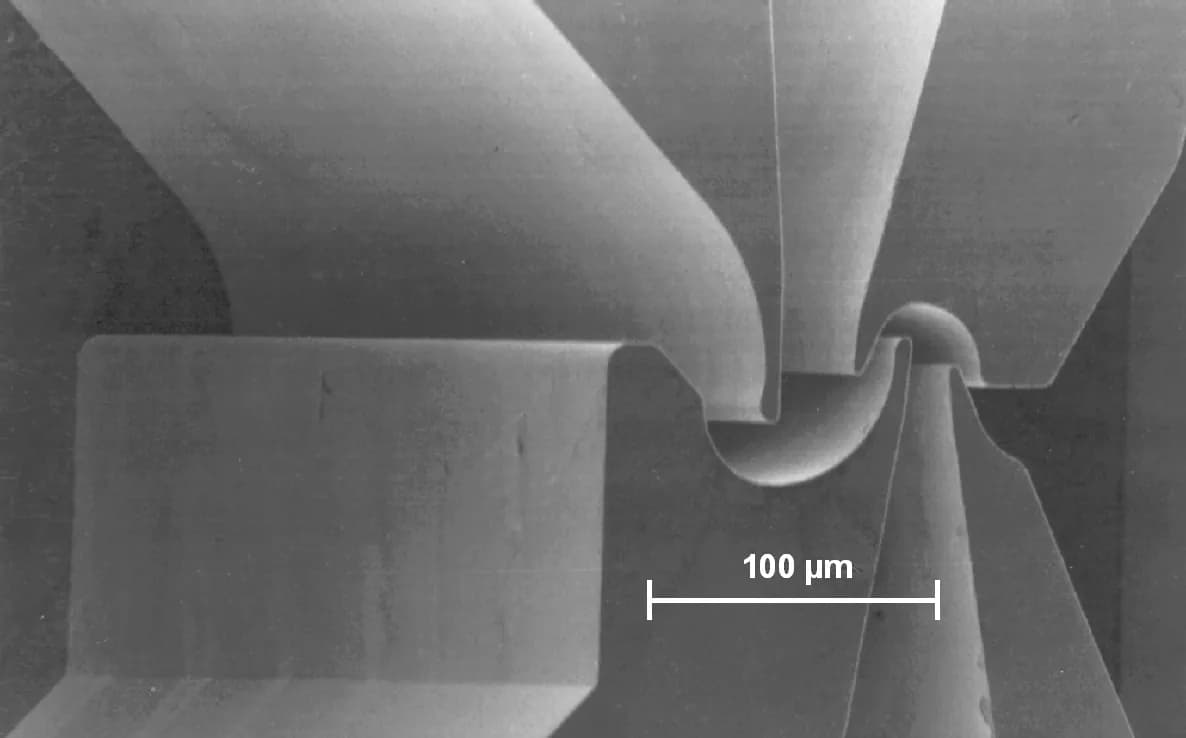
How it works
Coat a thick resist. A layer of resist, a plastic that light can change chemically, is bonded to a metal base plate. Common resists are PMMA (acrylic) and SU-8 (an epoxy), up to millimeters thick.
Expose. Parallel X-rays from a synchrotron (a ring-shaped particle accelerator that emits intense light), or UV light in the cheaper UV-LIGA, shine through a mask. Gold patches on the mask block the rays; where they pass, the resist changes all the way down, which can take hours.
Develop. A chemical bath dissolves the exposed resist. Deep slots remain, with near-vertical, mirror-smooth walls.
Electroform. In a plating bath, electric current deposits nickel onto the bare base plate at the bottom of each slot. The metal grows upward and fills the slots atom by atom, often over many hours.
Lap and strip. The top is lapped (ground flat with fine abrasive), then the leftover resist is dissolved. Free-standing metal parts remain, or a metal mold insert if they stay joined.
Mold copies (optional). The nickel insert serves as a mold for injection molding or hot embossing (pressing it into softened plastic). It can make thousands of cheap plastic replicas.
Key facts
- Materials
- Resist: PMMA or SU-8; metal: nickel, nickel alloys, copper, gold; copies in plastics or ceramics
- Typical parts
- Watch gears and springs, micro-gears, nozzles, comb drives for MEMS, molds for microfluidic chips
- Part size
- Features of a few microns; heights from tens of microns to millimeters; parts usually millimeters across
- Precision
- Sub-micron accuracy side to side; height-to-width ratios up to about 100:1 with X-rays
- Surface finish
- Very smooth, near-vertical, mirror-like side walls
- Batch size it suits
- Metal parts in small to medium series; molded plastic copies in large series
- Tooling and machine cost
- X-ray LIGA needs rare, costly synchrotron time; UV-LIGA uses ordinary UV lamps and is far cheaper; plus masks and plating baths
- Speed
- Slow: exposure and plating each take hours, but one plate carries many parts at once
Strengths and limits
Strengths
- Very tall, thin walls that stay near-vertical and smooth
- Sub-micron precision on parts millimeters tall
- Solid metal parts, not just thin coatings
- A metal mold makes cheap plastic copies
Limits
- The X-ray version needs a synchrotron: rare and expensive
- Long exposure and plating times
- Only 2.5D shapes (a flat outline extruded straight up), no undercuts
- UV-LIGA is cheaper but less tall and less precise
Where it's used
- WatchmakingEscape wheels, anchors, springs, hands (UV-LIGA nickel parts)
- MEMS (micro-electro-mechanical systems, tiny machines on chips)Micro-gears, actuators, comb drives, optical switches
- MedicalMicro-needles, molds for microfluidic test cards, hearing-aid parts
- Optics and X-rayX-ray lenses, micro-spectrometer molds, gratings
- ElectronicsMicro-connectors, probe needles for testing chips
- Energy (historic)Separation nozzles for uranium enrichment, the 1980s origin of LIGA
How to recognize it
- You will rarely see LIGA parts: they sit hidden inside mechanical watches, chip-testing probe cards and microfluidic devices.
- A tiny metal gear or spring with walls so straight and shiny they look polished, thinner than a hair in places.
- The same outline from top to bottom, with sharp inside corners and no draft (the slight taper most molded parts need).
- Molded LIGA copies: clear plastic chips with micro-channels or tiny pillars, visible only under a magnifier.
Compare with
Watch it
Support Center for Microsystems Education · An animated walk through each LIGA step
sylmandcls · A real X-ray lithography beamline at a synchrotron
Mimotec SA · How a Swiss maker produces UV-LIGA watch parts
Tech Ed · Where LIGA fits among other ways to make micro-machines
See real photos
- Wikipedia: LIGA — photos of a uranium-enrichment nozzle, an optical switch, a micro-spectrometer mold and X-ray lenses
- Wikimedia Commons photo search
Remember
- LIGA: draw deep slots with X-rays or UV, fill them with nickel, then optionally mold copies.
- It makes tall, straight-walled micro-parts that no cutting tool can reach.
- X-ray LIGA is the most precise but needs a synchrotron; UV-LIGA is the cheaper workhorse of watchmaking.
More in Micro- and nanofabrication
All 100 processes
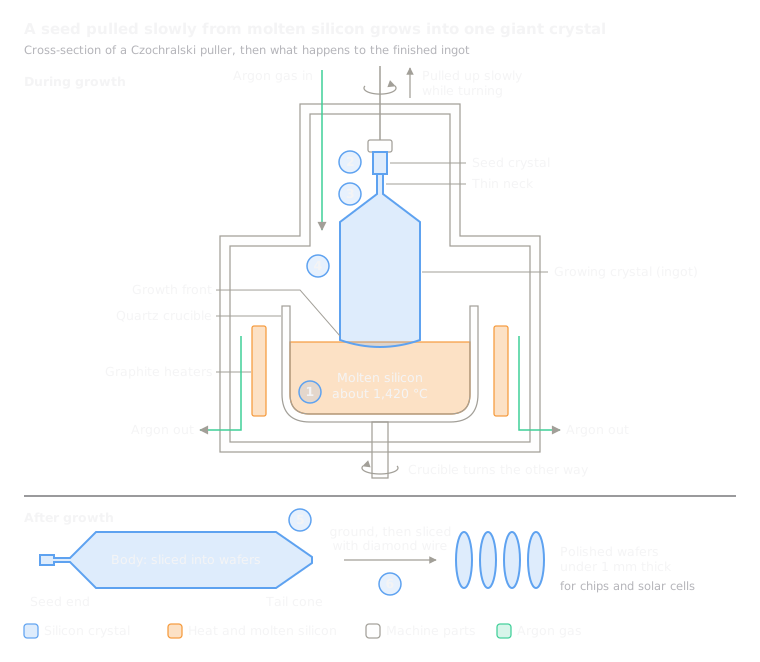 13.1Czochralski crystal growth (silicon wafers)Pulls a giant single crystal of silicon slowly out of a meltOpen the lesson
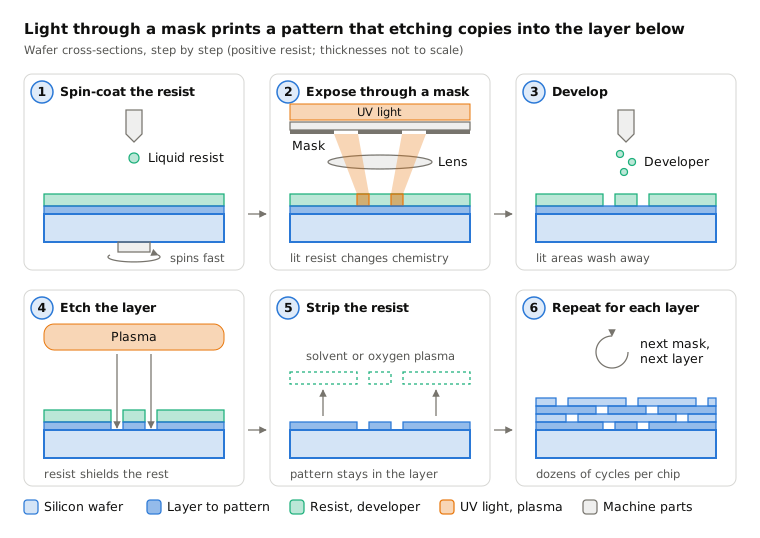
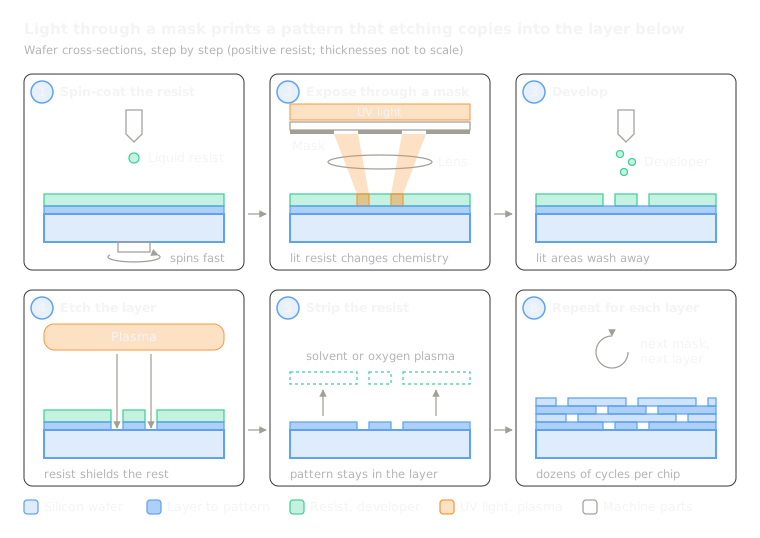 13.2PhotolithographyProjects a pattern with light onto a light-sensitive coating, then etches itOpen the lesson
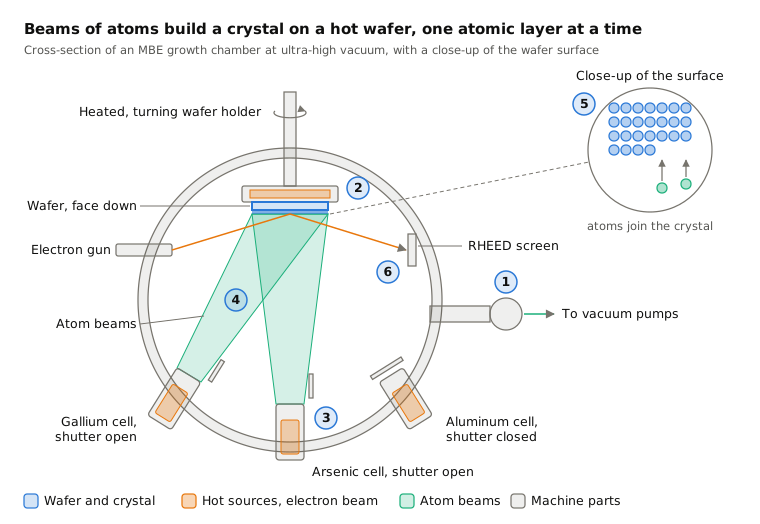
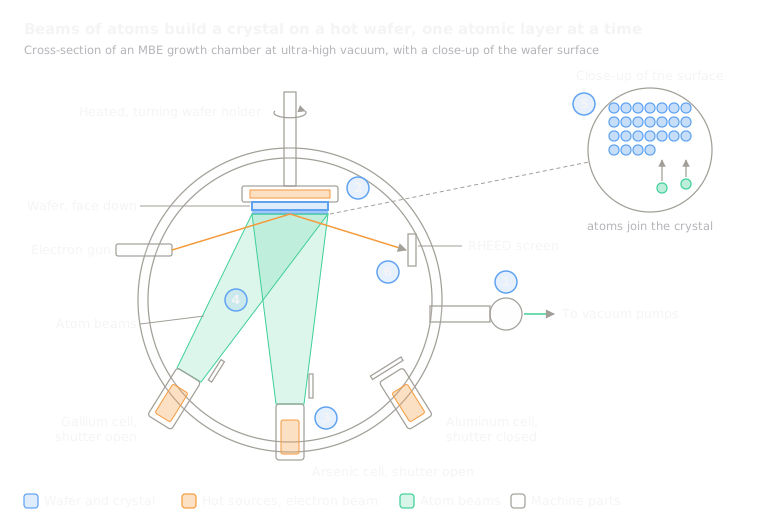 13.3Molecular beam epitaxy (MBE)Grows a crystal one atomic layer at a time from beams in ultra-high vacuumOpen the lesson
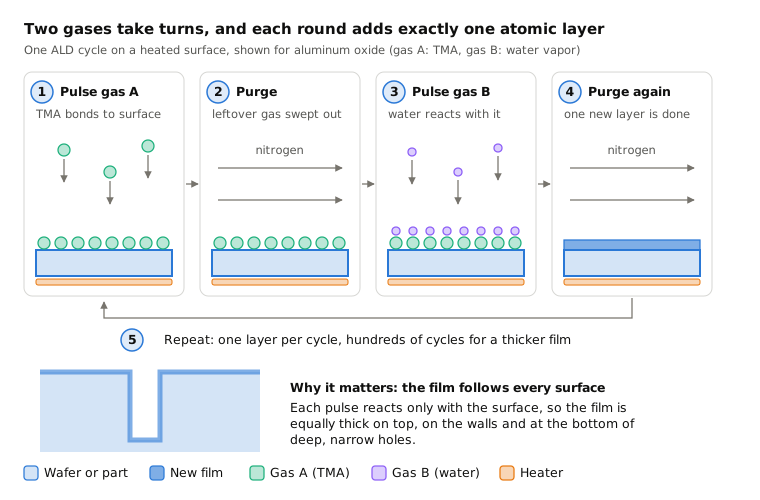
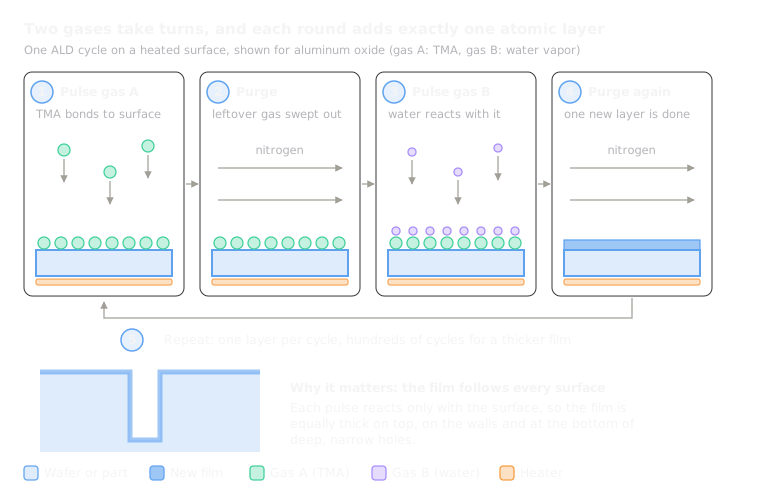 13.4Atomic layer deposition (ALD)Coats a surface one atomic layer per cycle with alternating gasesOpen the lesson
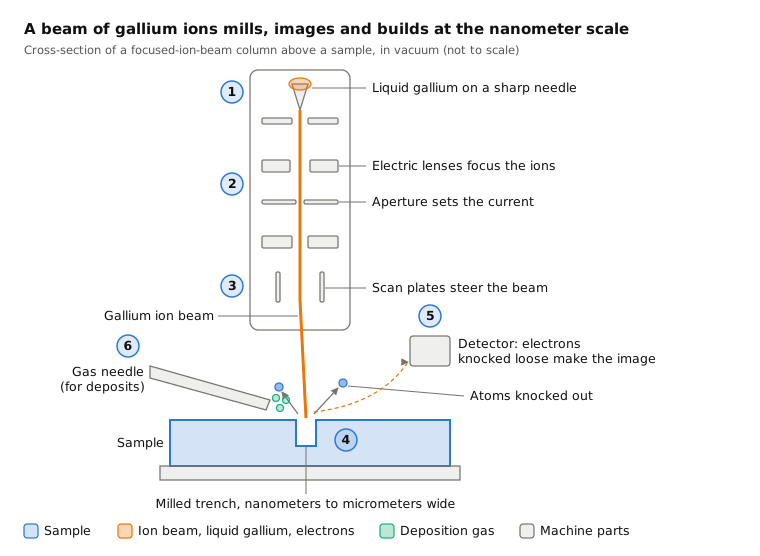
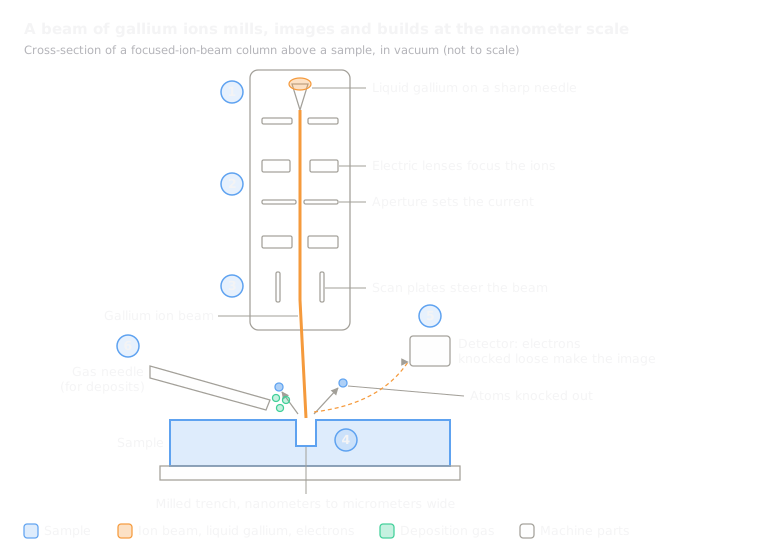 13.5Focused ion beam (FIB)Mills or adds material with a beam of ions under a microscopeOpen the lesson
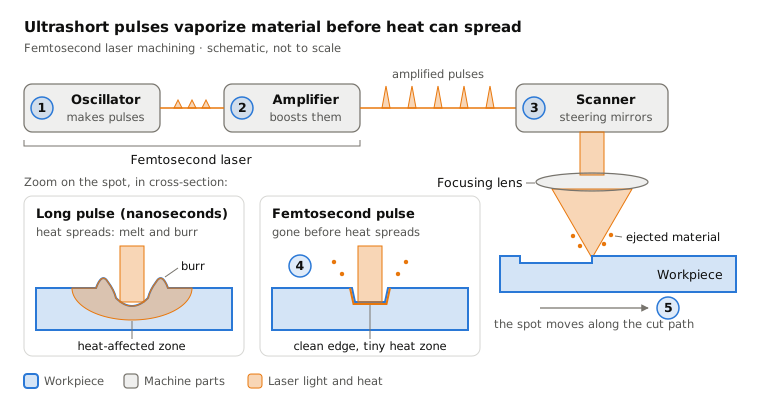
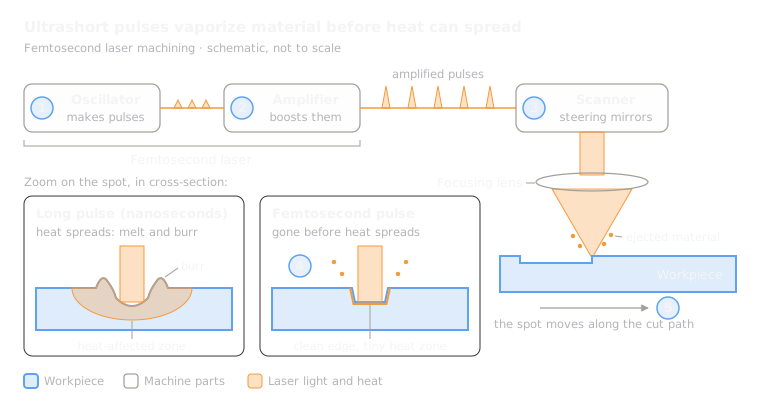 13.6Femtosecond laser machiningRemoves material with ultrashort laser pulses, without meltingOpen the lesson
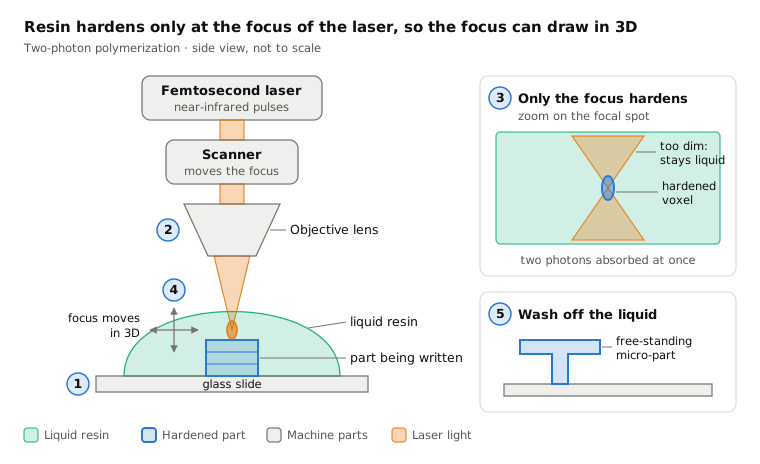
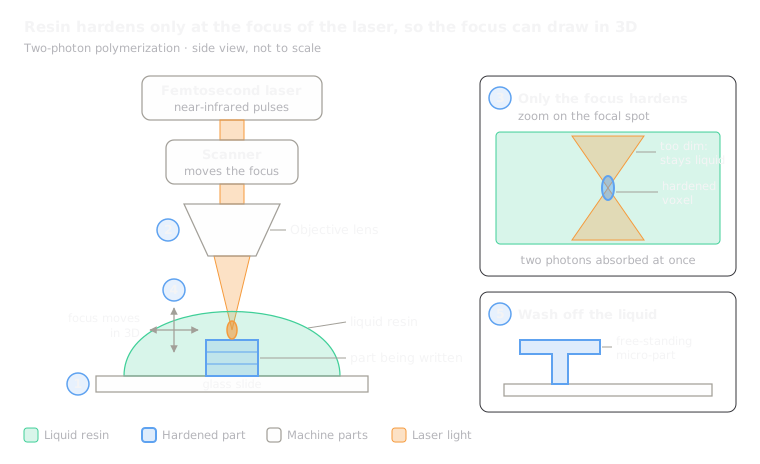 13.8Two-photon polymerizationHardens resin only at a laser focus to print 3D micro-partsOpen the lesson
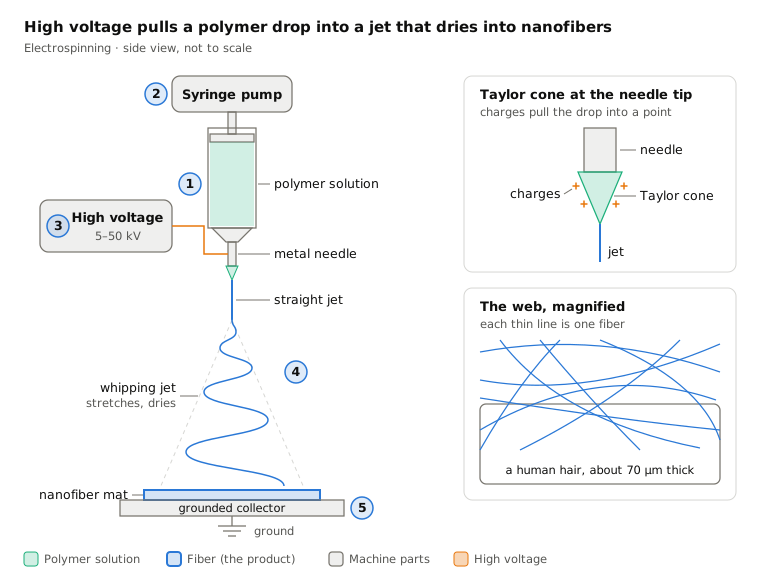
 13.9ElectrospinningPulls a polymer jet into nanofibers with high voltageOpen the lesson
Try it
Put AI to work in your CAD.
Model parts, generate drawings and automate the repetitive work inside your CAD software.