

Two-photon polymerization
Hardens resin only at a laser focus to print 3D micro-parts
Two-photon polymerization is 3D printing at the scale of a living cell. A focused laser hardens liquid resin only at its focal point, so moving that point draws objects with details under a micron (0.001 mm). It prints micro-lenses onto optical fiber tips and scaffolds for growing cells.
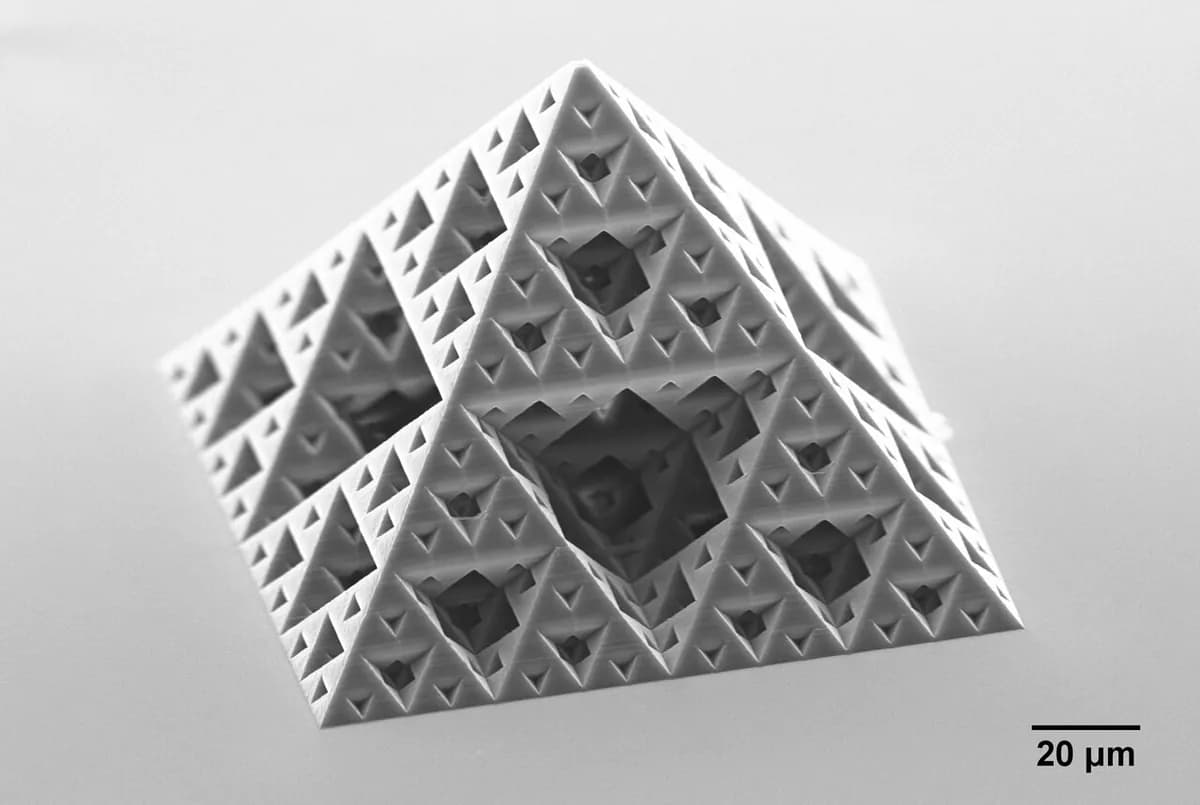
How it works
Place a drop of resin. A drop of liquid photoresin (a plastic that hardens under light) goes on a glass slide, or directly on a fiber tip or chip.
Focus the laser. Femtosecond pulses of near-infrared light (just beyond red, invisible to us) pass through a microscope objective, a powerful lens. They converge to a spot inside the resin.
Harden only the focus. Only at the focus is light intense enough for molecules to absorb two photons (particles of light) at once. That hardens a voxel: a 3D pixel around a micron or smaller.
Write in 3D. Mirrors and stages move the focus along paths sliced from a CAD model, point by point and layer by layer. The part grows inside the liquid, often without support structures.
Wash off the liquid. A solvent rinses away the unhardened resin, revealing the solid micro-part. Delicate parts are dried carefully so liquid surface tension does not bend them.
Key facts
- Materials
- Photoresins: acrylates, epoxies such as SU-8, hybrid organic-glass resins; some biocompatible or glass-forming resins
- Typical parts
- Micro-lenses and optics, cell scaffolds, microfluidic filters, lattice metamaterials, record-small sculptures
- Part size
- Features from about 0.1 µm; whole parts usually micrometers to a few millimeters
- Precision
- Sub-micron detail; research systems reach features around 100 nm or less
- Surface finish
- Smooth enough for optics; fine layer steps visible under an electron microscope
- Batch size it suits
- Prototypes and small series; also masters for molding copies
- Tooling and machine cost
- No tooling; printers often cost several hundred thousand dollars
- Speed
- Slow: a part a few millimeters in size can take hours
Strengths and limits
Strengths
- True free-form 3D at sub-micron resolution
- No mask or mold: straight from CAD to part
- Prints onto fibers, chips and inside channels
- Smooth, optical-quality surfaces are possible
Limits
- Very slow for anything above a few millimeters
- Small build volumes and expensive printers
- Limited to light-curing resins
- Shrinkage distorts parts unless the design compensates
Where it's used
- PhotonicsMicro-lenses on fiber tips, waveguides, diffractive optics
- Life sciencesScaffolds for cells and stem-cell research, micro-needles
- Microfluidics3D filters and mixers printed inside channels
- MEMS and sensorsMicro-springs, micro-grippers, tips for atomic force microscopes
- Materials researchMechanical metamaterials (lattices with unusual properties), nano-lattices
- Art and outreachMicro-sculptures and record-small objects
How to recognize it
- You almost never will: the parts are smaller than a grain of sand and live in labs, prototype optics and research devices.
- Under a microscope: perfectly shaped 3D objects with fine stair-step layer lines, like a tiny 3D print.
- Overhangs, lattices and closed hollow shapes that no mold could release.
- A lens or structure sitting right on the cut end of an optical fiber.
Compare with
Watch it
g Fun Facts online · A short, simple explanation of the principle
scientificblogging · A race car smaller than a grain of sand being printed
Nanoscribe · Printed micro-parts and electron-microscope close-ups
UpNano · A commercial printer and how its parts are built
See real photos
- Wikipedia: Multiphoton lithography — principle, materials and applications; few photos
- Wikimedia Commons photo search
Remember
- The resin hardens only where two photons arrive at once: at the laser's focus.
- Moving that focus draws true 3D shapes with sub-micron detail.
- It is slow and small-scale: ideal for micro-optics, scaffolds and prototypes.
More in Micro- and nanofabrication
All 100 processes
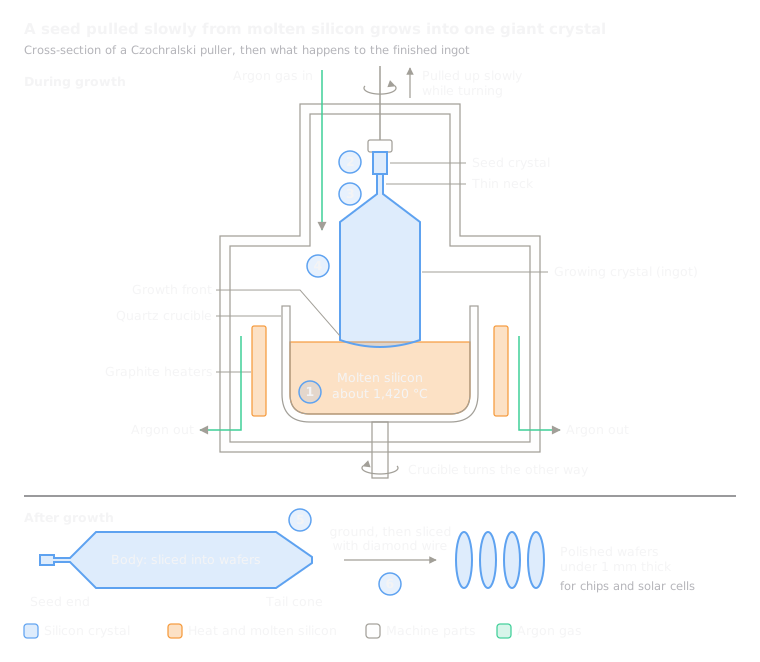 13.1Czochralski crystal growth (silicon wafers)Pulls a giant single crystal of silicon slowly out of a meltOpen the lesson
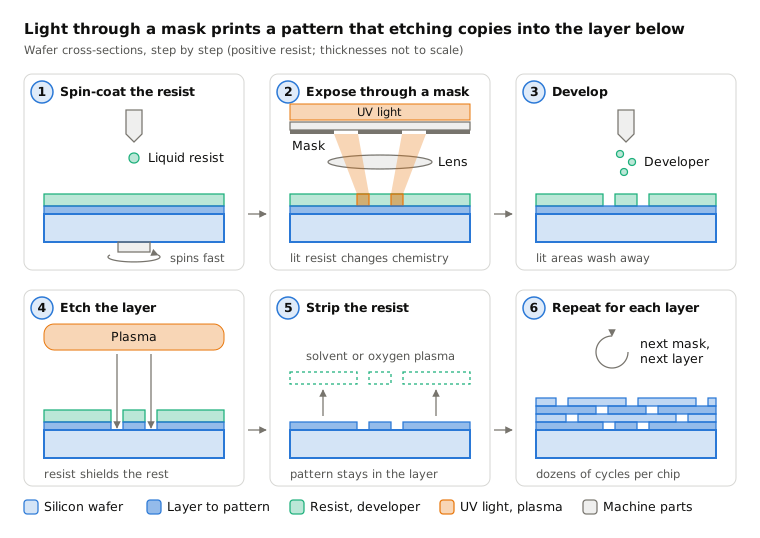
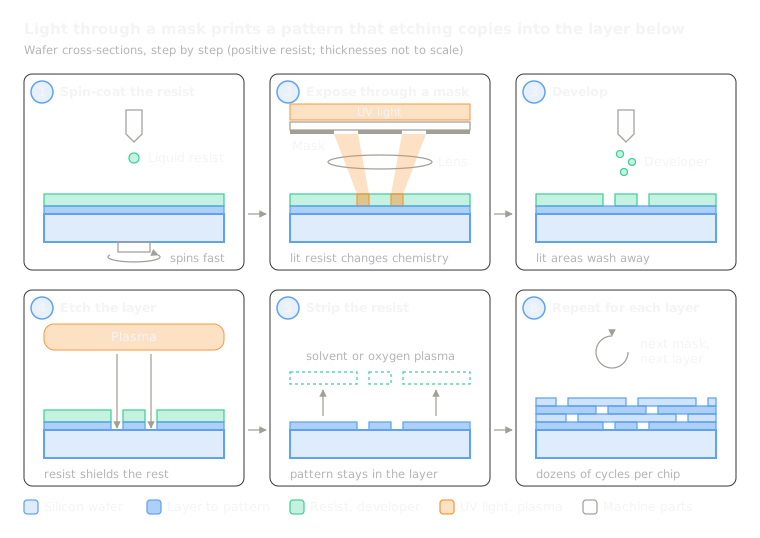 13.2PhotolithographyProjects a pattern with light onto a light-sensitive coating, then etches itOpen the lesson
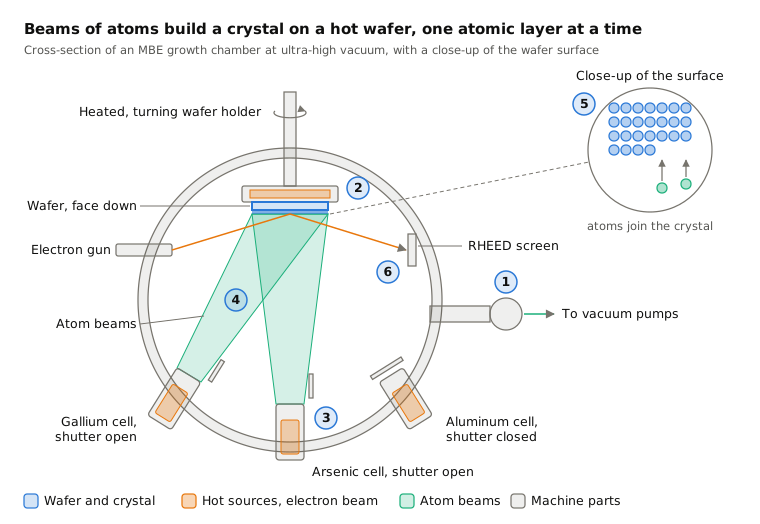
 13.3Molecular beam epitaxy (MBE)Grows a crystal one atomic layer at a time from beams in ultra-high vacuumOpen the lesson
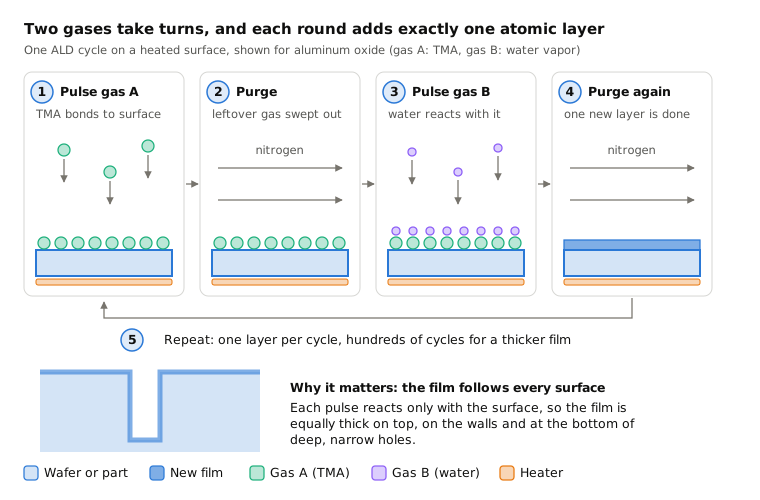
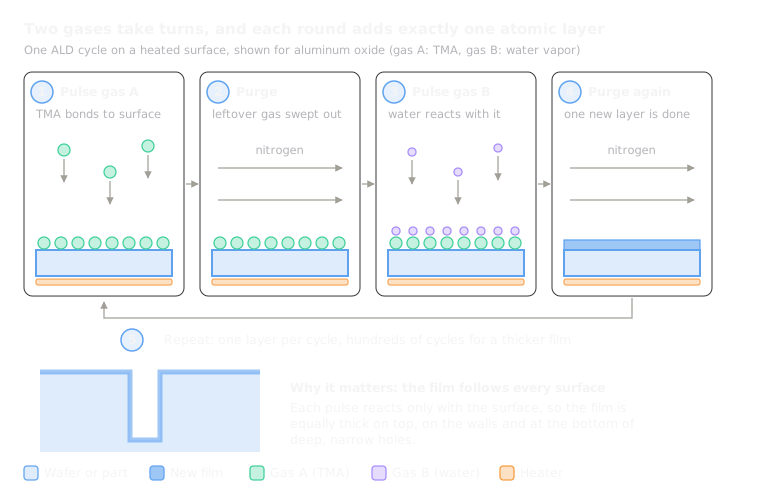 13.4Atomic layer deposition (ALD)Coats a surface one atomic layer per cycle with alternating gasesOpen the lesson
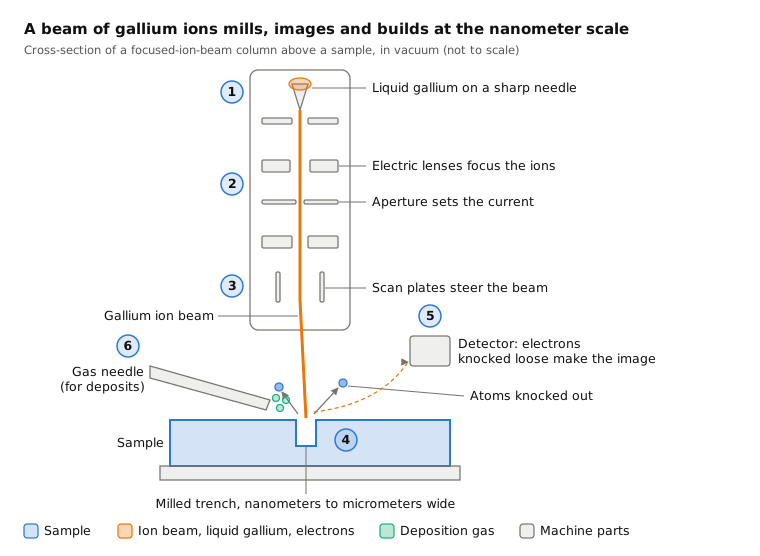
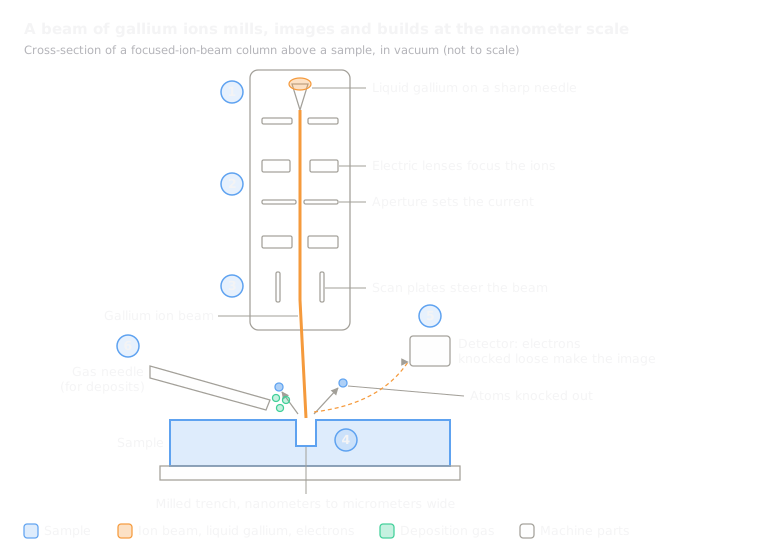 13.5Focused ion beam (FIB)Mills or adds material with a beam of ions under a microscopeOpen the lesson
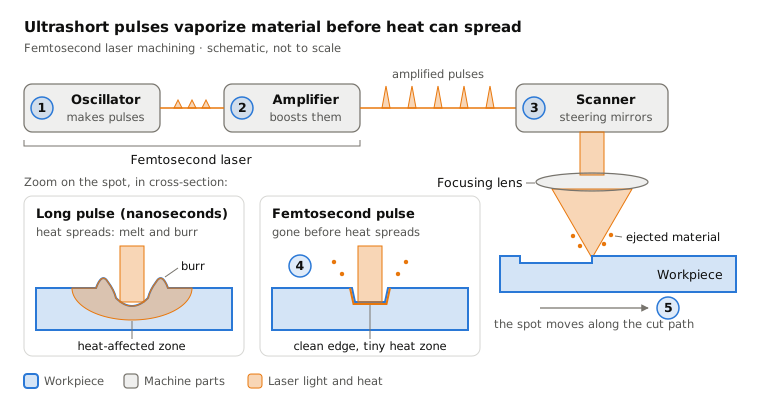
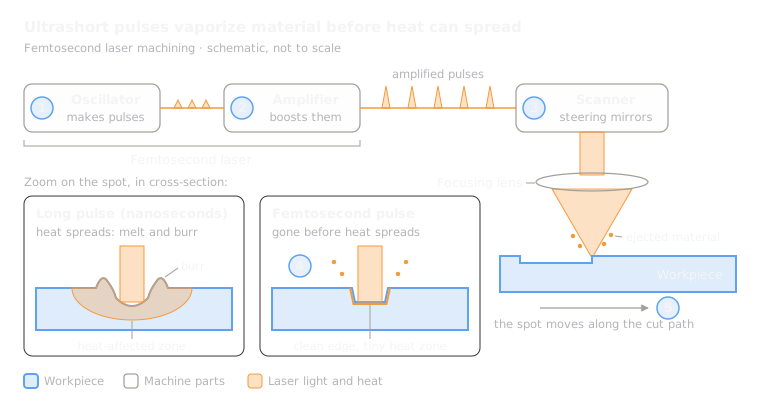 13.6Femtosecond laser machiningRemoves material with ultrashort laser pulses, without meltingOpen the lesson
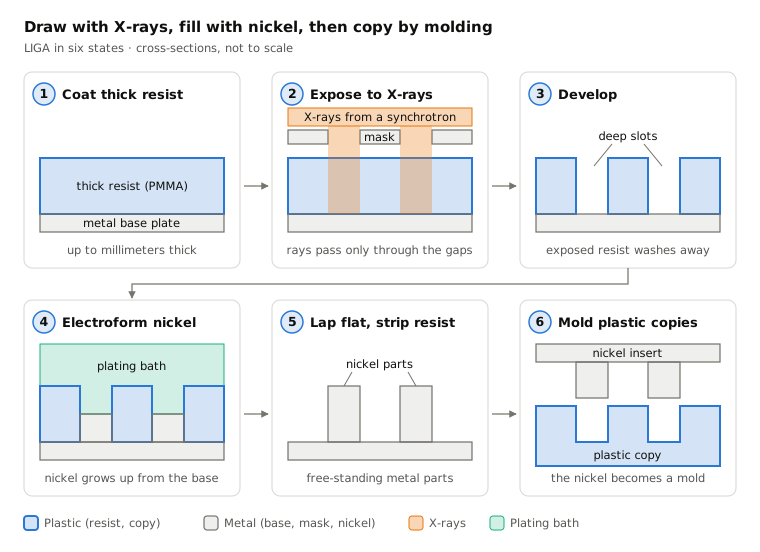
 13.7LIGADraws deep slots with X-rays or UV, fills them with nickel, then molds copiesOpen the lesson
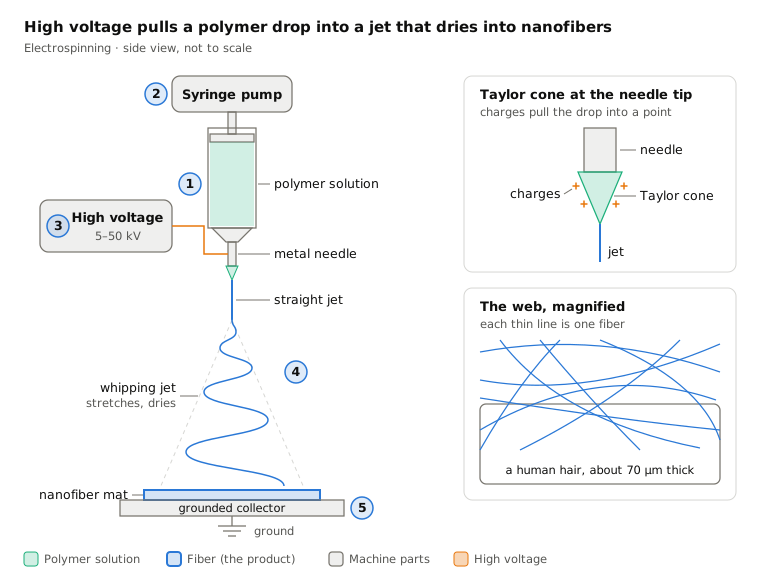
 13.9ElectrospinningPulls a polymer jet into nanofibers with high voltageOpen the lesson
Try it
Put AI to work in your CAD.
Model parts, generate drawings and automate the repetitive work inside your CAD software.