

Centrifugal casting
Metal flung against the wall of a spinning mold
Centrifugal casting pours molten metal into a mold that spins fast, so the metal is flung against the wall and freezes into a tube or ring. Water and sewer pipes, engine cylinder liners and bearing rings are made this way. Spinning packs the metal tightly, so the walls come out dense and strong.
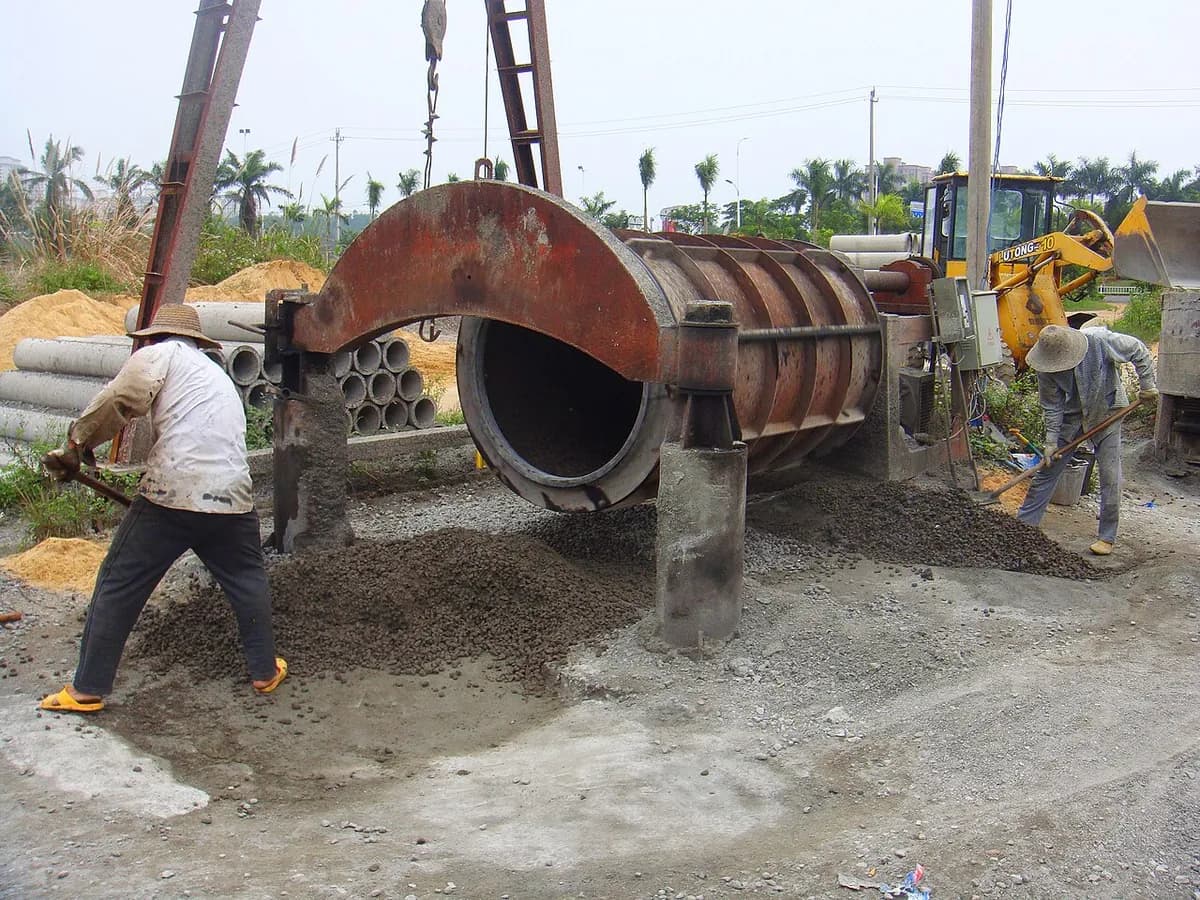
How it works
Spin the mold. A steel or iron mold, often lined with a thin coating, sits on drive rollers and spins, typically at a few hundred to a few thousand revolutions per minute.
Pour. Molten metal runs in through a spout from a ladle. No core is needed for the hole: the bore forms by itself.
Let the spin shape it. Centrifugal force (the outward push you feel on a merry-go-round) throws the metal against the wall, where it spreads into an even layer. The amount poured sets the wall thickness.
Solidify from the outside in. The metal freezes first against the cool mold. Lighter impurities and gas bubbles drift inward to the bore, which is machined away later.
Stop and extract. The mold stops, and the hot tube is pulled out. It is then cleaned, machined or lined, as with cement-lined water pipe.
Key facts
- Materials
- Cast iron and ductile iron, steels and stainless steels, bronze and brass, nickel alloys
- Typical parts
- Pipes, cylinder liners, bushings, bearing rings, rolls for steel mills, flanges
- Part size
- From small bushings a few centimeters wide to pipes over 1 m wide and about 6 m long
- Precision
- Outside diameter about ±0.5 to ±2 mm; the bore is usually machined
- Surface finish
- Outer surface fairly smooth (Ra about 3 to 12 µm); bore rougher before machining
- Batch size it suits
- From single large rolls to millions of pipes a year
- Tooling and machine cost
- Molds are simple; machines from tens of thousands to millions of dollars for pipe plants
- Speed
- A few minutes per casting; a pipe line can make a pipe every minute or two
Strengths and limits
Strengths
- Dense, strong walls with few gas holes
- No core needed for the bore
- Little waste: no sprues or risers
- Can cast two metals in layers, like a hard outer shell on a tough core
Limits
- Only round, hollow shapes around the spin axis
- The bore is rough and dirty and usually needs machining
- Wall thickness and length are limited by the machine
- Some alloys separate by weight during spinning
Where it's used
- Water and sewageDuctile-iron water mains and sewer pipes
- AutomotiveCylinder liners, brake drums
- Oil, gas and chemicalsHeat-resistant furnace tubes, pump sleeves
- Steel industryRolls for rolling mills
- MachineryBronze bushings, bearing rings, gear blanks
How to recognize it
- A perfectly round, hollow part with an even wall all the way around.
- An outer surface that copies the mold, often with a fine, uniform texture.
- A machined bore, since the as-cast inside is rough.
- No parting line and no cut-off sprue or riser stubs.
Compare with
Watch it
Shubham Kola · An animated explanation of the spinning-mold principle
MetalTek International · Pouring into a horizontal spinning mold, then pulling out the tube
MetalTek International · A vertical machine casting rings and short cylinders
McWane Ductile · Water-cooled molds turning out ductile iron pipe at scale
See real photos
- Wikipedia: Centrifugal casting (industrial) — the principle, horizontal and vertical machines, and typical products
- Wikimedia Commons photo search
Remember
- Spin, not gravity or pressure, pushes the metal into shape.
- The hole forms by itself, so no core is needed.
- Best for dense, round, hollow parts such as pipes and rings.
More in Casting
All 100 processes
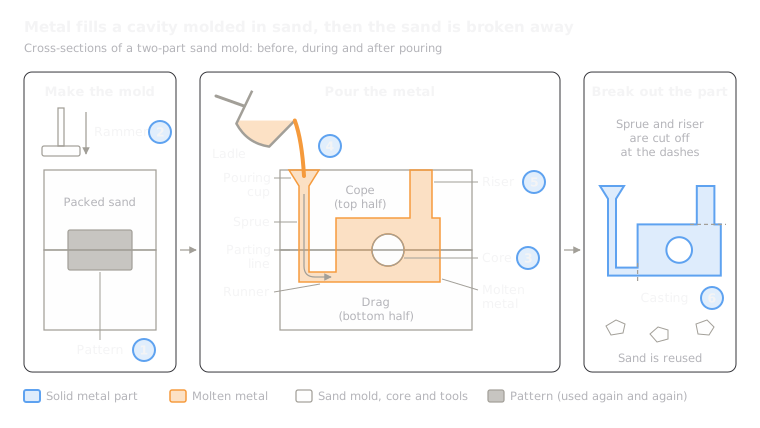 1.1ShortSand castingMetal poured into a cavity packed in sand; the sand is broken awayOpen the lesson
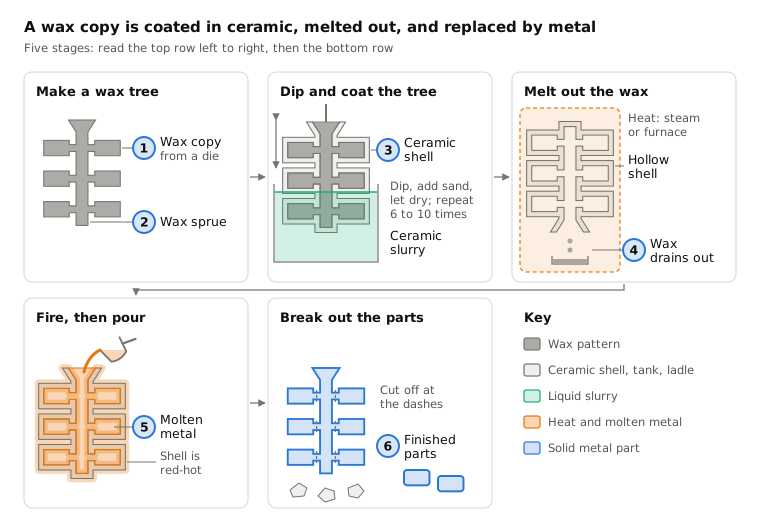
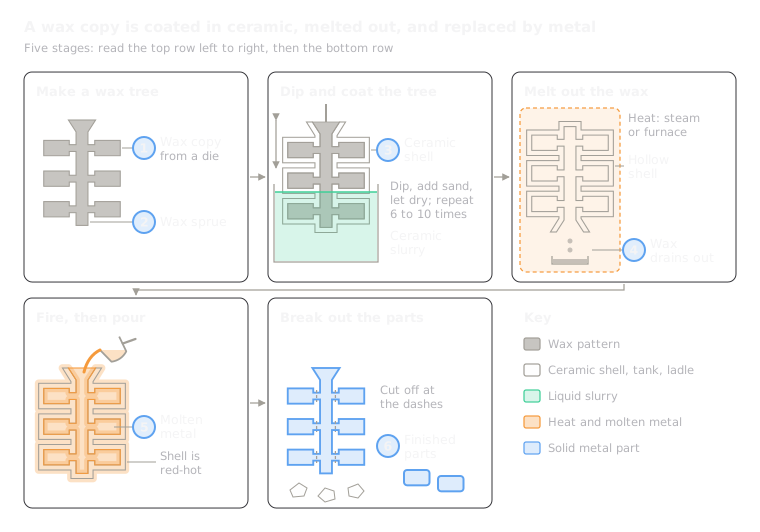 1.2Investment casting (lost wax)Wax copy coated in ceramic, melted out, then filled with metalOpen the lesson
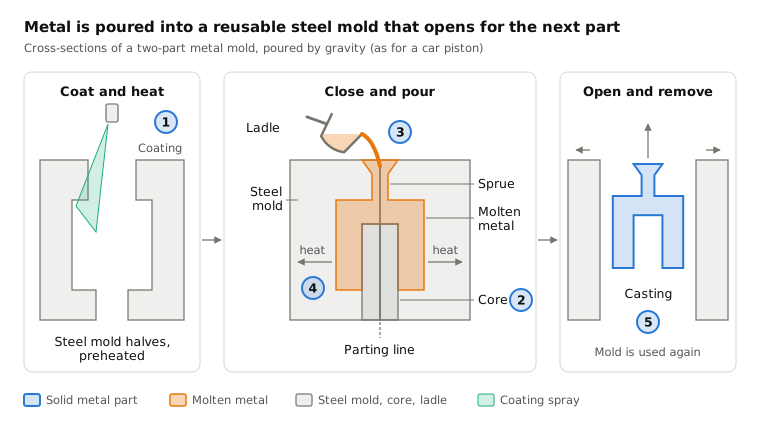
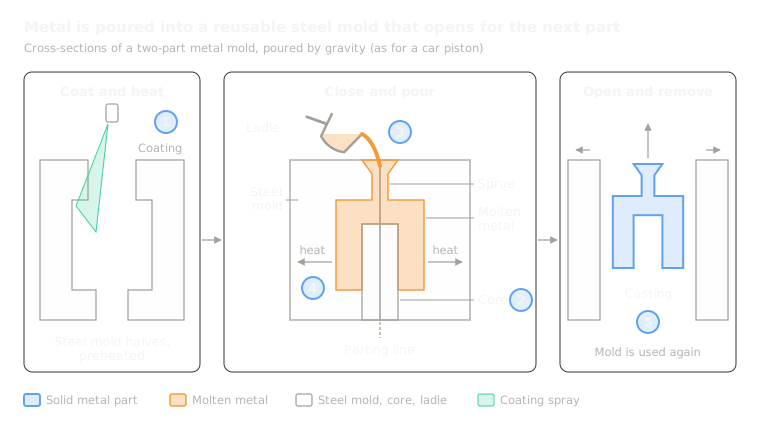 1.3Permanent mold castingMetal poured by gravity into a reusable steel moldOpen the lesson
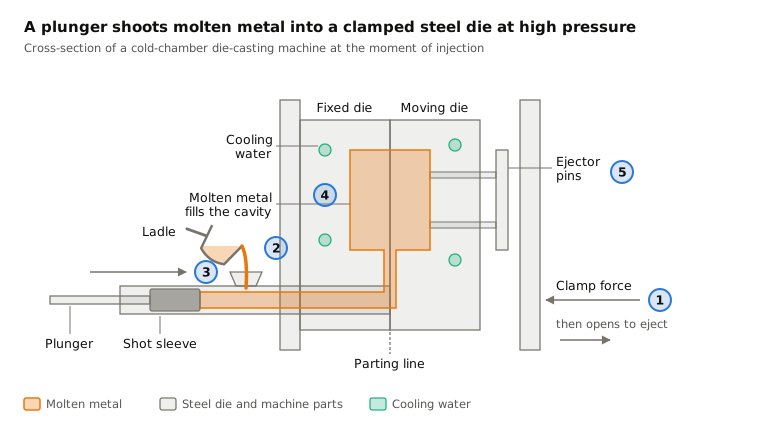
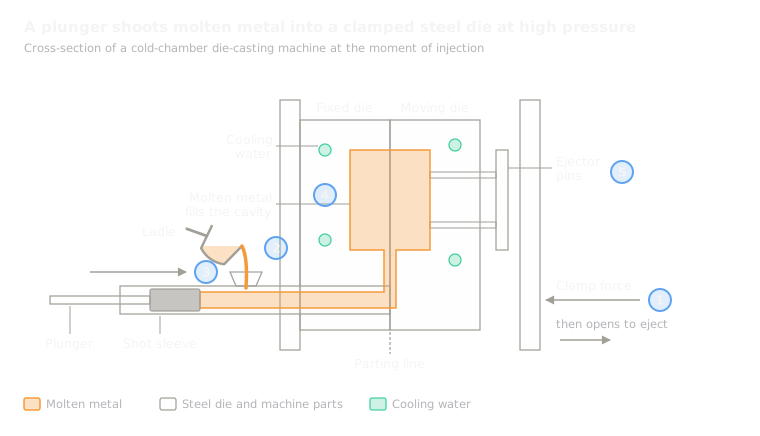 1.4Die castingMetal shot into a steel die at high pressureOpen the lesson
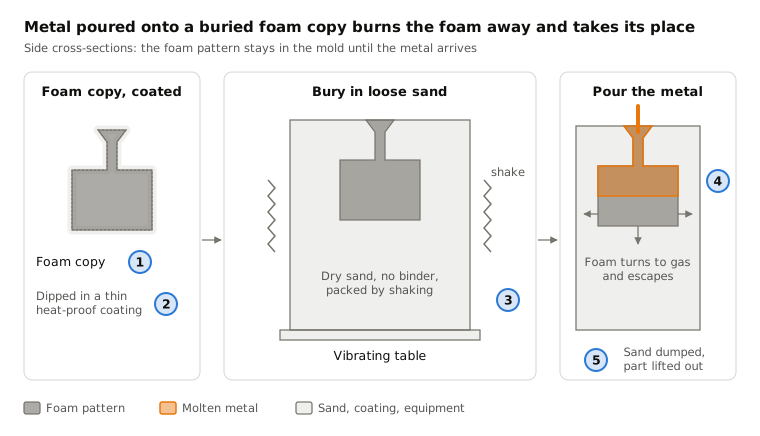
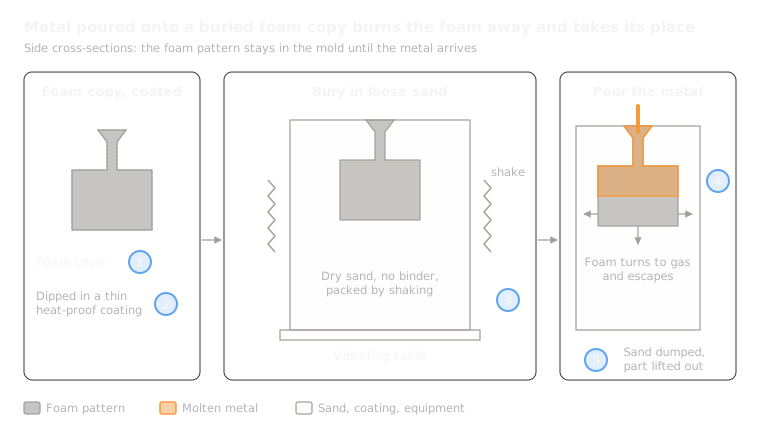 1.6Lost foam castingMetal poured onto a foam copy buried in loose sandOpen the lesson
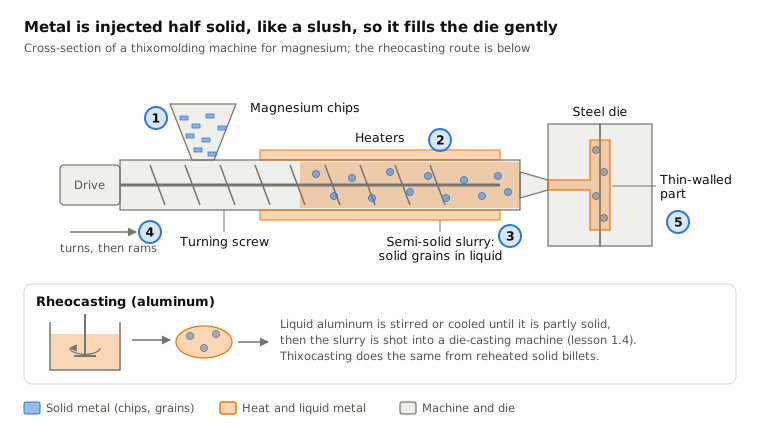
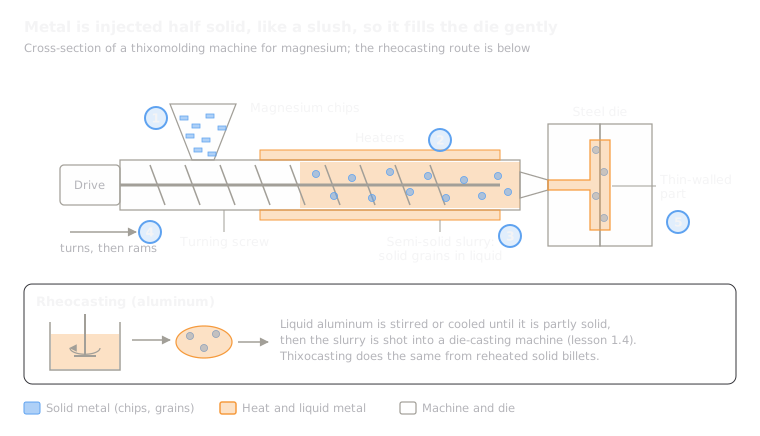 1.7Semi-solid casting (thixomolding and rheocasting)A half-solid metal slush injected into a steel dieOpen the lesson
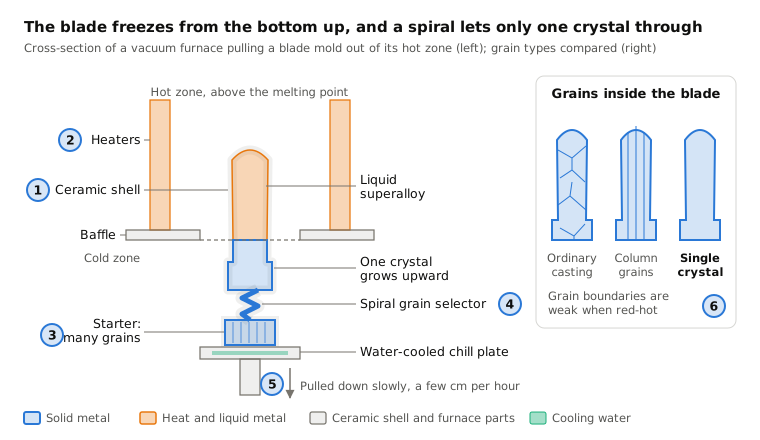
 1.8Single-crystal casting (turbine blades)Slow freezing from one end grows the part as one crystalOpen the lesson
Try it
Put AI to work in your CAD.
Model parts, generate drawings and automate the repetitive work inside your CAD software.