

Permanent mold casting
Metal poured by gravity into a reusable steel mold
Permanent mold casting pours molten metal, usually by gravity, into a mold made of steel or cast iron that is opened and used again thousands of times. Car pistons and many aluminum wheels and cylinder heads are made this way. It sits between sand casting and die casting: better parts than sand, much cheaper tooling than die casting.
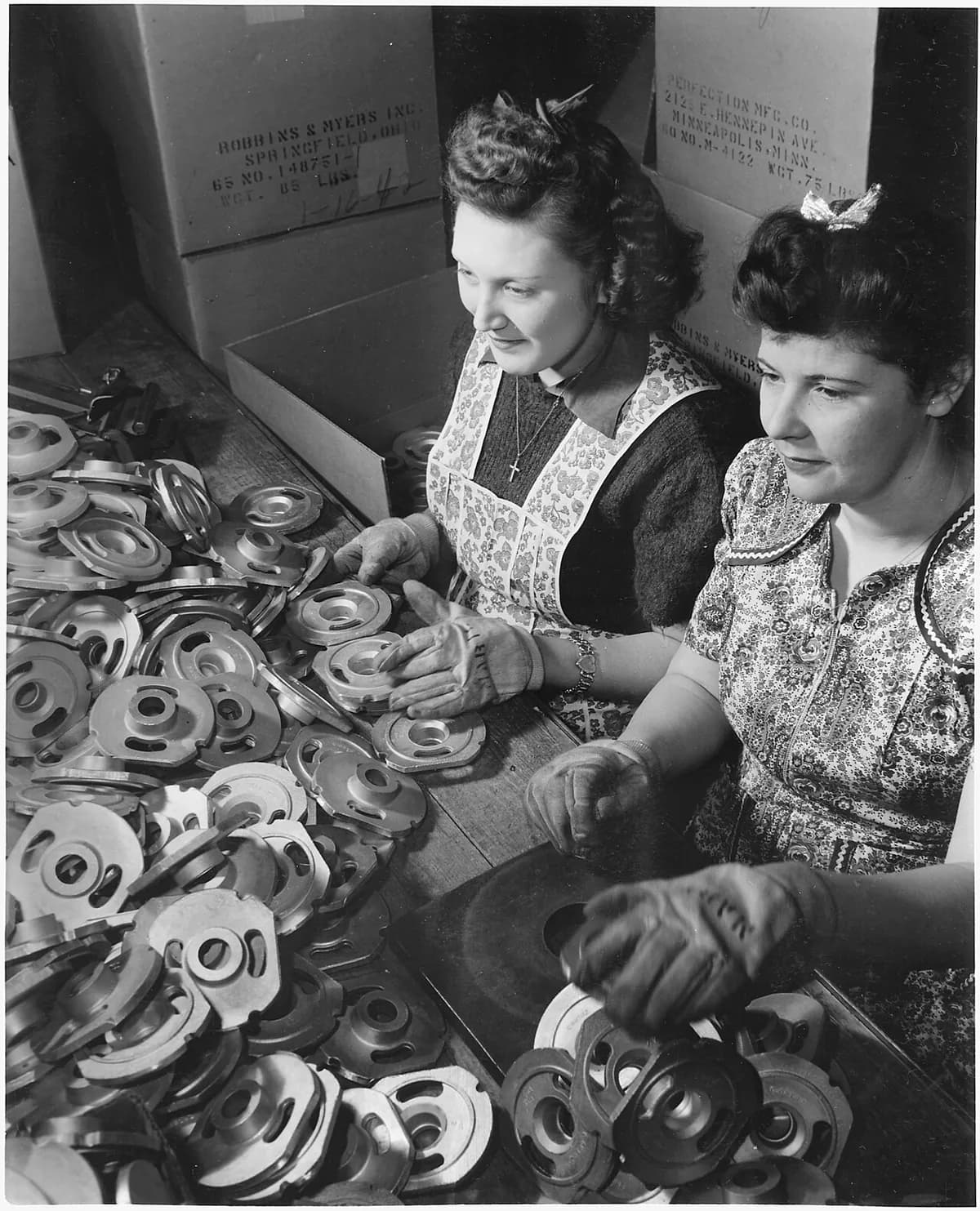
How it works
Coat and preheat the mold. The two steel halves are sprayed with a thin ceramic coating, which protects them and slows cooling. They are kept hot, typically around 200 to 400 °C, so the metal does not freeze too early.
Set the cores and close. Cores (inserts that form holes and hollows) go in. They can be steel, pulled out after each cycle, or sand, broken out later. The halves clamp together along the parting line.
Pour. Molten metal, most often aluminum, is poured from a ladle into the sprue. Gravity fills the cavity; some machines tilt the mold to fill it gently, and low-pressure machines push the metal up from below.
Let it cool in the mold. The steel draws heat out quickly, so the metal freezes in about a minute or a few minutes. Fast cooling gives fine grains (small crystals) and stronger metal than sand casting.
Open and remove the casting. The halves open, the cores are pulled, and the casting is lifted out. The sprue is cut off, and the mold is ready for the next cycle.
Key facts
- Materials
- Mostly aluminum and magnesium alloys, also copper alloys (brass, bronze) and some cast iron
- Typical parts
- Pistons, aluminum wheels, cylinder heads, gear and pump housings, brake calipers, cookware
- Part size
- Typically from about 100 g to around 50 kg
- Precision
- About ±0.3 to ±0.5 mm on a 100 mm feature
- Surface finish
- Fairly smooth: Ra (average roughness) about 2.5 to 6 µm
- Batch size it suits
- Medium to high volume: a few thousand to hundreds of thousands of parts a year
- Tooling and machine cost
- Steel molds cost roughly ten thousand to a hundred thousand dollars or more
- Speed
- A few minutes per part per mold; several molds often run side by side
Strengths and limits
Strengths
- Better precision and smoother surfaces than sand casting
- Fast cooling gives fine grain and good strength
- Few gas holes, so parts can be heat-treated and welded
- Molds last for thousands to over a hundred thousand parts
Limits
- Mold is costly, so small batches do not pay off
- Mostly limited to aluminum, magnesium and copper alloys; steel is too hot for the mold
- Shapes must come out of a rigid mold, so undercuts need cores
- Slower than die casting, and walls must be thicker, about 3 to 4 mm minimum
Where it's used
- AutomotivePistons, cylinder heads, wheels, brake calipers, suspension parts
- Aerospace and defenseHousings and brackets in aluminum alloys
- MachineryPump bodies, gear housings, hydraulic parts
- PlumbingBrass and bronze valve bodies and fittings
- Home goodsCast-aluminum cookware, lamp and furniture parts
How to recognize it
- A fairly smooth, slightly matte surface: much finer than sand casting, a little rougher than die casting.
- A clean, straight parting line where the steel halves met.
- Walls that are thicker than on a die-cast part, often 4 mm or more.
- A cut-off stub of the sprue, often on a thick section of the part.
Compare with
Watch it
THORS eLearning Solutions · An animated beginner explanation of gravity permanent mold casting
Densen_casting · A production foundry pouring aluminum into steel molds, cycle after cycle
Kurtz Casting Solutions · How robots run automated gravity casting cells
Kurtz Casting Solutions · The low-pressure variant, where metal is pushed up into the mold from below
See real photos
- Wikipedia: Permanent mold casting — gravity, slush, low-pressure and vacuum variants, mold materials and products
- Wikimedia Commons photo search
Remember
- The mold is steel or iron and is reused thousands of times.
- Gravity (or low pressure) fills it, not high-pressure injection.
- Better and stronger than sand castings, cheaper tooling than die casting.
More in Casting
All 100 processes
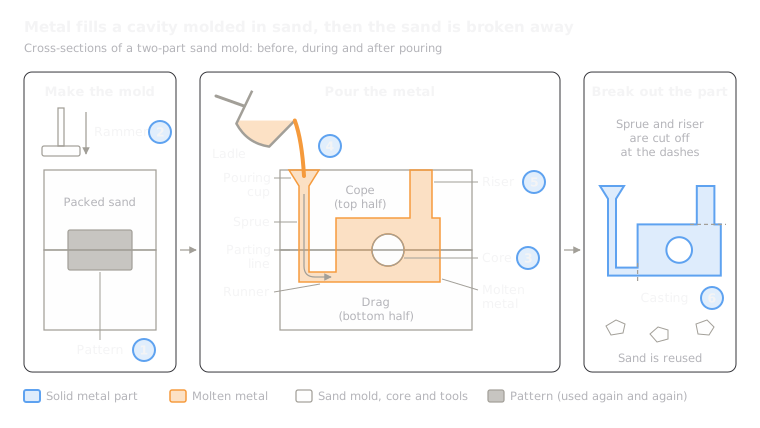 1.1ShortSand castingMetal poured into a cavity packed in sand; the sand is broken awayOpen the lesson
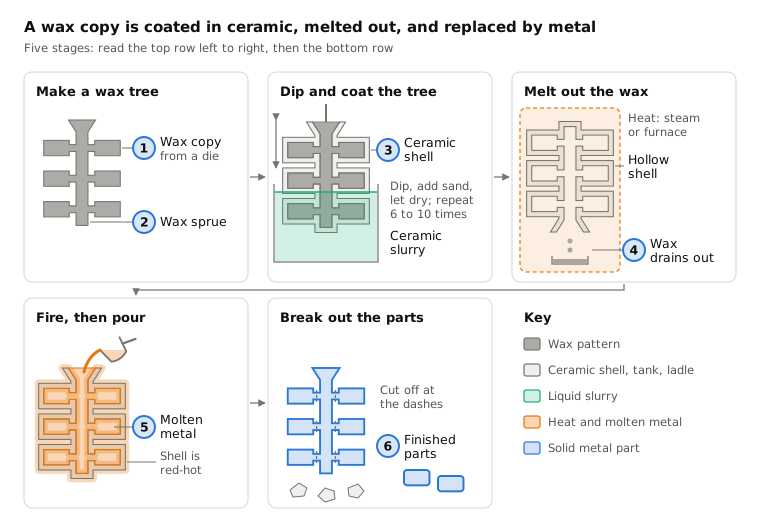
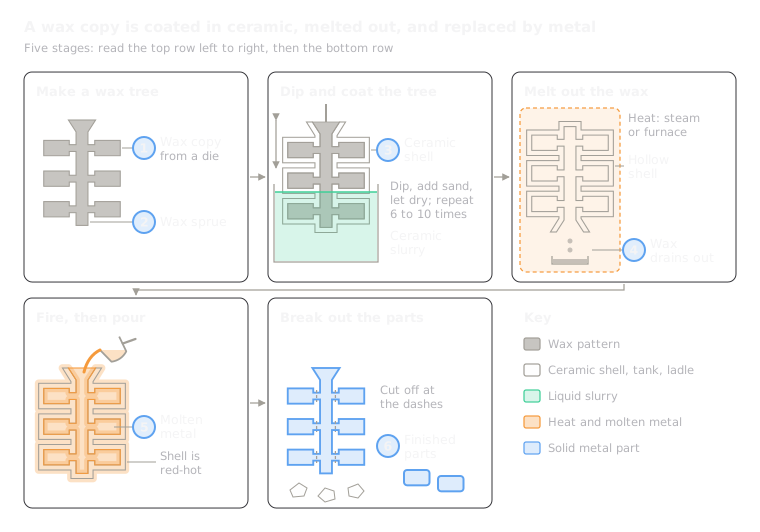 1.2Investment casting (lost wax)Wax copy coated in ceramic, melted out, then filled with metalOpen the lesson
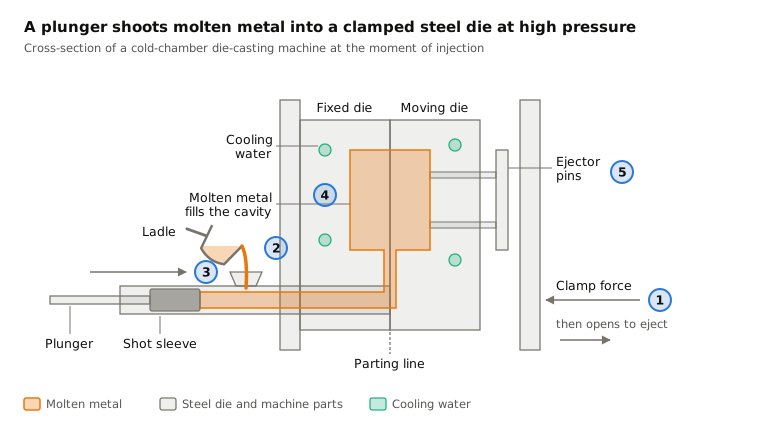
 1.4Die castingMetal shot into a steel die at high pressureOpen the lesson
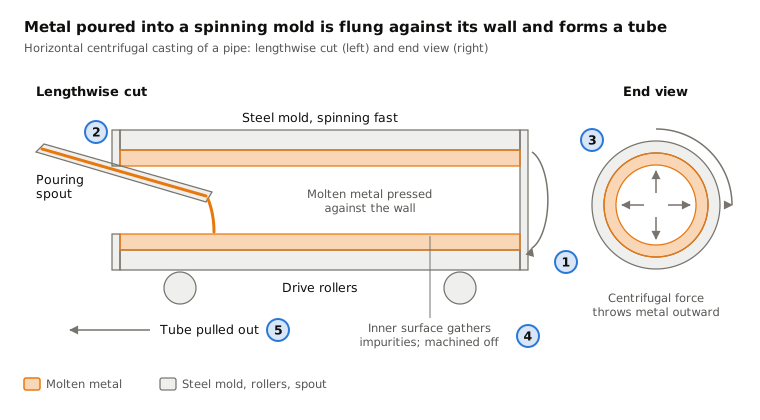
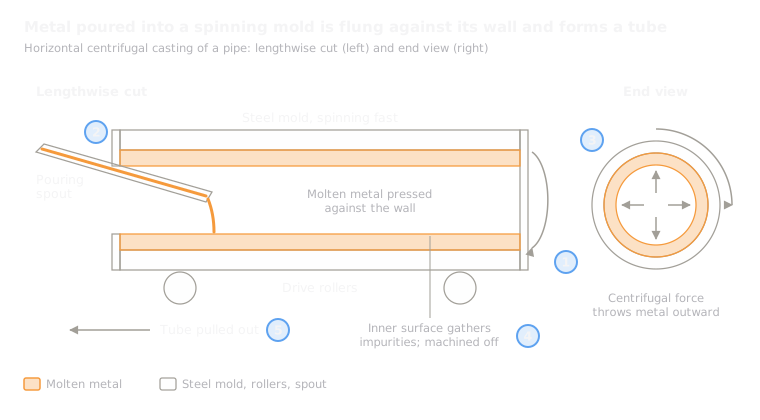 1.5Centrifugal castingMetal flung against the wall of a spinning moldOpen the lesson
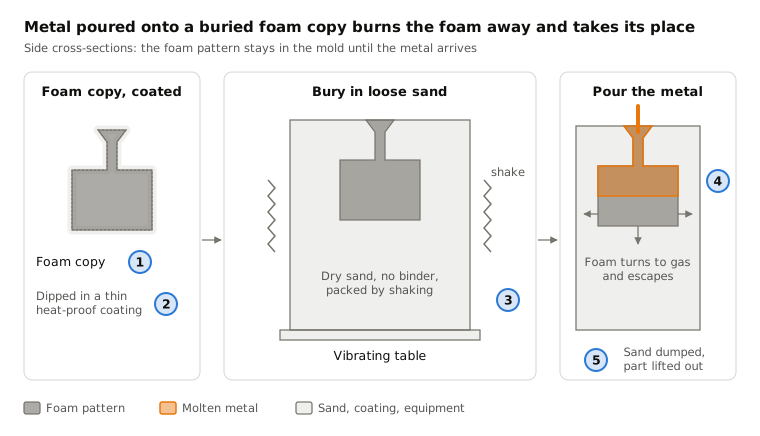
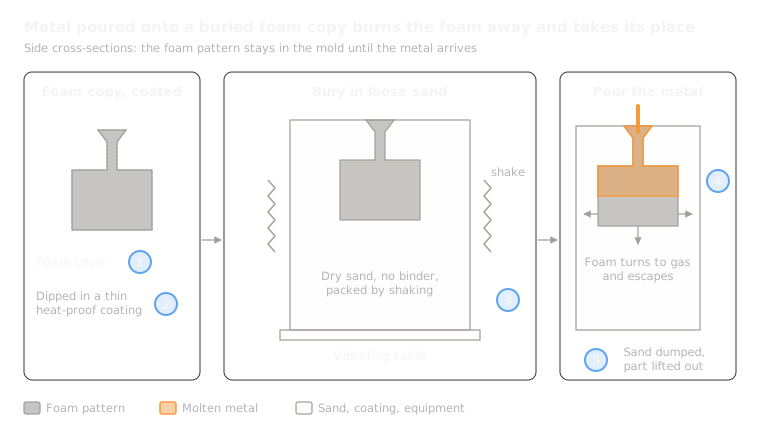 1.6Lost foam castingMetal poured onto a foam copy buried in loose sandOpen the lesson
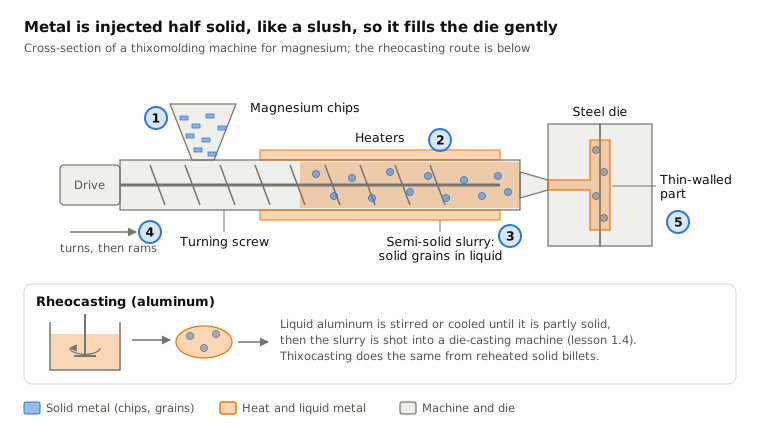
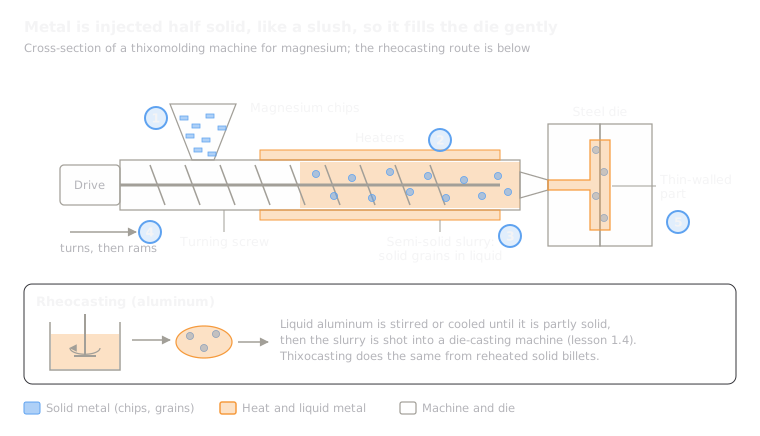 1.7Semi-solid casting (thixomolding and rheocasting)A half-solid metal slush injected into a steel dieOpen the lesson
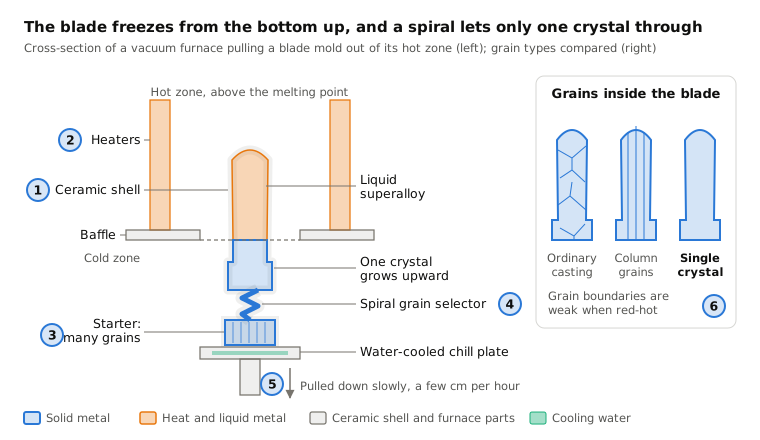
 1.8Single-crystal casting (turbine blades)Slow freezing from one end grows the part as one crystalOpen the lesson
Try it
Put AI to work in your CAD.
Model parts, generate drawings and automate the repetitive work inside your CAD software.