

Die casting
Metal shot into a steel die at high pressure
Die casting injects molten metal at high speed and high pressure into a hardened steel mold, called a die, then opens it seconds later. Laptop and phone frames, car gearbox housings and door handles are made this way. It is the fastest way to make large numbers of precise, thin-walled metal parts.
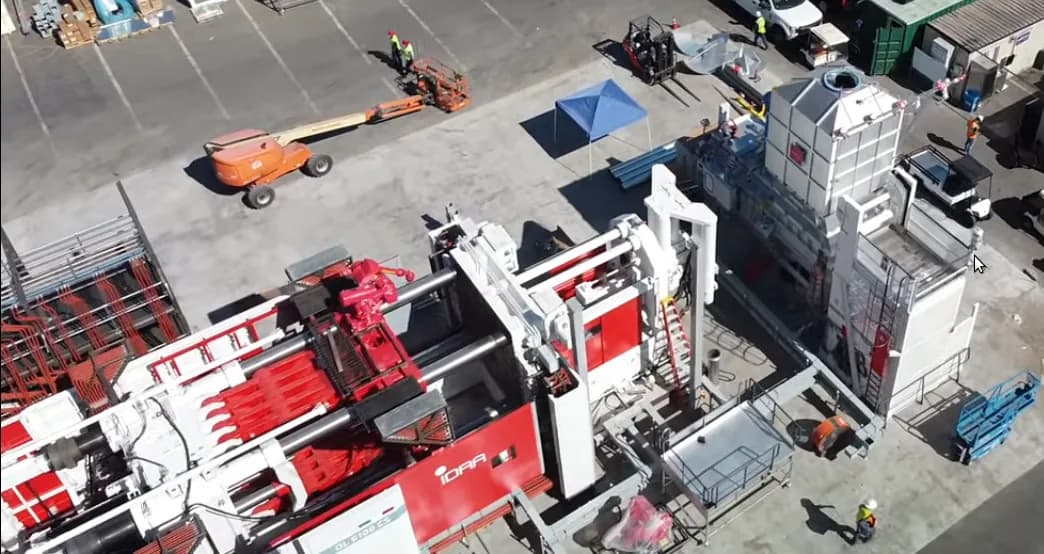
How it works
Close and clamp the die. The moving die half is pushed against the fixed half and held by a hydraulic clamp. The clamp force is typically hundreds to thousands of tonnes, so the die stays shut under pressure.
Fill the shot sleeve. A measured dose of molten metal, usually aluminum, is ladled into the shot sleeve (a steel tube leading into the die). This is the cold-chamber machine; for zinc, a hot-chamber machine keeps its pump sunk in the molten metal.
Inject. The plunger (a hydraulic piston) shoots the metal into the cavity in a fraction of a second, then keeps pushing at high pressure, often several hundred bar, to pack the metal in as it shrinks.
Cool in the die. Water flowing through channels in the steel removes heat fast. Thin parts are solid within seconds.
Open, eject and trim. The moving half pulls back and ejector pins (steel rods) push the casting out, usually into a robot's grip. The runners, the leftover slug called the biscuit and thin flash (metal squeezed into the parting line) are trimmed off in a press.
Key facts
- Materials
- Aluminum, zinc and magnesium alloys; some brass. Not steel, which is too hot for the die
- Typical parts
- Engine and gearbox housings, laptop and phone frames, power-tool bodies, door handles, faucets, toy cars
- Part size
- From a few grams (zinc parts) to whole car underbodies of about 50 to 100 kg in the largest machines
- Precision
- About ±0.05 to ±0.2 mm on small features
- Surface finish
- Smooth: Ra (average roughness) about 1 to 2.5 µm, ready to paint or plate
- Batch size it suits
- Tens of thousands to millions of parts
- Tooling and machine cost
- Dies from tens of thousands to over a million dollars; machines from hundreds of thousands to millions
- Speed
- Seconds to about two minutes per shot, depending on part size
Strengths and limits
Strengths
- Very fast cycles, ideal for mass production
- Thin walls, often 1 to 3 mm, and fine detail
- Precise and smooth, needing little machining
- Parts can include bosses, ribs and lettering in one shot
Limits
- Dies are very expensive, so small batches do not pay off
- Limited to lower-melting metals like aluminum, zinc and magnesium
- Trapped air leaves tiny pores, so most parts cannot be heat-treated or welded easily
- Long lead time, often months, to design and build a die
Where it's used
- AutomotiveGearbox and engine housings, brackets, large one-piece body castings
- ElectronicsLaptop and phone frames, heat sinks, connector housings
- Consumer goodsPower-tool bodies, kitchen appliance parts, toy cars
- Building hardwareDoor handles, locks, faucets (often zinc, then plated)
- LightingStreetlight housings, LED heat sinks
How to recognize it
- Smooth, even surfaces and crisp detail, often painted or chrome-plated.
- Small round marks, slightly raised or sunken, where the ejector pins pushed the part out.
- A thin trimmed line at the parting line, sometimes with tiny leftover flash.
- Thin walls stiffened by ribs, and round bosses (posts) for screws.
Compare with
Watch it
RCM Industries, Inc. · The full cycle explained by a die caster
Pedeo Hogedrukgieterij · An aluminum casting cell in production: ladling, shot and ejection
DyCast Specialties Corporation · Hot-chamber zinc casting of small parts, up close
Bühler Group · A giant machine that casts large car body sections in one shot
See real photos
- Wikipedia: Die casting — hot and cold chamber machines, photos of open tooling and a working cell
- Wikimedia Commons photo search
Remember
- Metal is forced in at high pressure, not poured by gravity.
- Expensive steel dies pay off only at high volumes.
- Fast, precise, thin-walled parts, mainly in aluminum, zinc and magnesium.
More in Casting
All 100 processes
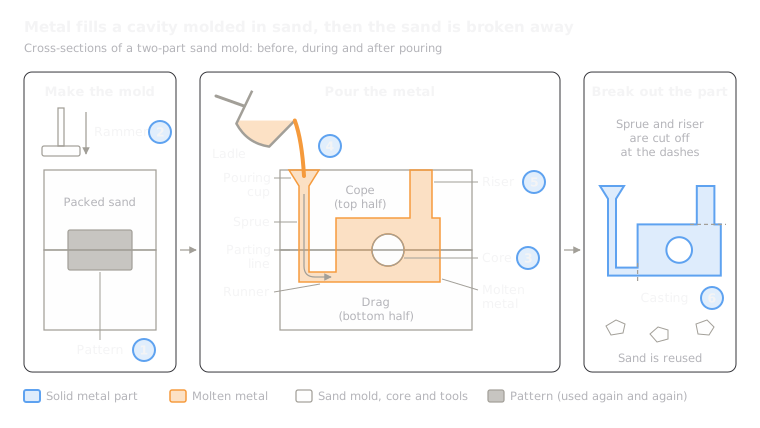 1.1ShortSand castingMetal poured into a cavity packed in sand; the sand is broken awayOpen the lesson
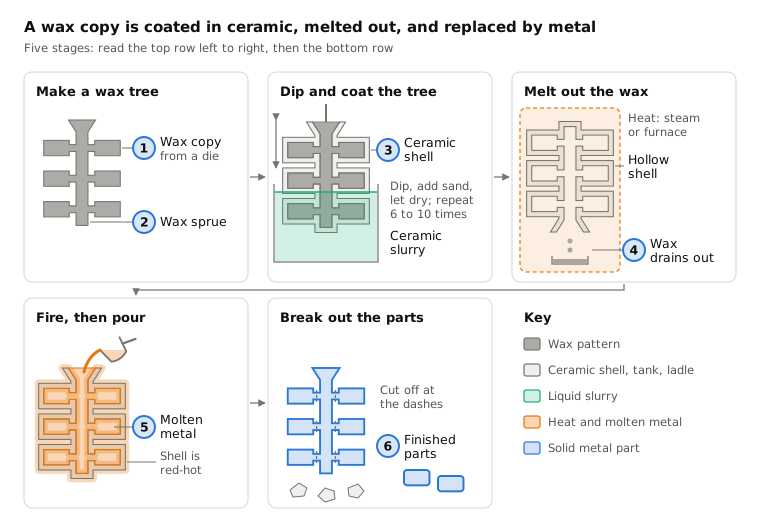
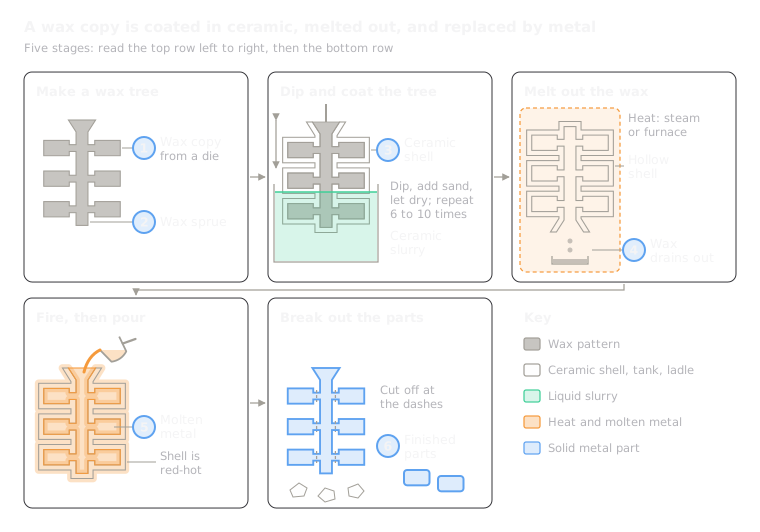 1.2Investment casting (lost wax)Wax copy coated in ceramic, melted out, then filled with metalOpen the lesson
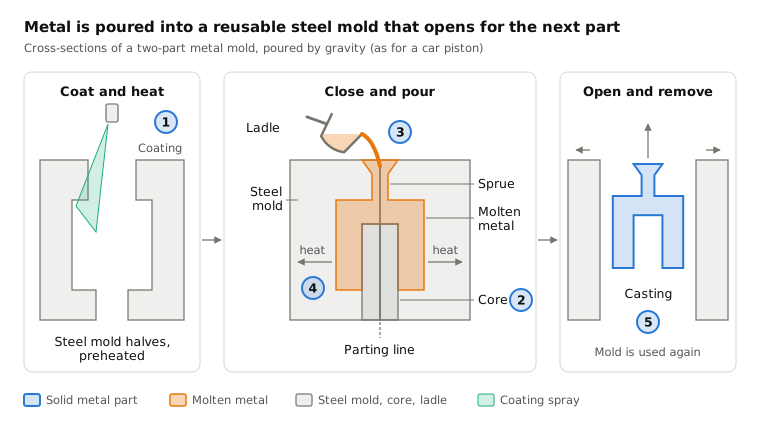
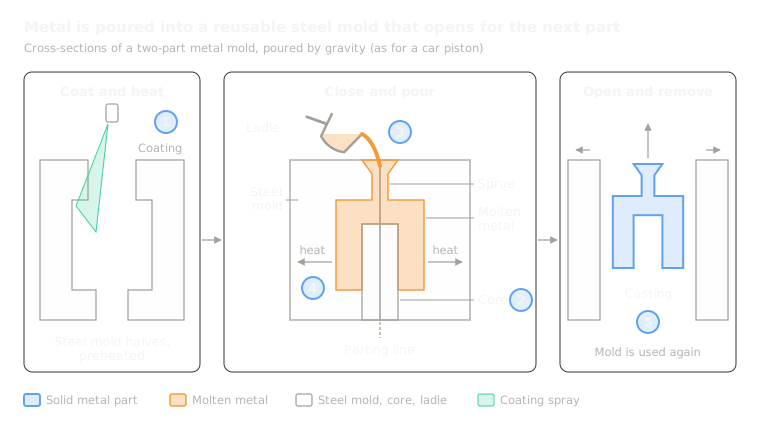 1.3Permanent mold castingMetal poured by gravity into a reusable steel moldOpen the lesson
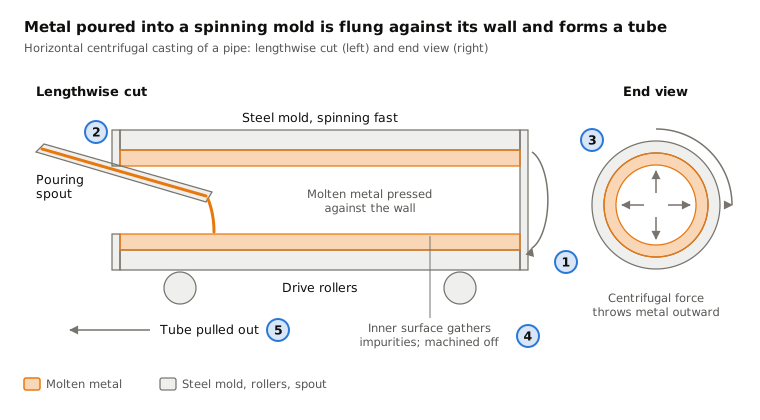
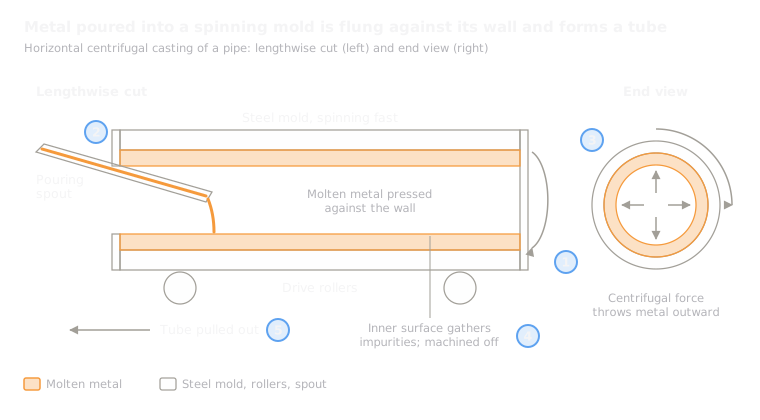 1.5Centrifugal castingMetal flung against the wall of a spinning moldOpen the lesson
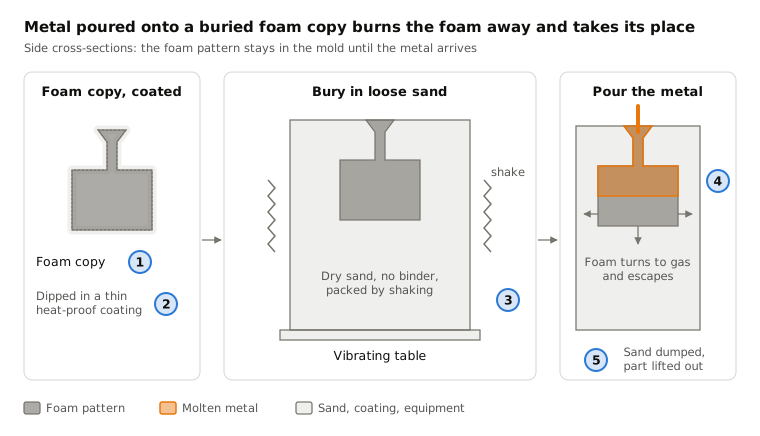
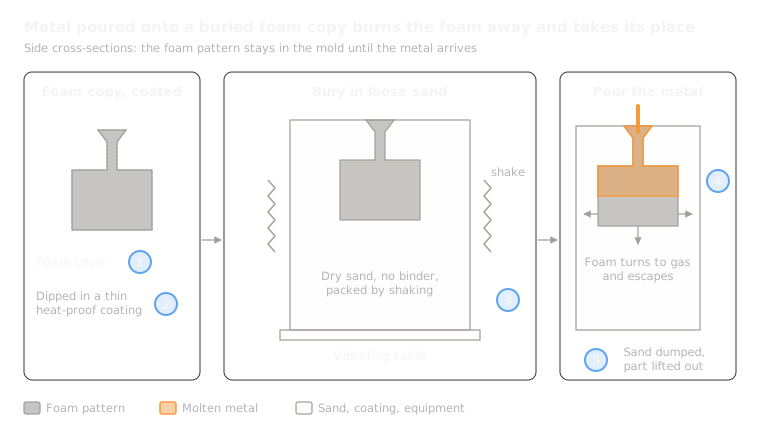 1.6Lost foam castingMetal poured onto a foam copy buried in loose sandOpen the lesson
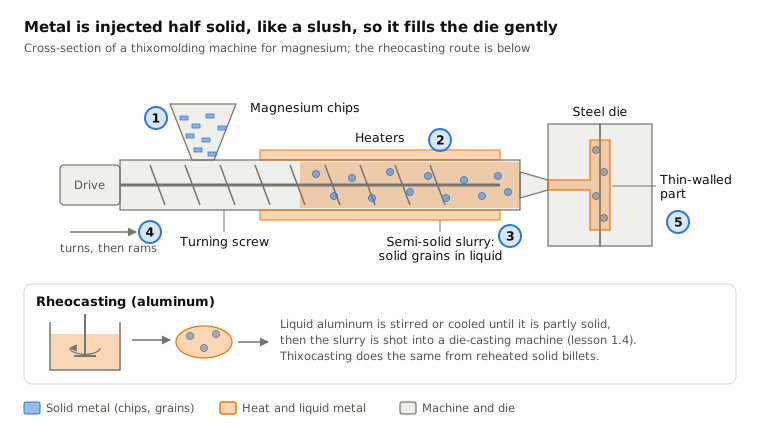
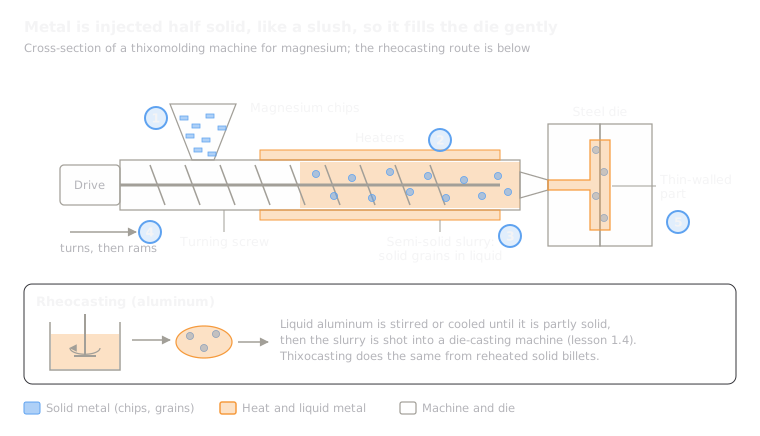 1.7Semi-solid casting (thixomolding and rheocasting)A half-solid metal slush injected into a steel dieOpen the lesson
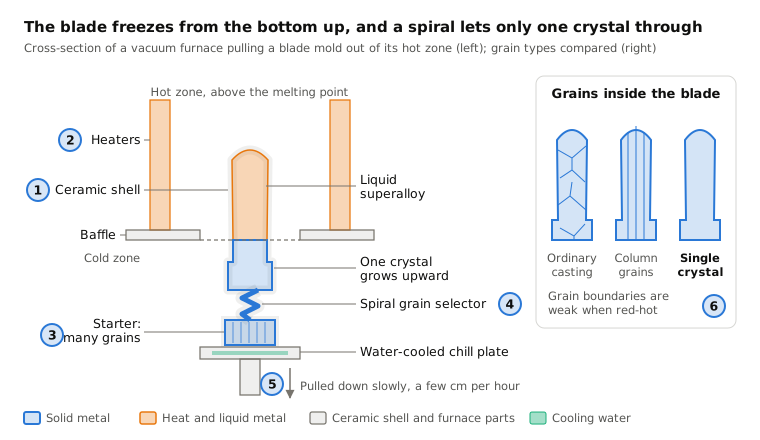
 1.8Single-crystal casting (turbine blades)Slow freezing from one end grows the part as one crystalOpen the lesson
Try it
Put AI to work in your CAD.
Model parts, generate drawings and automate the repetitive work inside your CAD software.