

Laser powder bed fusion (metal, SLM/DMLS)
A laser melts thin layers of metal powder (powder bed fusion)
Laser powder bed fusion (LPBF) melts fine metal powder with a laser, one thin layer at a time, to build fully dense metal parts. Machine makers call it SLM (selective laser melting) or DMLS (direct metal laser sintering). It matters because it makes metal shapes no cutting tool or mold could, such as rocket engine parts with cooling channels inside.
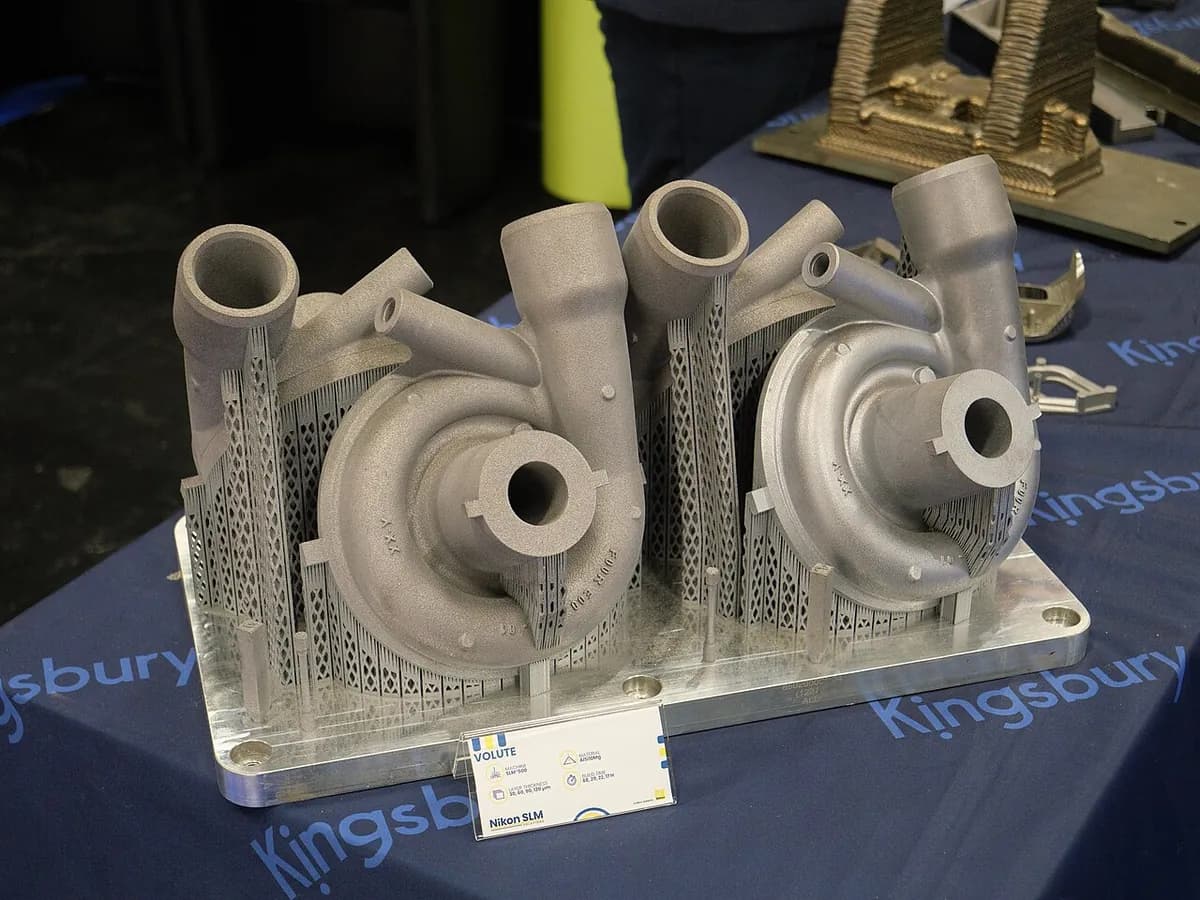
How it works
Slice and add supports. Software slices the model into very thin layers and adds supports (thin metal struts). They anchor overhangs to the build plate and draw heat away so the part does not warp.
Fill with argon. The chamber is sealed and flushed with argon or nitrogen, inert gases that keep hot metal from oxidizing. A steady gas flow sweeps smoke and spatter (tiny hot droplets) out of the laser's path.
Spread a layer. The supply piston rises, and a recoater blade spreads metal powder over the build plate, typically 0.02–0.06 mm thick.
Melt the slice. A fiber laser, typically 200–1,000 W, traces the slice. It melts the powder into a tiny melt pool that freezes almost instantly, welding onto the layer below.
Lower and repeat. The build plate drops by one layer and the cycle repeats, often thousands of times over one or more days.
Finish the part. While still on the plate, parts get a stress-relief heat treatment (slow heating that relaxes locked-in stresses). Then they are cut off, supports are removed, and many go on to HIP (hot isostatic pressing, lesson 9.3) and machining.
Key facts
- Materials
- Titanium alloys (Ti-6Al-4V), stainless and tool steels, nickel superalloys (Inconel), aluminum (AlSi10Mg), cobalt-chrome, copper alloys
- Typical parts
- Rocket engine injectors, turbine and fuel-system parts, medical implants, dental crowns, molds with cooling channels, heat exchangers
- Part size
- Typically 25–40 cm per side; the largest machines exceed 1 m
- Precision
- About ±0.1 mm as printed; critical faces are machined afterwards
- Surface finish
- Matte and slightly rough, like fine sandpaper; rougher on down-facing surfaces; often blasted, polished or machined
- Batch size it suits
- 1 to a few thousand parts a year; best when each part is complex and valuable
- Tooling and machine cost
- No tooling; machines cost several hundred thousand to a few million dollars
- Speed
- Slow: builds often take one to several days
Strengths and limits
Strengths
- Shapes impossible to machine or cast: inner channels, lattices, organic forms
- Fully dense metal, comparable to cast or wrought metal after heat treatment
- Several parts merged into one, saving assembly and weight
- Light designs from topology optimization (software that removes unneeded material)
Limits
- Very expensive machines, powder and post-processing
- Needs supports, which must be cut or machined off
- Locked-in heat stresses can warp parts or crack them off the plate
- Slow, with rough surfaces that often need machining
Where it's used
- SpaceRocket engine injectors, combustion chambers, turbopump parts
- AerospaceJet engine fuel nozzles, brackets, heat exchangers
- MedicalHip cups and spinal implants with porous surfaces, custom implants
- DentalCobalt-chrome crowns, bridges and denture frames
- ToolingInjection molds with conformal cooling (channels that follow the part's shape)
- MotorsportLight brackets, uprights, exhaust and hydraulic parts
How to recognize it
- A matte, slightly grainy gray metal surface, often with faint layer lines.
- Small scars or rough patches on down-facing surfaces, where supports were removed.
- A flat, often machined base where the part was cut off the build plate.
- Organic shapes, lattices or inner channels that no drill or mold could produce.
Compare with
Watch it
RAPID DIRECT · The full SLM workflow, explained for beginners
Billy Wu · Close-up footage of a part being built
3D Distributed · A machine at work: laser, sparks and recoater
NASA's Marshall Space Flight Center · Printed rocket engine parts at NASA
See real photos
- Wikipedia: Selective laser melting — process schematic and photos of printed metal parts
- Wikimedia Commons photo search
Remember
- LPBF melts metal powder with a laser in inert gas, building fully dense parts layer by layer.
- It makes complex, light metal parts no other process can, but slowly and at high cost.
- Supports, heat treatment, cutting off the plate and often machining are part of every job.
More in Additive manufacturing
All 100 processes
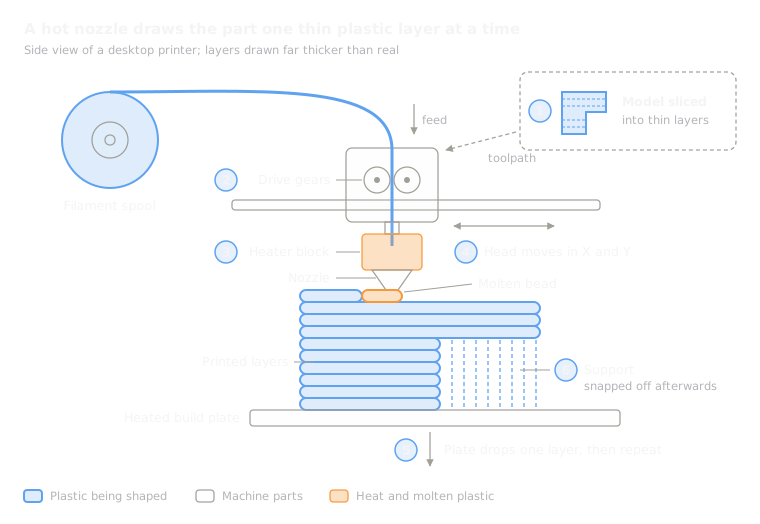 8.1ShortFDM (fused deposition modeling)Extrudes molten plastic filament through a moving nozzle (material extrusion)Open the lesson
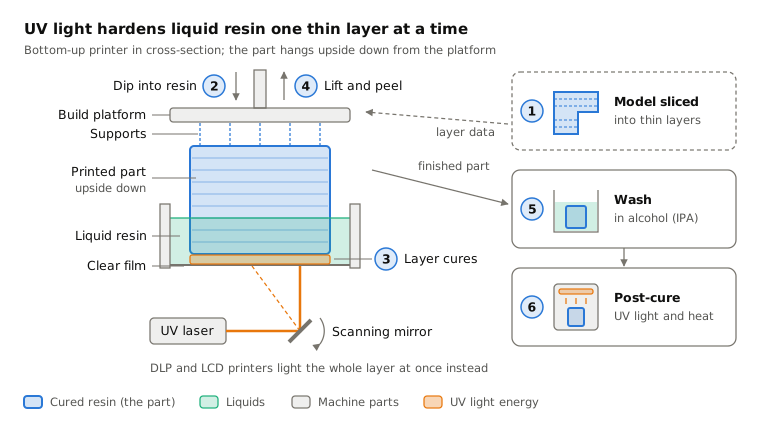
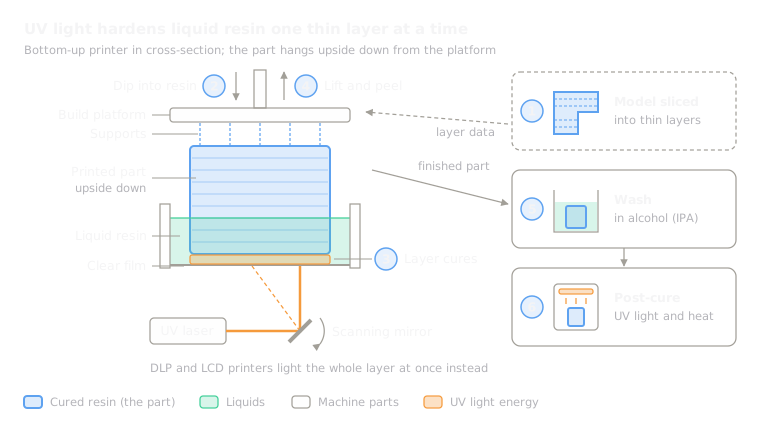 8.2Stereolithography (SLA/DLP)Hardens liquid resin layer by layer with a laser or projector (vat photopolymerization)Open the lesson
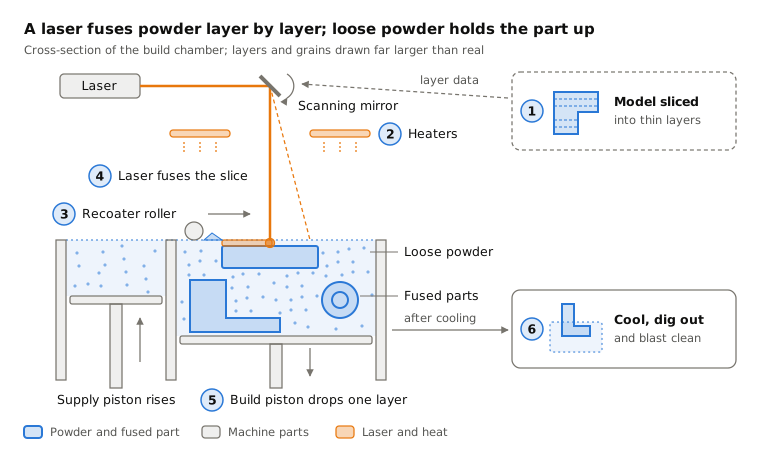
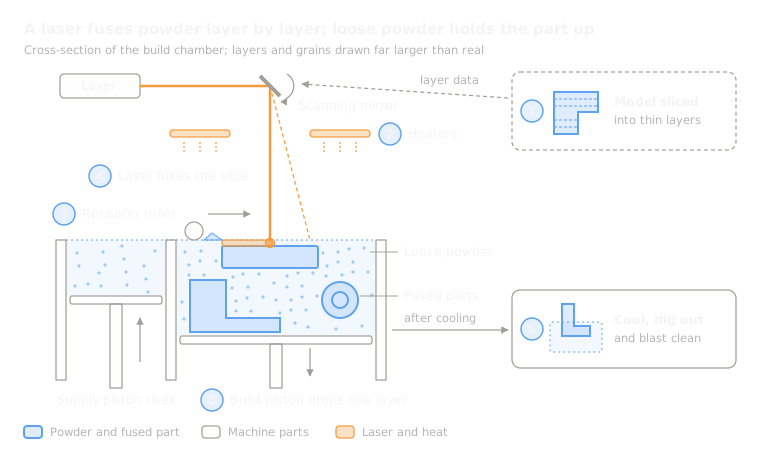 8.3Selective laser sintering (SLS)A laser fuses nylon powder in a bed; the loose powder supports the part (powder bed fusion)Open the lesson
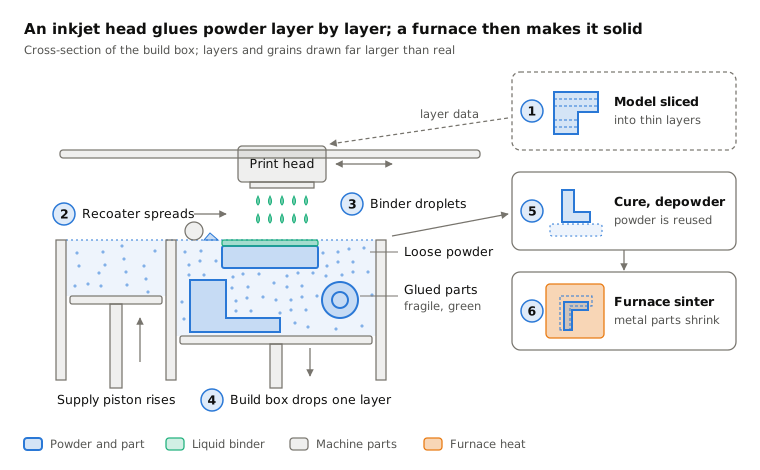
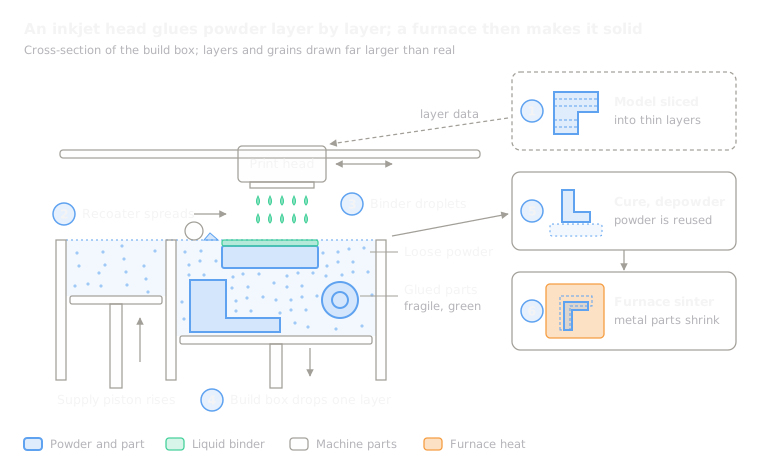 8.5Binder jettingInkjet heads glue powder, then the part is cured or sintered (binder jetting)Open the lesson
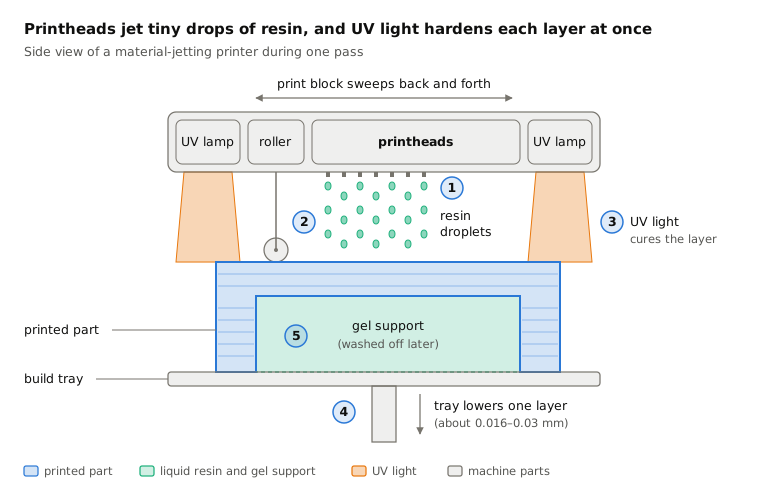
 8.6Material jetting (PolyJet)Jets droplets of resin and cures them with UV light (material jetting)Open the lesson
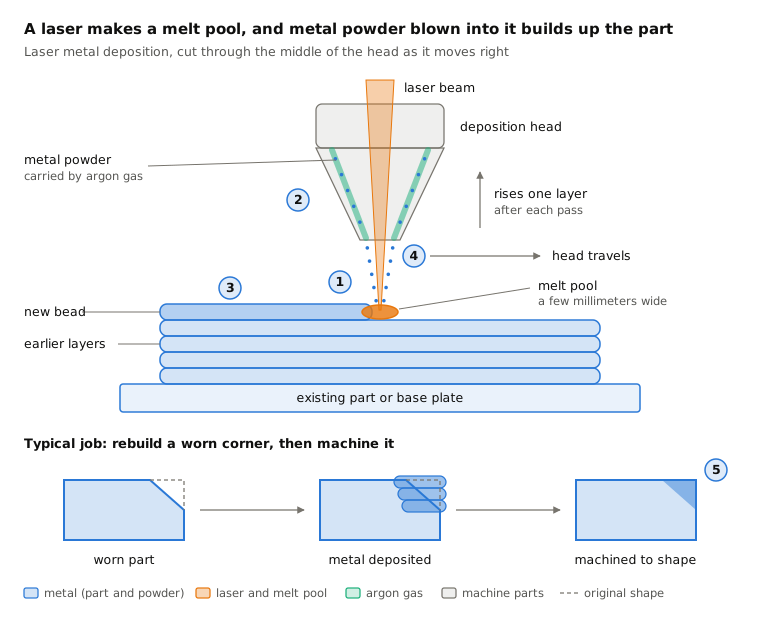
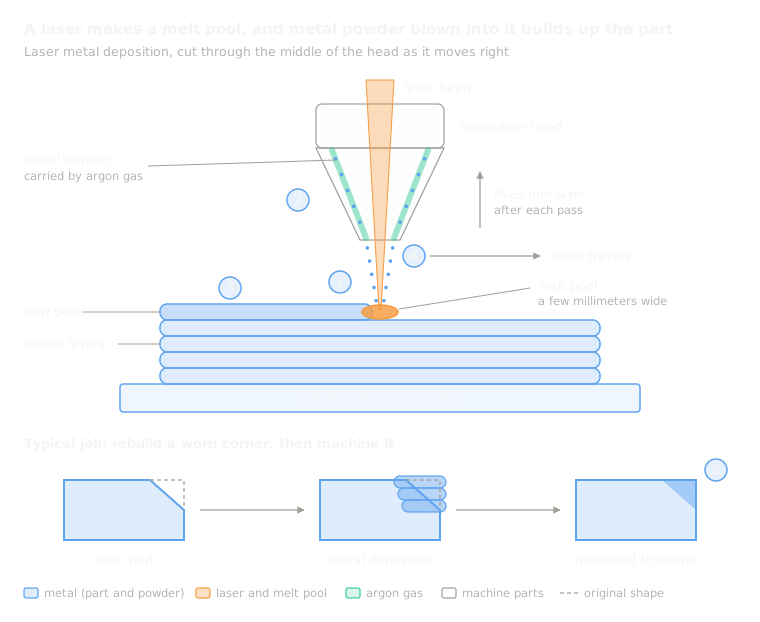 8.7Directed energy deposition (DED/LMD)A laser melts a pool on the part; blown powder adds metal (directed energy deposition)Open the lesson
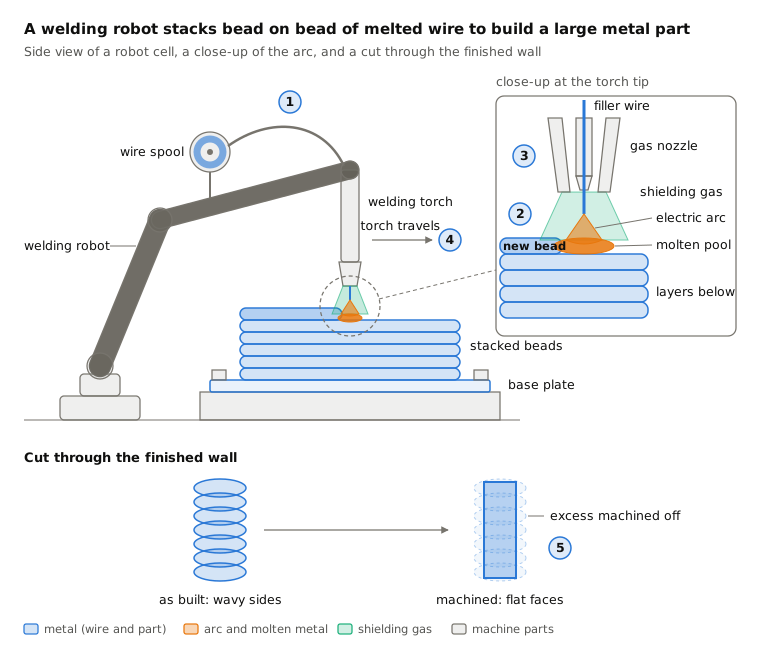
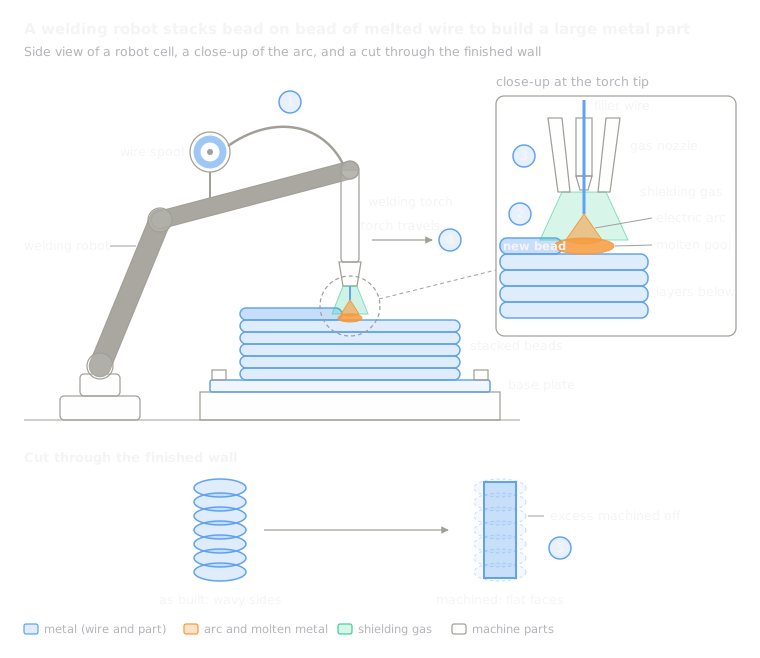 8.8Wire arc additive manufacturing (WAAM)A welding robot stacks arc-melted wire into beads (directed energy deposition)Open the lesson
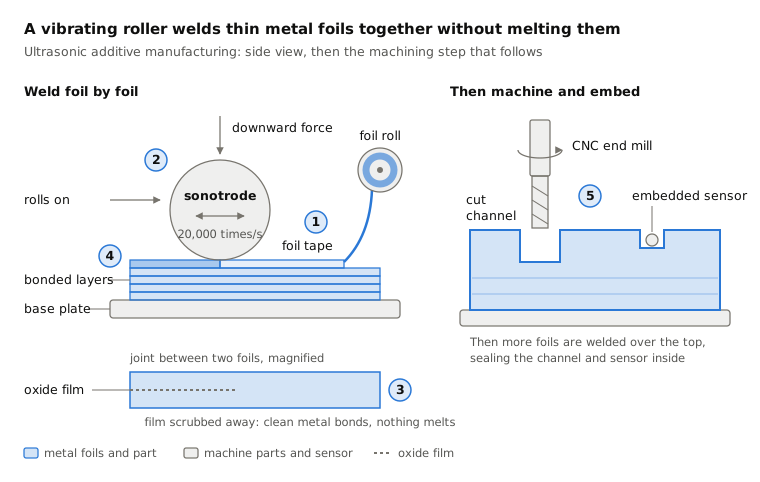
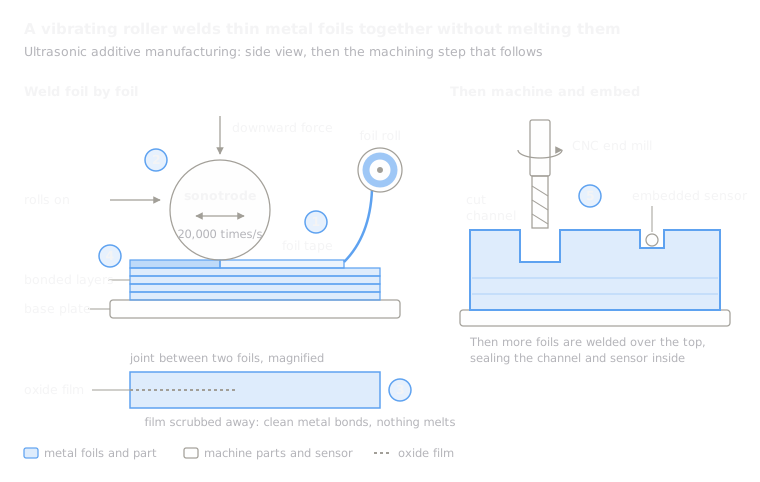 8.9Ultrasonic additive manufacturing (UAM)Ultrasonic vibration welds metal foils without melting, then a mill trims them (sheet lamination)Open the lesson
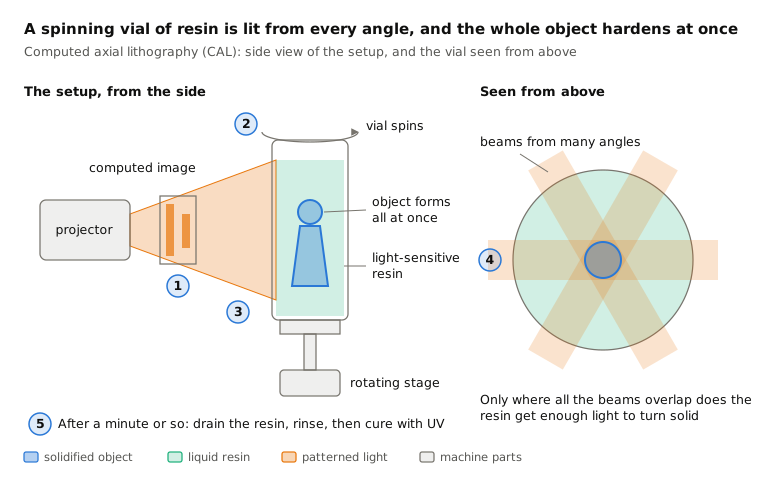
 8.10Volumetric printing (CAL)Light from every angle cures a spinning vial of resin all at once (volumetric printing)Open the lesson
Try it
Put AI to work in your CAD.
Model parts, generate drawings and automate the repetitive work inside your CAD software.