

Ultrasonic additive manufacturing (UAM)
Ultrasonic vibration welds metal foils without melting, then a mill trims them (sheet lamination)
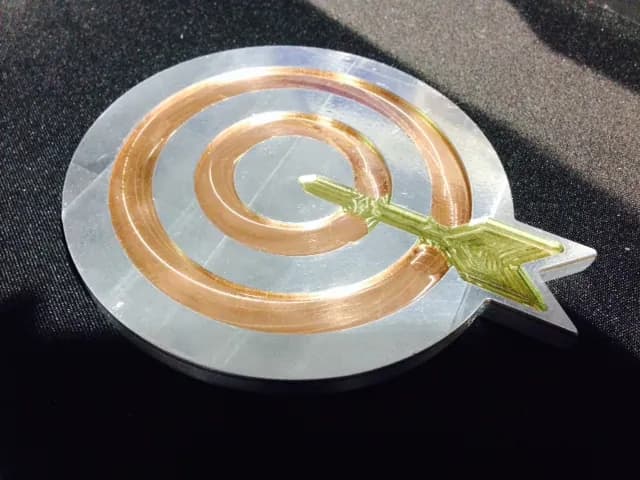
Ultrasonic additive manufacturing (UAM) builds metal parts by welding thin foils onto each other with high-frequency vibration. Nothing melts: the metal stays solid, much as two very clean metal surfaces can stick when rubbed hard together. Because it runs cool, UAM can bury sensors, wires and cooling channels inside solid metal.
How it works
Lay a foil. A strip of metal foil, typically about 0.15 mm thick and 25 mm wide, unrolls onto the part.
Press and vibrate. A sonotrode (a wheel-shaped horn driven by ultrasonic vibration) rolls over the foil. It presses hard and scrubs it side to side about 20,000 times a second (20 kHz).
Bond without melting. The scrubbing breaks the thin oxide film (a skin of tarnish) on both surfaces. Clean metal touches clean metal and the atoms bond, while the part stays warm, not molten.
Repeat. Foils are laid side by side and on top of each other, building a solid block layer by layer.
Machine and embed. Every few layers, a built-in CNC mill (a computer-controlled cutter) trims the outline and cuts channels or pockets. Sensors or fibers go into a pocket, and new foils seal them in.
Key facts
- Materials
- Aluminum alloys (most common), copper, titanium, nickel and steel foils; dissimilar pairs such as aluminum with copper or titanium
- Typical parts
- Heat exchangers with internal channels, parts with embedded sensors or fibers, multi-metal plates and transition joints
- Part size
- From a few centimeters up to roughly 1.8 m across on the largest machines
- Precision
- Set by the built-in CNC mill: about ±0.05 mm on machined faces
- Surface finish
- Machined, so as smooth as any milled part
- Batch size it suits
- Prototypes, one-offs and small series of high-value parts
- Tooling and machine cost
- No tooling. Machines typically cost from several hundred thousand to millions of dollars
- Speed
- Hours to days per part: welding is quick, but the machining stops add time
Strengths and limits
Strengths
- No melting, so dissimilar metals join without brittle layers
- Sensors, fibers and electronics survive being buried in metal
- Internal channels with no supports or loose powder to clean out
- Machined accuracy and finish from the same machine
Limits
- Works best with softer metals; aluminum is by far the easiest
- Bonds between foils can be weaker in the stacking direction
- Mostly blocky shapes; thin, tall or intricate features are hard
- Few machine makers and costly equipment
Where it's used
- Aerospace and spaceHeat exchangers and thermal-control parts for satellites and aircraft
- ElectronicsCold plates and housings with built-in cooling channels
- Energy and researchStructures with embedded fiber-optic or temperature sensors
- Heavy industryMulti-metal transition joints, such as aluminum bonded to steel or copper
How to recognize it
- Blocky parts that look milled from solid, with no layer lines on the outside.
- On a cut and etched section, thin stripes about 0.15 mm apart: the foil layers.
- Two different metals in one block, such as aluminum on copper, meeting at a sharp, straight boundary.
- Hidden internal channels or wires that no cutter could have reached from outside.
Compare with
Watch it
Fabrisonic3D · The maker explains how ultrasonic welding bonds foils without melting
Fabrisonic3D · Real footage of the machine laying, welding and trimming foils
Fabrisonic3D · Example parts: embedded sensors, internal channels, mixed metals
Fabrisonic3D · A large production machine at work
See real photos
- Wikipedia: Ultrasonic consolidation — the process and its history; text only, no photos
- Wikimedia Commons photo search
Remember
- UAM welds metal foils with pressure and ultrasonic vibration, never melting them.
- Low heat lets it join dissimilar metals and bury sensors inside solid metal.
- It alternates welding and CNC machining, so parts come out accurate.
More in Additive manufacturing
All 100 processes
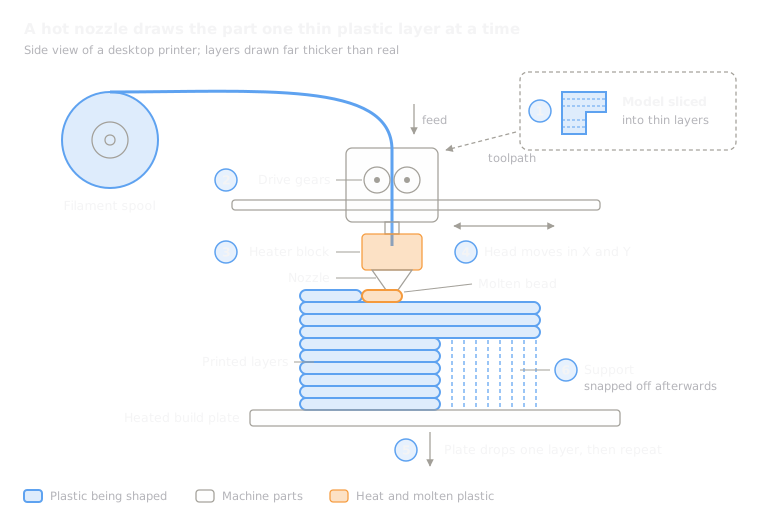 8.1ShortFDM (fused deposition modeling)Extrudes molten plastic filament through a moving nozzle (material extrusion)Open the lesson
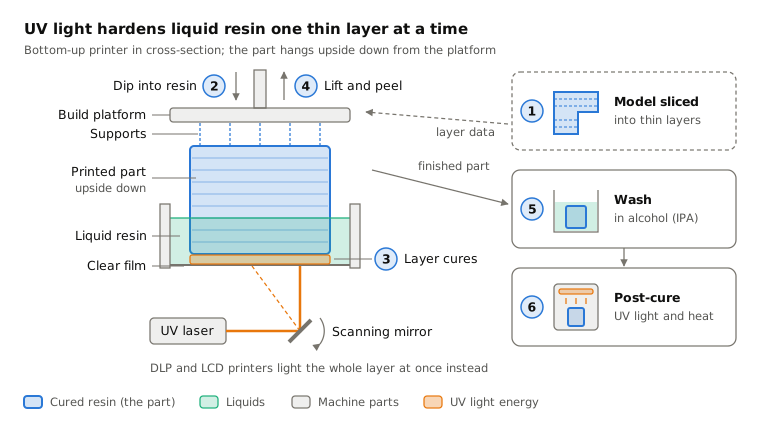
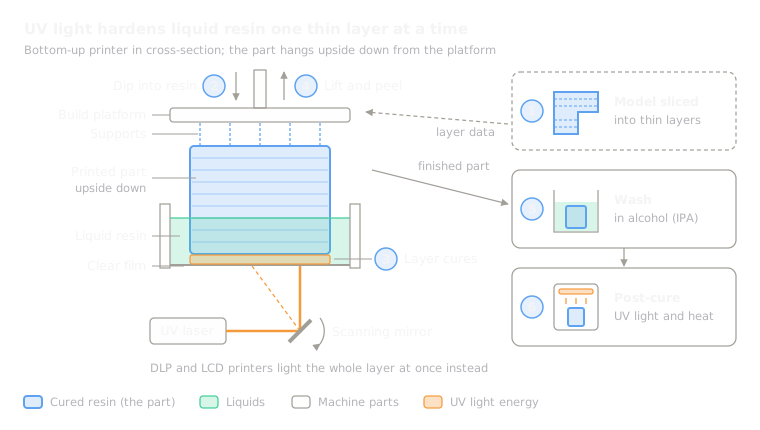 8.2Stereolithography (SLA/DLP)Hardens liquid resin layer by layer with a laser or projector (vat photopolymerization)Open the lesson
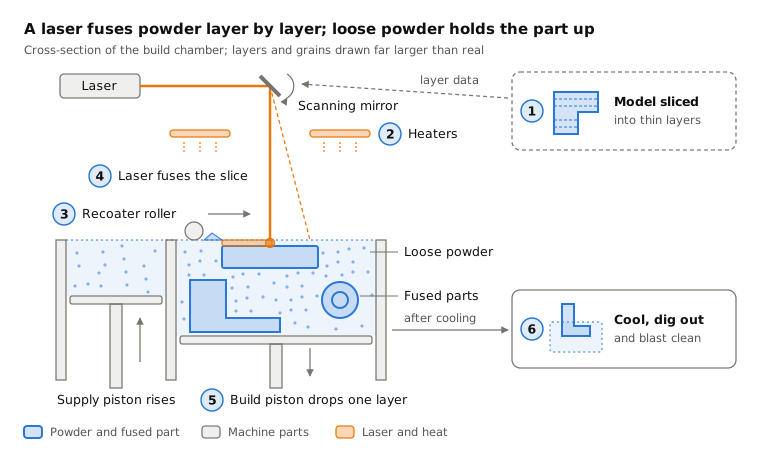
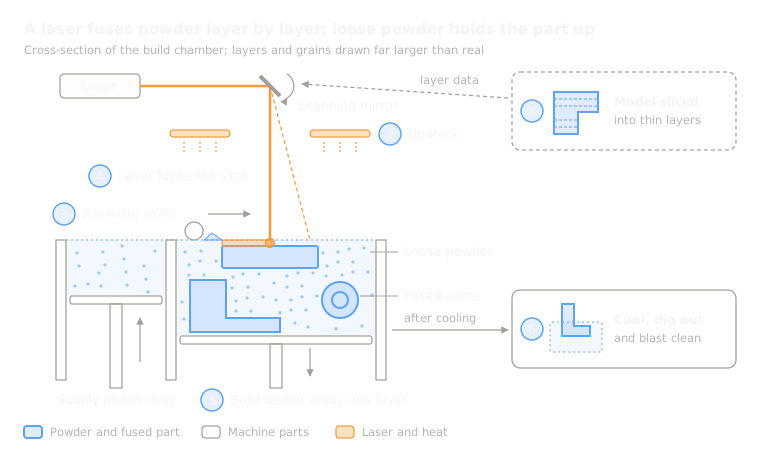 8.3Selective laser sintering (SLS)A laser fuses nylon powder in a bed; the loose powder supports the part (powder bed fusion)Open the lesson
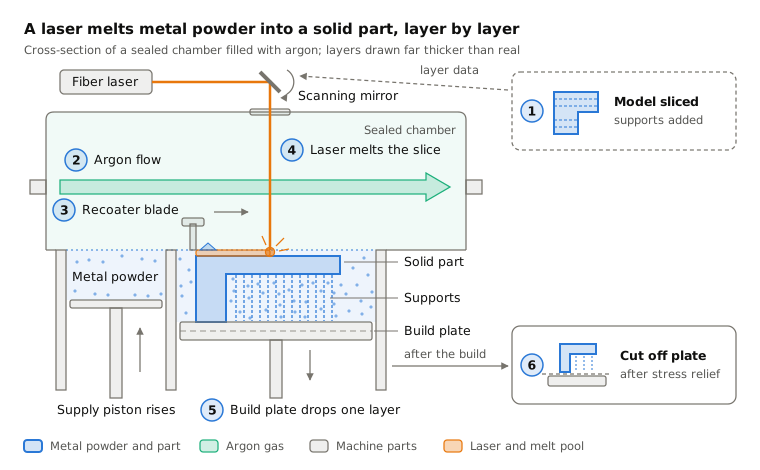
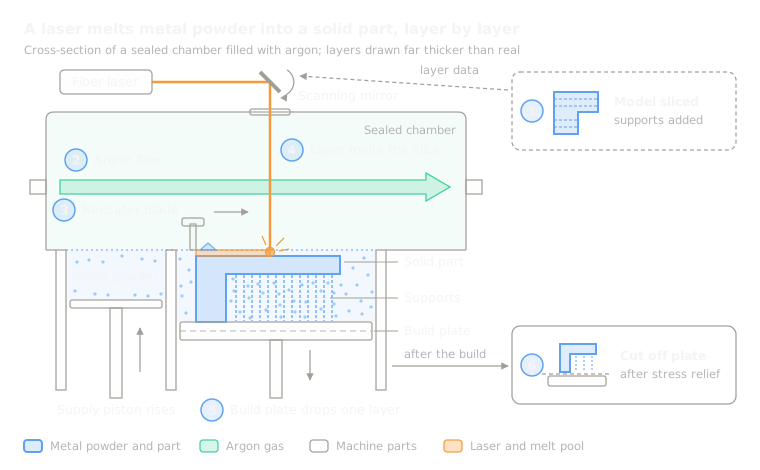 8.4Laser powder bed fusion (metal, SLM/DMLS)A laser melts thin layers of metal powder (powder bed fusion)Open the lesson
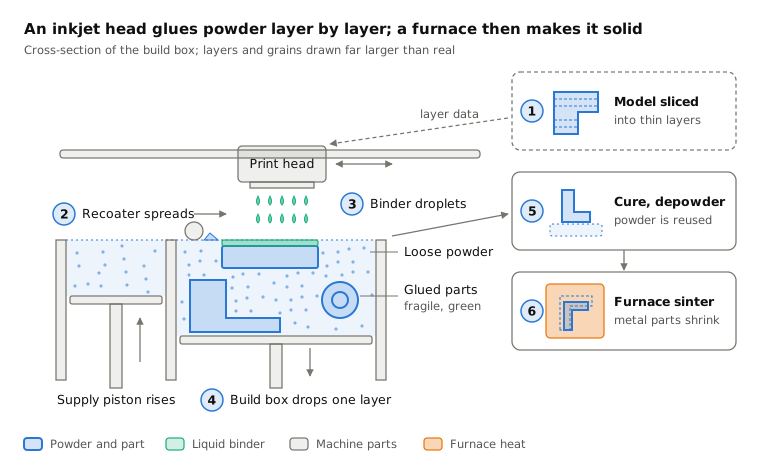
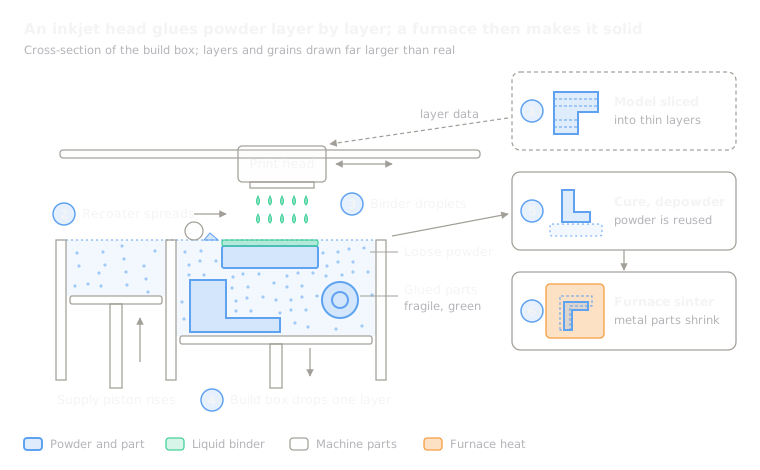 8.5Binder jettingInkjet heads glue powder, then the part is cured or sintered (binder jetting)Open the lesson
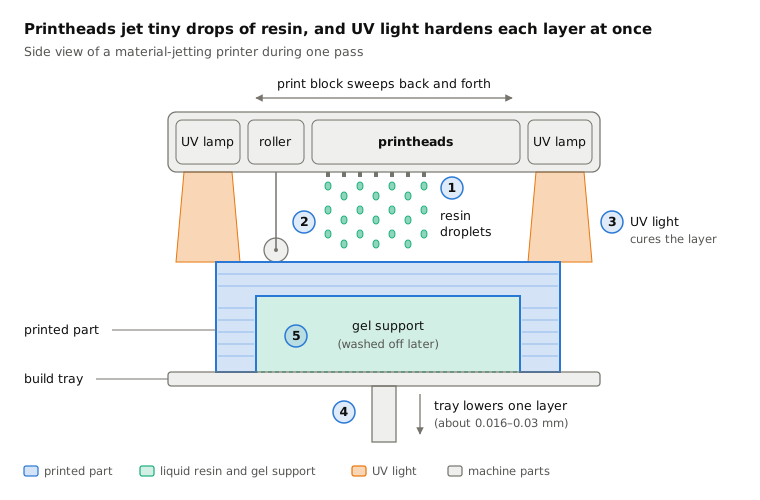
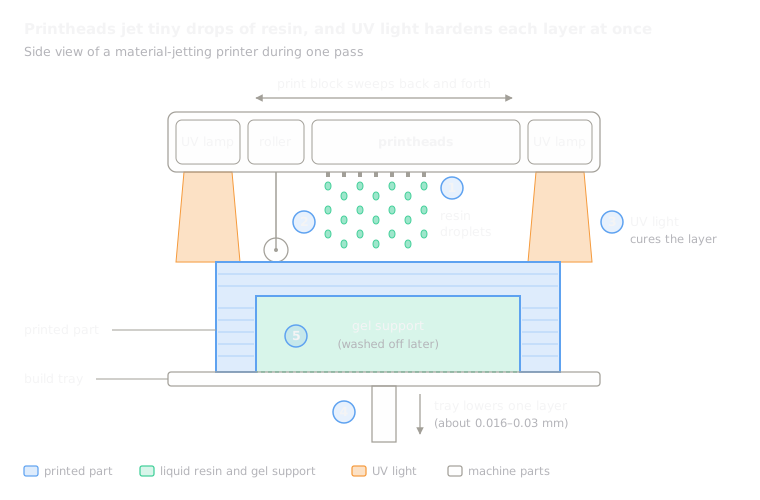 8.6Material jetting (PolyJet)Jets droplets of resin and cures them with UV light (material jetting)Open the lesson
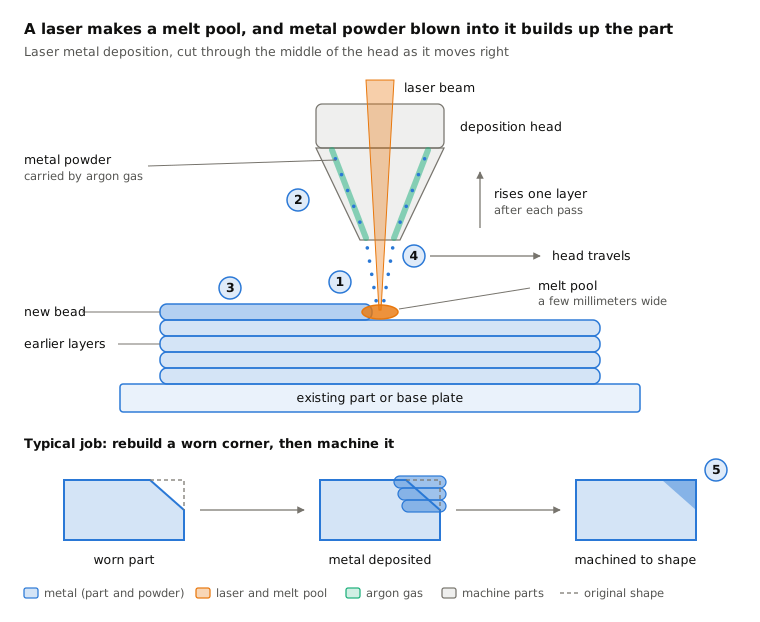
 8.7Directed energy deposition (DED/LMD)A laser melts a pool on the part; blown powder adds metal (directed energy deposition)Open the lesson
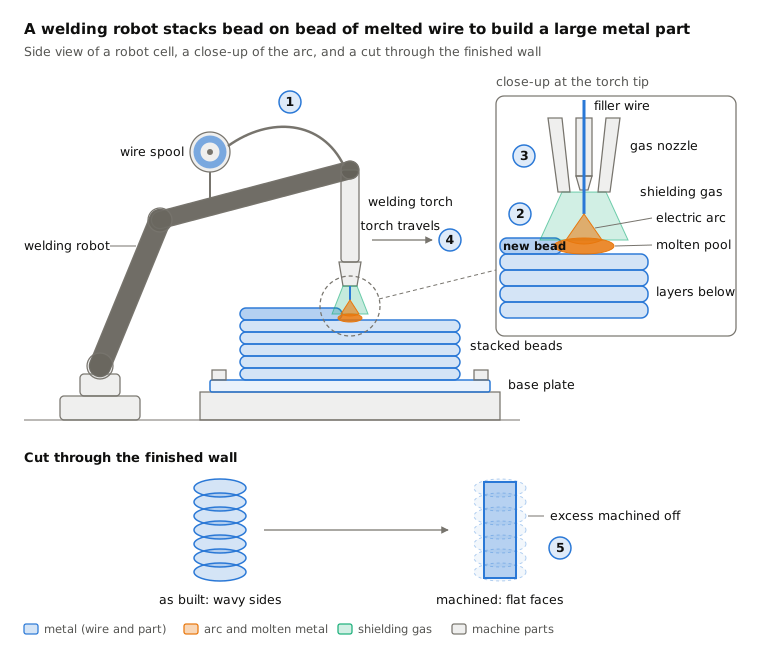
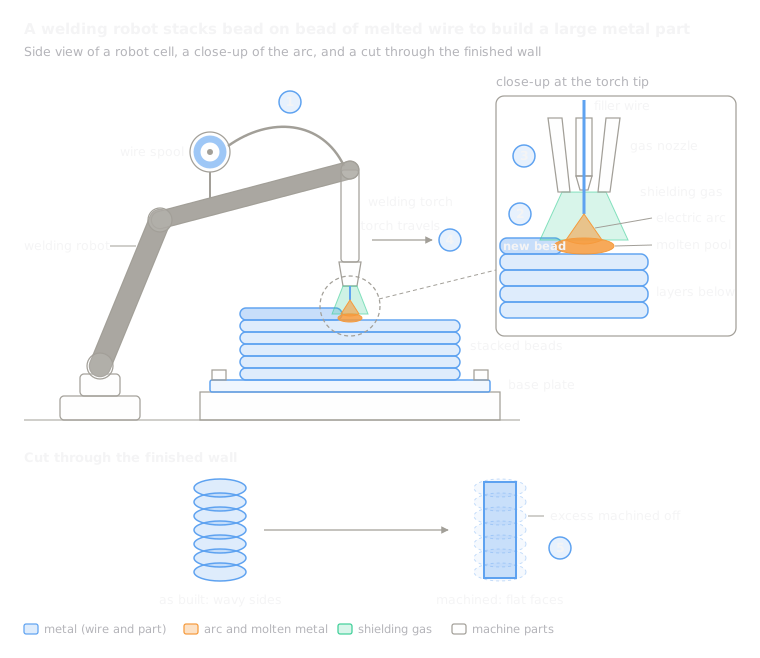 8.8Wire arc additive manufacturing (WAAM)A welding robot stacks arc-melted wire into beads (directed energy deposition)Open the lesson
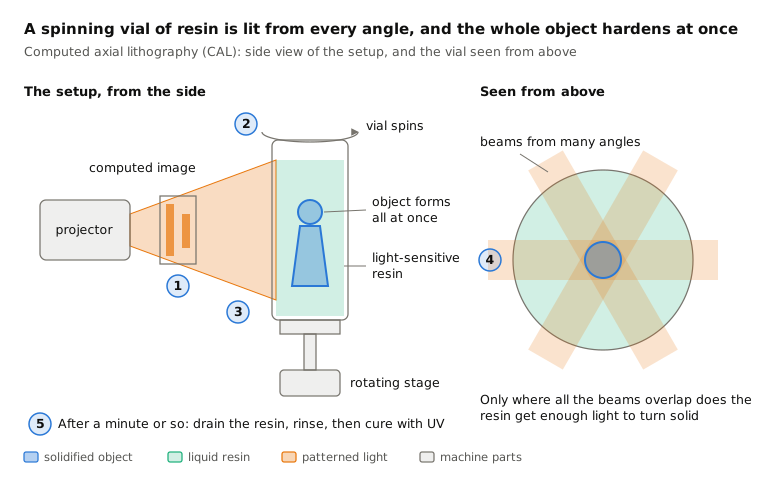
 8.10Volumetric printing (CAL)Light from every angle cures a spinning vial of resin all at once (volumetric printing)Open the lesson
Try it
Put AI to work in your CAD.
Model parts, generate drawings and automate the repetitive work inside your CAD software.