

Ultrasonic welding
Solid state: fast vibration bonds small joints in under a second
Ultrasonic welding joins parts by pressing them together and shaking them very fast, about 20,000 to 40,000 times a second. The rubbing heats the joint until it bonds, in well under a second, with no glue, screws or filler. Most welded plastic housings, from car lights to toothbrush handles, and many battery and wire connections are made this way.
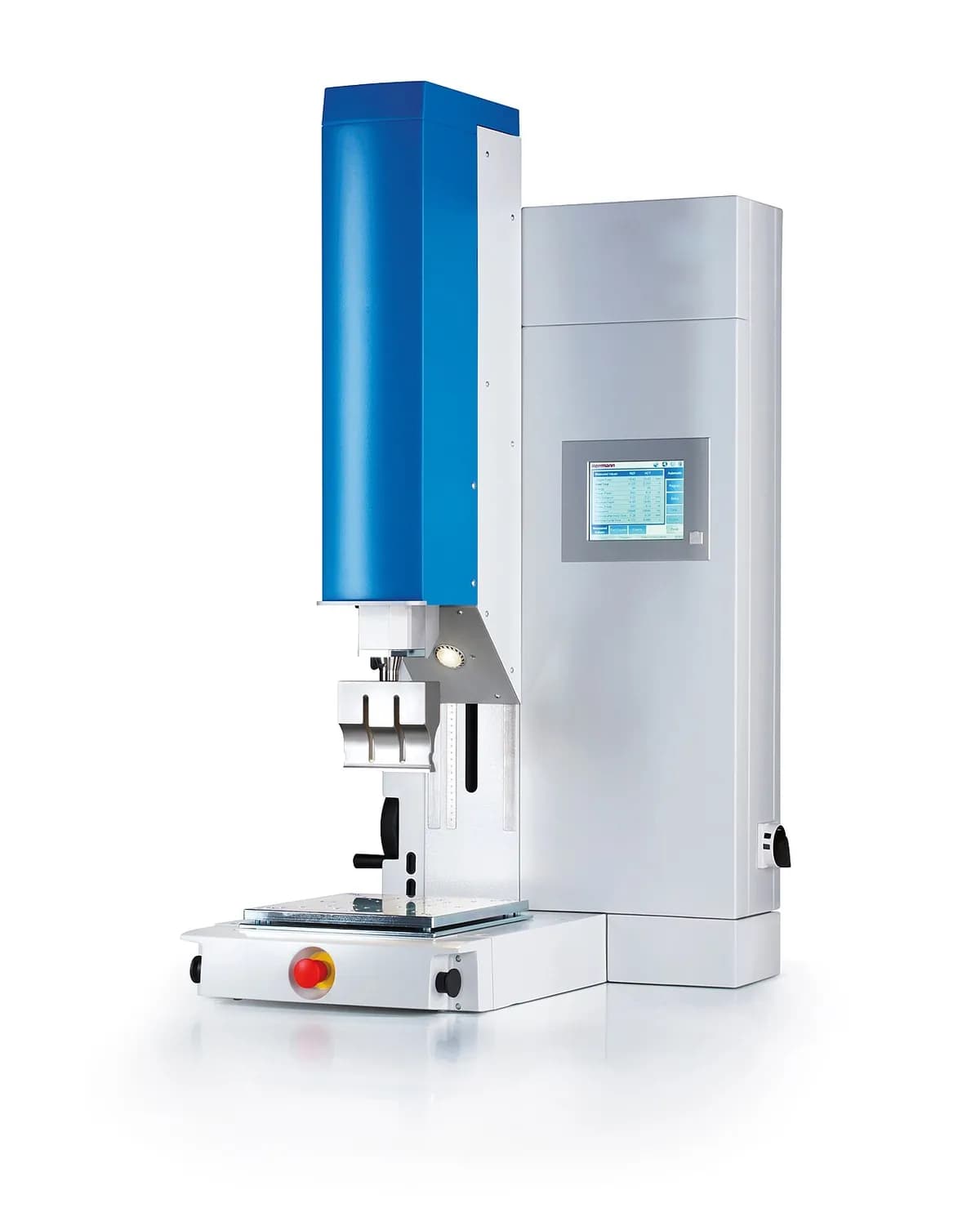
How it works
Load the parts. The two parts sit in a fixture on the anvil (a fixed support shaped to hold them). Plastic parts are molded with a small ridge called an energy director where they touch.
Press. The horn (also called a sonotrode, the shaped metal tip of the machine) comes down and squeezes the parts together.
Vibrate. A generator sends high-frequency current to the converter, whose piezoelectric crystals (materials that change shape with voltage) turn it into vibration. The booster and horn amplify it to a movement of a few hundredths of a millimeter.
Melt the joint. Friction concentrates heat at the small contact point, so the energy director melts first and flows across the joint. The rest of the part stays cool.
Hold and cool. The vibration stops, but the force stays on for a moment while the melt freezes. The two parts are now one.
Metals work differently. For metal wires, foils and battery tabs, the horn scrubs sideways instead of hammering up and down. The rubbing breaks up surface oxides and presses clean metal together, so the joint forms without melting.
Key facts
- Materials
- Thermoplastics such as ABS, polycarbonate, polypropylene and nylon; thin, soft metals such as copper and aluminum foils and wires
- Typical parts
- Car light housings, medical devices, filters, toys, blister packs, battery tabs, wire harness splices
- Part size
- Joint areas from a few millimeters up to about 20–30 cm with one horn; metal sheets usually under about 1 mm
- Precision
- Very repeatable; height of the welded part typically within about ±0.05–0.1 mm when the machine controls the collapse
- Surface finish
- Clean, often invisible joint; sometimes a small bead of squeezed-out plastic (flash) or a textured mark from the horn on metals
- Batch size it suits
- Large series; each part shape needs its own horn and fixture
- Tooling and machine cost
- Tens of thousands of dollars for a welder; a few thousand for each custom horn and fixture
- Speed
- Weld time typically 0.1–1 s; a full cycle of a few seconds, so thousands of parts a day per machine
Strengths and limits
Strengths
- Very fast, clean and easy to automate
- No glue, screws, solvents or filler to buy
- Low energy use, heat only at the joint
- Joins dissimilar metals such as copper to aluminum
Limits
- Only for small joints and fairly thin parts
- Each part design needs its own horn and fixture
- Works only with thermoplastics and soft, thin metals
- Vibration can damage delicate electronics inside the part
Where it's used
- AutomotiveTail-light and headlamp housings, wire harness splices
- BatteriesCell tabs and busbars in electric-car and phone batteries
- MedicalFilters, IV parts, sealed device housings
- PackagingBlister packs, coffee capsule lids, tube sealing
- Consumer goodsToys, toothbrushes, phone parts, nonwoven masks and wipes
How to recognize it
- Two molded plastic halves joined with no screws, clips or glue, and a thin seam that cannot be opened.
- Sometimes a fine line of squeezed-out plastic along the seam.
- On metal wire splices or battery tabs, a small flattened area with a textured, knurled pattern left by the horn.
Compare with
Watch it
DuskLight · The parts of the machine, animated
The Weld Nugget · How vibration becomes heat at the joint
Branson Ultrasonics · A welder working on an automated line
HerrmannUltrasonics · Many real products made this way
See real photos
- Wikipedia: Ultrasonic welding — the parts of the welding stack and applications, with links to photos
- Wikimedia Commons photo search
Remember
- Vibration at 20,000 or more cycles per second turns into heat right at the joint.
- Plastic joints melt at a small ridge; metal joints bond without melting by scrubbing sideways.
- It is fast and clean, but limited to small joints and thin parts.
More in Joining
All 100 processes
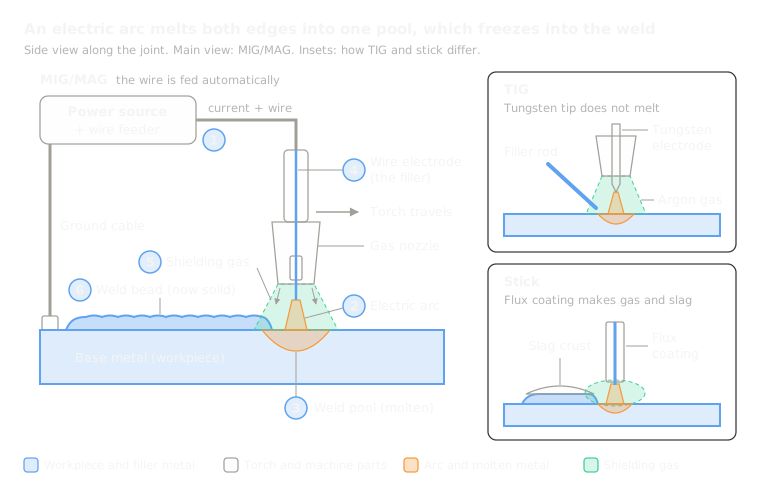 7.1ShortArc welding (MIG/MAG, TIG, stick)Fusion: an electric arc melts the edges and usually a fillerOpen the lesson
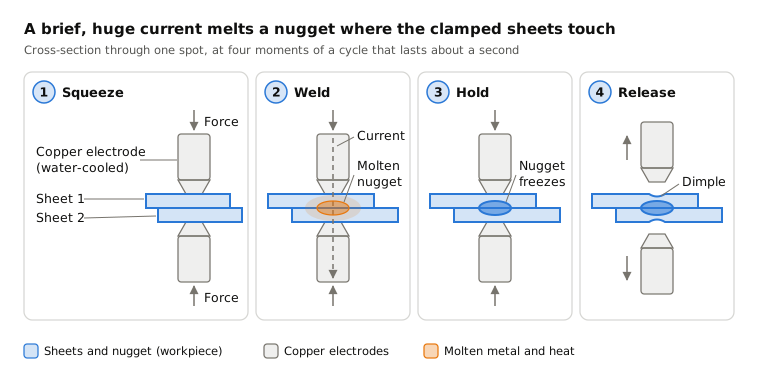
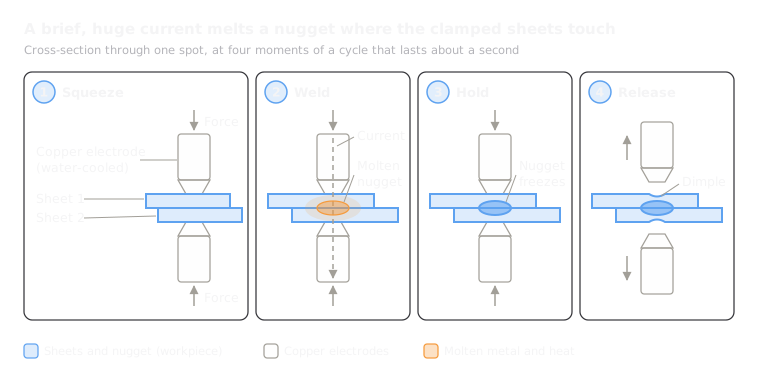 7.2Resistance spot weldingFusion: a pulse of current melts a nugget between clamped sheetsOpen the lesson
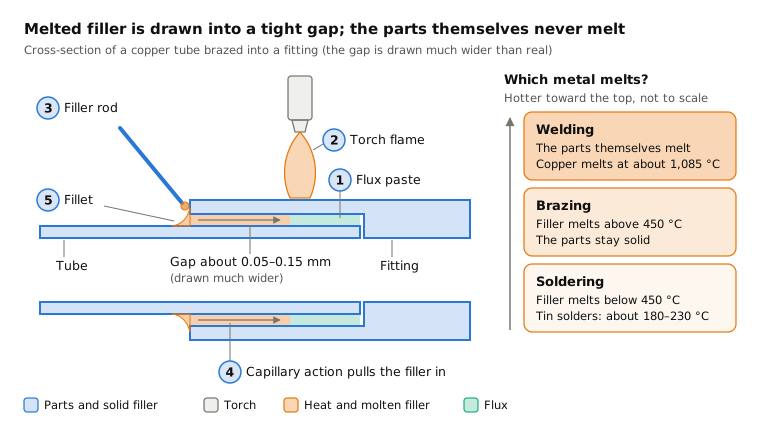
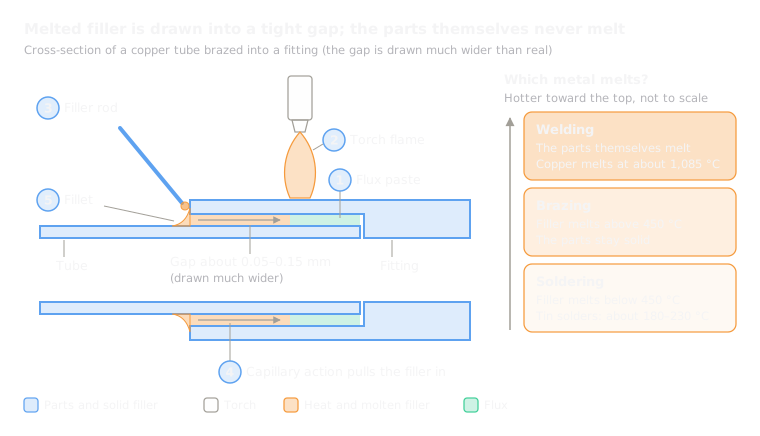 7.3Brazing and solderingFiller only: a lower-melting filler flows into a tight gapOpen the lesson
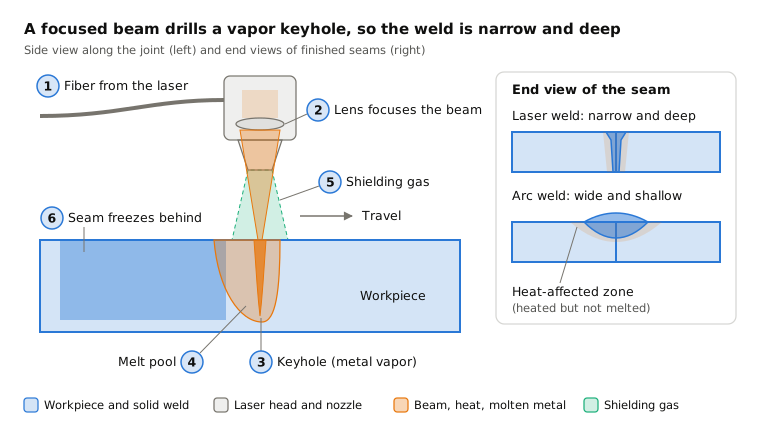
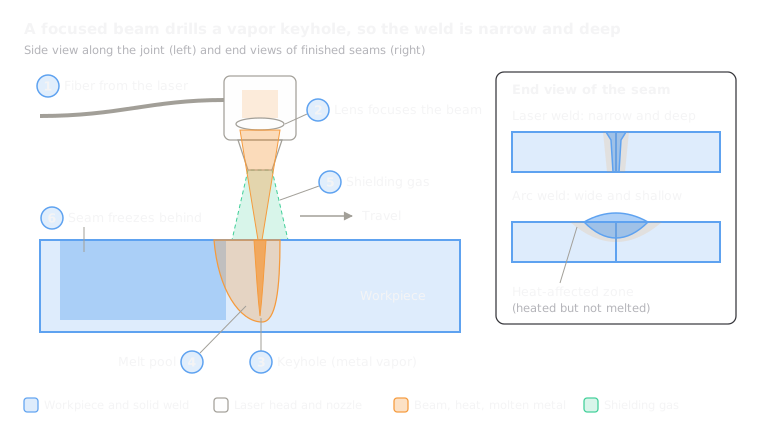 7.4Laser weldingFusion: a focused laser drills a keyhole for narrow, deep weldsOpen the lesson
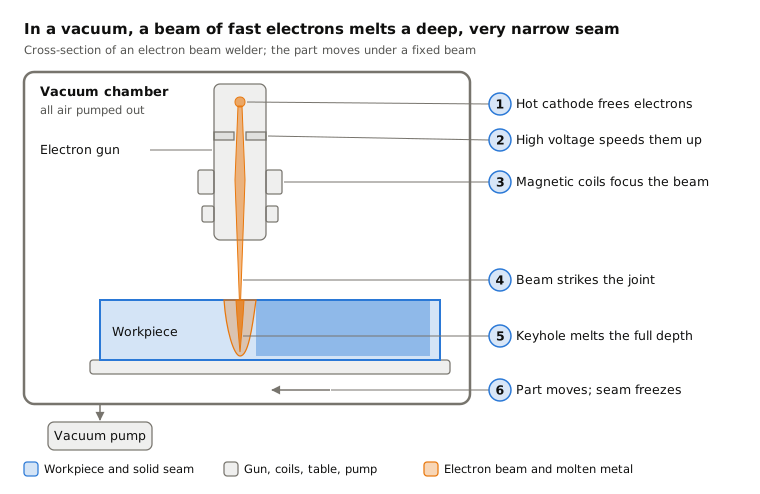
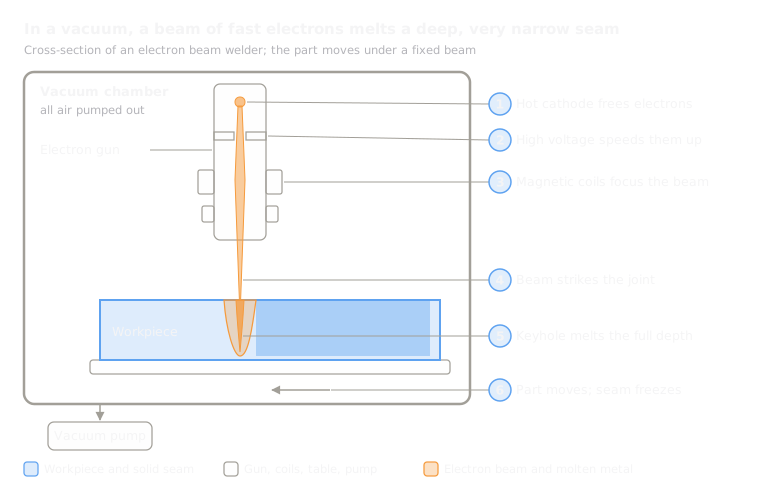 7.5Electron beam weldingFusion: an electron beam in a vacuum welds very thick metalOpen the lesson
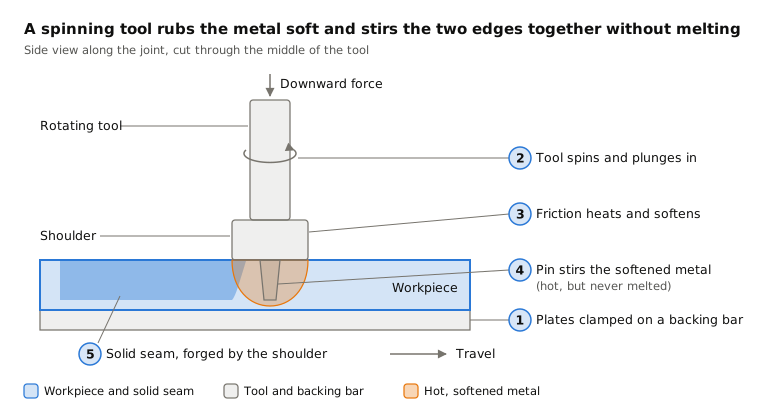
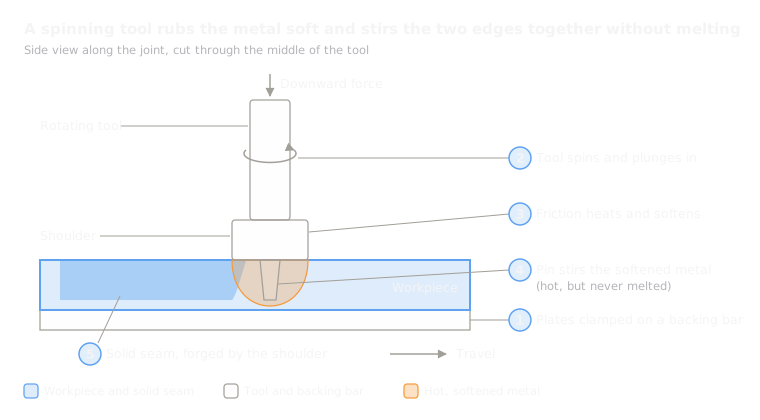 7.6Friction stir weldingSolid state: a spinning tool stirs softened edges togetherOpen the lesson
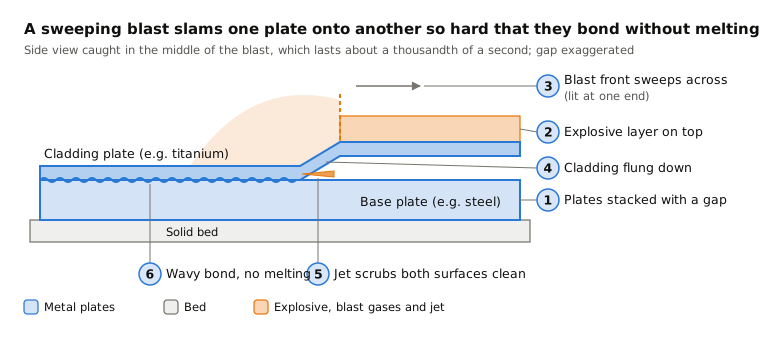
 7.8Explosion welding (cladding)Solid state: a blast slams one plate onto anotherOpen the lesson
Try it
Put AI to work in your CAD.
Model parts, generate drawings and automate the repetitive work inside your CAD software.