

Joining
Joining processes make one permanent part out of several, so that the joint carries load as if it were solid metal or plastic. They all share one principle: bring clean atoms of the two parts so close that they bond. Melting, pressure, friction or a molten filler are just different ways to get there.
The big idea
Every metal surface is covered with oxides and dirt that stop atoms from bonding. A joining process must get through that barrier. Fusion welding melts the edges of both parts so they flow into one pool and freeze together: arc, resistance spot, laser and electron beam welding. Solid-state welding never melts the parts; it scrubs and squeezes clean surfaces together until they bond, using friction, vibration or a blast: friction stir, ultrasonic and explosion welding. Brazing and soldering keep the parts solid too, but melt a separate filler metal that flows into the gap, like a metallic glue. Think of joining two pieces of chocolate: you can melt both edges together (fusion), press them hard until they stick (solid state), or glue them with melted caramel (brazing). Bolts, rivets and adhesives also join parts, but they are outside this course.
The 8 processes in this chapter
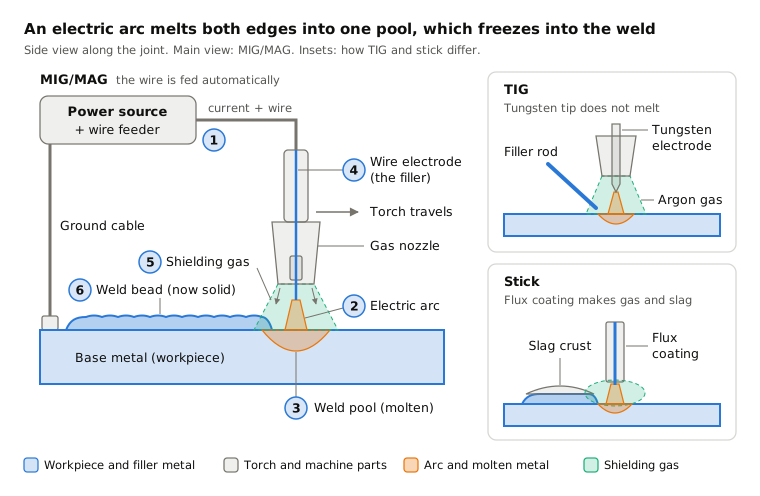
 7.1ShortArc welding (MIG/MAG, TIG, stick)Fusion: an electric arc melts the edges and usually a fillerOpen the lesson
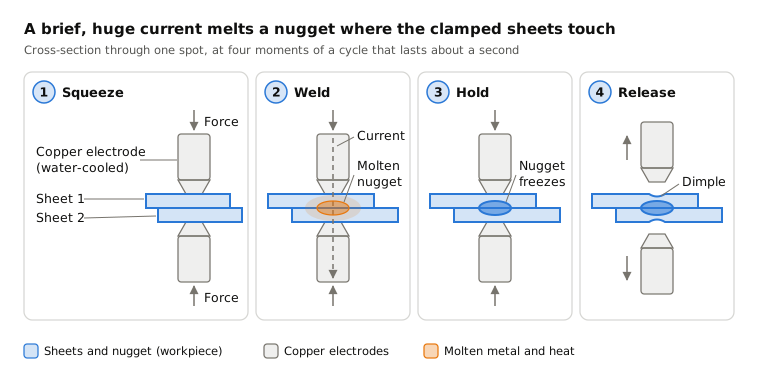
 7.2Resistance spot weldingFusion: a pulse of current melts a nugget between clamped sheetsOpen the lesson
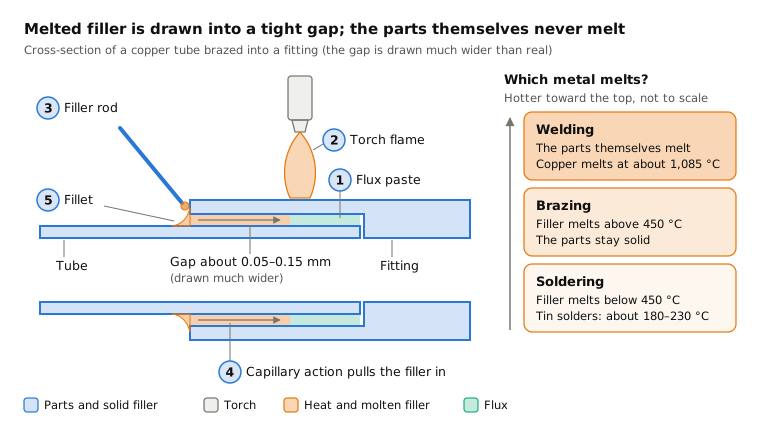
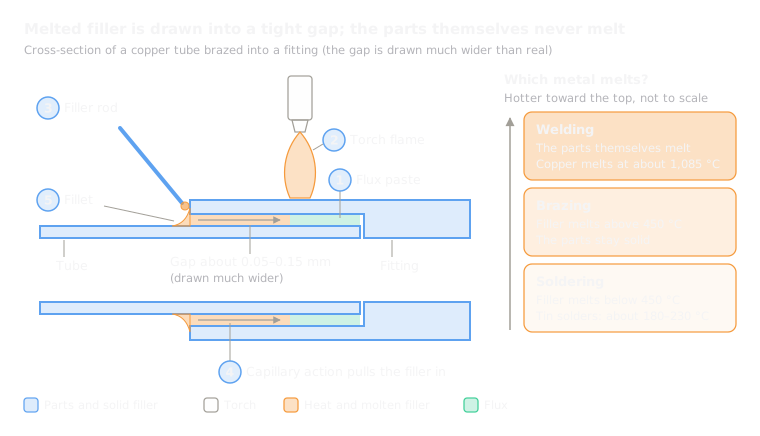 7.3Brazing and solderingFiller only: a lower-melting filler flows into a tight gapOpen the lesson
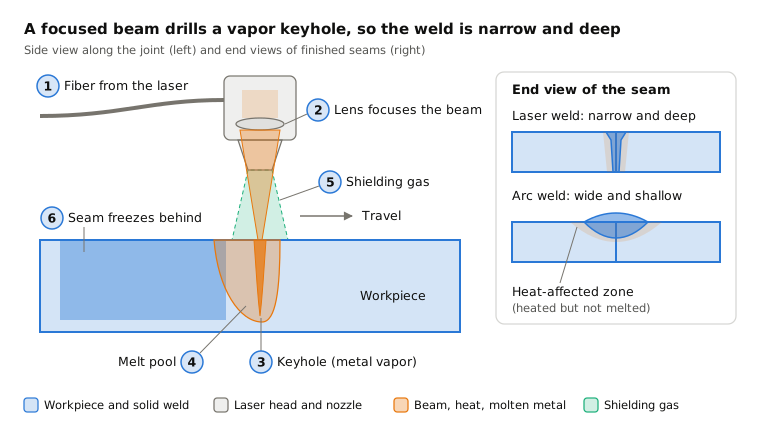
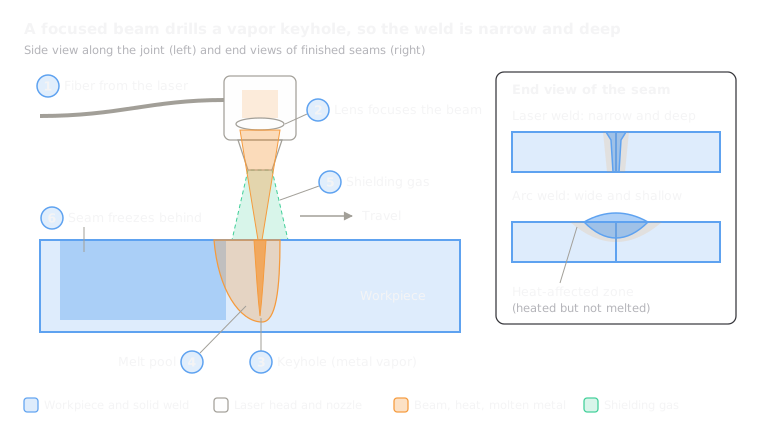 7.4Laser weldingFusion: a focused laser drills a keyhole for narrow, deep weldsOpen the lesson
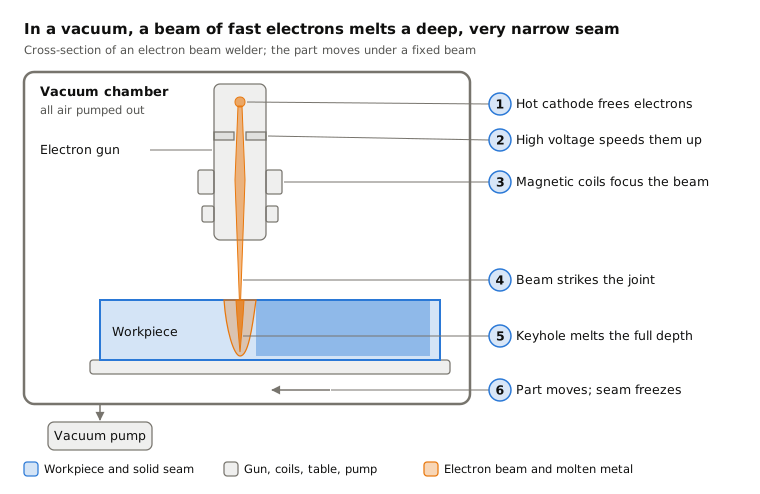
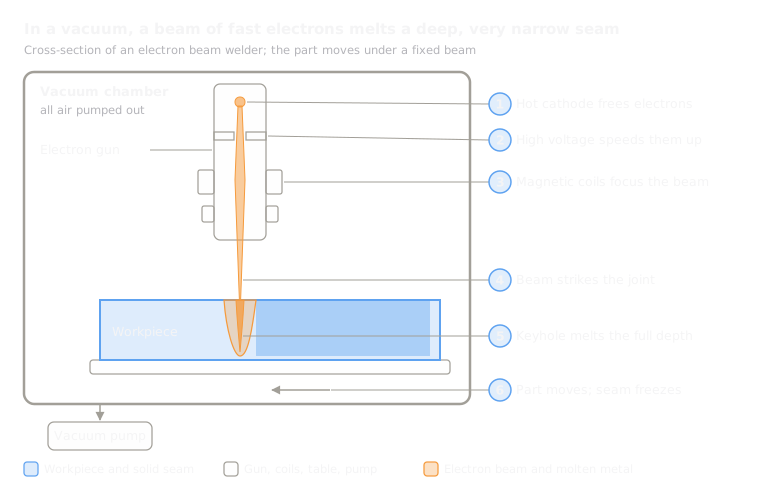 7.5Electron beam weldingFusion: an electron beam in a vacuum welds very thick metalOpen the lesson
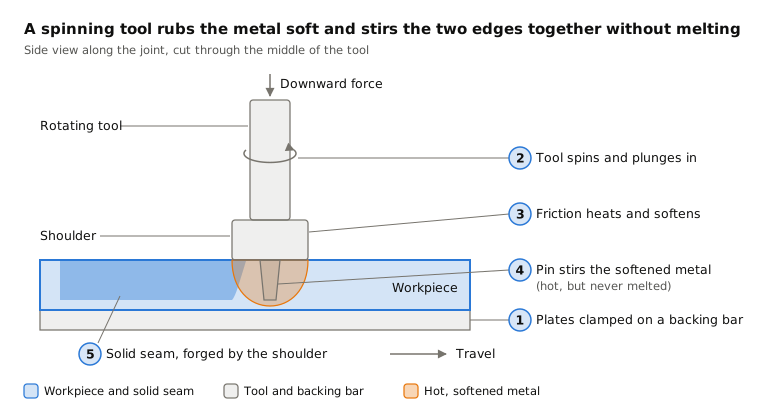
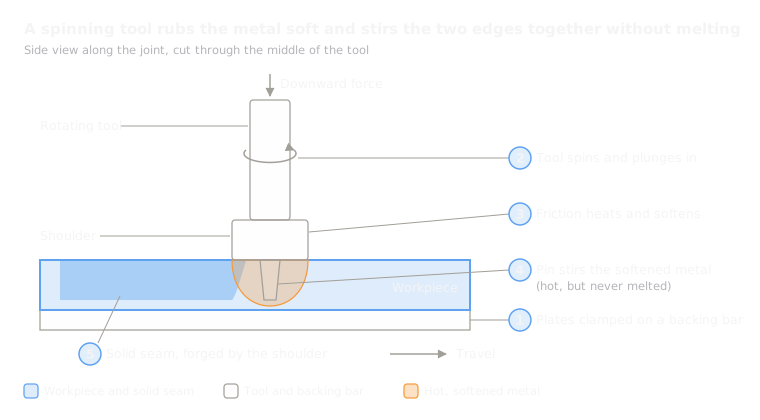 7.6Friction stir weldingSolid state: a spinning tool stirs softened edges togetherOpen the lesson
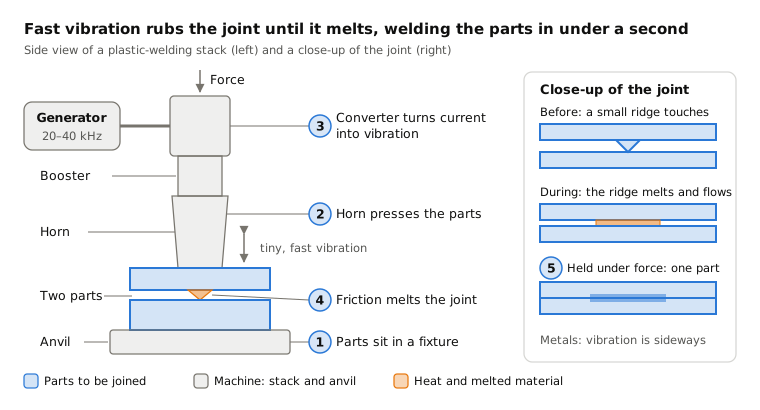
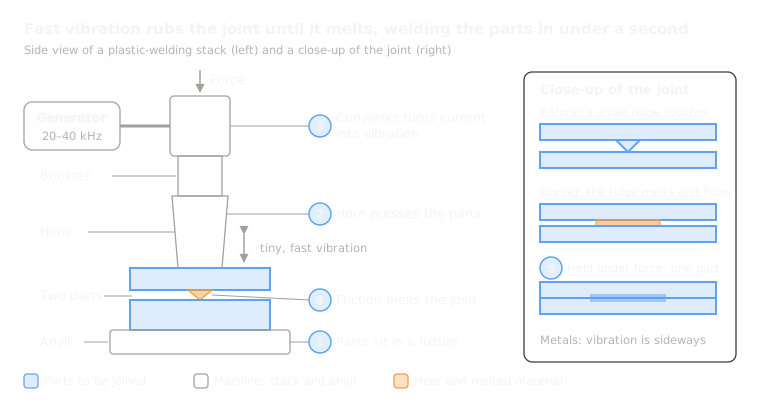 7.7Ultrasonic weldingSolid state: fast vibration bonds small joints in under a secondOpen the lesson
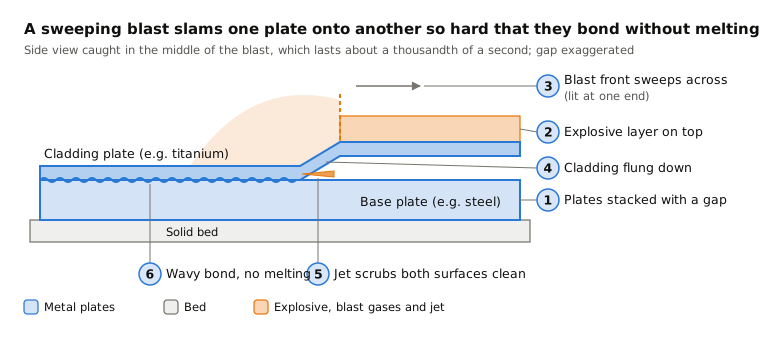
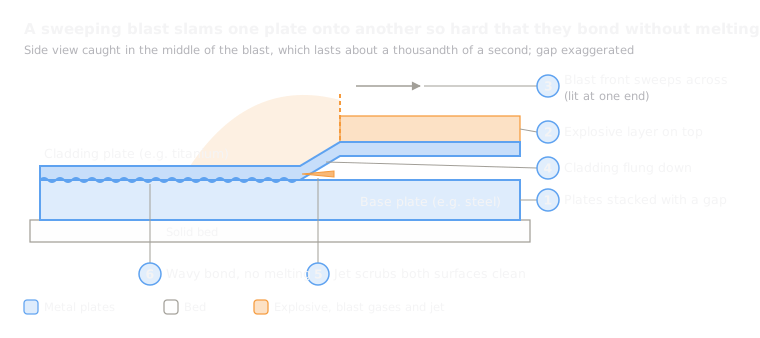 7.8Explosion welding (cladding)Solid state: a blast slams one plate onto anotherOpen the lesson
Side by side
| Process | In one line | Best for | Batch size | Precision |
|---|---|---|---|---|
| 7.1Arc welding (MIG/MAG, TIG, stick) | Fusion: an electric arc melts the edges and usually a filler | Steel frames, pipes, ships, repairs | One-off to mass production | About ±1 mm, distortion is the limit |
| 7.2Resistance spot welding | Fusion: a pulse of current melts a nugget between clamped sheets | Car bodies and other thin sheet | Mass production | Spot within about ±1 mm |
| 7.3Brazing and soldering | Filler only: a lower-melting filler flows into a tight gap | Pipes, electronics, dissimilar metals | One-off to millions of joints | Good, parts do not melt |
| 7.4Laser welding | Fusion: a focused laser drills a keyhole for narrow, deep welds | Car bodies, batteries, medical parts | Large series | About ±0.1 mm |
| 7.5Electron beam welding | Fusion: an electron beam in a vacuum welds very thick metal | Aerospace and high-value parts | Small to medium | About ±0.1 mm |
| 7.6Friction stir welding | Solid state: a spinning tool stirs softened edges together | Long aluminum seams | Medium to large | Fraction of a millimeter, low distortion |
| 7.7Ultrasonic welding | Solid state: fast vibration bonds small joints in under a second | Plastic housings, wires, battery tabs | Large series | About ±0.1 mm |
| 7.8Explosion welding (cladding) | Solid state: a blast slams one plate onto another | Clad plates of dissimilar metals | One-off plates | Low, machined afterward |
How to choose within this family
- Thick steel structures, repairs or outdoor work: start with arc welding; it is cheap, portable and flexible.
- Thin overlapping sheet in high volume: resistance spot welding; switch to laser welding for continuous seams and less distortion.
- Metals that are hard to fusion weld or must not distort: friction stir welding for aluminum seams, ultrasonic welding for thin foils and plastics, explosion welding for large clad plates.
- Very deep, very clean welds in costly parts: electron beam welding, if the part fits in a vacuum chamber.
- Dissimilar or delicate parts that must not melt: brazing, or soldering for electronics and low loads.
Key words
- Fusion welding
- joining by melting the edges of both parts so they freeze as one piece.
- Solid-state welding
- joining without melting, by pressure, friction or vibration on clean surfaces.
- Filler metal
- extra metal added to fill the joint, as a wire, rod or paste.
- Weld pool
- the small puddle of molten metal under the heat source.
- Heat-affected zone
- metal next to the weld that was heated enough to change but did not melt.
- Keyhole
- a narrow channel of metal vapor that lets a laser or electron beam weld deep.
- Shielding
- gas, flux or vacuum that keeps air away from hot metal.
- Capillary action
- the pull that draws a liquid into a narrow gap, used in brazing and soldering.
Try it
Put AI to work in your CAD.
Model parts, generate drawings and automate the repetitive work inside your CAD software.