

Binder jetting
Inkjet heads glue powder, then the part is cured or sintered (binder jetting)
Binder jetting builds a part by spreading thin layers of powder and printing a liquid glue, called binder, onto each one with an inkjet head. It works much like an office printer, but with powder instead of paper. It matters because it is one of the fastest ways to print metal parts in batches, and foundries use it to print sand molds for casting.
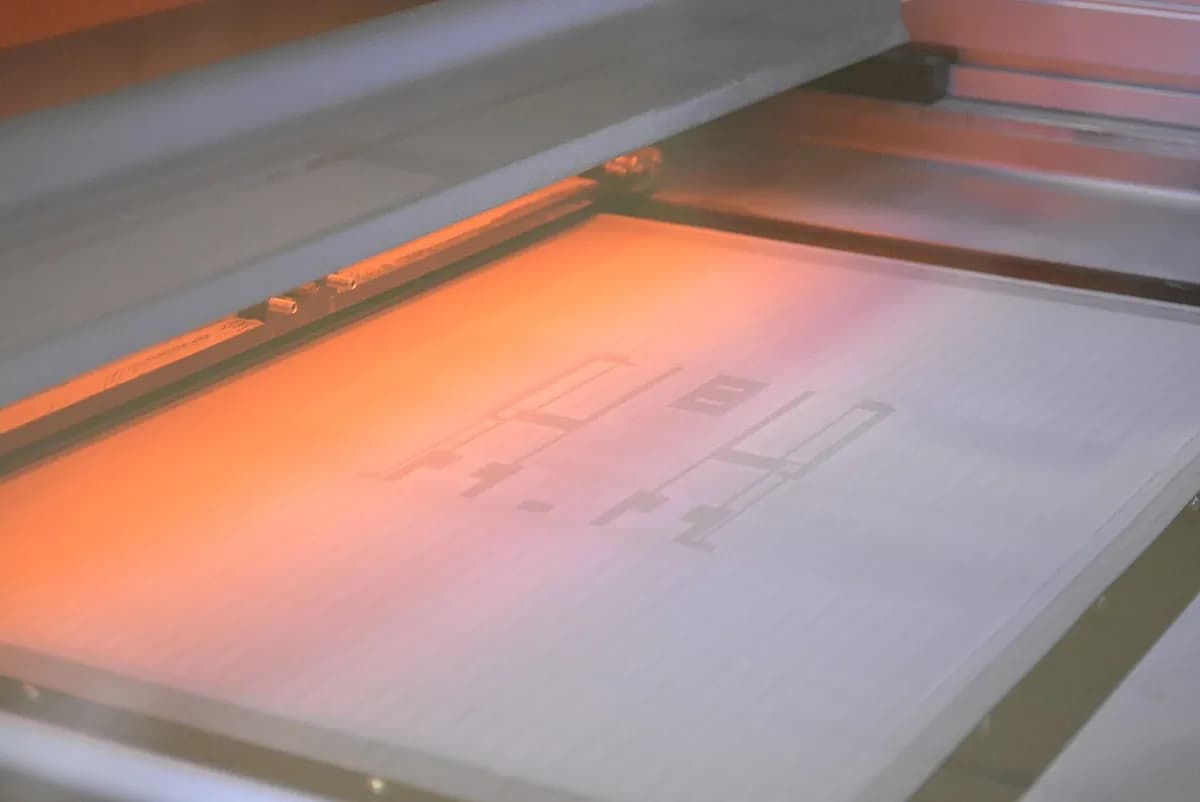
How it works
Slice the model. Software cuts the 3D model into thin layers. Parts can be packed tightly and stacked, because the powder holds them up.
Spread a layer. The supply piston rises and a recoater (a roller or blade) spreads a thin, even layer of powder, typically 0.05–0.1 mm for metal.
Jet the binder. An inkjet print head sweeps across and drops tiny droplets of binder only where the part's slice should be. The glued grains stick together; the rest stay loose.
Lower and repeat. The build box drops by one layer and the cycle repeats until the box is full. No laser or heat is needed during printing.
Cure and depowder. The box is warmed to harden the binder, then the loose powder is brushed and blown away and reused. The glued "green" parts are fragile, like chalk.
Sinter in a furnace. Metal parts go into a furnace near their melting point, where the binder burns off and the grains fuse together. The part shrinks by roughly 15–20% in each direction as it densifies.
Key facts
- Materials
- Stainless steels, tool steels, copper and other metals; foundry sand; ceramics; gypsum for full-color models
- Typical parts
- Small metal parts in batches, sand molds and cores for casting, ceramic parts, color figurines
- Part size
- Metal parts usually fist-sized or smaller; sand printers build boxes up to several meters long
- Precision
- Metal: about ±1–2% after sintering because of shrinkage; sand molds: about ±0.3 mm
- Surface finish
- Matte and slightly grainy, like a fine casting; often blasted or polished
- Batch size it suits
- Hundreds to tens of thousands of small metal parts; one-off to small runs of sand molds
- Tooling and machine cost
- No tooling; machines plus furnaces cost a few hundred thousand to over a million dollars
- Speed
- Printing is fast, often hours per full box, but curing and sintering add a day or more
Strengths and limits
Strengths
- Fast printing of a whole box of parts, with no supports
- No heat while printing, so no warping or locked-in stresses
- Prints sand molds and cores with no pattern, straight from a file
- Lower cost per metal part than laser powder bed fusion at volume
Limits
- Parts shrink during sintering, which makes tight tolerances hard
- Green parts are fragile and need careful handling
- Some porosity can remain, so strength can trail fully melted metal
- Thin walls and large flat parts can sag or distort in the furnace
Where it's used
- FoundriesSand molds and cores for engine blocks, pump housings, prototypes
- AutomotiveSmall metal brackets and fittings; molds for cast parts
- Consumer goodsSteel parts for locks, tools and eyewear in batches
- IndustrialPump impellers, nozzles, ceramic parts
- Art and designFull-color figurines and architectural models in gypsum
How to recognize it
- A matte, slightly grainy surface, a little like a fine casting or sintered metal.
- No support marks, and parts that look slightly soft-edged.
- On sand molds, a sandy, crumbly texture with faint stair-steps on curves.
- Very small metal parts made in large, identical batches.
Compare with
Watch it
Mars Gadgets · Powder layer, inkjet binder and sintering, for beginners
AM Media | The Cool Parts Show · Industry journalists on binder jetting and its sintering step
CATI: Computer Aided Technology is now GoEngineer · A printer demo, with green parts being depowdered
voxeljet · Printed sand molds and cores, then poured metal
See real photos
- Wikipedia: Binder jetting — process steps, materials and history; text-led
- Wikipedia: 3D printing processes — binder jetting compared with other additive processes
- Wikimedia Commons photo search
Remember
- Binder jetting glues powder with inkjet droplets, layer by layer, with no heat during printing.
- Metal parts come out fragile and must be sintered in a furnace, where they shrink.
- It suits batches of small metal parts and printed sand molds for casting.
More in Additive manufacturing
All 100 processes
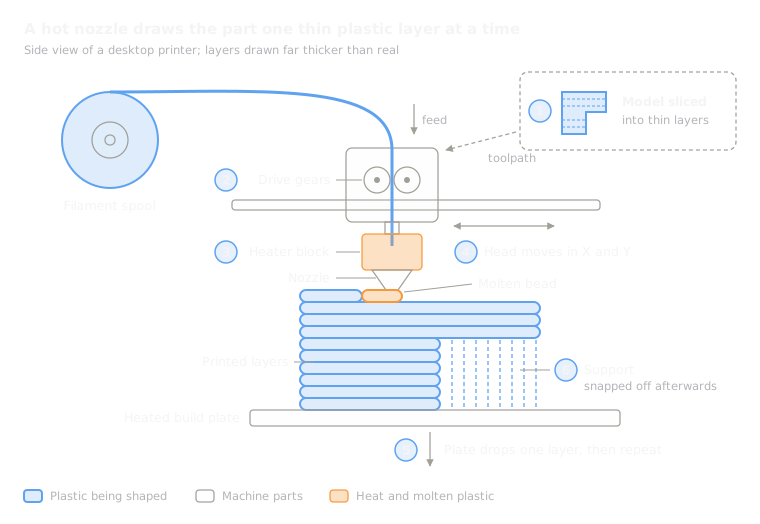 8.1ShortFDM (fused deposition modeling)Extrudes molten plastic filament through a moving nozzle (material extrusion)Open the lesson
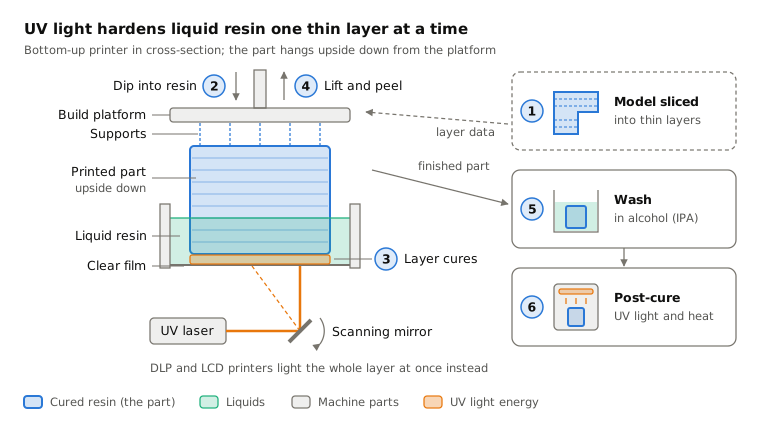
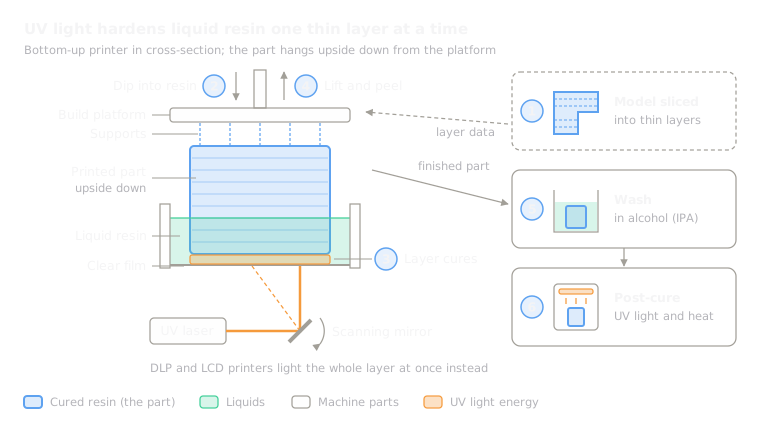 8.2Stereolithography (SLA/DLP)Hardens liquid resin layer by layer with a laser or projector (vat photopolymerization)Open the lesson
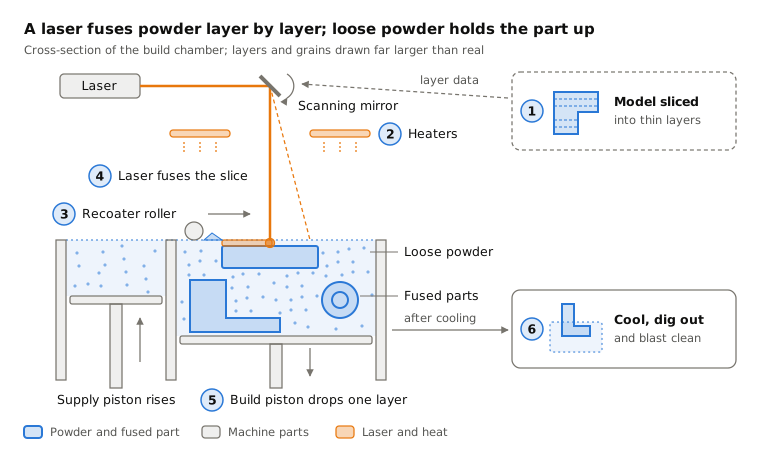
 8.3Selective laser sintering (SLS)A laser fuses nylon powder in a bed; the loose powder supports the part (powder bed fusion)Open the lesson
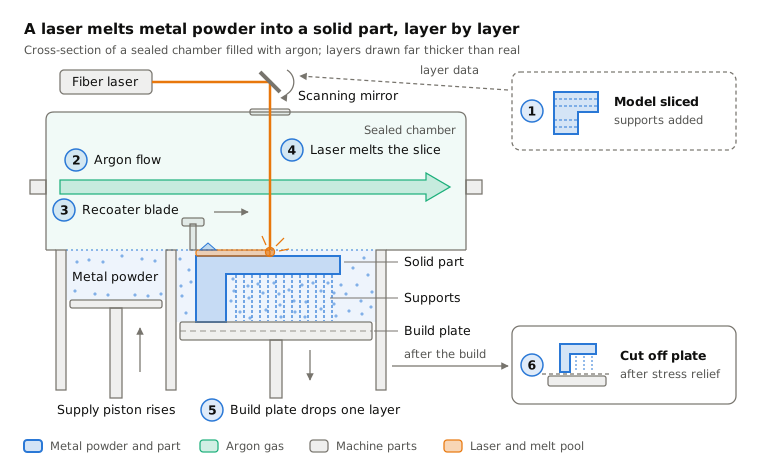
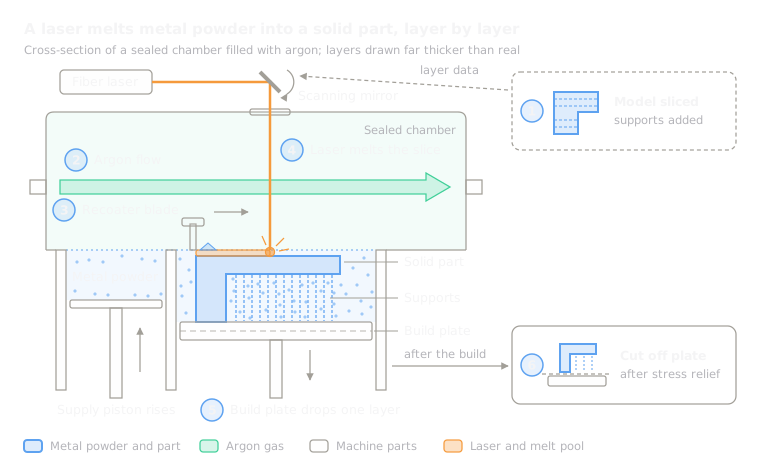 8.4Laser powder bed fusion (metal, SLM/DMLS)A laser melts thin layers of metal powder (powder bed fusion)Open the lesson
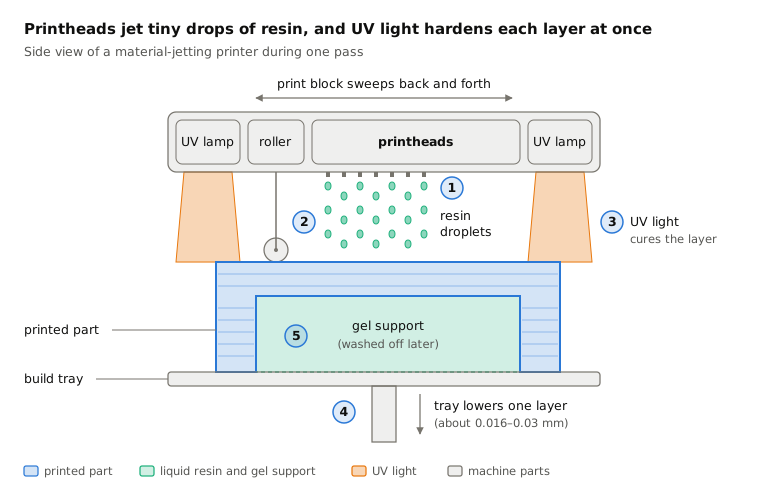
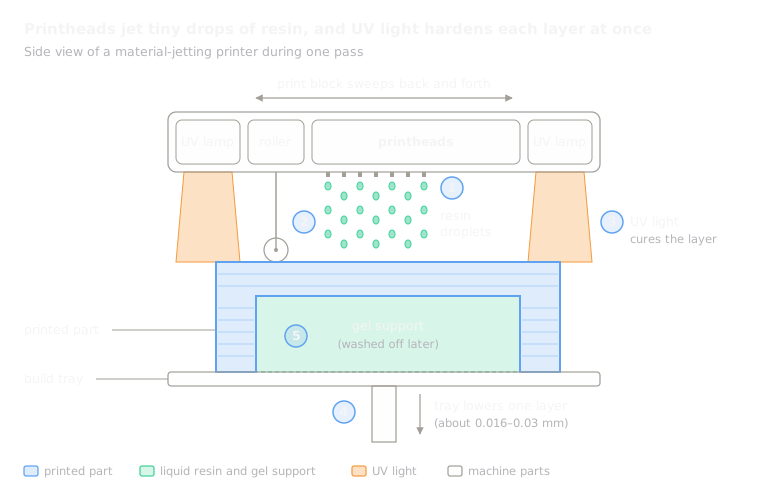 8.6Material jetting (PolyJet)Jets droplets of resin and cures them with UV light (material jetting)Open the lesson
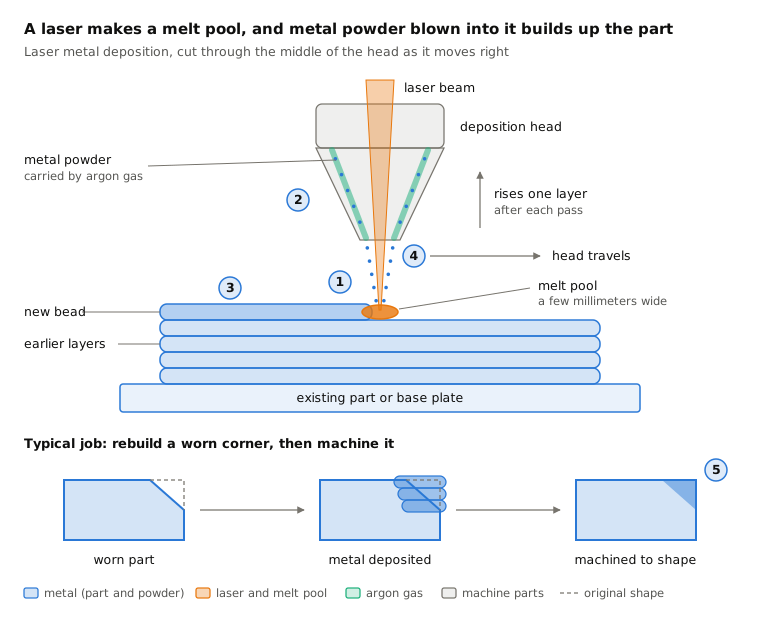
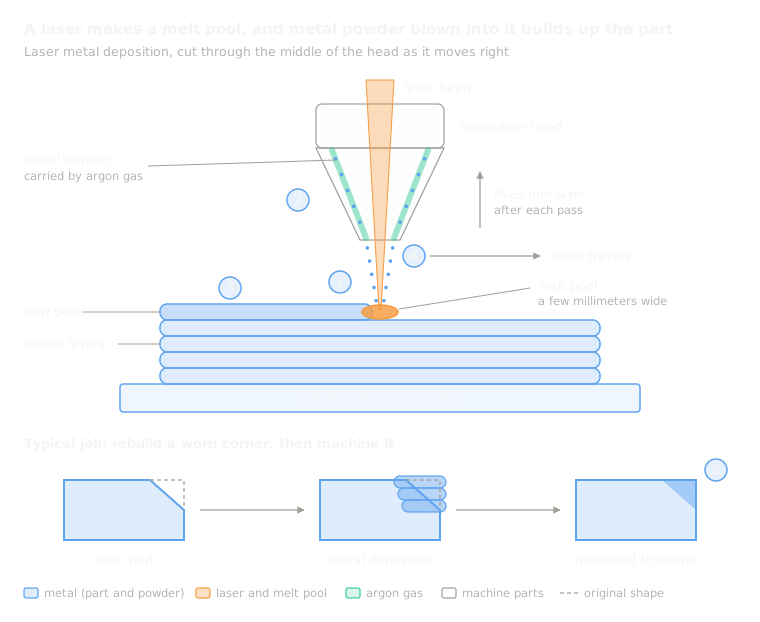 8.7Directed energy deposition (DED/LMD)A laser melts a pool on the part; blown powder adds metal (directed energy deposition)Open the lesson
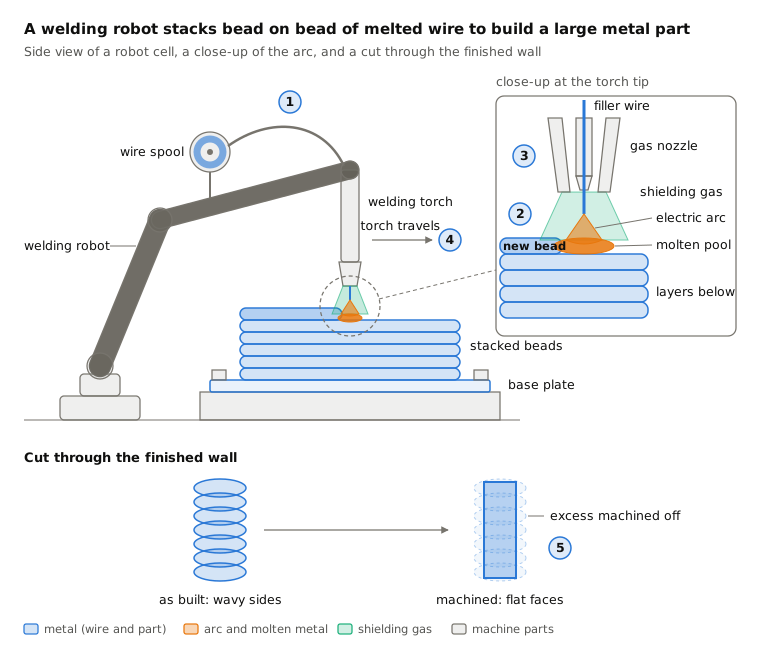
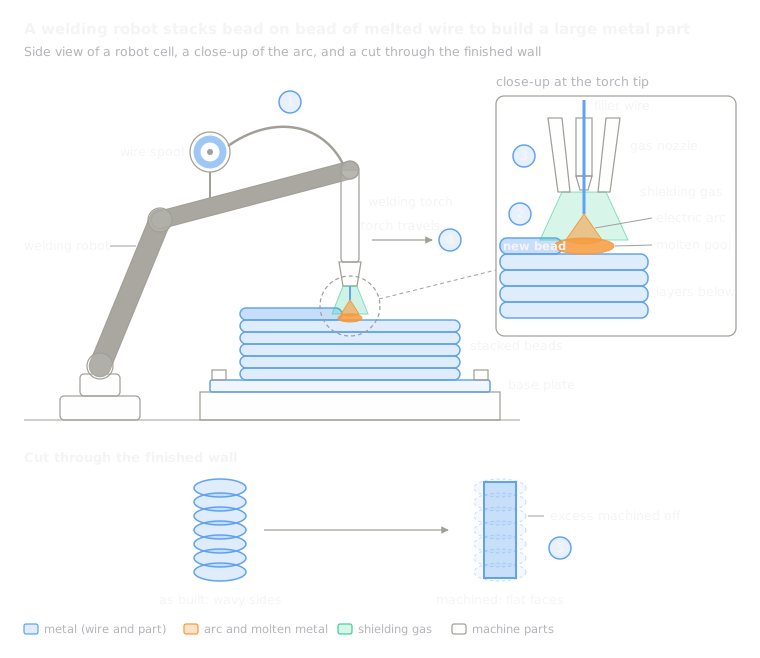 8.8Wire arc additive manufacturing (WAAM)A welding robot stacks arc-melted wire into beads (directed energy deposition)Open the lesson
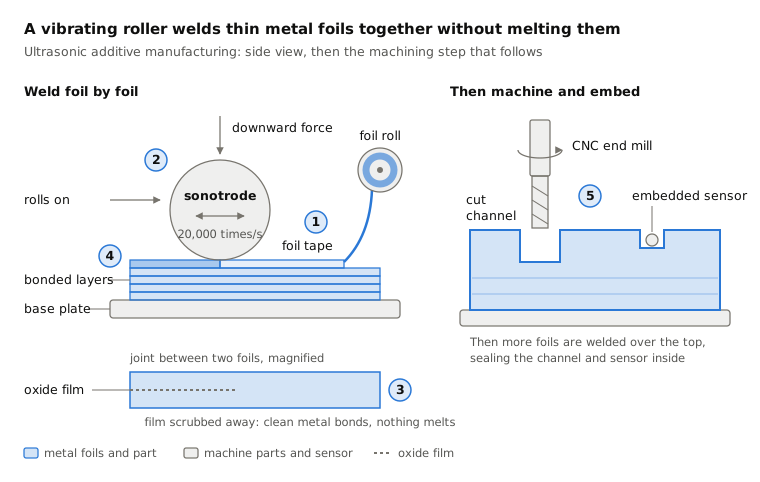
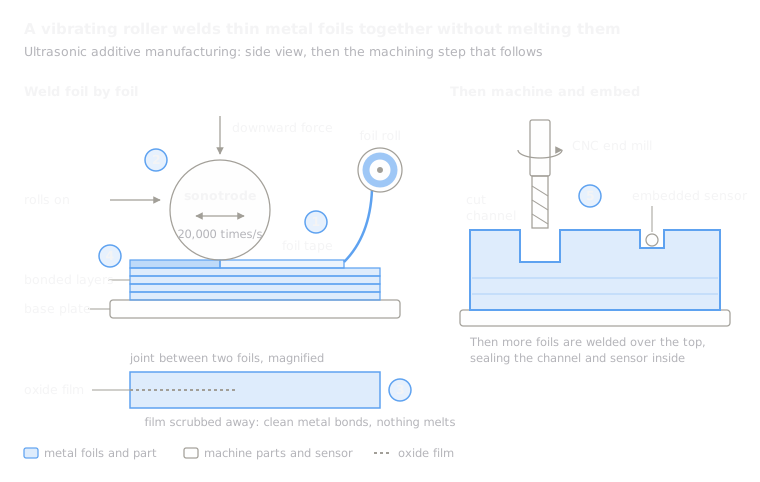 8.9Ultrasonic additive manufacturing (UAM)Ultrasonic vibration welds metal foils without melting, then a mill trims them (sheet lamination)Open the lesson
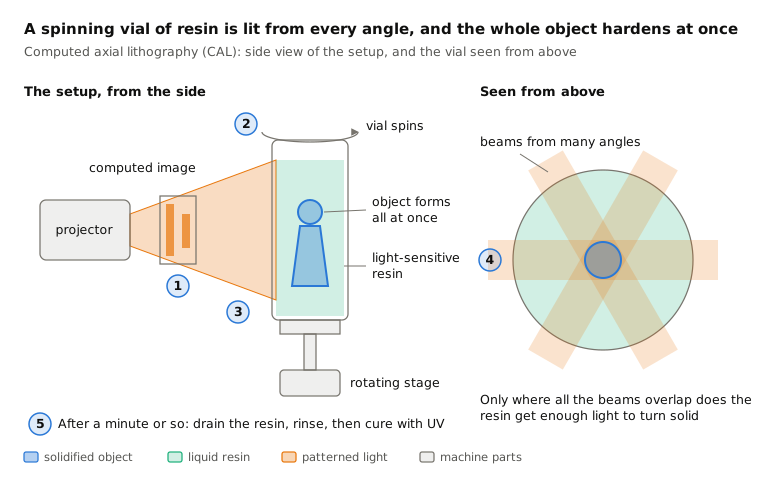
 8.10Volumetric printing (CAL)Light from every angle cures a spinning vial of resin all at once (volumetric printing)Open the lesson
Try it
Put AI to work in your CAD.
Model parts, generate drawings and automate the repetitive work inside your CAD software.