

Metal injection molding (MIM)
Mold a powder-and-binder paste, remove the binder, sinter
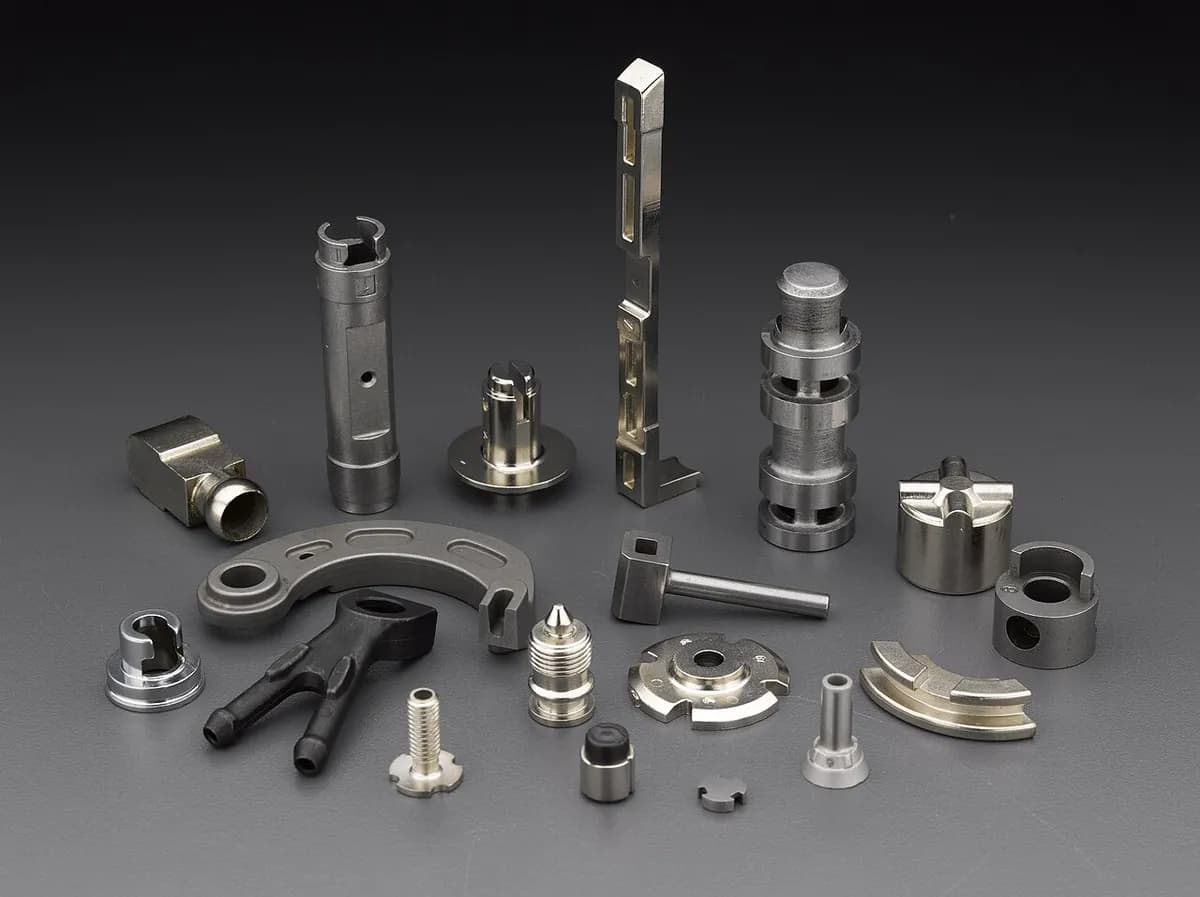
Metal injection molding (MIM) shapes metal like plastic: a hot paste of metal powder and plastic binder is injected into a mold. Then the plastic is removed and the metal is sintered, so the part shrinks into nearly solid metal. It makes tiny, complex parts such as watch-case pieces, phone hinge parts and surgical tool jaws.
How it works
Mix the feedstock. Very fine metal powder, with grains typically under 20 µm (a quarter of a hair's width), is kneaded with a binder of wax and plastic. The paste is about 60% metal by volume and is chopped into pellets.
Mold. An injection molding machine (a heated barrel with a turning screw) melts the binder and pushes the paste into a steel mold. Out comes a “green” part: full shape, but 15–20% bigger than the final part. The runners (feed channels) are ground up and reused.
Debind. Most of the binder is removed, usually with a solvent or a chemical vapor first, then with gentle heat. What is left is a fragile “brown” part: metal grains held by a trace of binder, full of open pores.
Sinter. The part goes into a vacuum or hydrogen furnace at roughly 1,200–1,400 °C for steels, close to (but below) melting. The grains fuse and the pores close, so the part shrinks evenly by about 15–20% and ends up 95–99% dense. Heat treatment, plating or light machining can follow.
Key facts
- Materials
- Mostly stainless steels (such as 17-4PH and 316L) and low-alloy steels; also titanium, tungsten alloys, cobalt-chrome and magnetic alloys
- Typical parts
- Watch-case parts, hinge parts, small gears, orthodontic brackets, surgical tool jaws, lock and firearm parts
- Part size
- Small: typically 0.1–100 g, from fingertip to palm size
- Precision
- About ±0.3–0.5% of a dimension (about ±0.05 mm on a 10 mm feature)
- Surface finish
- Smooth, roughly Ra 0.8–1.6 µm (Ra is the average height of surface bumps), copying the mold
- Batch size it suits
- High volume: typically 10,000 to millions of parts a year
- Tooling and machine cost
- Mold roughly $10,000–100,000; molding machines, debinding units and furnaces cost hundreds of thousands of dollars each
- Speed
- Molding: one shot every 10–60 s, often several parts per shot; debinding and sintering take many hours, often a day or more per batch
Strengths and limits
Strengths
- Complex 3D shapes, thin walls and fine details that would be costly to machine
- 95–99% dense, so strength comes close to that of solid metal
- Handles alloys that are hard to machine, like stainless steel and titanium
- Little waste: runners are recycled into new feedstock
Limits
- Only small parts: thick sections debind slowly and can crack or sag
- The 15–20% shrinkage must be predicted exactly when the mold is designed
- Expensive mold and a long debind-and-sinter cycle; needs large volumes
- Fine powders cost more than ordinary press-and-sinter powders
Where it's used
- Consumer electronicsPhone hinge parts, SIM-card trays, camera and connector parts
- Medical and dentalOrthodontic brackets, surgical tool jaws and handles
- Watches and jewelryWatch cases, buckles, bracelet links
- AutomotiveTurbocharger vanes, fuel-injector parts, lock and sensor parts
- FirearmsTriggers, hammers, safeties and other small action parts
- Tools and locksLock parts, small gears, power-tool parts
How to recognize it
- Small, intricate steel parts with smooth, satin surfaces and crisp details, like a molded plastic part made of metal.
- Tiny round marks from ejector pins and a small gate scar where the paste entered the mold.
- A faint parting line where the two mold halves met.
- Even wall thickness, ribs and hollowed-out pockets, typical of molded parts rather than machined ones.
Compare with
Watch it
AMT Pte. Ltd. · The four steps and the kinds of parts MIM makes
GKN Powder Metallurgy · How the binder leaves and how much the part shrinks
MPP · Real molding machines, furnaces and finished parts
Zimmer Group · A manufacturer's full process chain, from molding cell to part
See real photos
- Wikipedia: Metal injection molding — overview of the steps, materials and uses
- Wikimedia Commons photo search
Remember
- MIM is plastic injection molding with a metal-filled paste, followed by binder removal and sintering.
- The part shrinks 15–20% in the furnace, so the mold is made bigger by exactly that much.
- It is the go-to process for small, complex metal parts in large numbers.
More in Powders and ceramics
All 100 processes
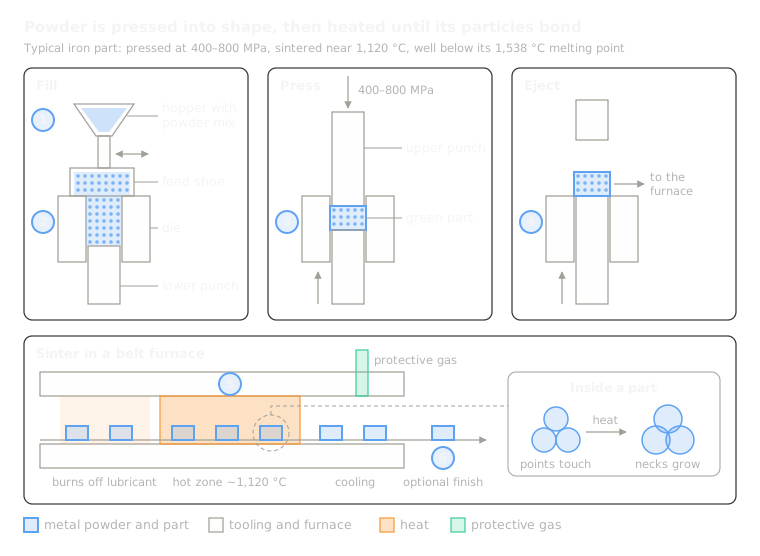 9.1Powder metallurgy (press and sinter)Press powder in a die, then sinter in a belt furnaceOpen the lesson
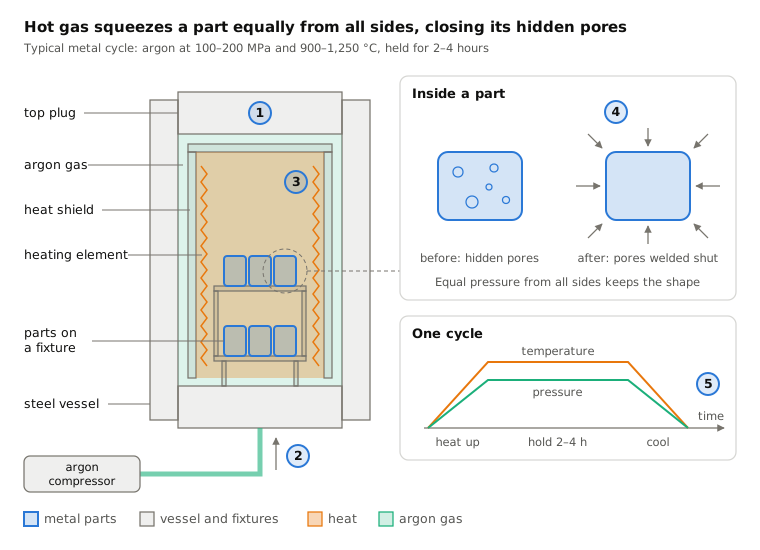
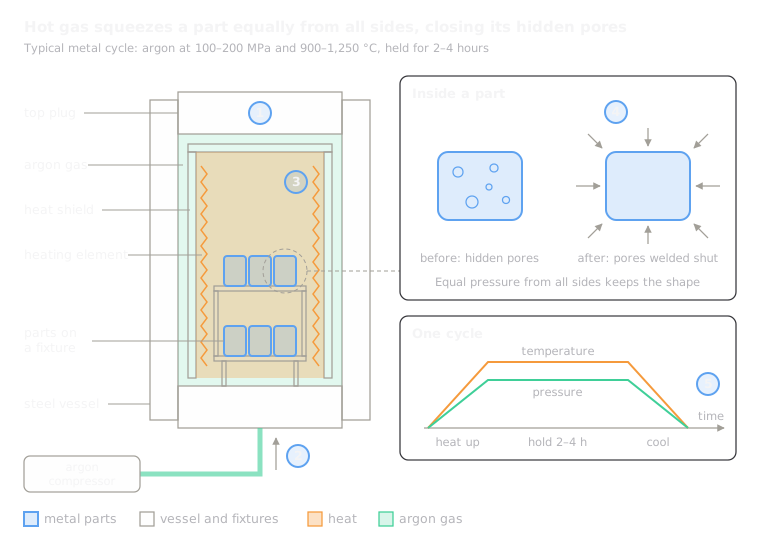 9.3Hot isostatic pressing (HIP)Squeeze with hot argon from all sides to close poresOpen the lesson
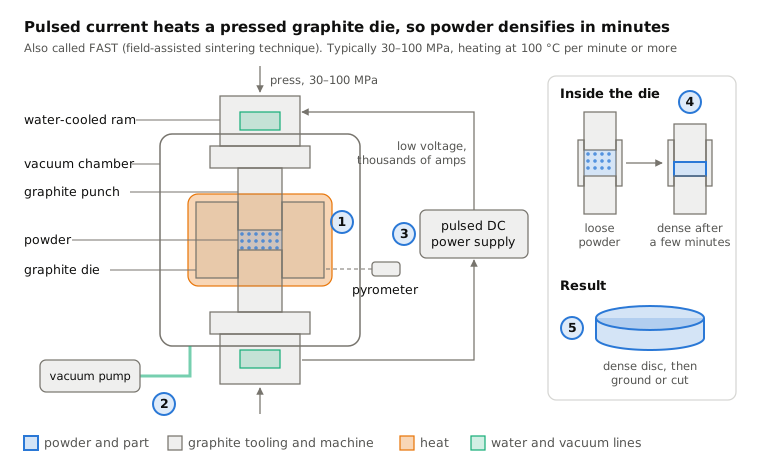
 9.4Spark plasma sintering (SPS)Pulsed current heats a pressed graphite die in minutesOpen the lesson
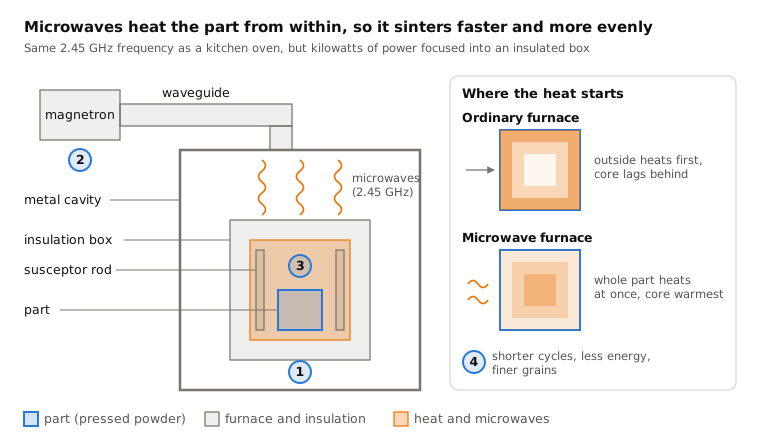
 9.5Microwave sinteringMicrowaves heat the part from withinOpen the lesson
 9.6Sol-gel processingA liquid sets into a gel, then is dried and firedOpen the lesson
Try it
Put AI to work in your CAD.
Model parts, generate drawings and automate the repetitive work inside your CAD software.