

Sol-gel processing
A liquid sets into a gel, then is dried and fired
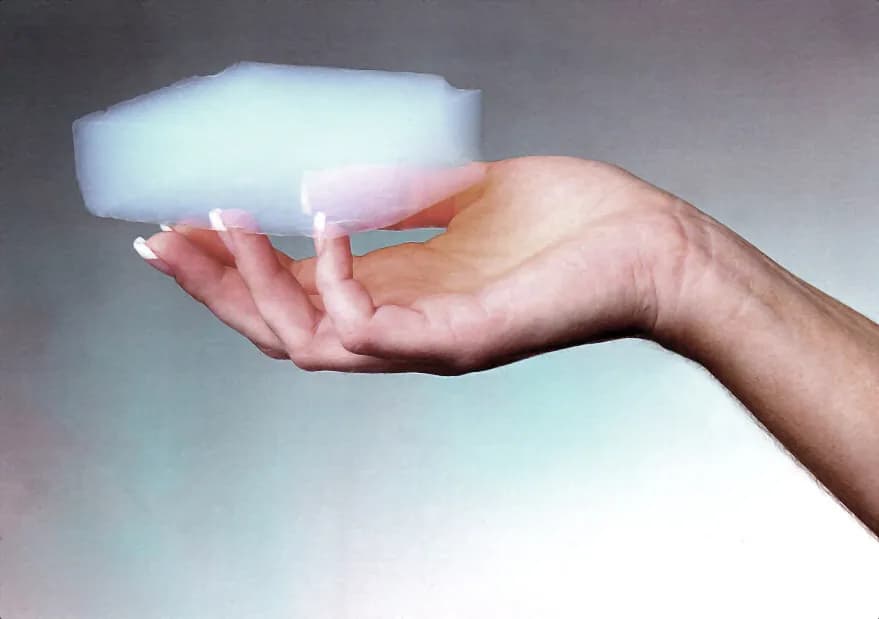
Sol-gel processing makes glass and ceramics from a liquid instead of a melt or a powder. Tiny particles form in a liquid, link into a jelly-like gel, and the gel is dried and gently heated into a solid. The anti-reflection coating on some camera lenses and the ghostly blue aerogel used as insulation are made this way.
How it works
Make the sol. Liquid chemicals that contain a metal or silicon (such as TEOS, a silicon compound) are mixed with water, alcohol and a little acid or base. Reactions build particles a few nanometers across, giving a sol: a liquid with tiny solid particles floating in it.
Shape it. While still liquid, the sol is dip-coated or spin-coated onto a part, sprayed, cast into a mold, or drawn into fibers.
Let it gel. The particles link up into a network that spans the whole volume and traps the liquid, like gelatin setting. This takes minutes to days; resting it longer (aging) makes the network stronger.
Dry it. Slow evaporation pulls the network together, so the gel shrinks into a dense, glassy xerogel and can crack if rushed. Drying above the liquid's critical point (supercritical drying, where there is no surface tension) keeps the network open, giving an aerogel that is mostly air.
Fire it. Heating to typically 400–1,200 °C burns off leftover organics and sinters the pores shut, giving dense glass, ceramic or a hard coating. That is far below the roughly 1,700 °C needed to melt silica glass. Aerogels are often used without firing.
Key facts
- Materials
- Silica, titania, zirconia, alumina and mixed oxides; hybrids of glass and plastic
- Typical parts
- Optical and anti-reflection coatings, protective films, aerogel insulation, fine ceramic powders, fibers
- Part size
- Films from nanometers to a few micrometers thick on parts of almost any size; solid pieces are usually only centimeters across, because drying cracks big ones
- Precision
- Film thickness controllable to roughly tens of nanometers
- Surface finish
- Very smooth, optically clear films
- Batch size it suits
- From single lab samples to continuous coating lines for glass
- Tooling and machine cost
- Low for coatings: glassware and dip or spin coaters from a few thousand dollars; supercritical dryers cost much more
- Speed
- Coating takes minutes; gelling hours to days; drying solid pieces can take days
Strengths and limits
Strengths
- Low temperatures compared with melting glass or sintering powder
- Very pure, even materials mixed at the molecular level
- Easy thin, even coatings on glass, metal or plastic
- Unique products like aerogels, the lightest solids made
Limits
- Large solid pieces crack while drying
- Big shrinkage, often more than half the volume
- Chemicals (alkoxides, solvents) are costly and some are flammable
- Slow: gelling and drying take hours to days
Where it's used
- OpticsAnti-reflection and filter coatings on lenses and glass
- Buildings and energyAerogel insulation blankets, coatings on solar glass
- Electronics and sensorsThin oxide films, gas and humidity sensors
- Protective coatingsScratch- and corrosion-resistant films on metal and plastic
- Space scienceAerogel dust collectors, such as on NASA's Stardust mission
- Ceramics and catalystsVery fine, pure powders and porous catalyst supports
How to recognize it
- Thin coatings show faint rainbow or bluish tints from light interference, like a soap bubble.
- Anti-reflection lenses look slightly colored when tilted and reflect little light.
- Aerogel looks like frozen blue smoke and feels almost weightless.
- Air-dried bulk pieces are small and may show fine cracks.
Compare with
Watch it
University of California Television (UCTV) · Sol-gel chemistry from a lab expert, with a live demo of the first steps (from about 5:00)
NileRed · The whole route at home: mixing, gelling, solvent exchange, supercritical drying
nottinghamscience · How the special drying step works
Veritasium · What finished aerogel is like and what it is used for
See real photos
- Wikipedia: Sol–gel process — process diagrams from sol to film, xerogel and aerogel
- Wikimedia Commons photo search
Remember
- Sol-gel builds a solid from a liquid: sol, then gel, then dry, then fire.
- It works at low temperature, which makes it ideal for thin coatings and pure materials.
- How you dry the gel decides the result: dense xerogel or feather-light aerogel.
More in Powders and ceramics
All 100 processes
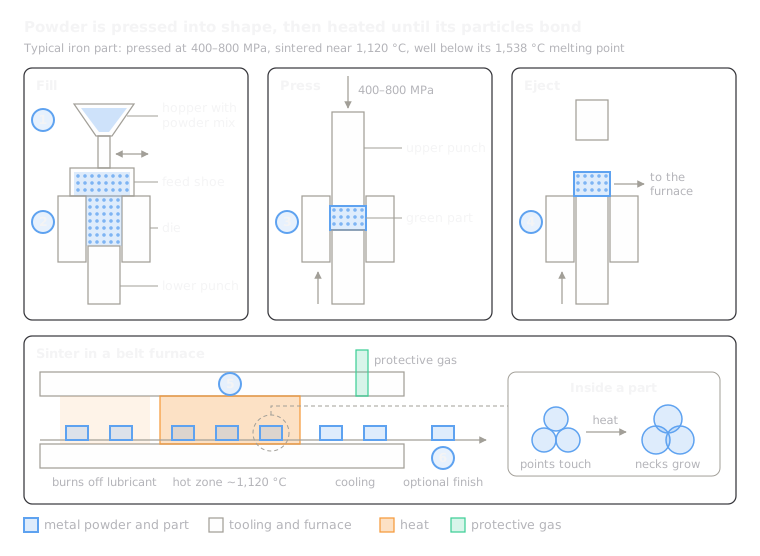 9.1Powder metallurgy (press and sinter)Press powder in a die, then sinter in a belt furnaceOpen the lesson
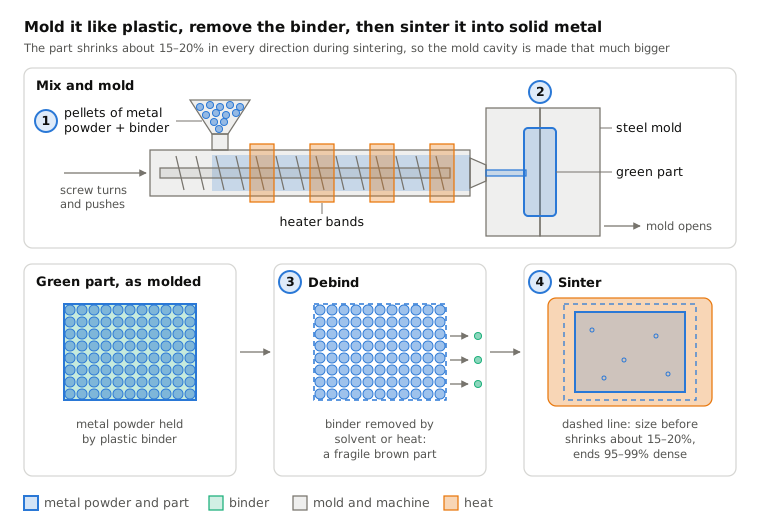
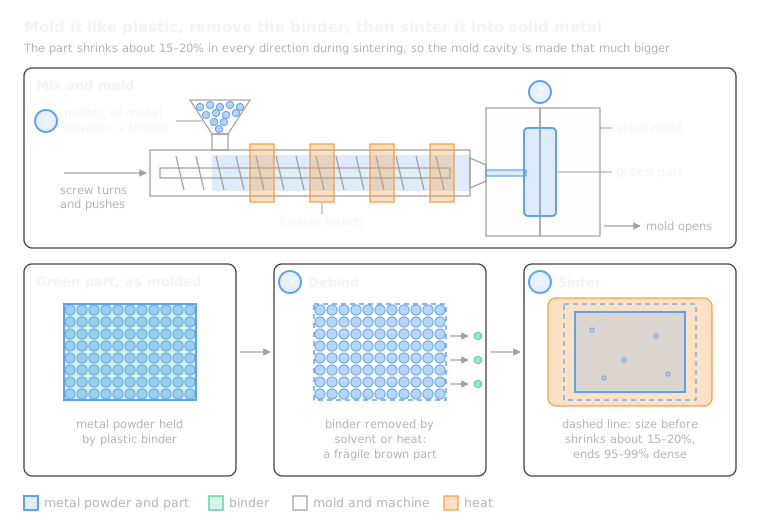 9.2Metal injection molding (MIM)Mold a powder-and-binder paste, remove the binder, sinterOpen the lesson
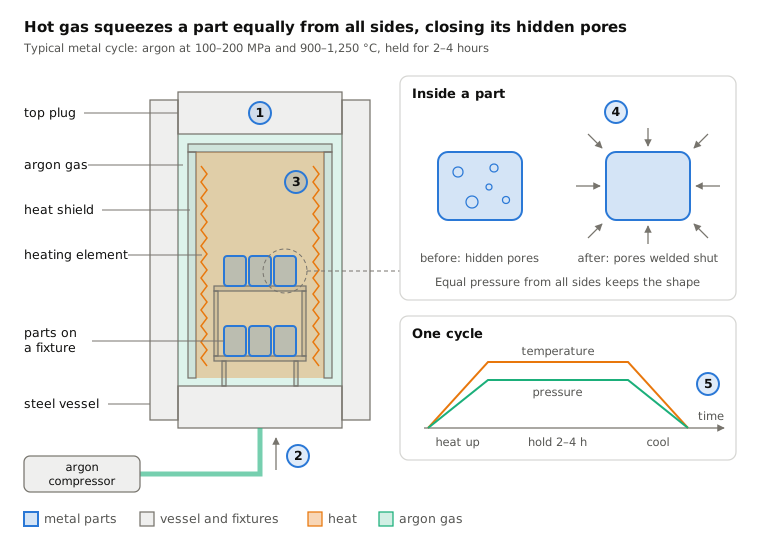
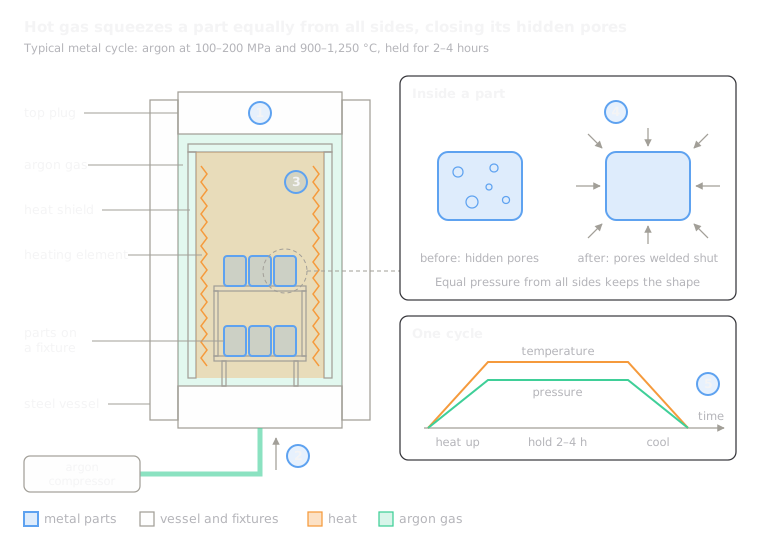 9.3Hot isostatic pressing (HIP)Squeeze with hot argon from all sides to close poresOpen the lesson
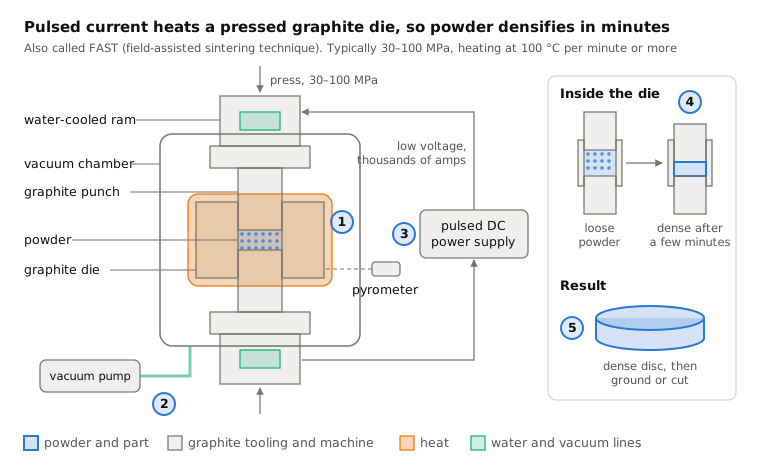
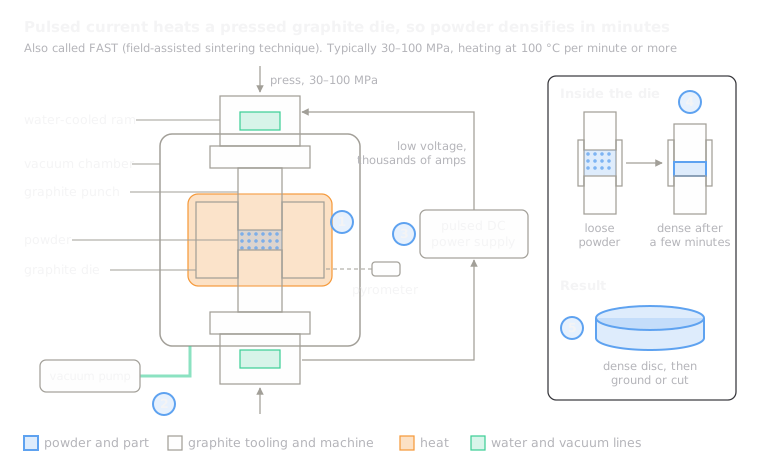 9.4Spark plasma sintering (SPS)Pulsed current heats a pressed graphite die in minutesOpen the lesson
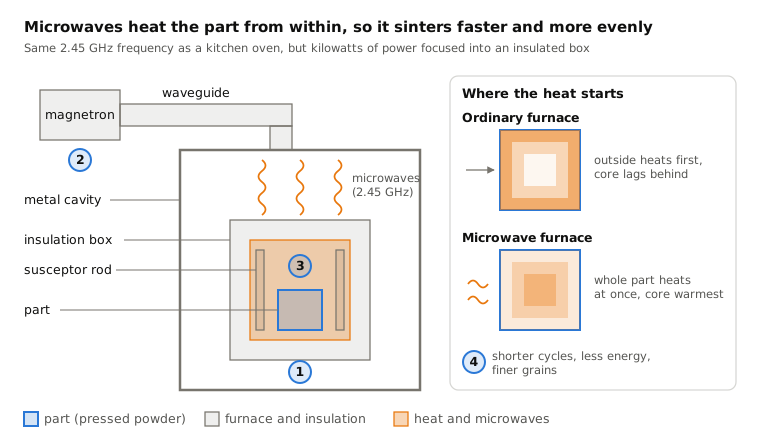
 9.5Microwave sinteringMicrowaves heat the part from withinOpen the lesson
Try it
Put AI to work in your CAD.
Model parts, generate drawings and automate the repetitive work inside your CAD software.