

Anodizing
Current grows a hard oxide out of aluminum itself
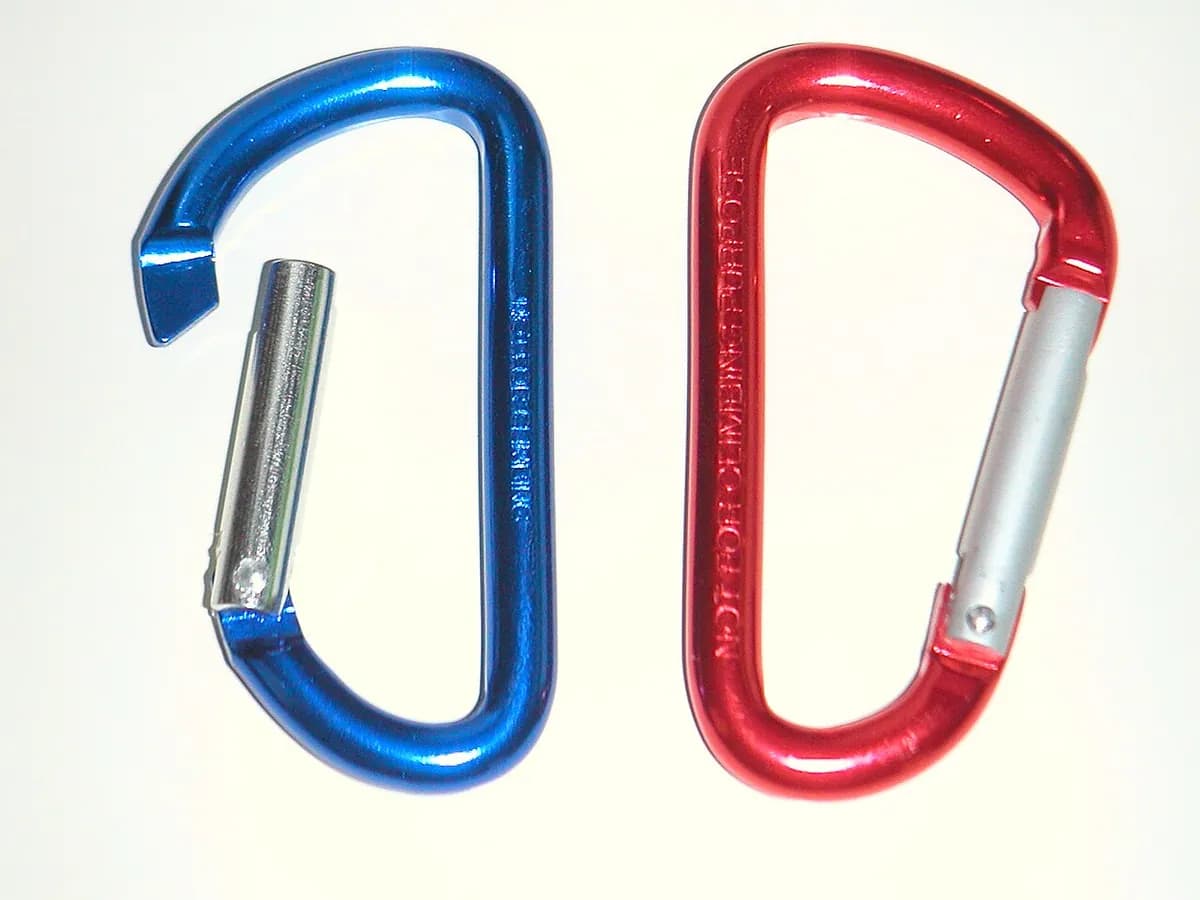
Anodizing grows a hard, protective oxide skin on aluminum by running electric current through it in an acid bath. The colored metal of a laptop case, a carabiner or a flashlight is anodized aluminum. Unlike paint or plating, nothing is added on top: the metal's own surface turns into a ceramic-like layer.
How it works
Clean and etch. The part is degreased, then etched in a caustic (strongly alkaline) bath and desmutted (dipped in acid to remove loose residue). Etching gives the matte look; chemical polishing gives a bright one.
Rack it as the anode. The part is clipped tightly to an aluminum or titanium rack and lowered into the acid, typically sulfuric acid kept at about 20 °C. Here the part is the anode (positive electrode), the opposite of electroplating.
Switch on the current. A DC power supply, typically at around 15–20 V for standard sulfuric anodizing, pushes current from the part to cathode plates in the tank.
The oxide grows. Oxygen from the water reacts with the aluminum surface to form aluminum oxide. The layer grows partly into the metal and partly outward, full of tiny straight pores, typically for 20–60 minutes.
Dye (optional). The open pores soak up organic dyes like a sponge, giving black, red, blue, gold and other colors. Clear anodizing skips this step.
Seal. Hot water near boiling, or a nickel or other sealing bath, swells the oxide and closes the pores. This locks in the dye and greatly improves corrosion resistance.
Hard anodizing runs colder, near 0 °C, and at higher voltage to grow a much thicker, harder layer for wear parts. Titanium and magnesium can be anodized too; on titanium the thin oxide gives bright colors by light interference, with no dye.
Key facts
- Materials
- Mainly aluminum alloys; also titanium and magnesium. Alloys rich in copper or silicon anodize less well
- Typical parts
- Laptop and phone cases, extruded window frames, cookware, climbing gear, bike parts, aircraft parts
- Part size
- From small screws to extrusions several meters long; the tank sets the limit
- Precision
- Thin and even: standard layers typically 5–25 µm, hard anodizing about 25–100 µm; about half the thickness adds to each surface
- Surface finish
- Copies the surface below (matte if etched or blasted, bright if polished), with an even satin or glossy look
- Batch size it suits
- From single parts to continuous production of profiles and consumer products
- Tooling and machine cost
- Racks are cheap; a full anodizing line with tanks, rectifiers, chillers and waste treatment costs hundreds of thousands or more
- Speed
- Roughly 20–60 minutes in the anodizing tank, plus cleaning, dyeing and sealing; a whole cycle takes about 1–2 hours
Strengths and limits
Strengths
- Part of the metal, so it cannot peel or flake like paint
- Hard and wear-resistant, especially hard anodizing
- Thin and predictable, so tight fits are kept
- Many durable colors, with the metallic sheen showing through
Limits
- Works only on aluminum, titanium, magnesium and a few other metals
- The oxide is brittle and can crack if the part bends
- Electrically insulating, so contact points need masking or machining
- Some dyed colors, especially reds and blues, fade in strong sunlight
Where it's used
- Consumer electronicsLaptop, phone and tablet cases, headphone parts, PC cases
- ArchitectureWindow frames, curtain walls, facade panels, handrails
- Aerospace and defenseAirframe parts, hard-anodized actuator parts and housings
- Sports and outdoorCarabiners, bike components, flashlights, fishing reels
- KitchenHard-anodized cookware, utensils, espresso machine parts
- MachineryPneumatic cylinders, pistons, pulleys, valve bodies
How to recognize it
- A colored or silvery metal with a satin, slightly deep sheen, where the metal texture shows through the color.
- No layer that can be scratched through to a different color; a deep scratch shows bright bare aluminum.
- Small uncolored marks where the part was clipped to its rack, often on an edge or inside a hole.
- A surface that a simple tester shows does not conduct electricity, though the part is metal.
Compare with
Watch it
Yijin Solution · A beginner explanation of the oxide grown in an acid bath
Captain Corrosion · Clean, etch, anodize, dye and seal, step by step
RAPID DIRECT · A tour of an anodizing line, tank by tank
Gamers Nexus · Racks of PC case parts anodized and dyed in a real factory
See real photos
- Wikipedia: Anodizing — photos of colored anodized parts and a diagram of the porous oxide structure
- Wikimedia Commons photo search
Remember
- Anodizing turns the aluminum surface into oxide; nothing is added on top.
- The part is the positive electrode, and the oxide grows full of pores that can take dye.
- Sealing closes the pores, locking in color and corrosion resistance.
More in Coatings and surface finishing
All 100 processes
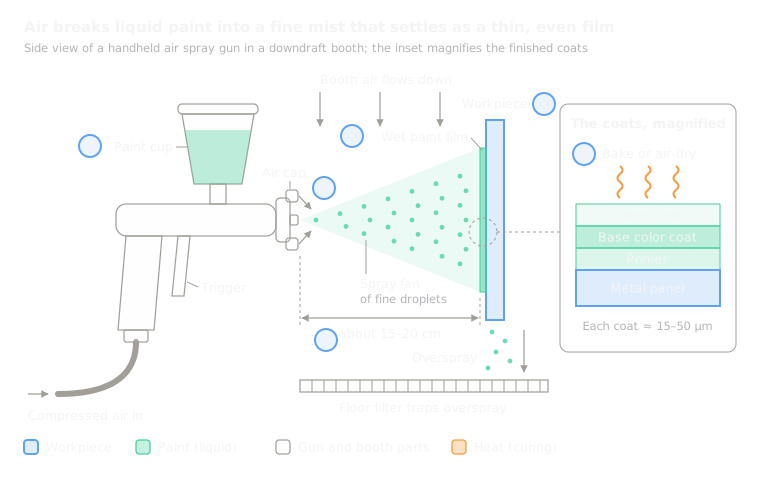 11.1Spray paintingLiquid paint atomized into a fine mist that dries or curesOpen the lesson
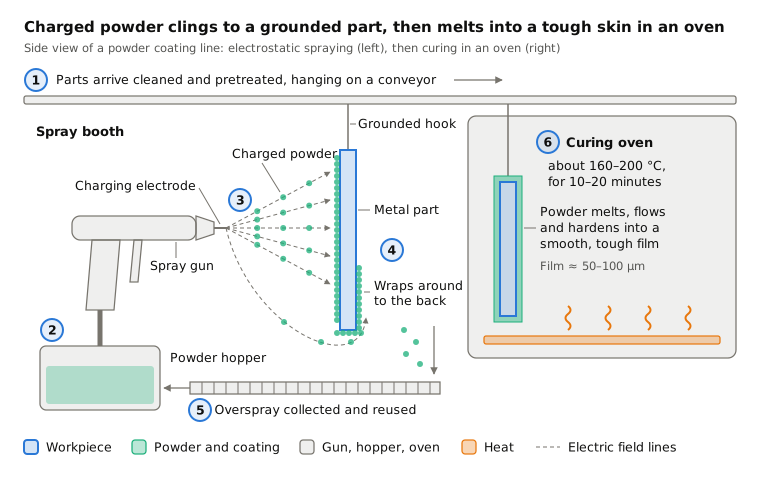
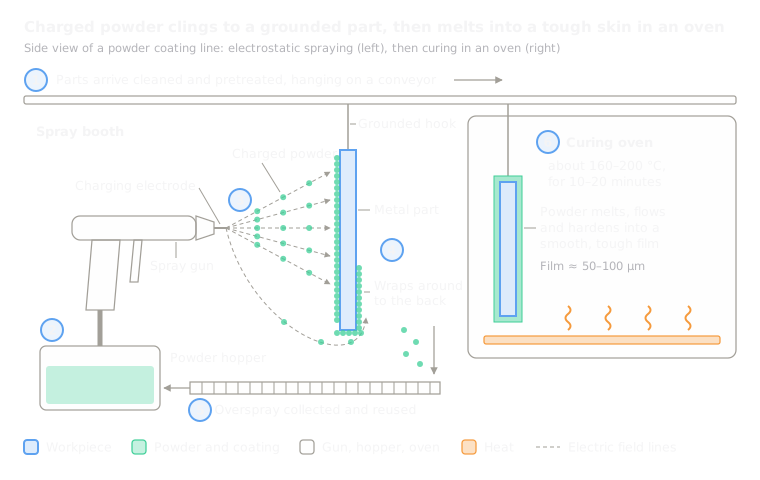 11.2Powder coatingCharged dry powder clings to the part, then melts in an ovenOpen the lesson
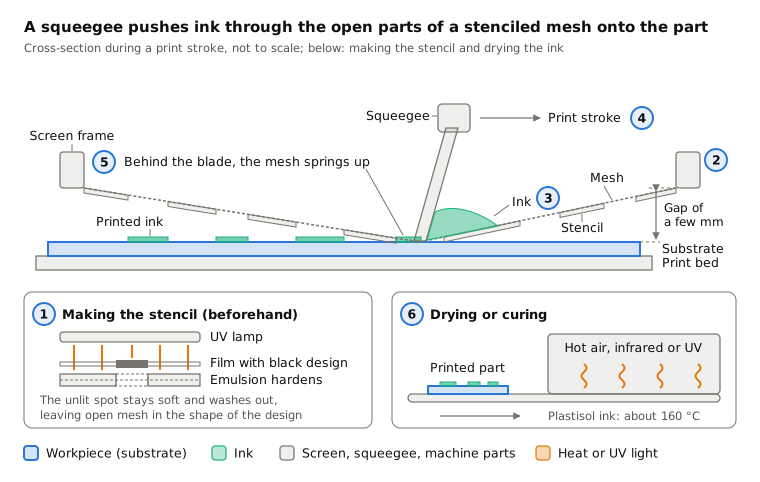
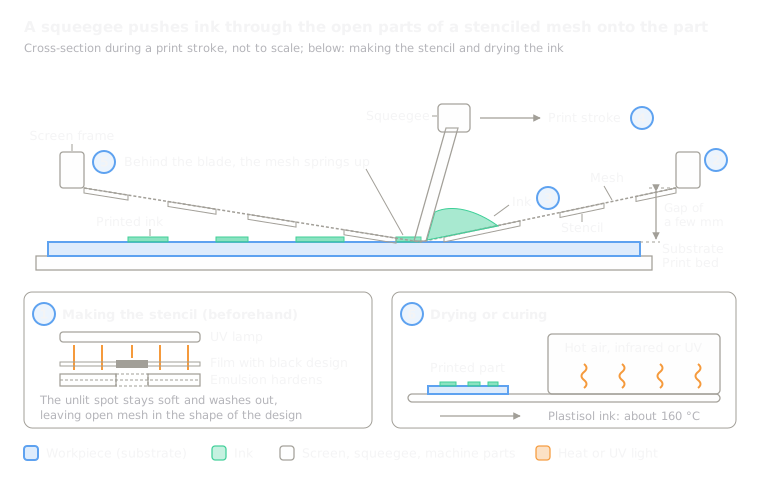 11.3Screen printingInk pushed through a mesh stencilOpen the lesson
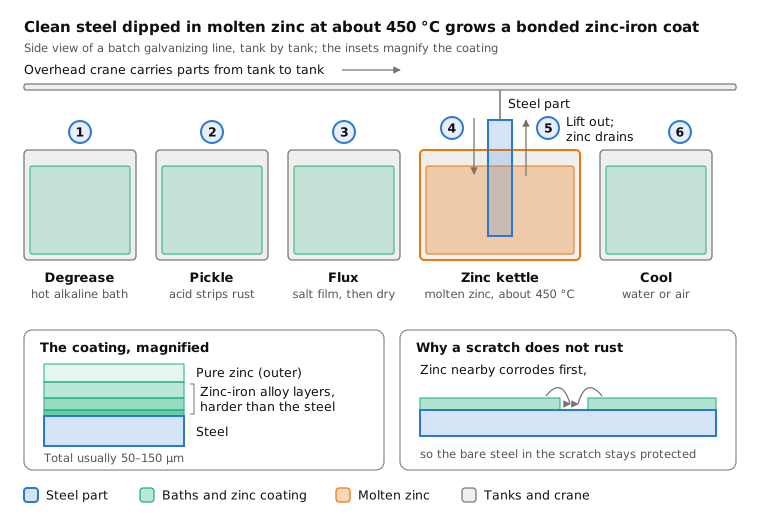
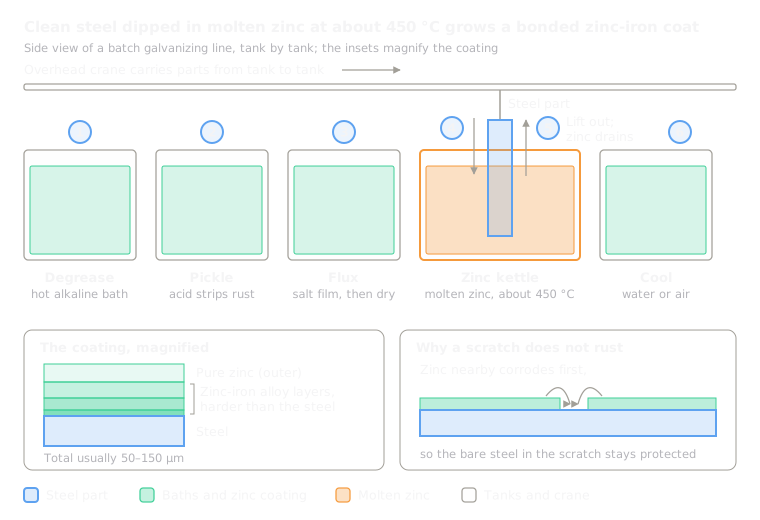 11.4Hot-dip galvanizingSteel dipped in molten zinc forms a bonded zinc layerOpen the lesson
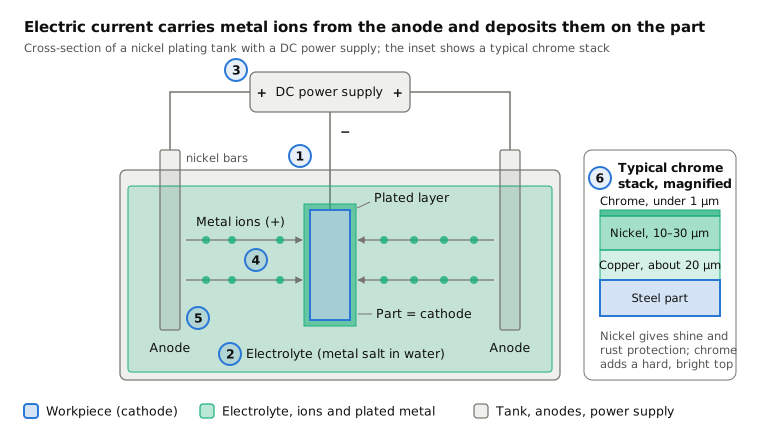
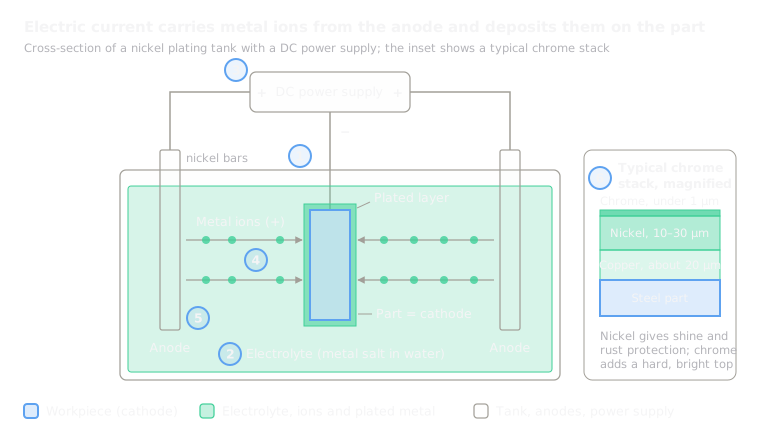 11.5Electroplating (chrome, nickel, zinc)Electric current deposits metal from a bathOpen the lesson
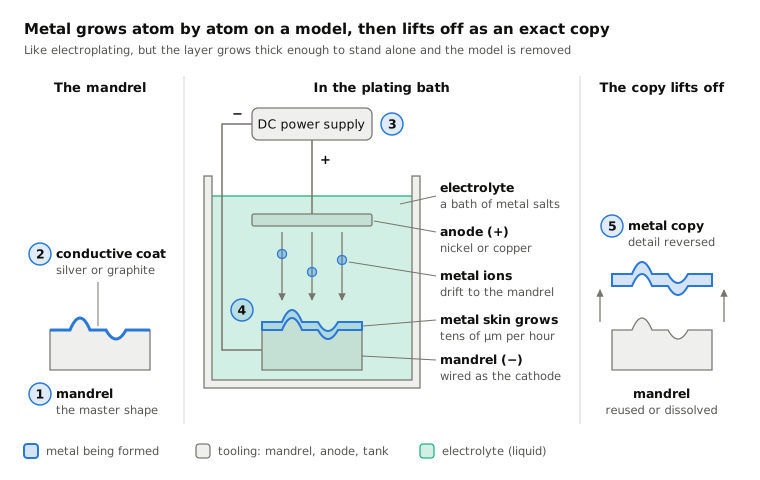
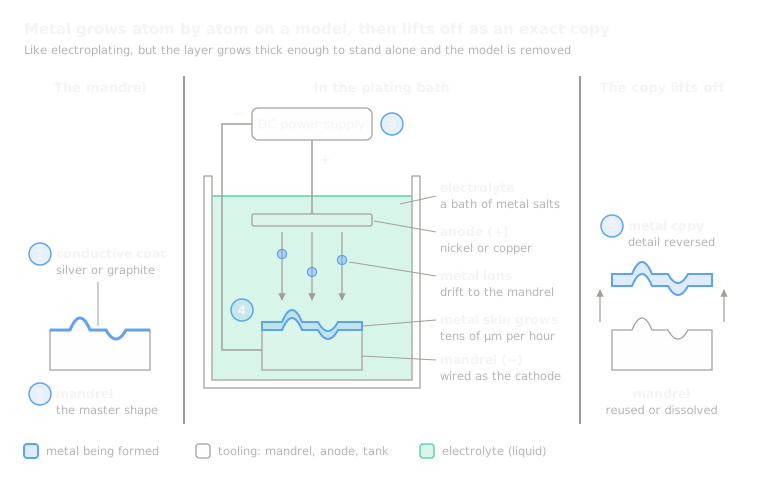 11.7ElectroformingPlating grown thick on a model, then lifted offOpen the lesson
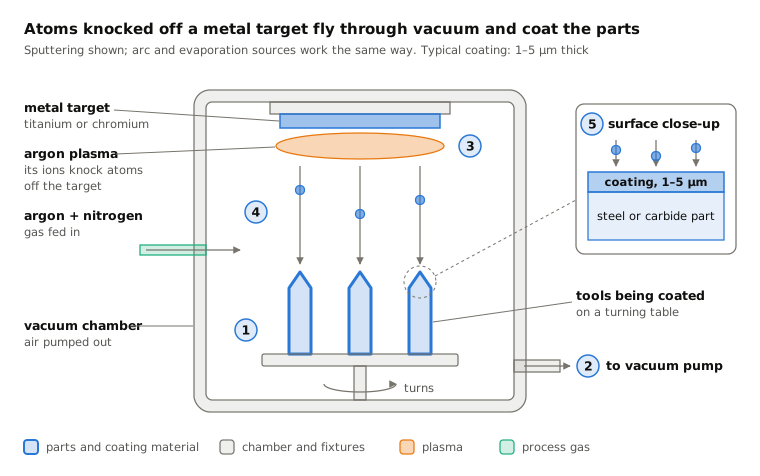
 11.8PVD coating (thin films in vacuum)Atoms knocked off a target coat parts in vacuumOpen the lesson
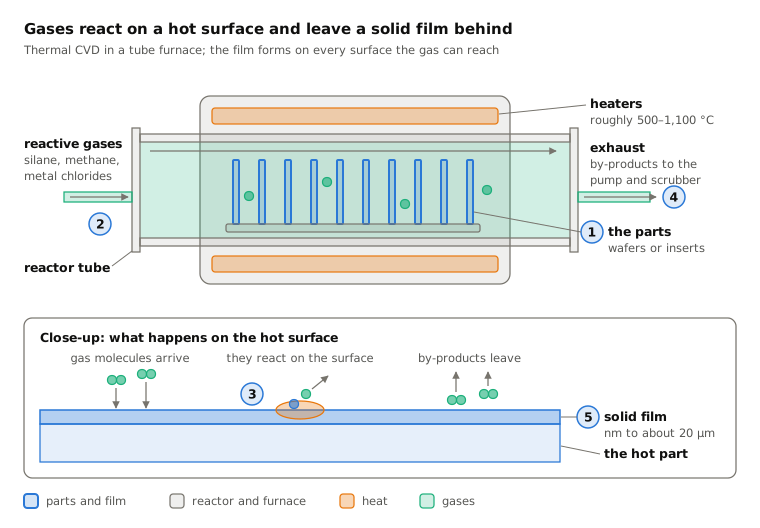
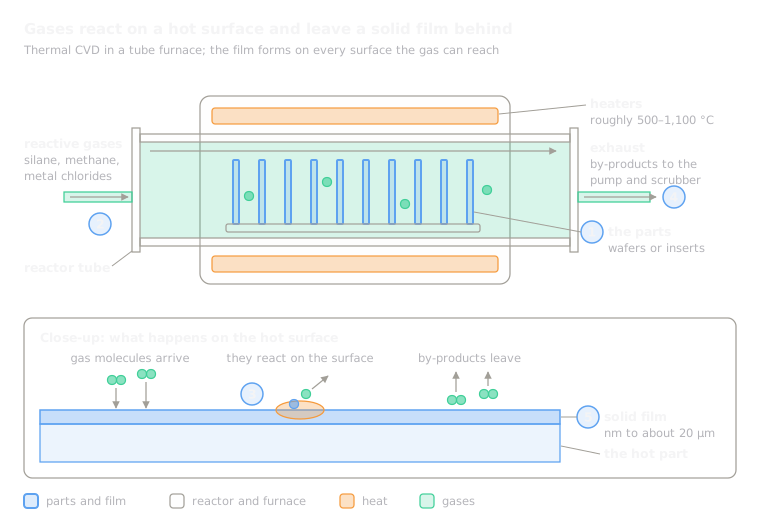 11.9CVD coatingGases react on a hot surface and leave a filmOpen the lesson
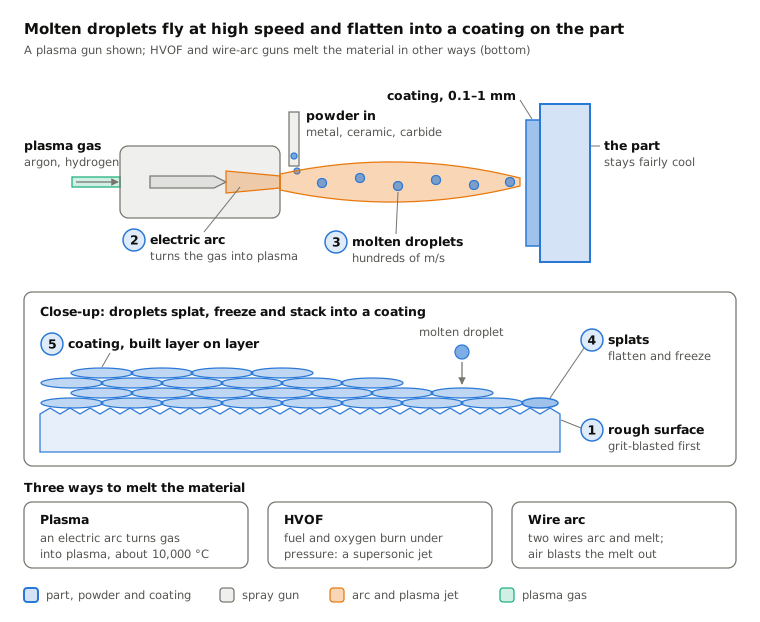
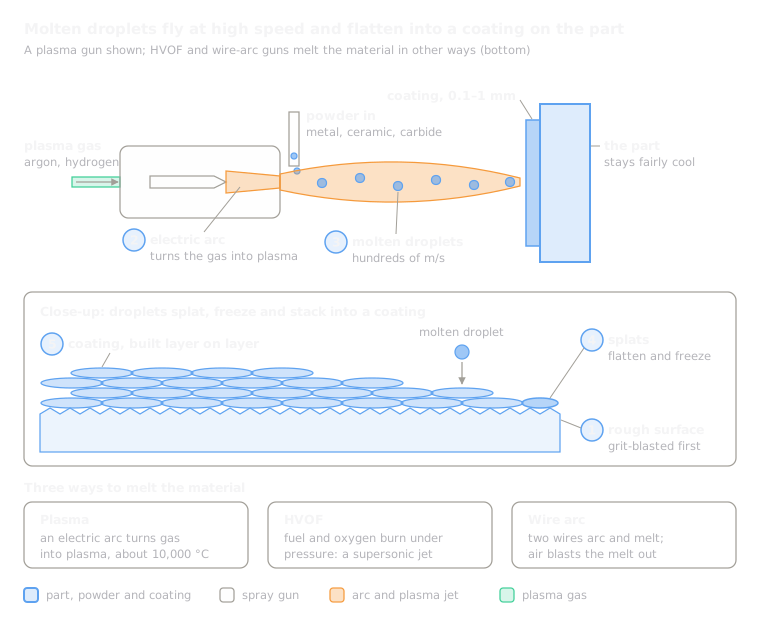 11.10Thermal spraying (plasma, HVOF, arc)Melted droplets fired at a part stack into a layerOpen the lesson
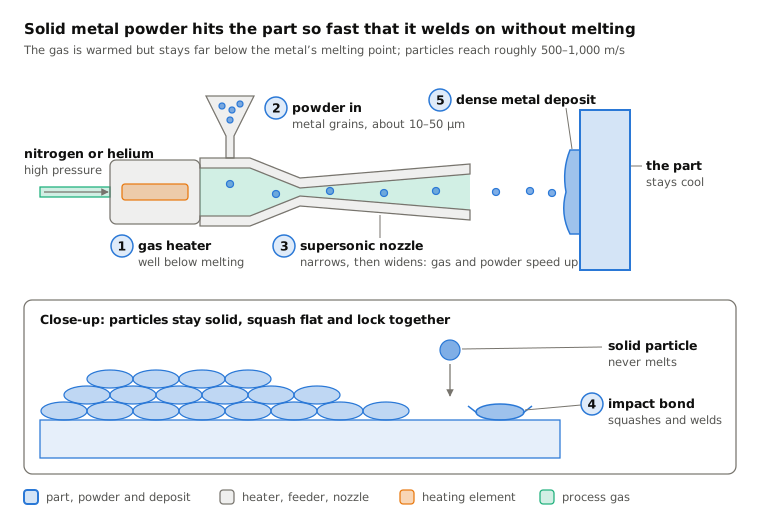
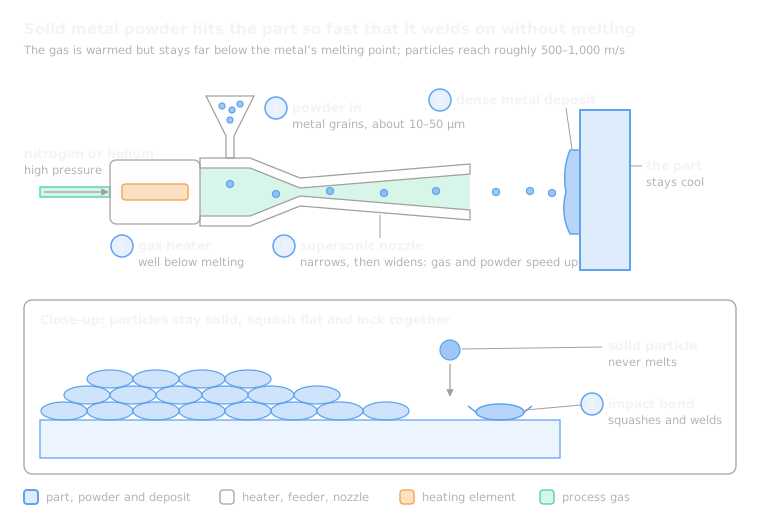 11.11Cold spraySolid metal grains weld on by sheer speedOpen the lesson
Try it
Put AI to work in your CAD.
Model parts, generate drawings and automate the repetitive work inside your CAD software.