

PVD coating (thin films in vacuum)
Atoms knocked off a target coat parts in vacuum
PVD (physical vapor deposition) coats parts with a metal or ceramic film a few microns thick, built atom by atom in a vacuum. The gold-colored layer on many drill bits is a PVD coating of titanium nitride. It makes tools last several times longer and gives watches and faucets a hard, lasting color.
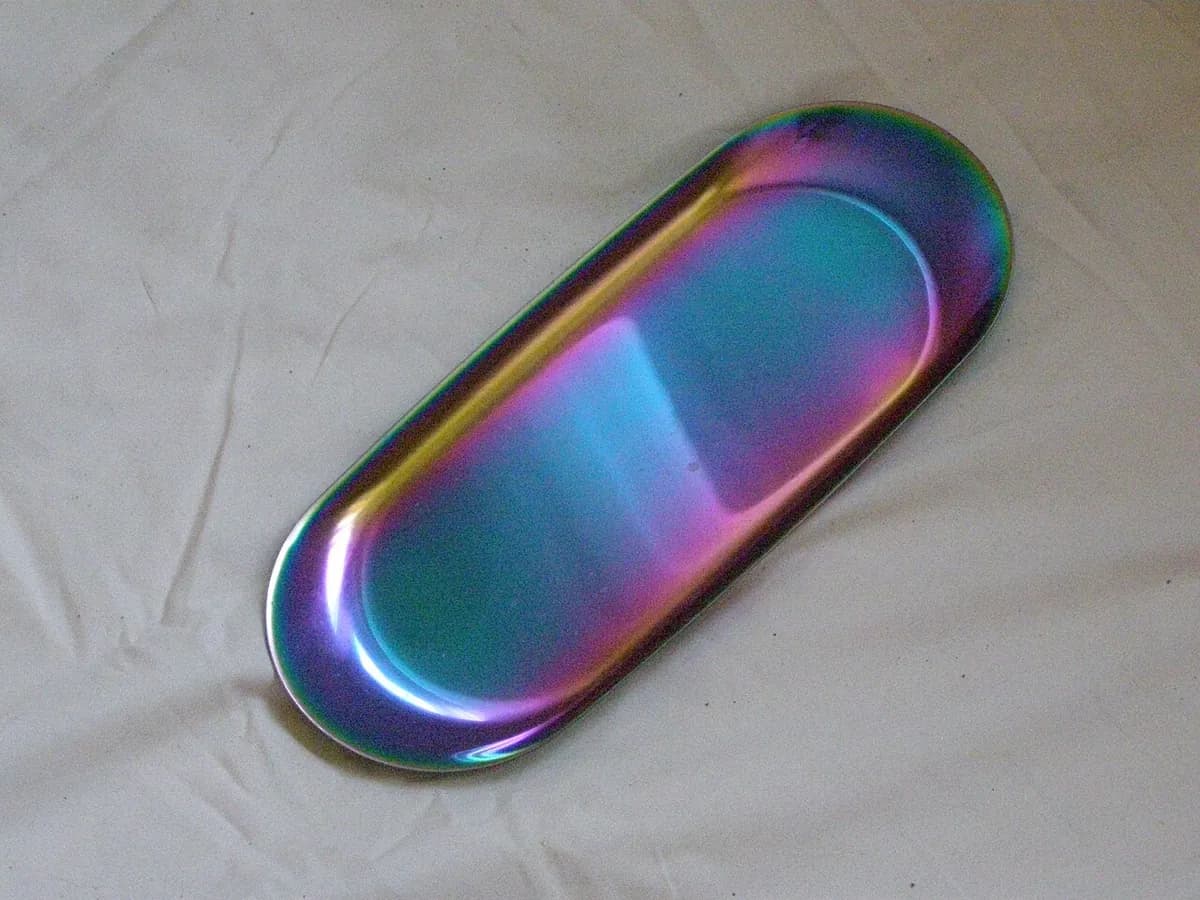
How it works
Clean and load. Parts are cleaned spotless, often in ultrasonic baths, then mounted on fixtures that turn during coating. Any trace of oil or dust would stop the film from sticking.
Pump down and heat. Pumps remove the air until the pressure is roughly a millionth of normal. Heaters bring the parts to typically 200–500 °C, and a short blast of argon ions scrubs their surfaces clean.
Knock atoms off the target. Argon gas is turned into a plasma (a glowing, electrically charged gas). Its ions slam into the target, a plate of the coating metal, and knock atoms loose: this is sputtering. Other machines free the atoms with an electric arc or by simple evaporation.
Fly and react. The freed atoms fly in straight lines and land on whatever they can see. Nitrogen fed into the chamber reacts with them, so titanium lands as hard, gold-colored titanium nitride (TiN).
Turn and build up. The fixtures rotate so every face gets its share. The film typically grows 1–5 µm thick, then the chamber cools and is vented.
Key facts
- Materials
- Coatings: TiN, TiAlN, CrN, DLC (diamond-like carbon), aluminum, chromium. Parts: tool steel, carbide, stainless steel, glass, some plastics
- Typical parts
- Drills, end mills and inserts, molds, watch cases, faucets, lenses, chips
- Part size
- From tiny inserts to parts tens of centimeters long; limited by the chamber
- Precision
- Film typically 1–5 µm, down to fractions of a micron; the part's size barely changes
- Surface finish
- Copies the surface below (polished in, polished out); colors from gold (TiN) to black (DLC)
- Batch size it suits
- Hundreds to thousands of small parts per load; coating services take small runs
- Tooling and machine cost
- High: an industrial system typically costs hundreds of thousands to over a million dollars; cost per part is low in full batches
- Speed
- A batch typically takes a few hours from loading to unloading
Strengths and limits
Strengths
- Very hard, thin film that keeps sharp edges sharp
- Many hard and decorative colors, such as gold, black or bronze
- Moderate heat: most tool steels keep their hardness
- Clean, dry process with no liquid waste
Limits
- Line of sight: deep holes and hidden faces get little or no coating
- Needs a vacuum chamber: high machine cost and batch work
- The part must be spotless, or the film peels
- Too thin to fill scratches or rebuild worn parts
Where it's used
- Cutting toolsGold TiN drills, dark TiAlN end mills, carbide inserts
- Molds and diesWear-resistant films on injection molds and forming tools
- Watches and jewelryBlack, gold or rose-gold finishes on steel cases and bands
- Home and bathBrushed-nickel or brass-look faucets and door handles
- Optics and electronicsAnti-reflection layers on lenses, metal films on chips and displays
- AutomotivePiston rings and engine parts with CrN or DLC coatings
How to recognize it
- A thin, even color on metal: gold on drill bits, violet-black or bronze on cutting tools.
- The color covers outer faces and cutting edges perfectly but fades inside deep holes and grooves.
- No drips, runs or thick edges: the metal itself seems to have changed color.
- Very hard to scratch, unlike paint of the same color.
Compare with
Watch it
Korvus Technology · The basics of PVD, from an equipment maker
Plansee · An animation of atoms sputtered from a target
CICEL COMPANY · The full factory workflow, from cleaning to unloading
Oerlikon · What an industrial coating machine looks like
See real photos
- Wikipedia: Physical vapor deposition — methods (sputtering, arc, evaporation) and uses, with links to photos
- Wikimedia Commons photo search
Remember
- PVD builds a hard film atom by atom in a vacuum, typically 1–5 µm thick.
- Atoms fly in straight lines, so hidden surfaces get little coating.
- The gold color of many drill bits is PVD titanium nitride.
More in Coatings and surface finishing
All 100 processes
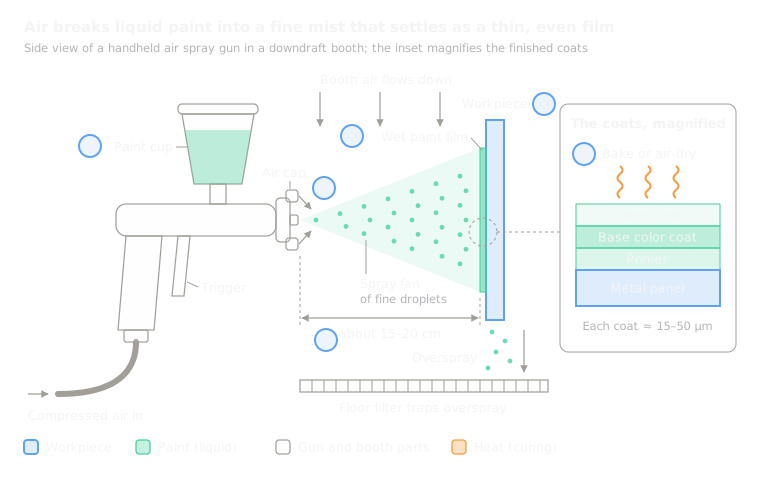 11.1Spray paintingLiquid paint atomized into a fine mist that dries or curesOpen the lesson
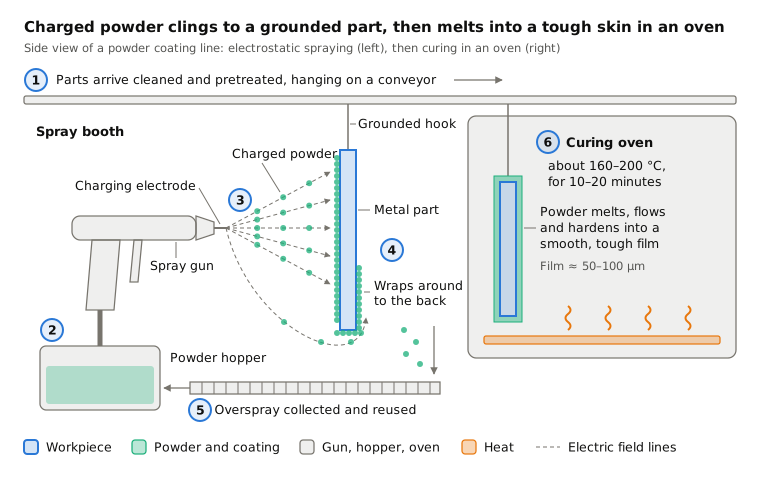
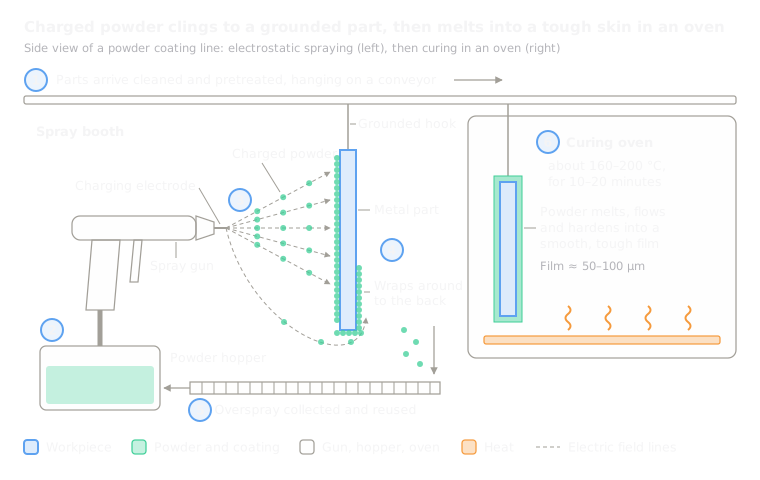 11.2Powder coatingCharged dry powder clings to the part, then melts in an ovenOpen the lesson
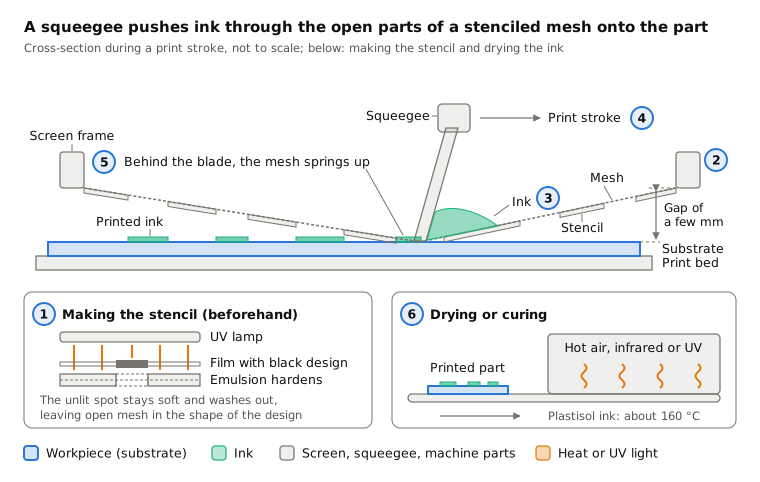
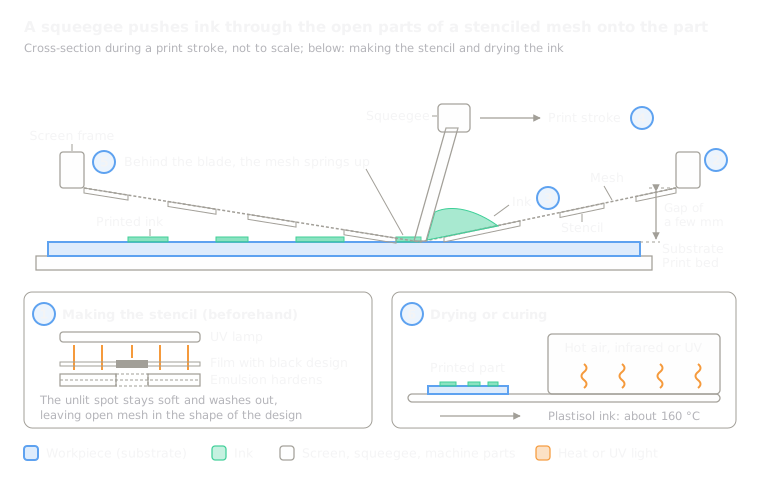 11.3Screen printingInk pushed through a mesh stencilOpen the lesson
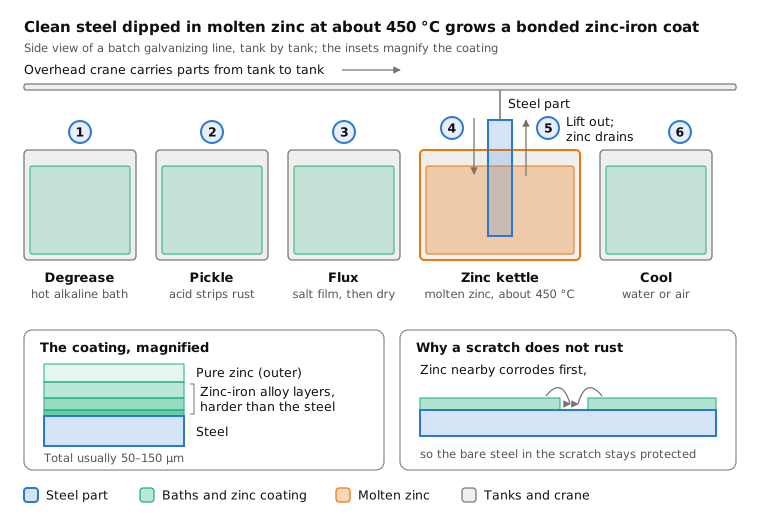
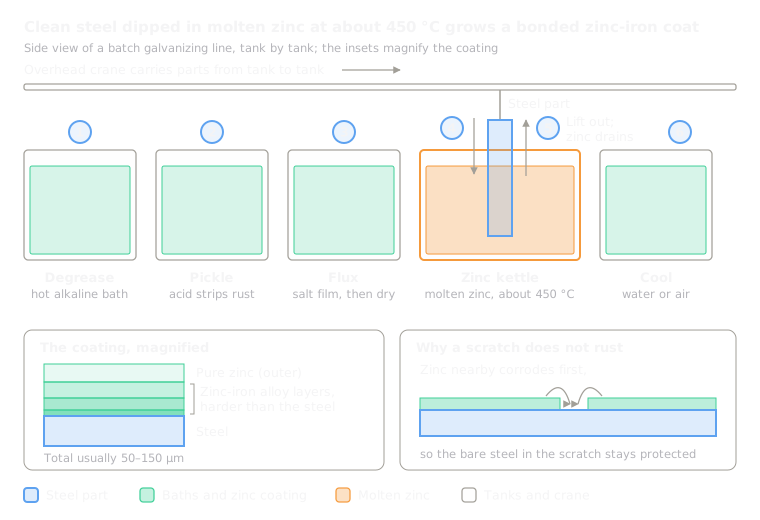 11.4Hot-dip galvanizingSteel dipped in molten zinc forms a bonded zinc layerOpen the lesson
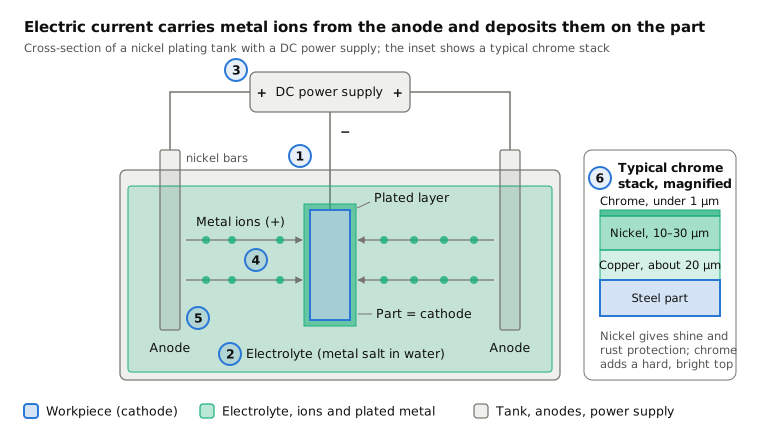
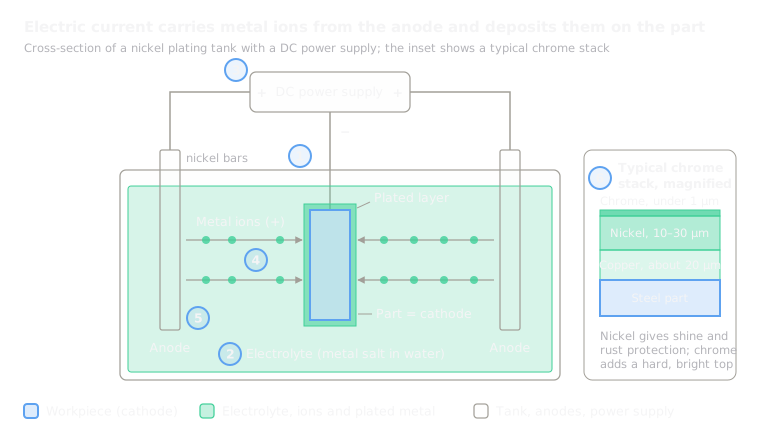 11.5Electroplating (chrome, nickel, zinc)Electric current deposits metal from a bathOpen the lesson
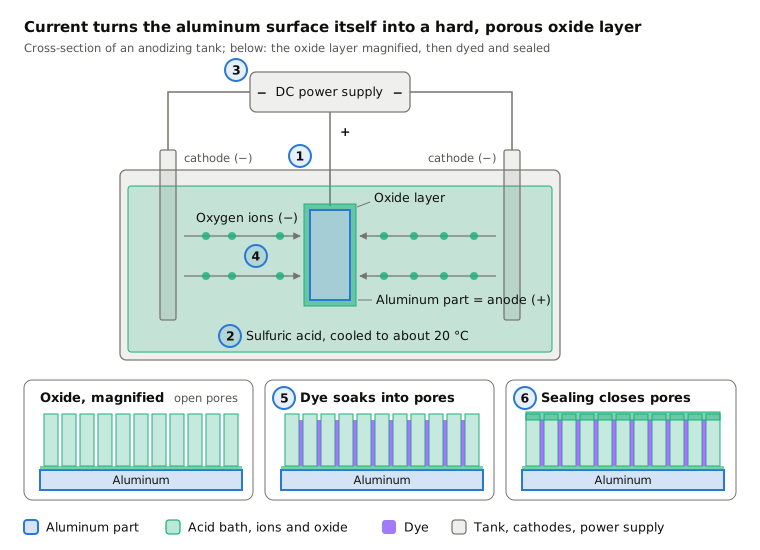
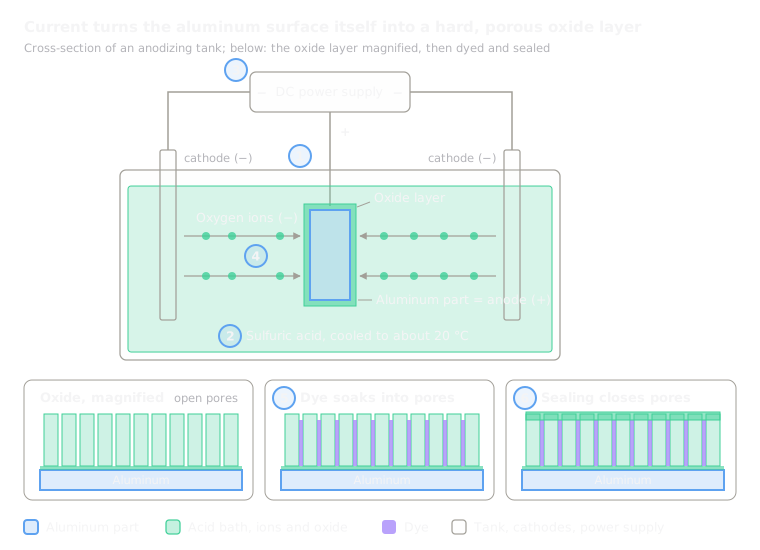 11.6AnodizingCurrent grows a hard oxide out of aluminum itselfOpen the lesson
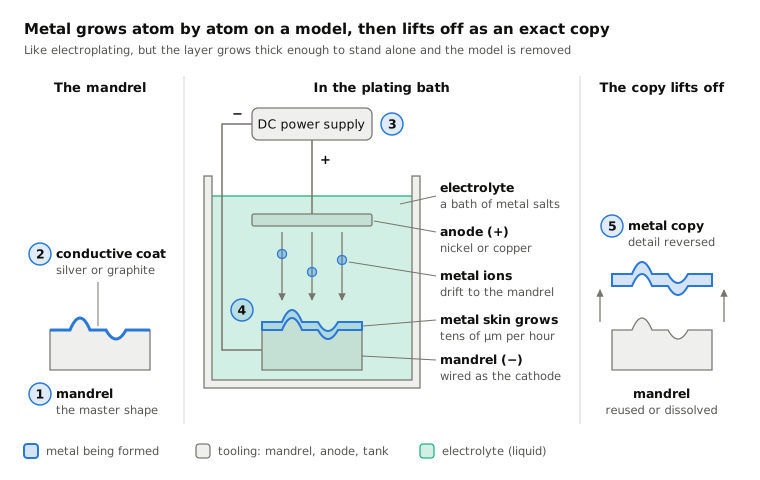
 11.7ElectroformingPlating grown thick on a model, then lifted offOpen the lesson
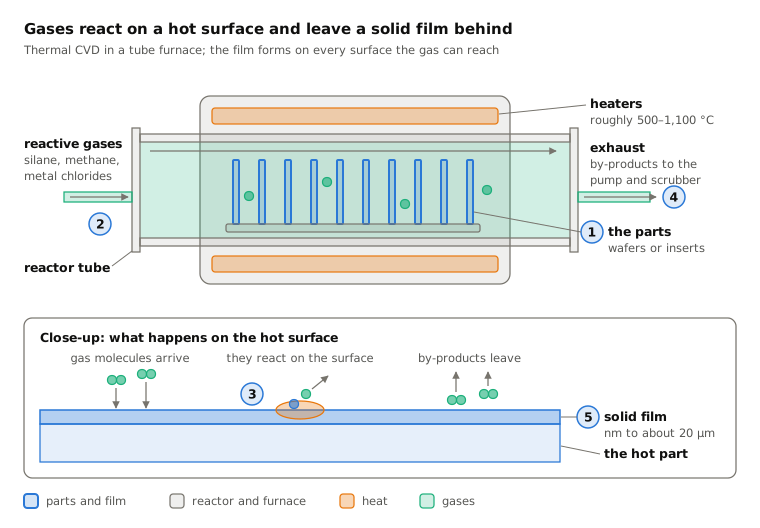
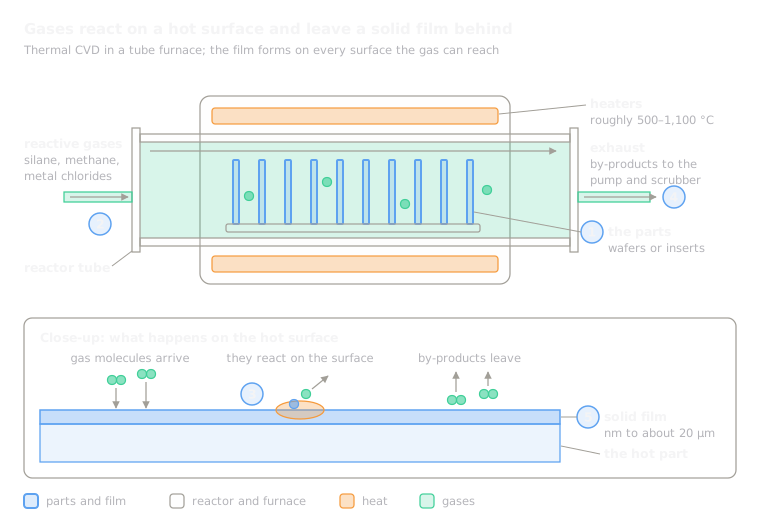 11.9CVD coatingGases react on a hot surface and leave a filmOpen the lesson
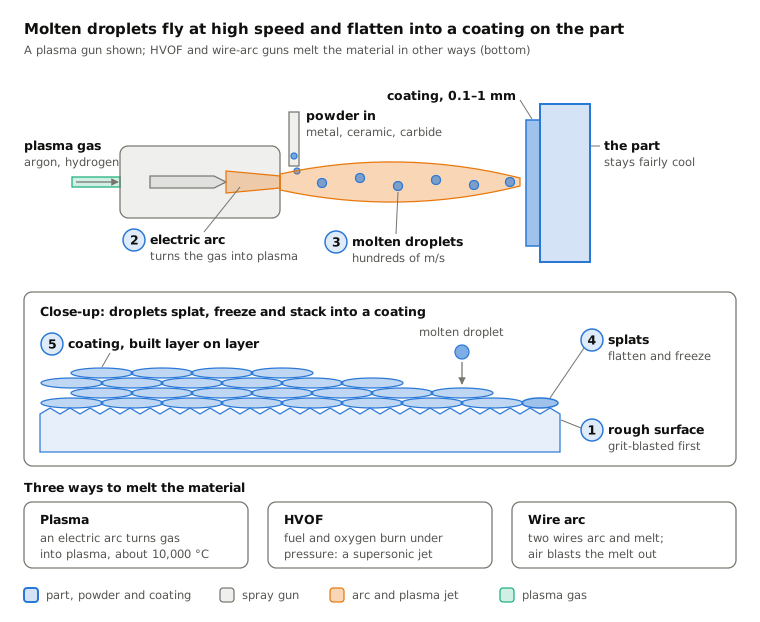
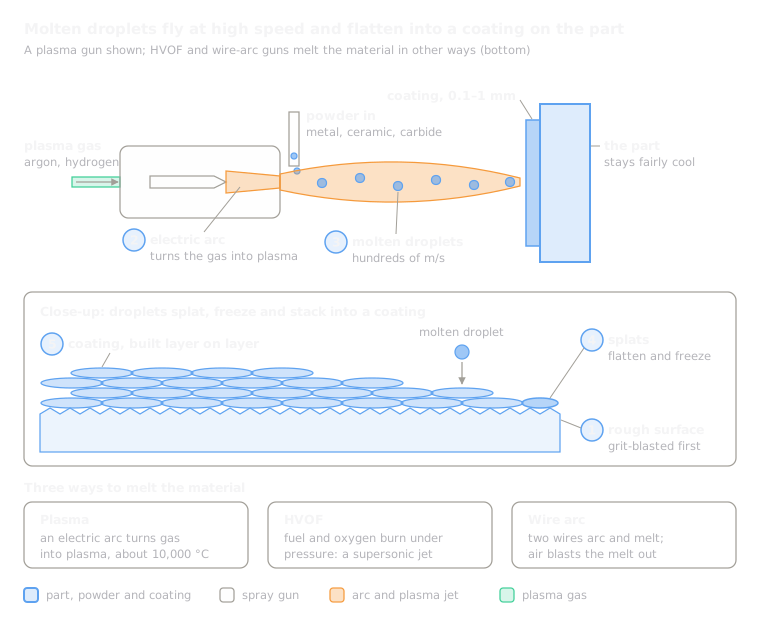 11.10Thermal spraying (plasma, HVOF, arc)Melted droplets fired at a part stack into a layerOpen the lesson
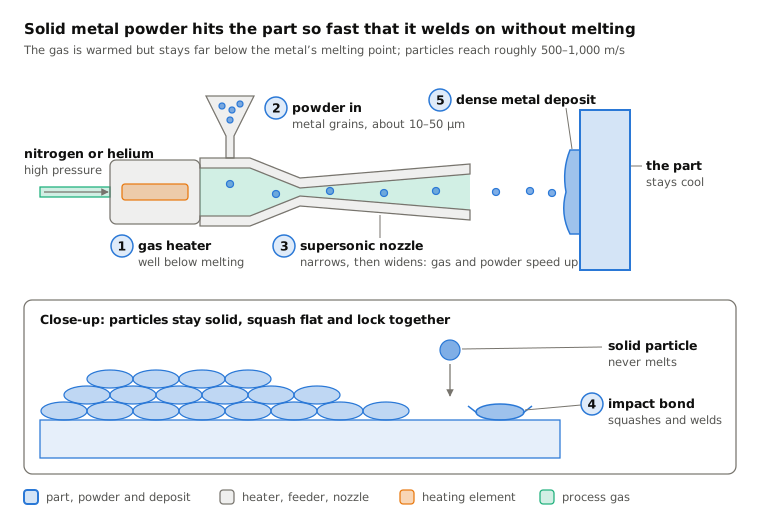
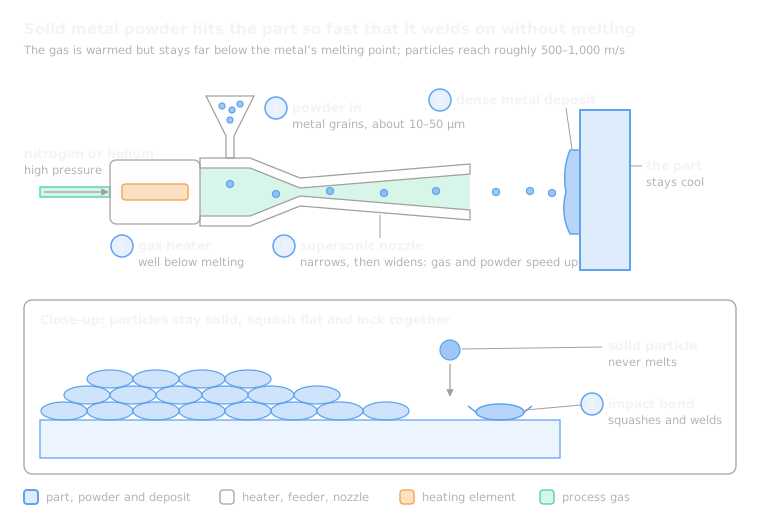 11.11Cold spraySolid metal grains weld on by sheer speedOpen the lesson
Try it
Put AI to work in your CAD.
Model parts, generate drawings and automate the repetitive work inside your CAD software.