

Hot-dip galvanizing
Steel dipped in molten zinc forms a bonded zinc layer
Hot-dip galvanizing protects steel from rust by dipping it in a bath of molten zinc. The dull gray, slightly spangled finish on highway guardrails, electricity pylons and farm gates comes from this process. A galvanized part can often last several decades outdoors with no maintenance.
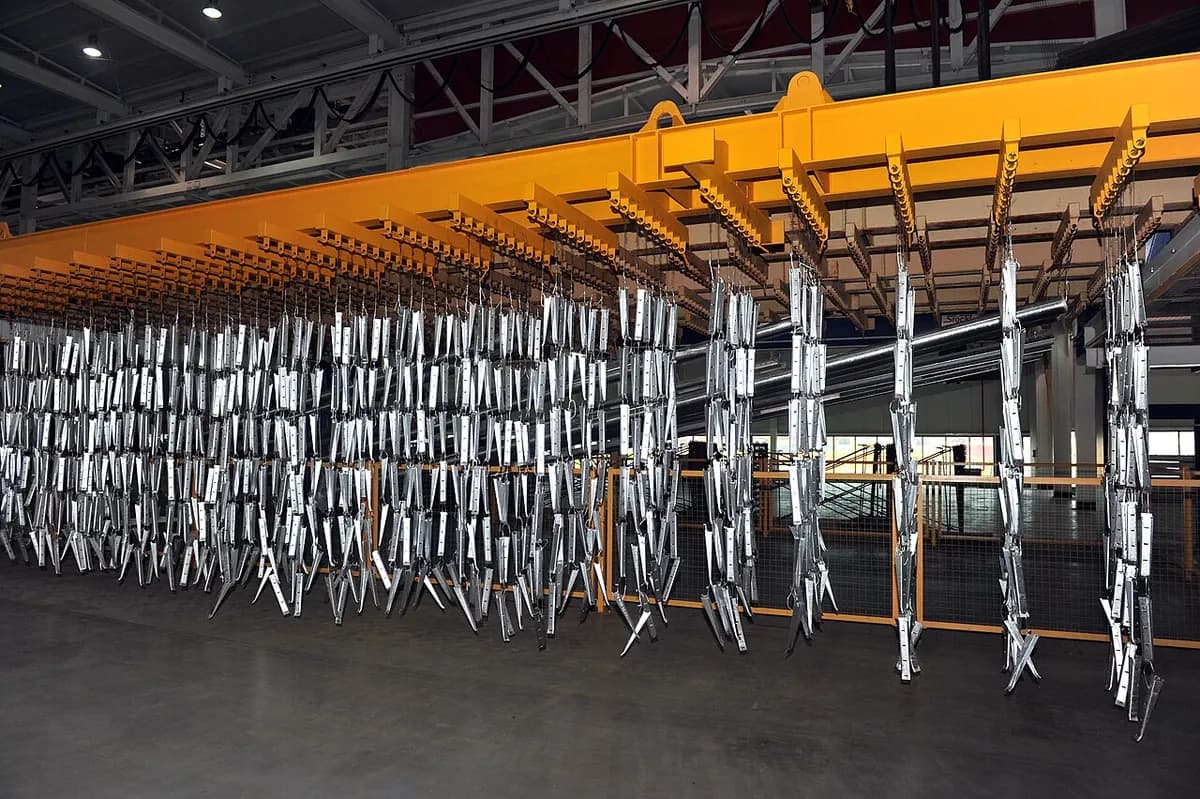
How it works
Degrease. The steel hangs from a crane and is dipped in a hot alkaline bath (a strong soapy cleaner) that removes oil, grease and paint marks.
Pickle. A dilute acid bath, usually hydrochloric acid, dissolves rust and mill scale (the dark oxide skin left by rolling). Zinc only bonds to perfectly clean steel.
Flux and dry. A dip in a flux (a zinc ammonium chloride salt solution) leaves a thin film that stops new rust and helps the zinc wet the steel. The part is then dried.
Dip in molten zinc. The part goes into a kettle of zinc at about 450 °C for a few minutes. Iron and zinc react and grow layers of zinc-iron alloy that are bonded into the steel surface.
Lift out and drain. The part is withdrawn slowly so excess zinc runs off. A layer of almost pure zinc stays on top of the alloy layers.
Cool and inspect. The part is quenched in water or cooled in air, then checked for thickness and bare spots, and drips are removed.
The same idea runs continuously in steel mills: coils of sheet unroll through a zinc bath, often at more than 100 m per minute. That sheet becomes car bodies, roofing and appliance panels.
Key facts
- Materials
- Carbon and low-alloy steel, and cast iron; zinc bath with small additions such as aluminum
- Typical parts
- Structural beams, guardrails, pylons, poles, fences, fasteners, trailers, farm equipment
- Part size
- From bolts to beams many meters long; the largest kettles are over 15 m long
- Precision
- Coating usually 50–150 µm and uneven; threads and close-fitting holes need cleaning or masking
- Surface finish
- Dull gray or shiny with a crystal pattern (spangle), turning matte gray with age; drips and rough spots are common
- Batch size it suits
- One-off structures to large series; galvanizers price it by weight of steel
- Tooling and machine cost
- No part-specific tooling; a galvanizing plant costs millions
- Speed
- Minutes in the zinc; a full batch cycle with cleaning takes hours; continuous sheet lines run at high speed
Strengths and limits
Strengths
- Very long life outdoors, often several decades with no upkeep
- Covers every surface, inside tubes and corners, in one dip
- Tough, metallurgically bonded coat that resists knocks
- Zinc protects scratches and cut edges by corroding first
Limits
- Only for steel and iron; looks industrial unless painted
- At about 450 °C thin parts can warp, and closed hollows must be vented to avoid bursting
- Thick, uneven coat, so it is poor for precise fits and threads
- Welding or cutting afterward burns off zinc and gives off fumes
Where it's used
- ConstructionStructural steel, stairs, balconies, rebar
- Transport infrastructureHighway guardrails, sign gantries, lighting columns, bridges
- EnergyElectricity pylons, substation frames, solar panel mounting structures
- AgricultureGates, fences, barn structures, animal pens
- AutomotiveGalvanized steel sheet for car bodies (continuous line), trailers
- HardwareBolts, nuts, nails, chains, wire
How to recognize it
- A dull silver-gray or shiny surface, sometimes with a frost-like crystal pattern called spangle.
- Small drips, runs or lumps of zinc at edges and lower ends, where the zinc drained off.
- Vent and drain holes drilled in the corners of tubes and closed shapes.
- On older outdoor steel, an even matte gray with no rust, even at cut edges and scratches.
Compare with
Watch it
Galvanizers Association · The process steps, explained by the UK industry body
American Galvanizers Association · What the finished coating looks like, and why
Joseph Ash Galvanizing · A real dip into molten zinc and the withdrawal
Brooke Alden · A plant tour past every tank
See real photos
- Wikipedia: Hot-dip galvanization — process steps, batch and continuous lines, history, with photos
- Wikimedia Commons photo search
Remember
- Clean steel dipped in zinc at about 450 °C grows a coat that is bonded into its surface.
- Zinc protects twice: as a barrier, and by corroding first wherever the steel is exposed.
- It is the long-life choice for outdoor steel, but the coat is thick and not precise.
More in Coatings and surface finishing
All 100 processes
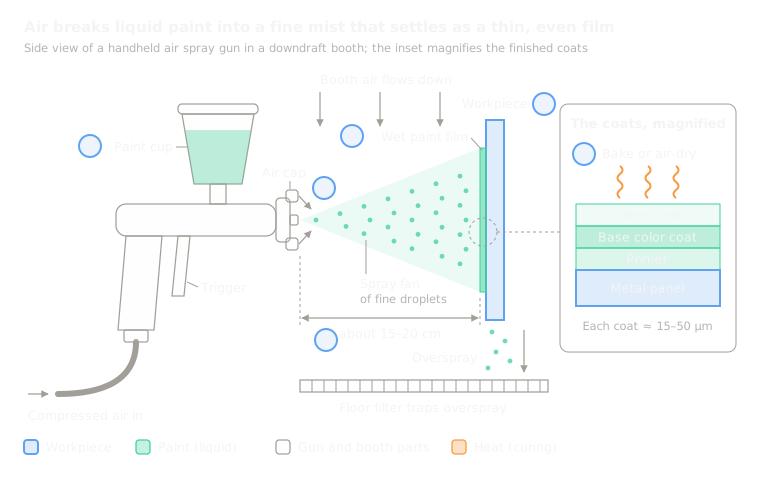 11.1Spray paintingLiquid paint atomized into a fine mist that dries or curesOpen the lesson
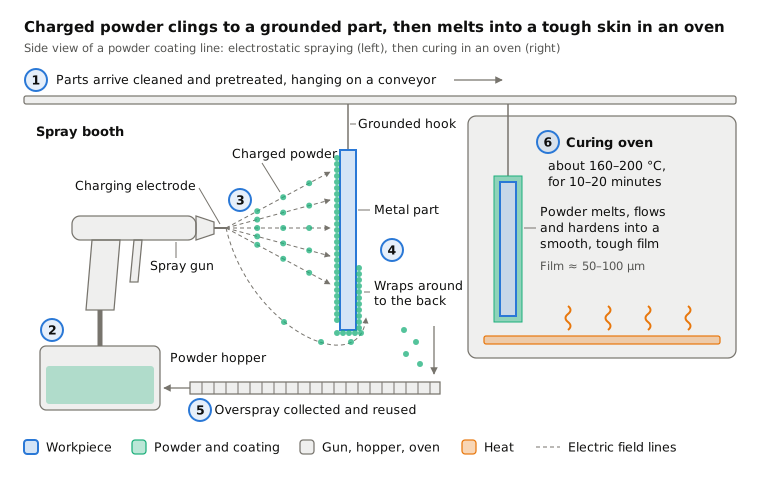
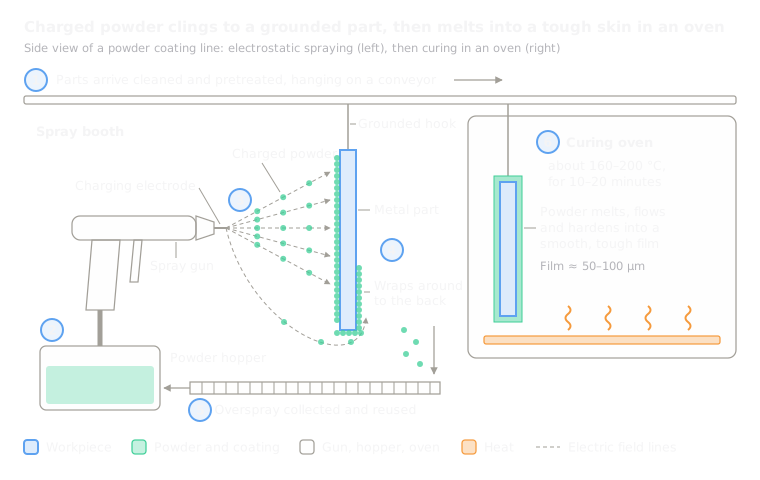 11.2Powder coatingCharged dry powder clings to the part, then melts in an ovenOpen the lesson
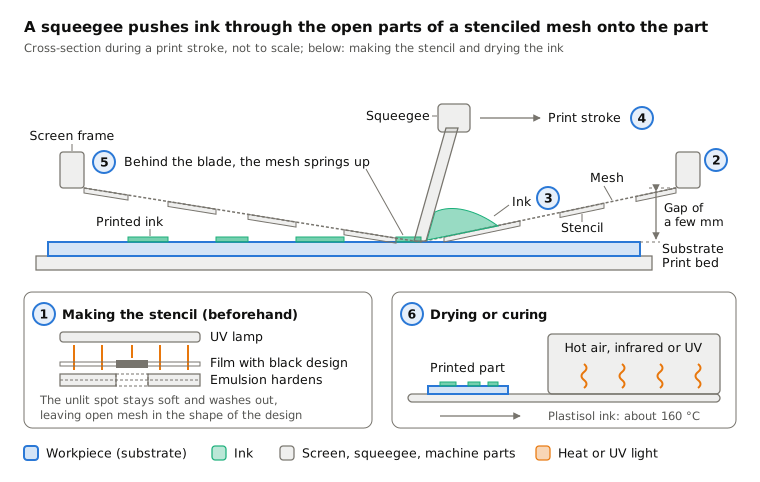
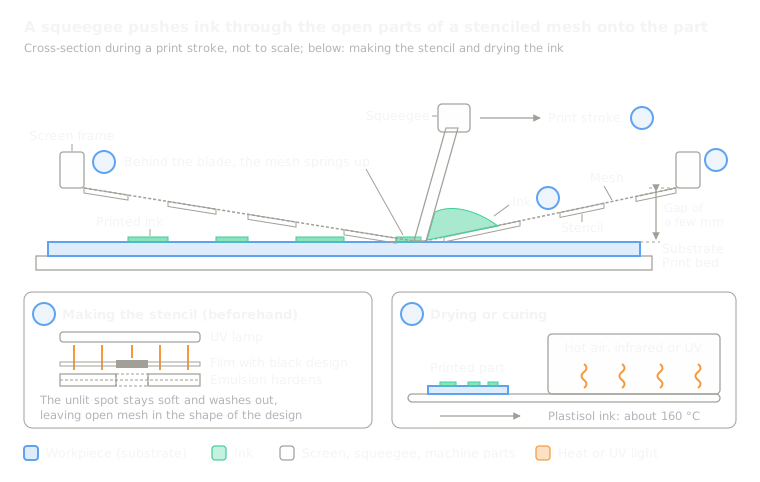 11.3Screen printingInk pushed through a mesh stencilOpen the lesson
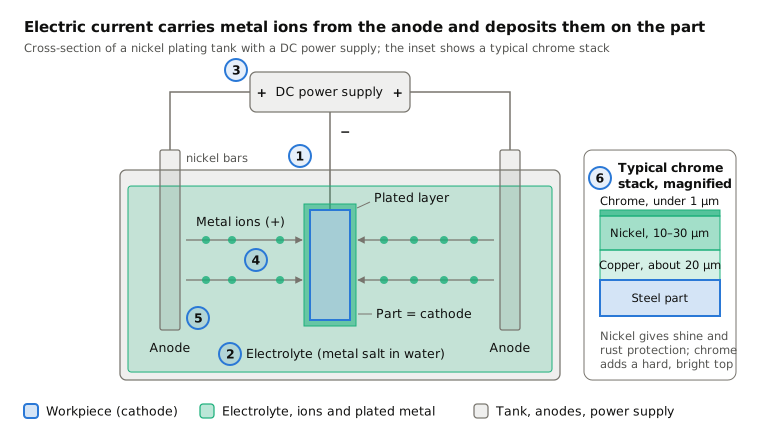
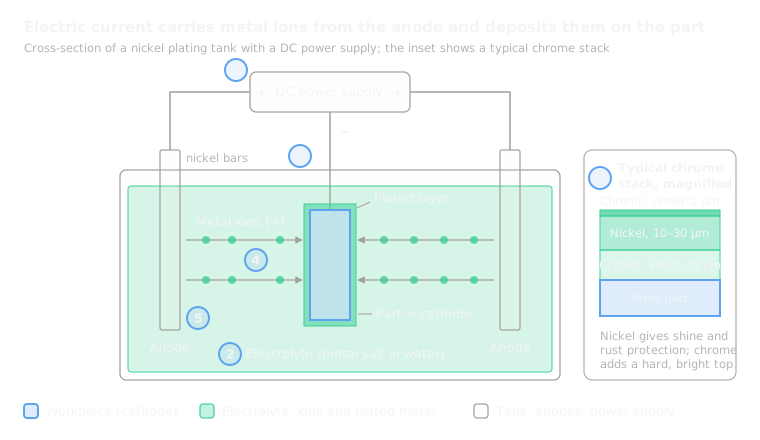 11.5Electroplating (chrome, nickel, zinc)Electric current deposits metal from a bathOpen the lesson
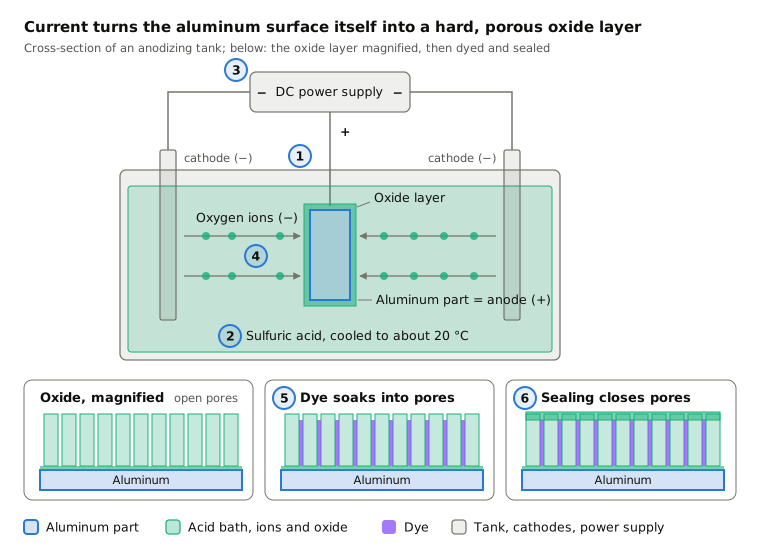
 11.6AnodizingCurrent grows a hard oxide out of aluminum itselfOpen the lesson
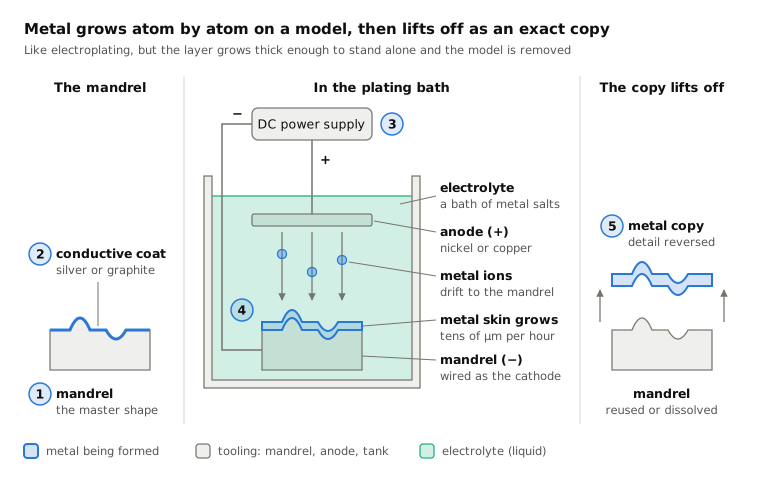
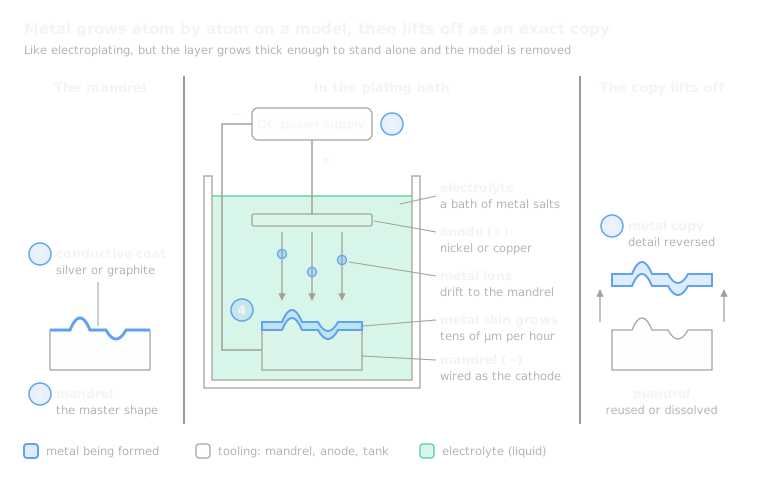 11.7ElectroformingPlating grown thick on a model, then lifted offOpen the lesson
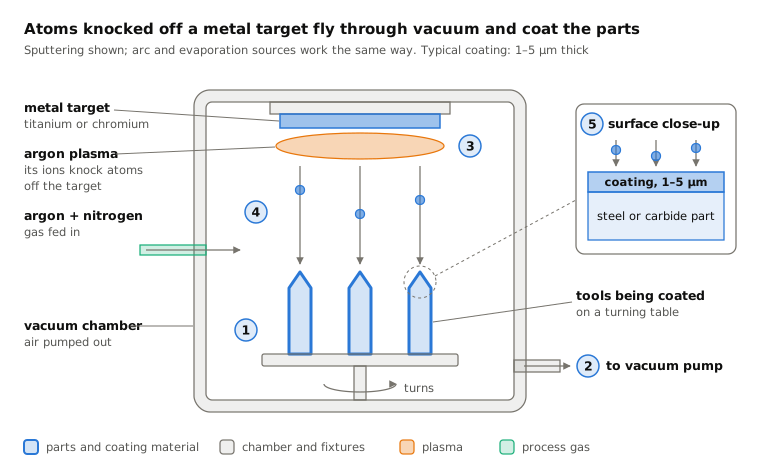
 11.8PVD coating (thin films in vacuum)Atoms knocked off a target coat parts in vacuumOpen the lesson
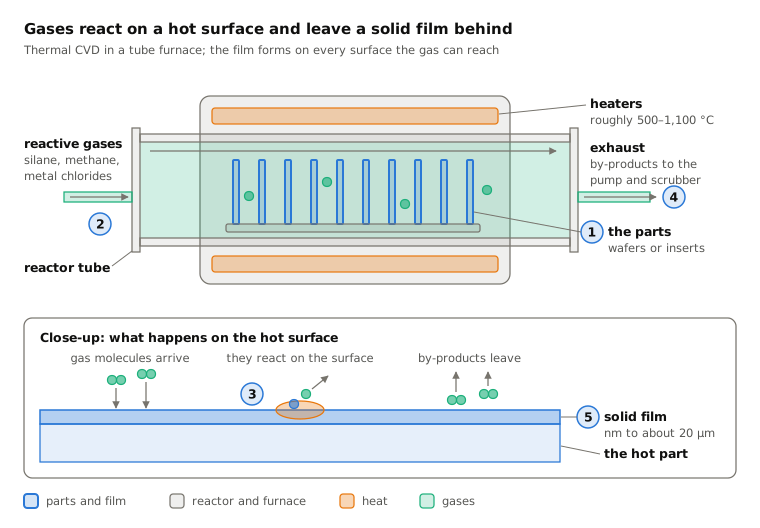
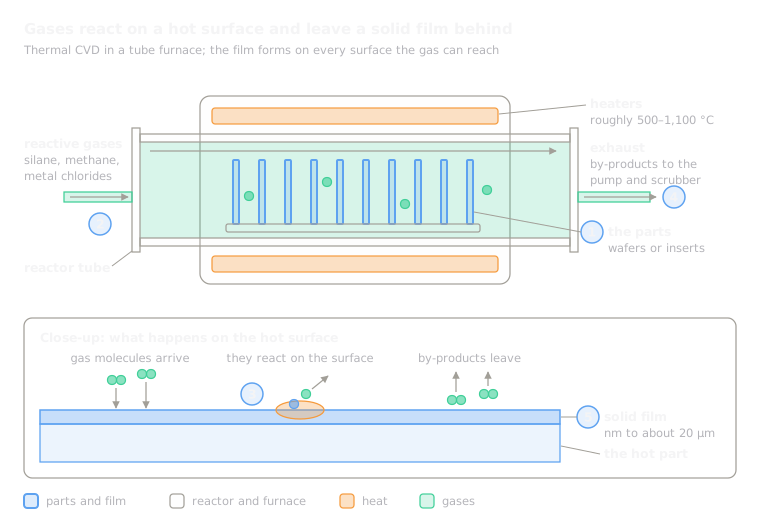 11.9CVD coatingGases react on a hot surface and leave a filmOpen the lesson
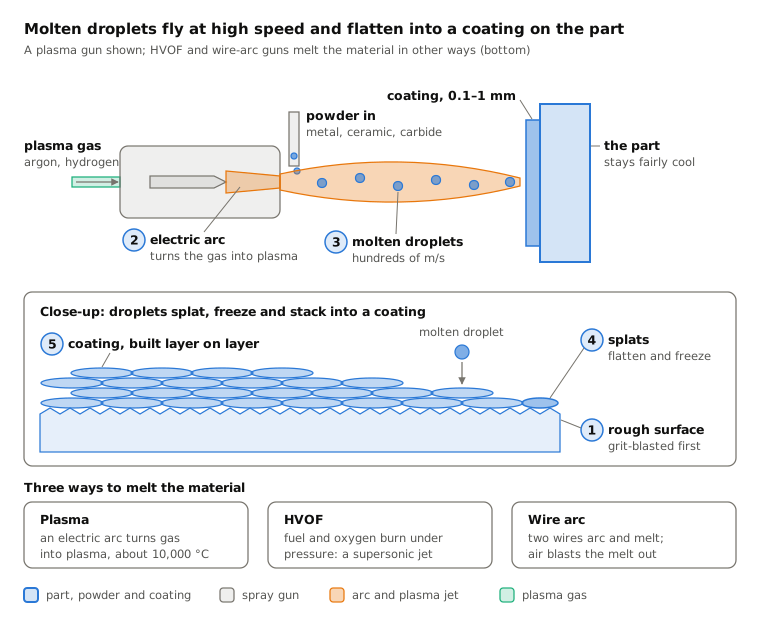
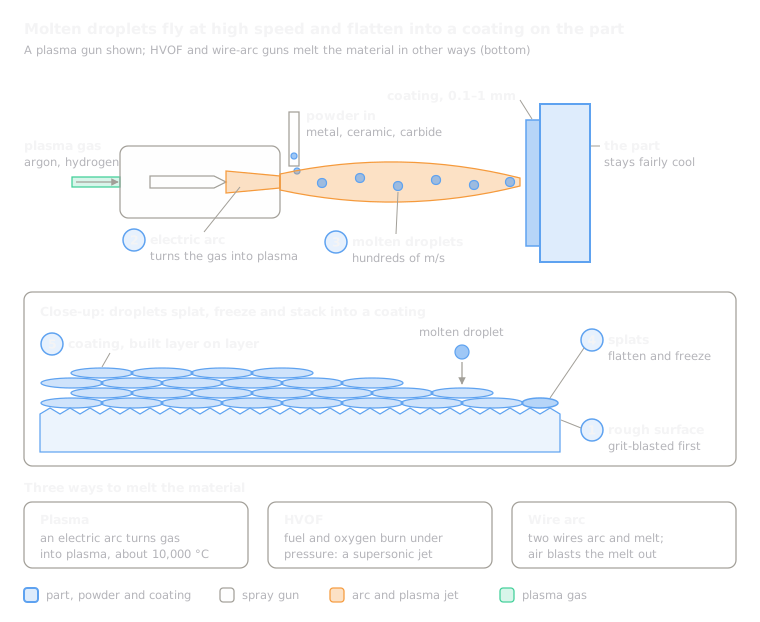 11.10Thermal spraying (plasma, HVOF, arc)Melted droplets fired at a part stack into a layerOpen the lesson
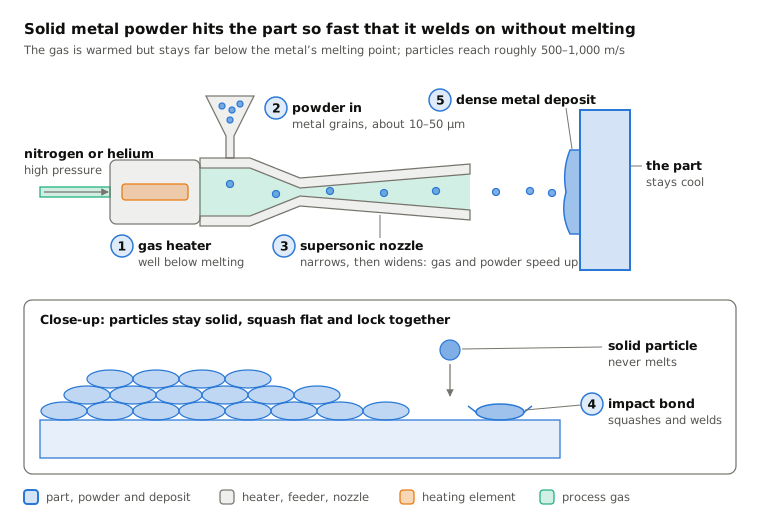
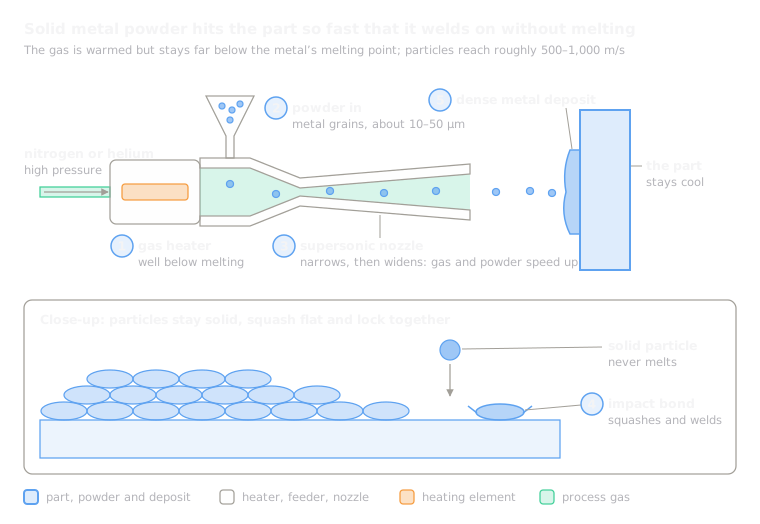 11.11Cold spraySolid metal grains weld on by sheer speedOpen the lesson
Try it
Put AI to work in your CAD.
Model parts, generate drawings and automate the repetitive work inside your CAD software.