

Thermal spraying (plasma, HVOF, arc)
Melted droplets fired at a part stack into a layer
Thermal spraying melts a coating material into tiny droplets and fires them at a part. They flatten on impact and stack up into a thick layer. Sprayed zinc protects steel bridges, sprayed ceramic shields jet-engine parts from heat, and sprayed metal rebuilds worn shafts.
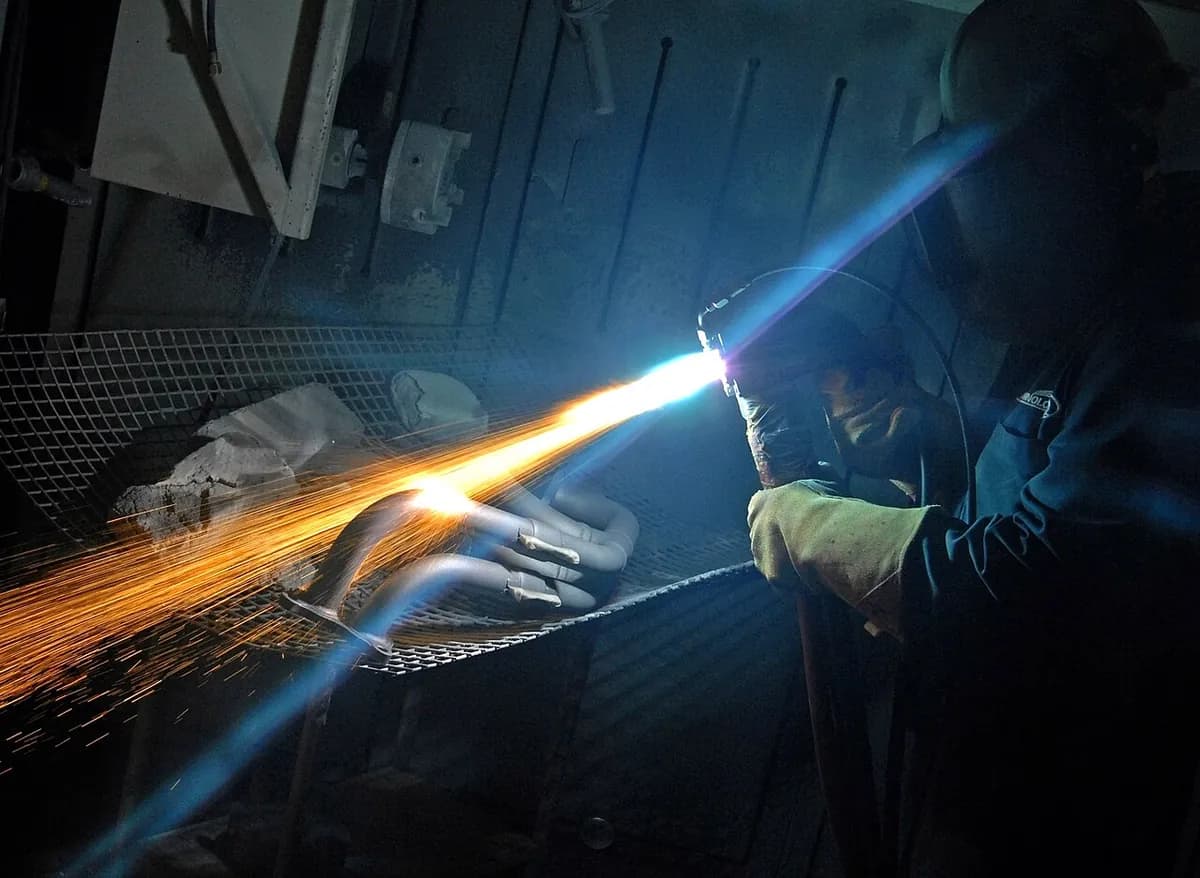
How it works
Prepare the surface. The part is cleaned, areas that must stay bare are masked, and the surface is grit-blasted (blasted with hard grit) to roughen it. The rough surface gives the droplets something to grip.
Melt the material. The gun melts powder or wire. A plasma gun uses an electric arc to turn gas into a plasma (an electrically charged gas) at about 10,000 °C. HVOF guns (high-velocity oxygen fuel) burn fuel with oxygen, and wire-arc guns melt two metal wires with an electric arc.
Fire the droplets. The hot gas jet hurls the molten droplets at the part at hundreds of meters per second.
Splat and freeze. Each droplet hits, flattens into a thin pancake called a splat, and freezes almost instantly. The part itself stays fairly cool, often below about 150 °C.
Build up and finish. A robot sweeps the gun back and forth, so splats stack into a coating typically 0.1–1 mm thick. The surface comes out rough, so precise parts are ground or polished afterwards.
Key facts
- Materials
- Metals (zinc, aluminum, stainless steel, nickel alloys), carbides (tungsten carbide-cobalt), ceramics (alumina, zirconia), some plastics
- Typical parts
- Shafts, rolls, turbine blades, boiler tubes, pump parts, implants, bridges
- Part size
- From small implants to whole bridges and storage tanks; the gun only needs to reach the surface
- Precision
- Coatings roughly 0.05–3 mm thick, about ±0.05 mm as sprayed; tighter after grinding
- Surface finish
- Matte and rough as sprayed, like fine sandpaper; carbides can be ground to a mirror
- Batch size it suits
- One-off repairs to production runs of aerospace and car parts
- Tooling and machine cost
- Thousands of dollars for a flame or arc gun; often hundreds of thousands for a plasma or HVOF cell with robot and booth
- Speed
- Typically several kilograms of coating per hour; a part takes minutes to hours
Strengths and limits
Strengths
- Thick coatings, up to several millimeters
- Almost any material that melts: metals, ceramics, carbides
- Part stays fairly cool, so it does not warp or lose its heat treatment
- Rebuilds worn or mis-machined parts
Limits
- Line of sight: the gun must see the surface, so deep holes are hard
- Coatings hold small pores and grip mechanically rather than fusing
- Rough as sprayed; precise parts need grinding
- Loud, dusty and bright: needs a sealed booth or a robot
Where it's used
- AerospaceHeat-barrier ceramic on turbine blades, hard carbide on landing gear
- InfrastructureZinc and aluminum against rust on bridges, wind towers and tanks
- EnergyCorrosion-resistant layers on boiler tubes and pump parts
- Paper and steel millsHard carbide coatings on large rolls
- MedicalPorous titanium or hydroxyapatite (a bone-like mineral) on hip implants, so bone grows in
- RepairRebuilding worn shafts, bearing seats and pump housings
How to recognize it
- A matte, slightly rough coating, often gray, that feels like fine sandpaper.
- Coating edges that stop at a sharp masking line.
- Under magnification, a layered, pancake-like structure with small pores.
- A ground, mirror-bright carbide band on a shaft or roll, a different color from the steel around it.
Compare with
Watch it
Austchrome · How an HVOF gun makes dense, hard coatings
Curtiss-Wright Surface Technologies · The whole shop process: masking, grit blasting, robot spraying
MTU Aero Engines · Robots plasma-spraying jet-engine parts
Alec Steele · Flame, arc and powder spraying tried in a workshop
See real photos
- Wikipedia: Thermal spraying — all variants (plasma, HVOF, wire arc, flame) and uses, with links to photos
- Wikimedia Commons photo search
Remember
- Thermal spraying melts material, fires the droplets at a part, and lets them stack into a coating.
- Coatings are thick (typically 0.1–1 mm) and rough, but the part stays fairly cool.
- Plasma, HVOF and wire-arc guns differ mainly in how they make the heat.
More in Coatings and surface finishing
All 100 processes
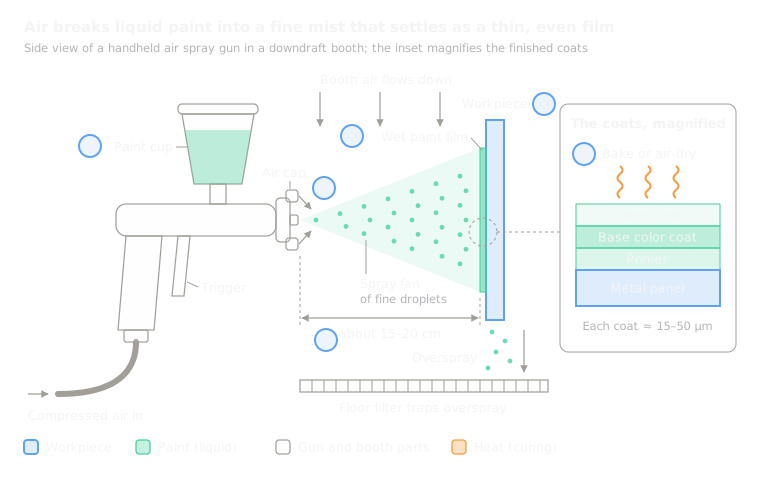 11.1Spray paintingLiquid paint atomized into a fine mist that dries or curesOpen the lesson
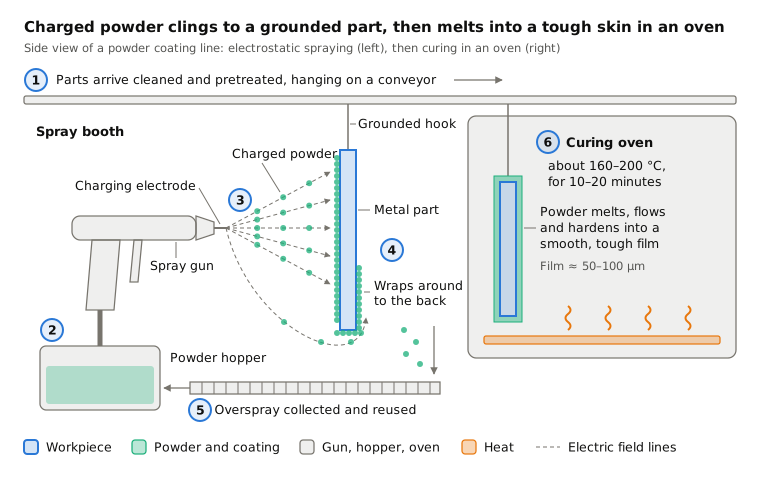
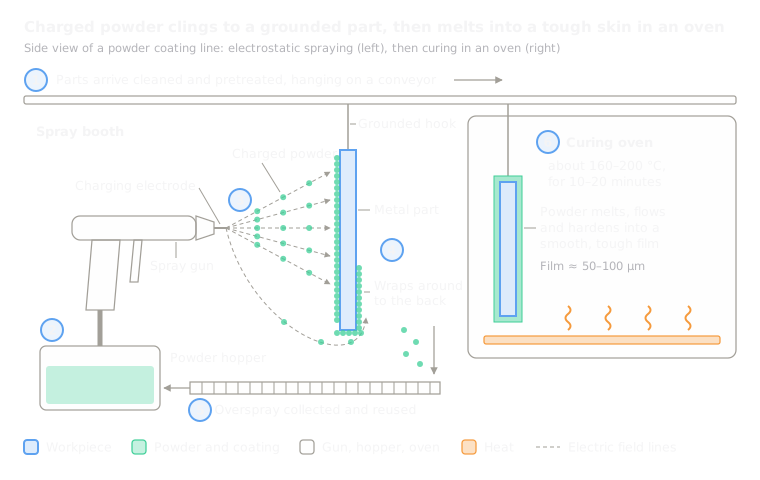 11.2Powder coatingCharged dry powder clings to the part, then melts in an ovenOpen the lesson
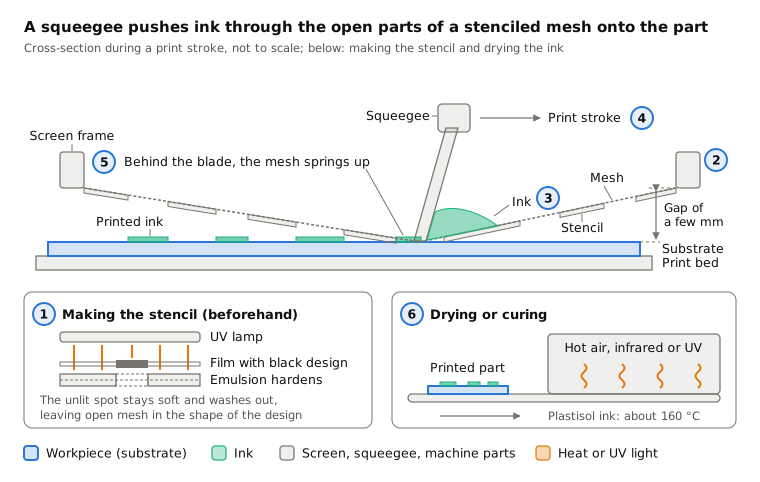
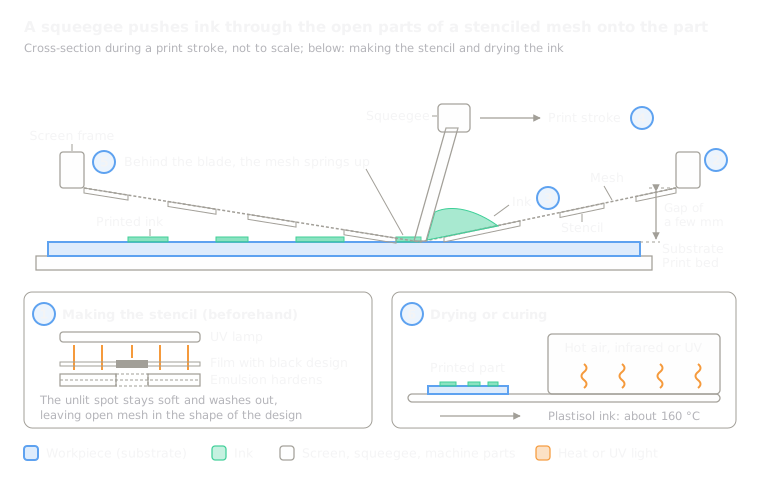 11.3Screen printingInk pushed through a mesh stencilOpen the lesson
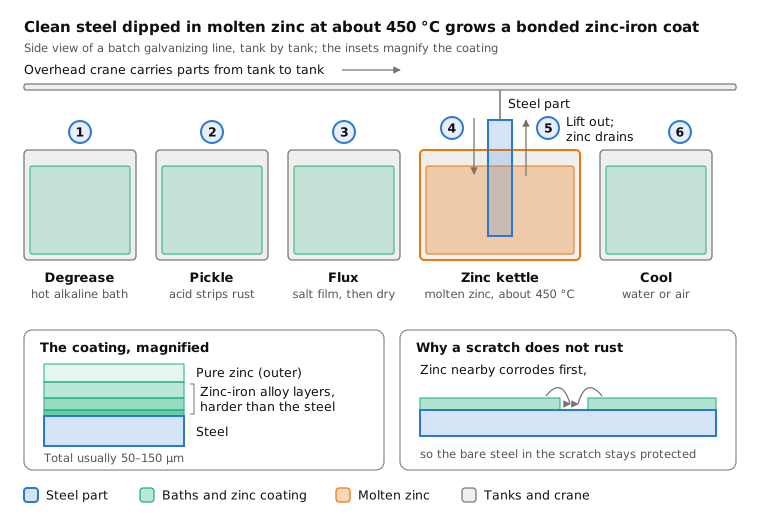
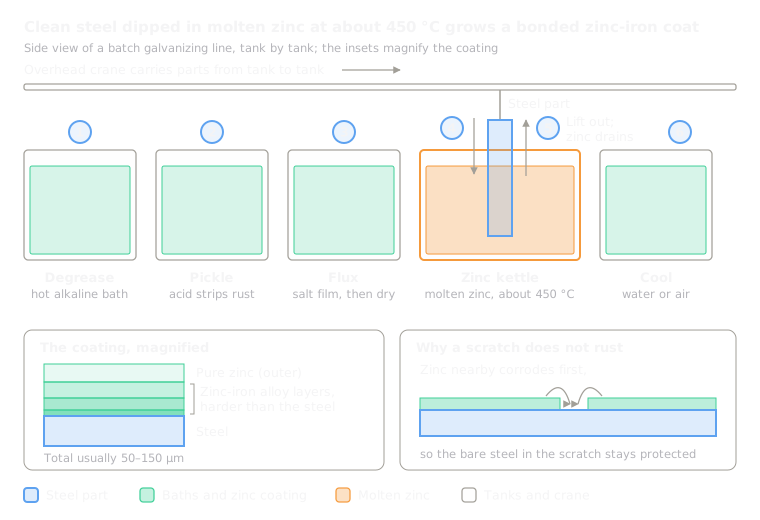 11.4Hot-dip galvanizingSteel dipped in molten zinc forms a bonded zinc layerOpen the lesson
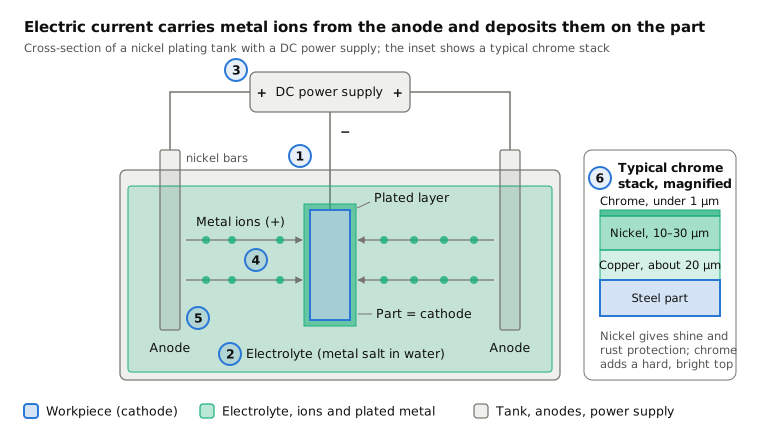
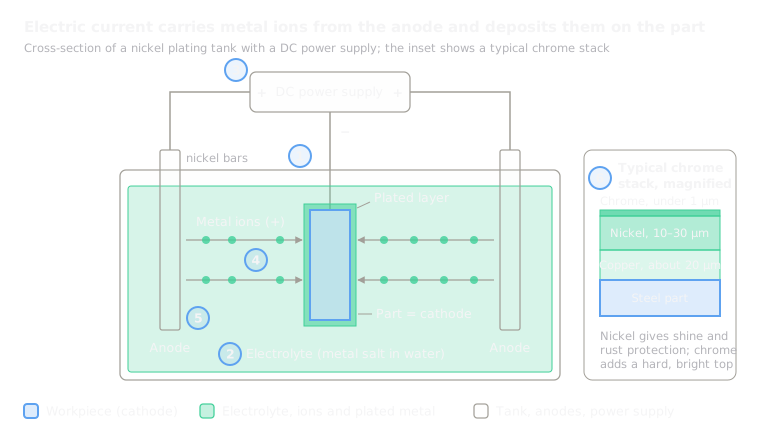 11.5Electroplating (chrome, nickel, zinc)Electric current deposits metal from a bathOpen the lesson
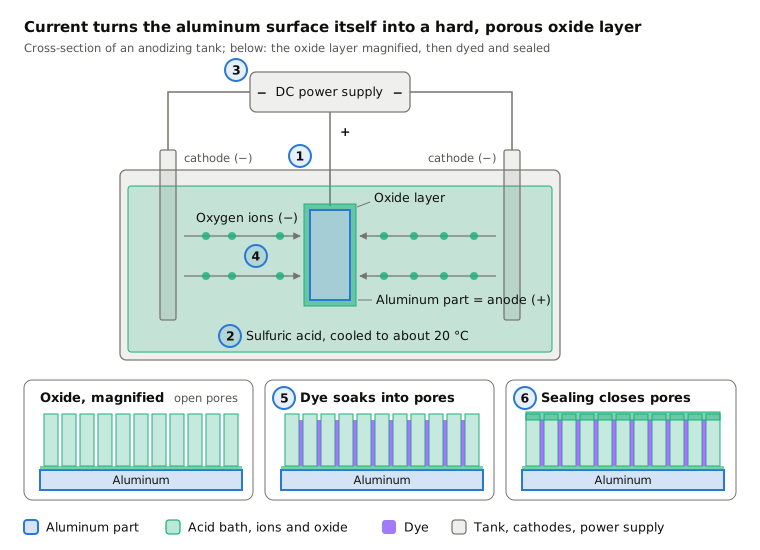
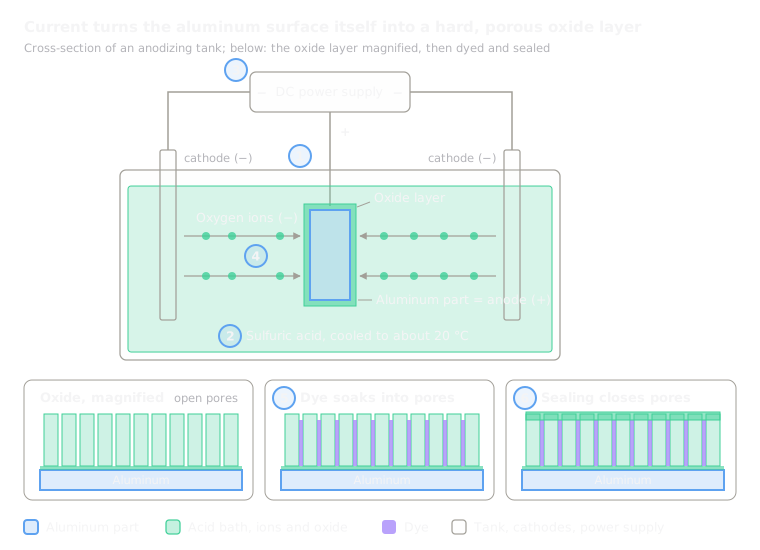 11.6AnodizingCurrent grows a hard oxide out of aluminum itselfOpen the lesson
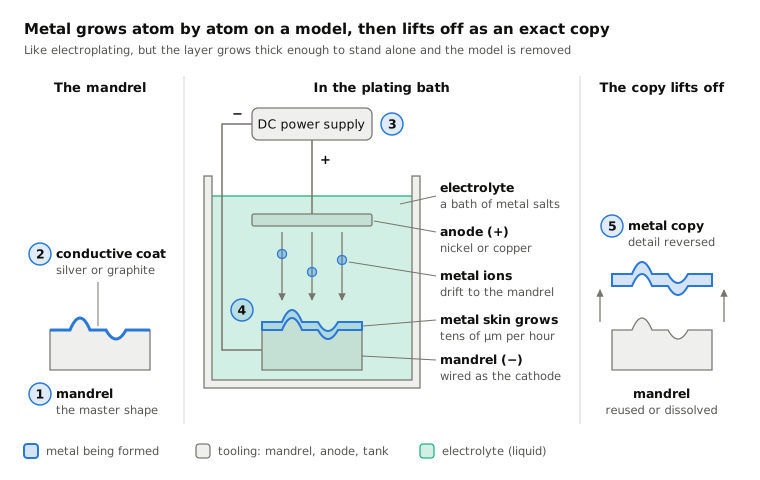
 11.7ElectroformingPlating grown thick on a model, then lifted offOpen the lesson
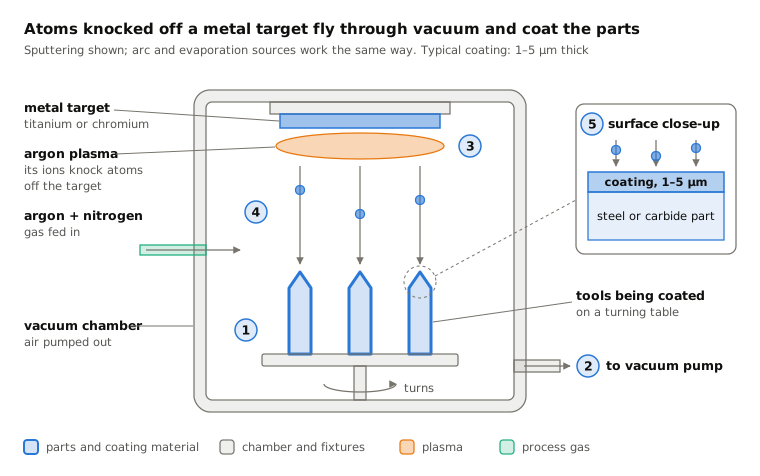
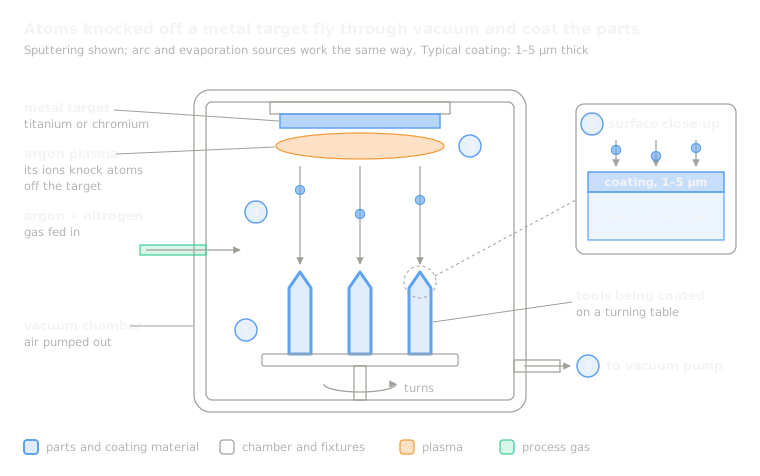 11.8PVD coating (thin films in vacuum)Atoms knocked off a target coat parts in vacuumOpen the lesson
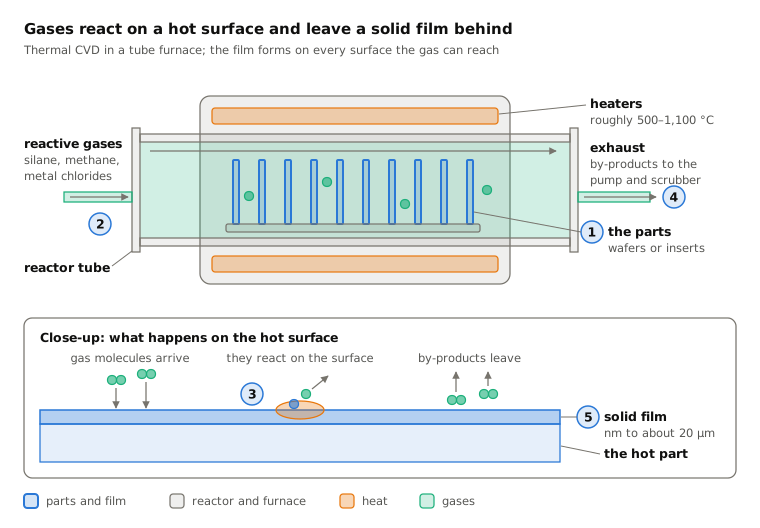
 11.9CVD coatingGases react on a hot surface and leave a filmOpen the lesson
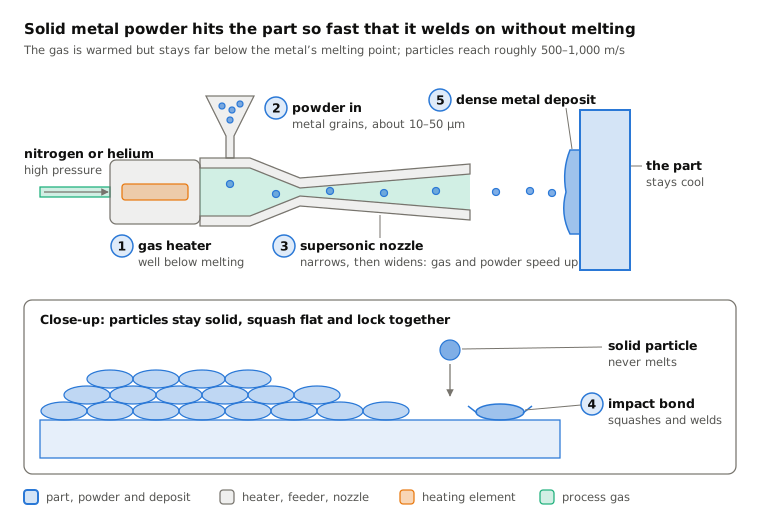
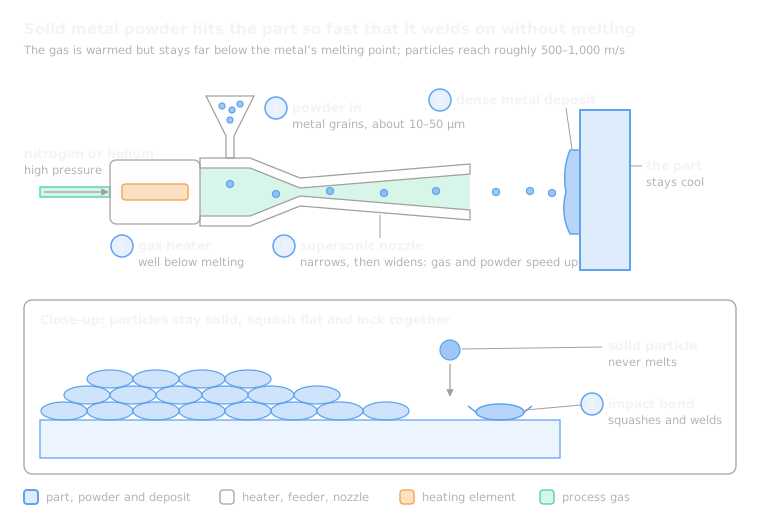 11.11Cold spraySolid metal grains weld on by sheer speedOpen the lesson
Try it
Put AI to work in your CAD.
Model parts, generate drawings and automate the repetitive work inside your CAD software.