

Cold spray
Solid metal grains weld on by sheer speed
Cold spray fires solid metal powder at a part so fast that the grains weld on when they hit, without ever melting. Think of it as thermal spraying (Thermal spraying) without the flame. It repairs worn aircraft and ship parts, and can even build whole metal parts layer by layer.
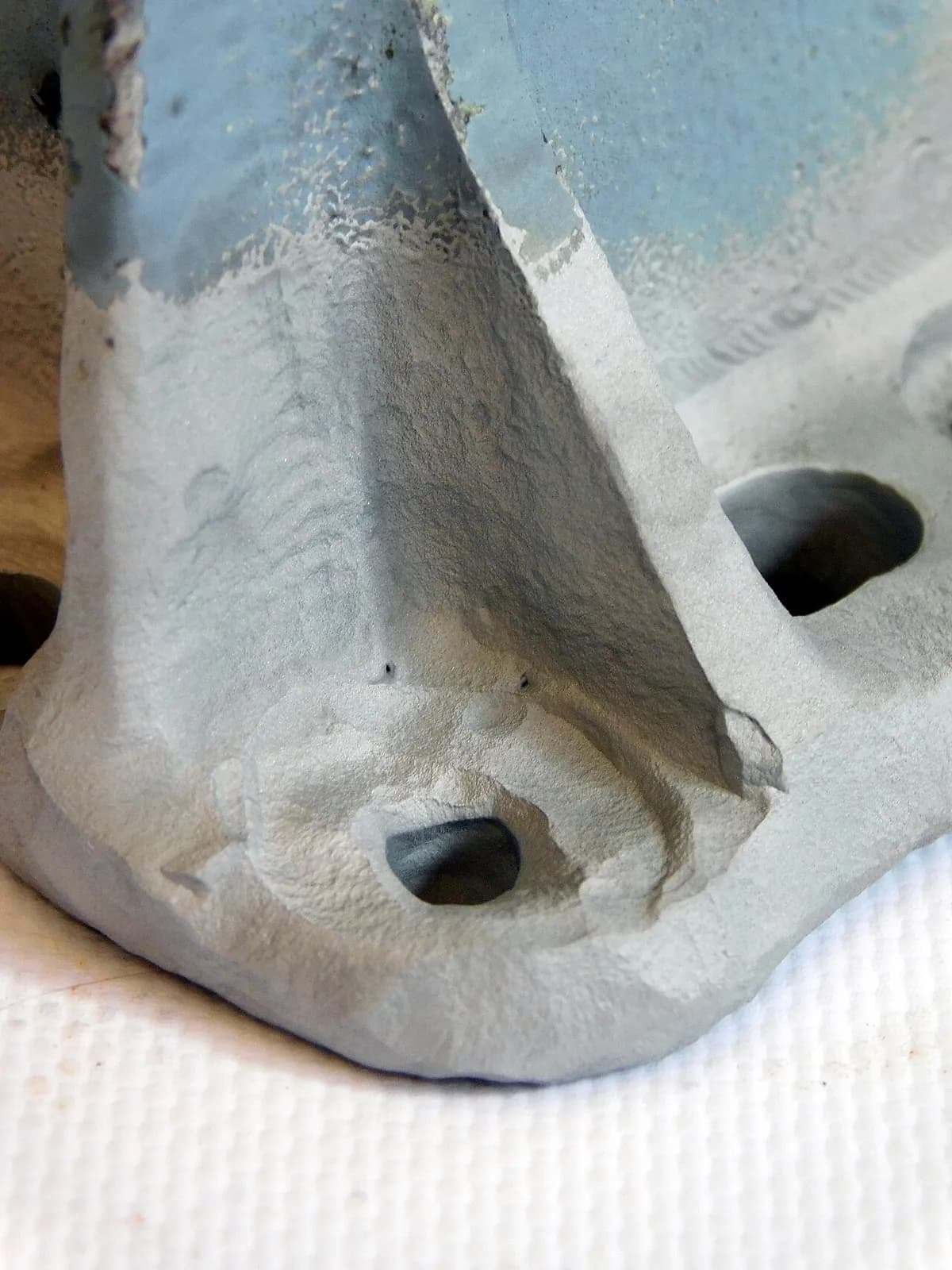
How it works
Heat the gas. Nitrogen or helium at high pressure (often tens of times normal air pressure) is warmed, typically to a few hundred degrees and at most about 1,000 °C. That stays well below the melting point of the powder.
Add the powder. A feeder meters fine metal grains, typically about 10–50 µm across, into the gas stream.
Accelerate. A converging-diverging nozzle (one that narrows, then widens, called a de Laval nozzle) makes the gas supersonic. It drags the grains up to roughly 500–1,000 m/s.
Impact and bond. Each solid grain squashes flat on impact. The crash breaks its thin oxide skin, and clean metal presses against clean metal and welds in the solid state (without melting).
Build up and machine. A robot sweeps the nozzle across the part, and grains pile up into a dense deposit from a fraction of a millimeter to several centimeters. Because it is rough, the deposit is then machined to shape.
Key facts
- Materials
- Ductile metals: aluminum, copper, titanium, nickel, tantalum, steels; some metal-ceramic mixes. Hard, brittle powders spray poorly
- Typical parts
- Repaired housings and shafts, corrosion coatings, copper layers, rocket nozzles, rings
- Part size
- Small repairs up to deposits several centimeters thick on large parts; limited by robot reach
- Precision
- Coarse as sprayed, around ±1 mm; final shape comes from machining
- Surface finish
- Rough and matte as sprayed; machined surfaces look like solid metal
- Batch size it suits
- Repairs, one-offs and small series; production coatings
- Tooling and machine cost
- No molds; systems often hundreds of thousands of dollars, plus gas (helium is expensive)
- Speed
- Fast deposition, typically kilograms per hour for aluminum or copper
Strengths and limits
Strengths
- No melting: no oxidation, little heat damage to the part
- Dense deposits, from coatings to thick builds
- Can join metals that are hard to weld together
- Fast and good for repairs on site
Limits
- Works only with ductile (bendable) metals
- Rough, near-net shape that must be machined
- Line of sight, like any spray
- Helium for top quality is costly, and the jet is very loud
Where it's used
- Aerospace and defenseRestoring corroded magnesium and aluminum gearbox housings
- SpaceCopper and nickel layers for rocket engine nozzles
- Electronics and energyCopper on aluminum for heat sinks and electrical contacts
- Oil, gas and marineCorrosion-resistant layers, shaft and valve repair
- ManufacturingAdditive builds of rings, flanges and near-net-shape parts
How to recognize it
- A thick, dense metal build-up on an old part, often of a different metal than the part itself.
- No heat tint, scale or burn marks around the repaired area, unlike welding.
- As sprayed, a rough, matte surface like coarse sandpaper; after machining, plain metal.
- Under a microscope, flattened grains packed tightly with almost no pores.
Compare with
Watch it
TWI Ltd · Experts explain the process, materials and equipment
Impact Innovations | Cold Spray Made In Germany · Copper and nickel sprayed, then machined into a rocket nozzle
UTBM Université de Technologie Belfort-Montbéliard · A university lab building a metal part by cold spray
3DPrint.com · A robot spraying a magnet inside a cylinder
See real photos
- Wikipedia: Cold spraying — history, speeds, gases and uses; mostly text, few photos
- Wikimedia Commons photo search
Remember
- Cold spray welds solid metal grains on by sheer speed, without melting.
- It needs ductile metals and a supersonic nozzle.
- It shines at repairs and thick, dense metal builds.
More in Coatings and surface finishing
All 100 processes
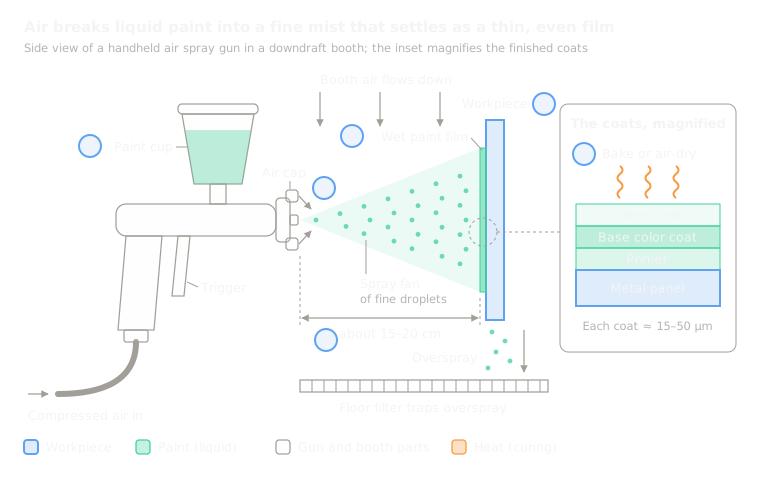 11.1Spray paintingLiquid paint atomized into a fine mist that dries or curesOpen the lesson
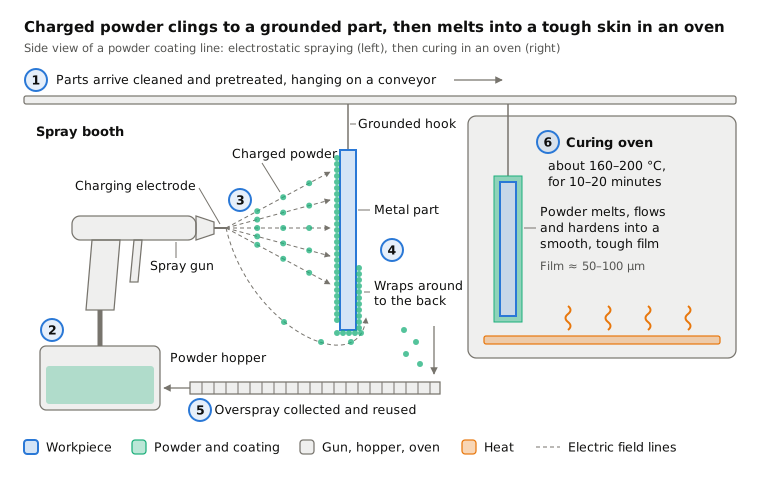
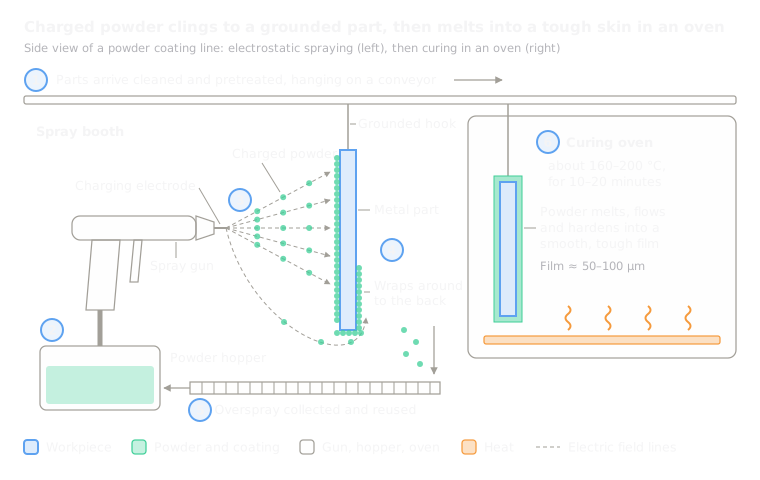 11.2Powder coatingCharged dry powder clings to the part, then melts in an ovenOpen the lesson
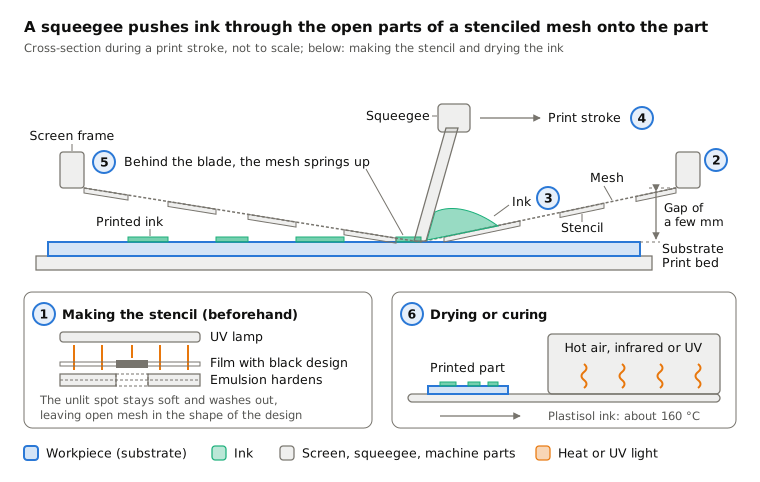
 11.3Screen printingInk pushed through a mesh stencilOpen the lesson
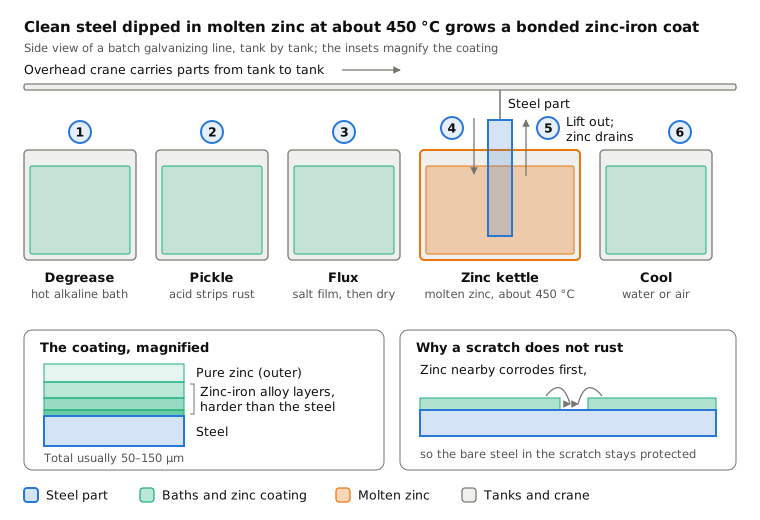
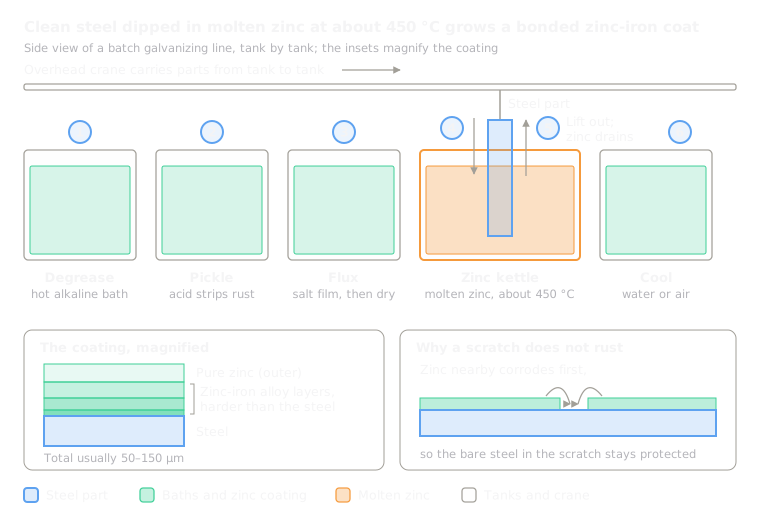 11.4Hot-dip galvanizingSteel dipped in molten zinc forms a bonded zinc layerOpen the lesson
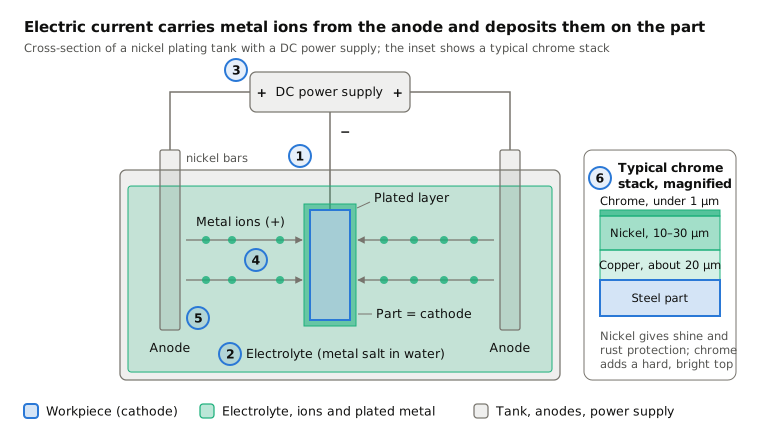
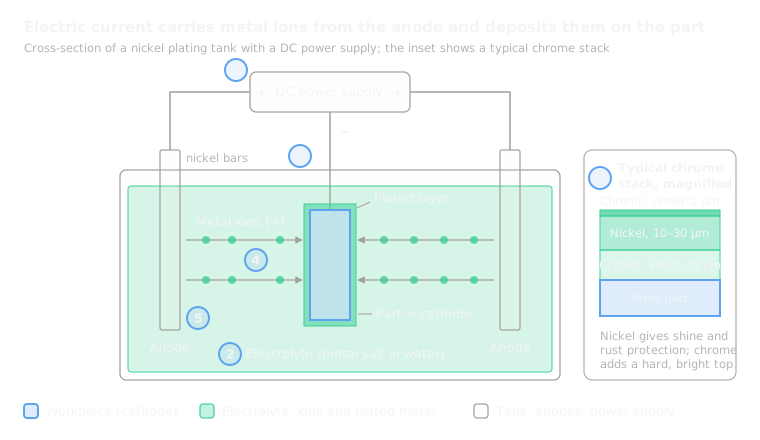 11.5Electroplating (chrome, nickel, zinc)Electric current deposits metal from a bathOpen the lesson
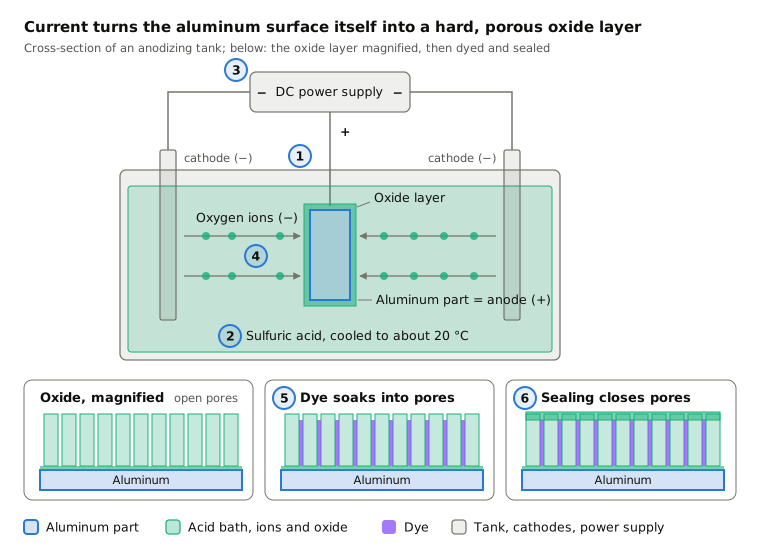
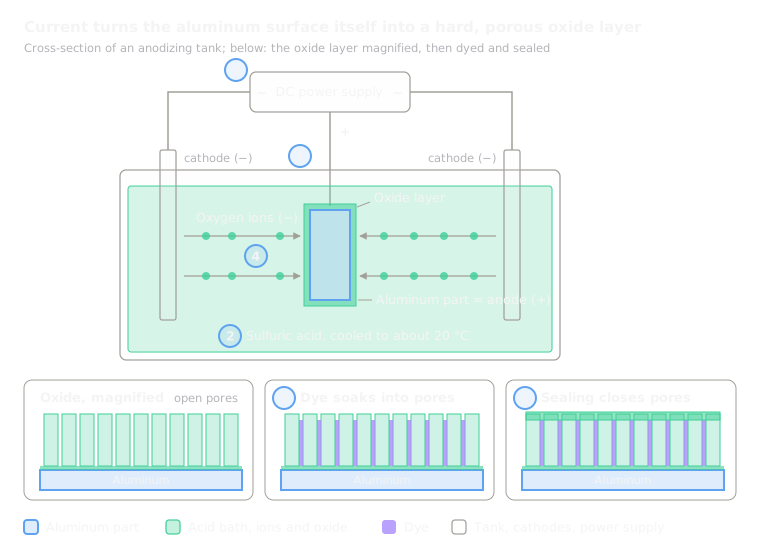 11.6AnodizingCurrent grows a hard oxide out of aluminum itselfOpen the lesson
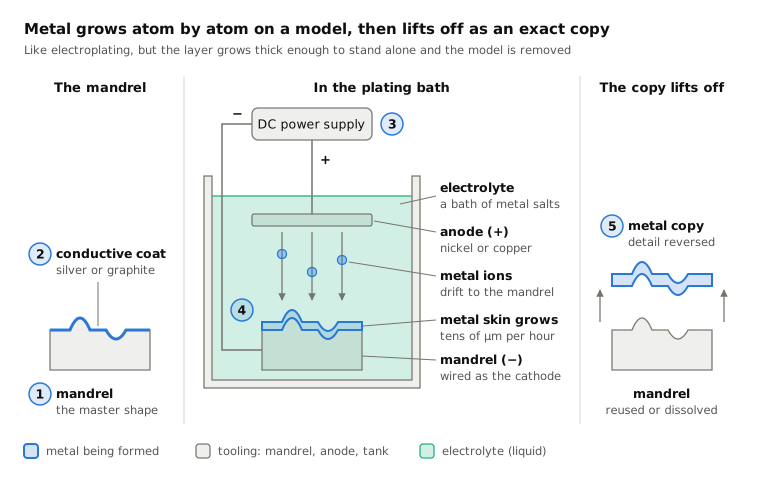
 11.7ElectroformingPlating grown thick on a model, then lifted offOpen the lesson
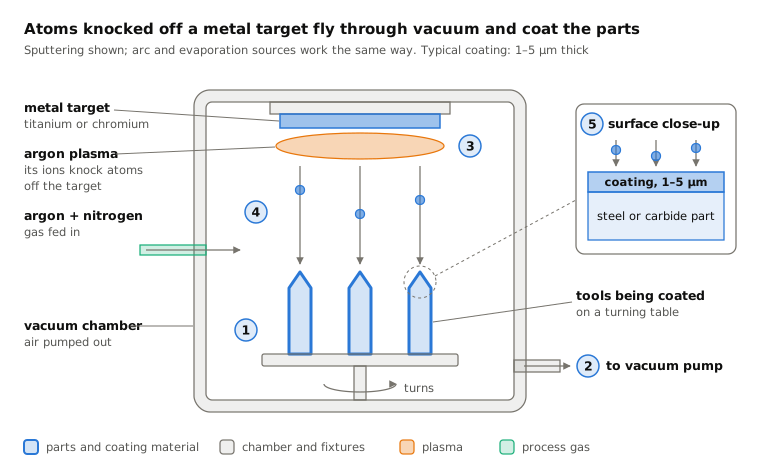
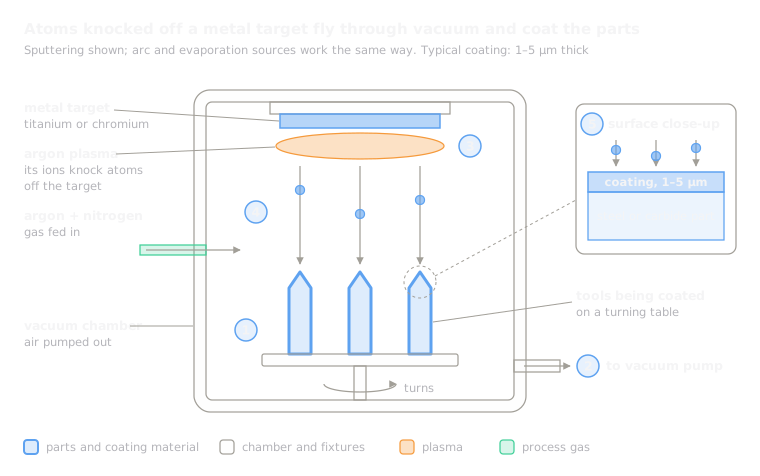 11.8PVD coating (thin films in vacuum)Atoms knocked off a target coat parts in vacuumOpen the lesson
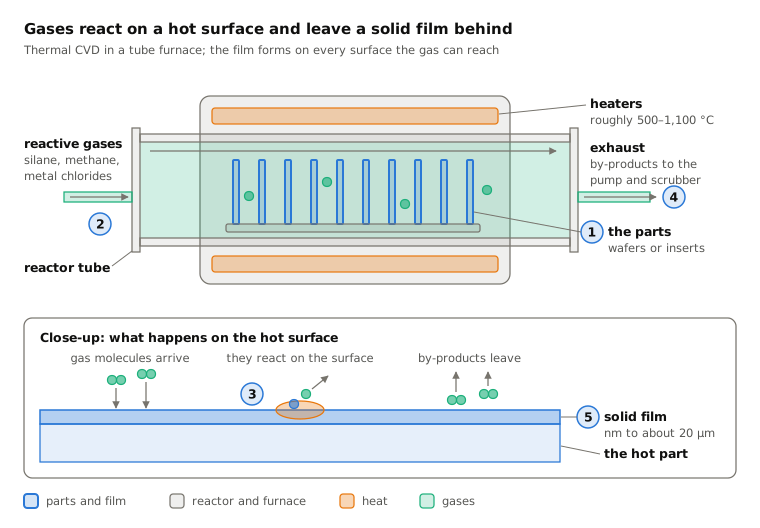
 11.9CVD coatingGases react on a hot surface and leave a filmOpen the lesson
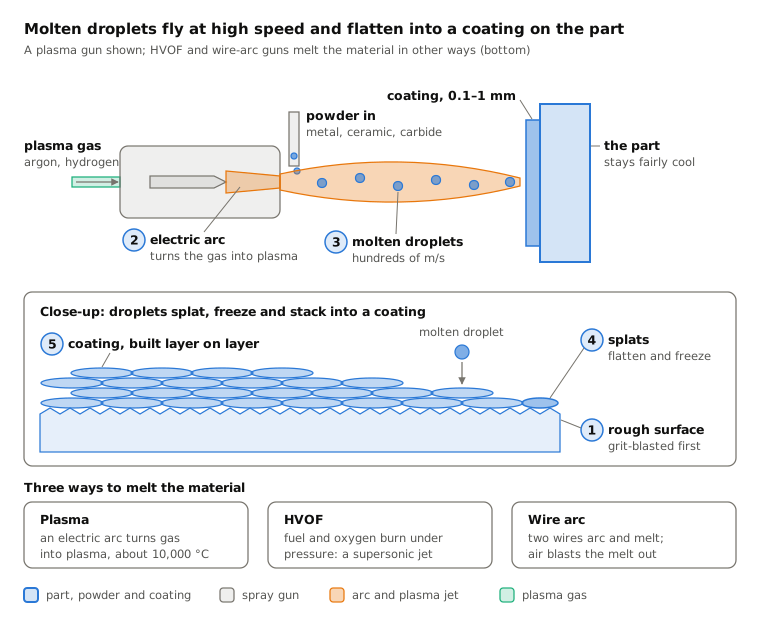
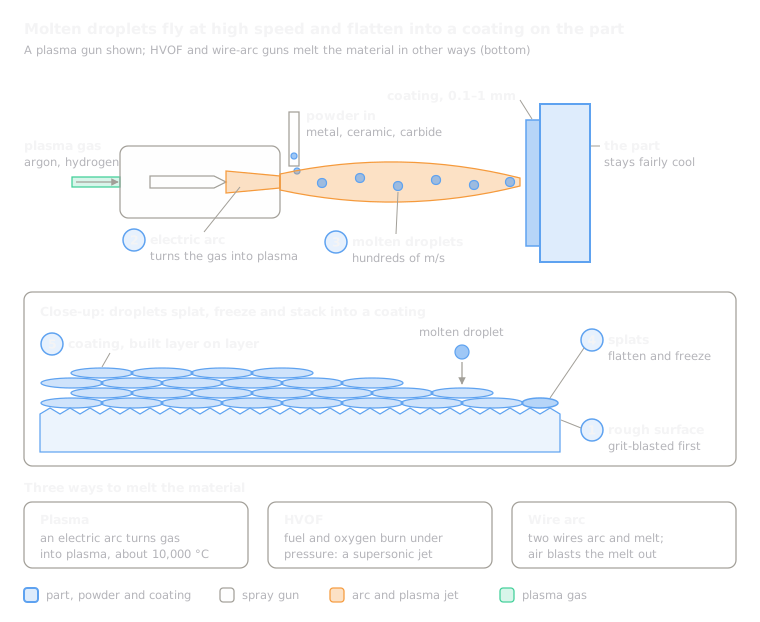 11.10Thermal spraying (plasma, HVOF, arc)Melted droplets fired at a part stack into a layerOpen the lesson
Try it
Put AI to work in your CAD.
Model parts, generate drawings and automate the repetitive work inside your CAD software.