

Electroplating (chrome, nickel, zinc)
Electric current deposits metal from a bath
Electroplating uses electric current to coat a part with a thin layer of another metal, such as chrome, nickel or zinc. The shiny chrome on a bathroom tap and the yellowish zinc on a bolt are both electroplated. It adds looks, rust protection or wear resistance while the part keeps its exact shape.
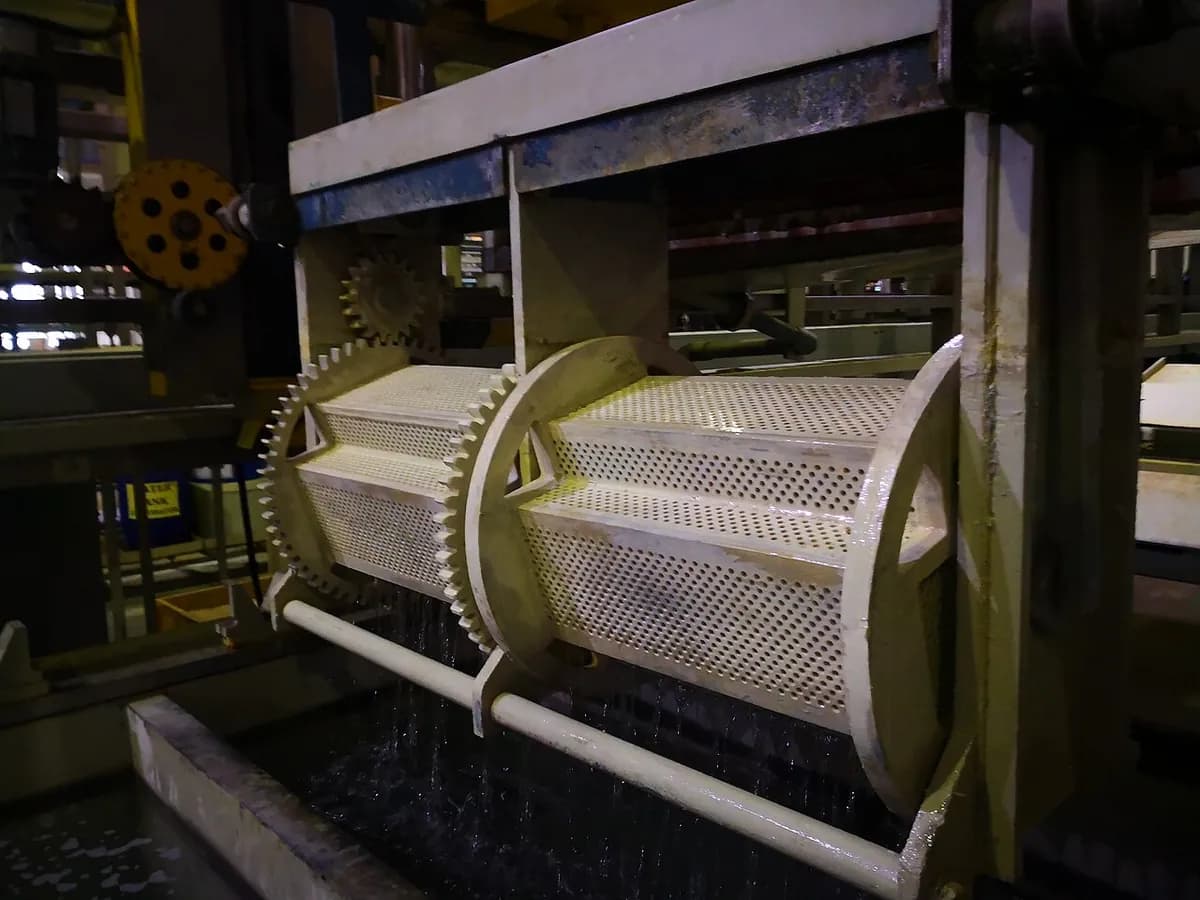
How it works
Clean and rack the part. The part is degreased, rinsed and dipped briefly in acid to remove oxide (activation). It is then hung on a rack or tumbled in a barrel that conducts electricity.
Immerse it in the electrolyte. The tank holds an electrolyte (water with a dissolved salt of the coating metal, such as nickel sulfate). The bath is often warmed and stirred.
Switch on the current. A DC power supply (rectifier) connects the part to the negative side, making it the cathode. Bars of the coating metal on the positive side are the anodes.
Ions travel and plate. Metal ions carry a positive charge, so they drift to the part. There they pick up electrons and turn back into solid metal, atom by atom, on every wetted surface.
The anode dissolves. As metal leaves the solution, the nickel or zinc anode dissolves to replace it. In chrome baths the anodes do not dissolve, so chemicals are added instead.
Rinse and repeat. The part is rinsed between tanks; decorative chrome goes through copper, nickel and chrome baths in turn. Zinc-plated parts usually get a passivation dip (a thin conversion film that adds corrosion resistance and the blue or yellow tint).
Thickness depends on current and time: more current or more minutes give a thicker coat. Plating builds up faster on edges and corners, where the electric field is strongest, and slower in holes and recesses.
Key facts
- Materials
- Coatings of chrome, nickel, zinc, copper, tin, silver, gold; on steel, brass, copper, aluminum, and plastics made conductive first
- Typical parts
- Taps, car trim, bolts and screws, hydraulic piston rods, electrical contacts, jewelry
- Part size
- From tiny connector pins to rolls and rods several meters long; the tank sets the limit
- Precision
- Very thin and controllable: zinc typically 5–25 µm, decorative chrome well under 1 µm, hard chrome tens to hundreds of µm
- Surface finish
- Copies the surface below: polished parts come out mirror-bright, matte parts stay matte
- Batch size it suits
- From single repairs to millions of fasteners in barrel lines
- Tooling and machine cost
- Racks and fixtures are cheap; an automated plating line with tanks, hoists and waste treatment costs hundreds of thousands to millions
- Speed
- Minutes for thin zinc or decorative chrome, up to many hours for thick hard chrome
Strengths and limits
Strengths
- Thin, even coats that keep the part's dimensions
- Many metals for looks, corrosion, wear or conductivity
- Mirror-bright decorative finishes
- Cheap per part in large batches, especially in barrels
Limits
- Uneven in deep holes and recesses; edges build up more
- Uses toxic chemicals (for example hexavalent chromium and cyanide baths) that need strict waste treatment
- Hydrogen made during plating can embrittle high-strength steel, so parts are baked afterward
- Every step depends on perfect cleaning; poor prep makes the coat peel or blister
Where it's used
- AutomotiveZinc-plated fasteners and brackets, chrome trim, nickel-plated parts
- Plumbing and homeChrome taps, shower heads, door handles
- Hydraulics and machineryHard-chrome piston rods, rolls, molds
- ElectronicsGold and tin on connectors, copper and nickel on circuit boards
- AerospaceCadmium or zinc-nickel on landing-gear parts and fasteners
- Jewelry and coinsGold and silver plating over cheaper metals
How to recognize it
- A very thin coat that follows every detail, scratch and polish line of the part underneath.
- Mirror-bright chrome with a slightly blue tint, or the rainbow, yellow or blue sheen of passivated zinc on screws.
- Contact marks: a small bare or dull spot where the part touched its rack.
- When it fails, tiny pits or blisters under the shine, or flaking at sharp edges.
Compare with
Watch it
VIEW CHEM · Animated anode, cathode and ion flow
Mayer Motorsports · A shop walkthrough: polishing, then copper, nickel and chrome
Proinvest Group | Unlimited Steel Solutions · Industrial hard chrome on hydraulic bars
Riley Surface World · An automatic barrel zinc line with its gantry and tanks
See real photos
- Wikipedia: Electroplating — principle diagrams and plating-line photos
- Wikipedia: Chrome plating — chromed car and motorcycle parts, decorative versus hard chrome
- Wikimedia Commons photo search
Remember
- The part is the negative electrode; positive metal ions in the bath land on it and become metal.
- Current and time set the thickness, from under 1 µm to hundreds of µm.
- Clean parts and safe handling of toxic baths are what make or break plating.
More in Coatings and surface finishing
All 100 processes
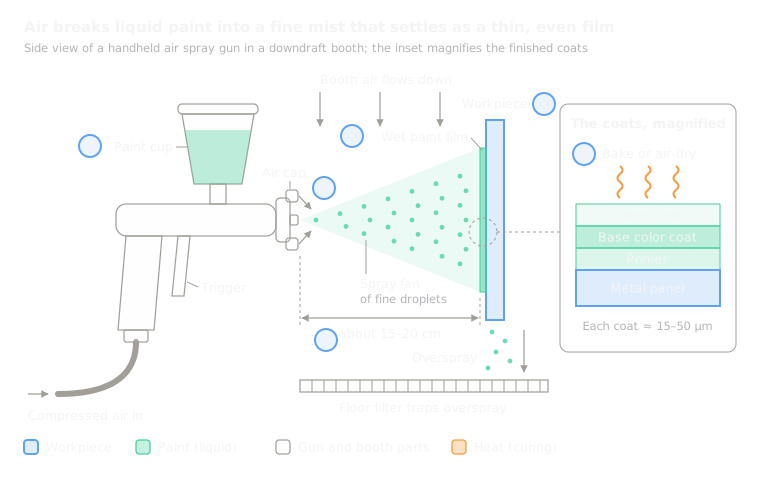 11.1Spray paintingLiquid paint atomized into a fine mist that dries or curesOpen the lesson
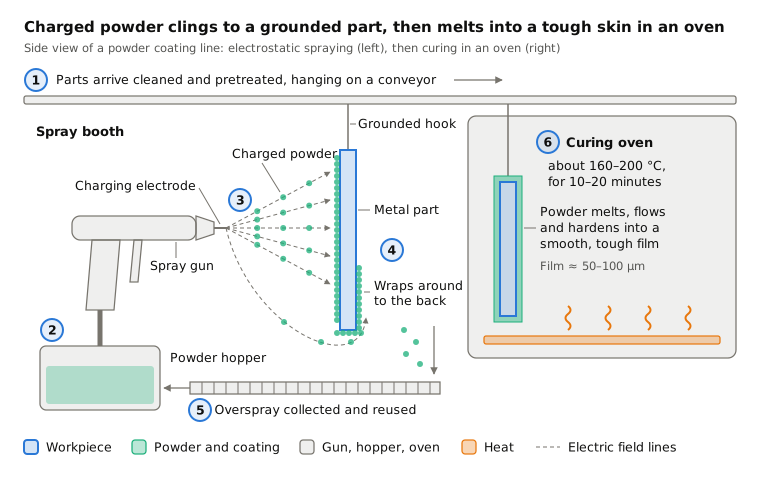
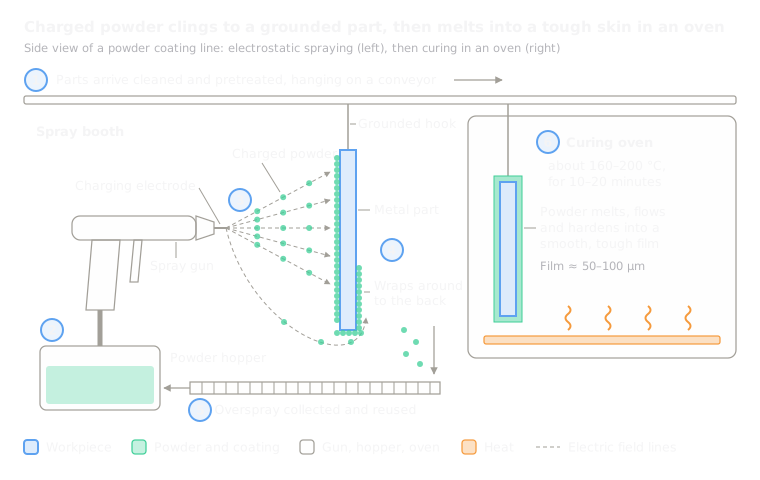 11.2Powder coatingCharged dry powder clings to the part, then melts in an ovenOpen the lesson
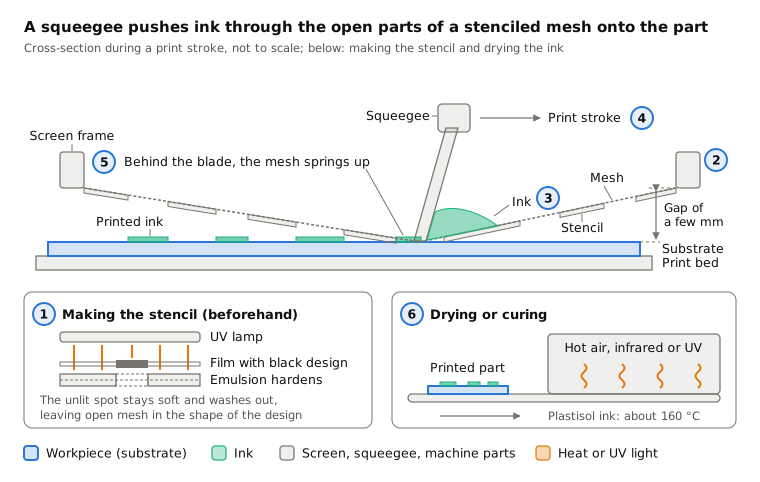
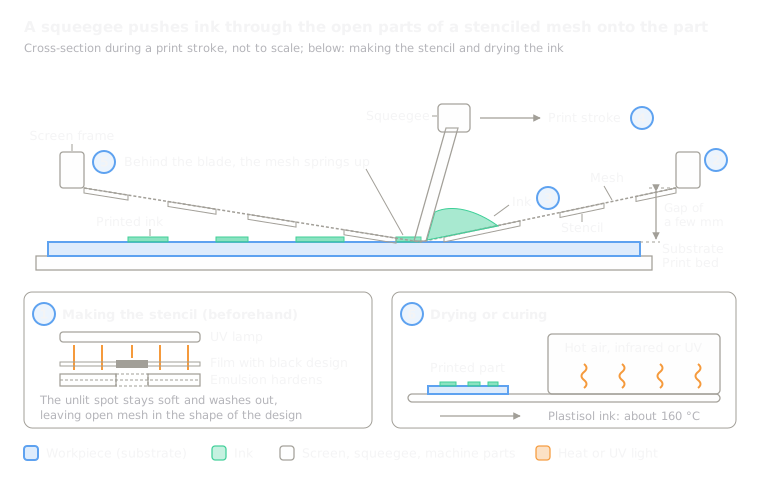 11.3Screen printingInk pushed through a mesh stencilOpen the lesson
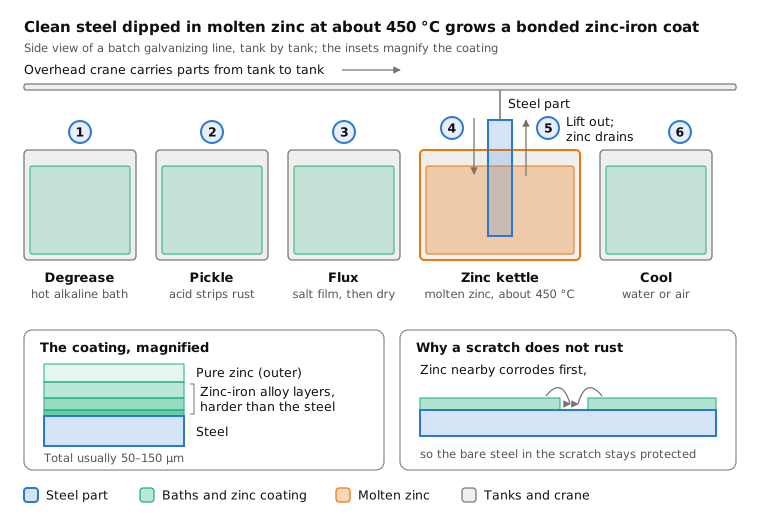
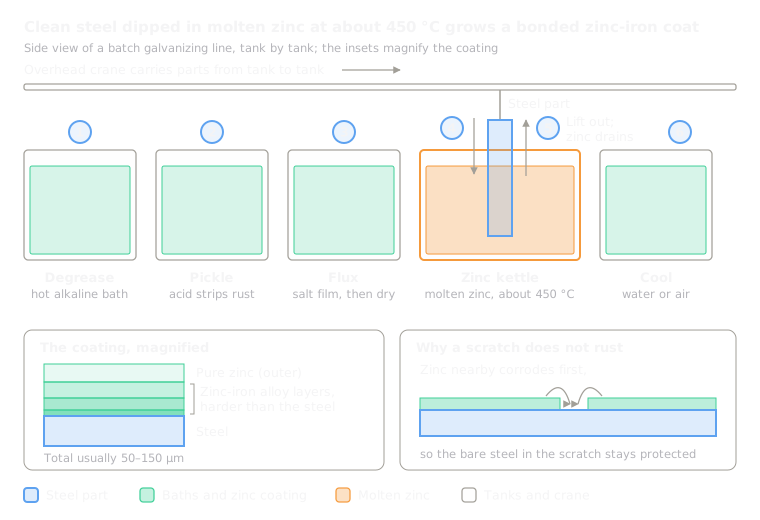 11.4Hot-dip galvanizingSteel dipped in molten zinc forms a bonded zinc layerOpen the lesson
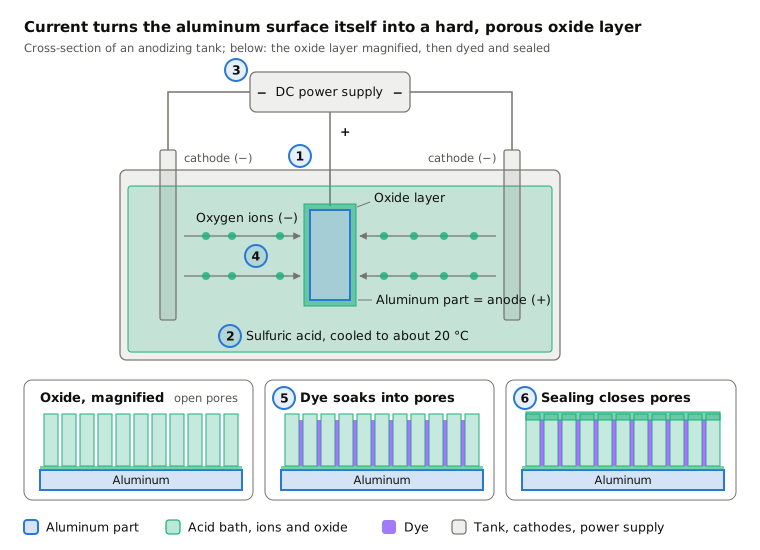
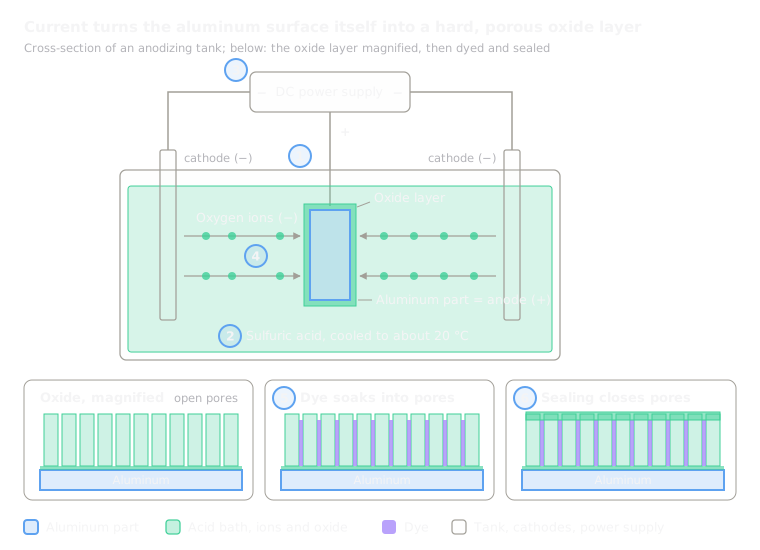 11.6AnodizingCurrent grows a hard oxide out of aluminum itselfOpen the lesson
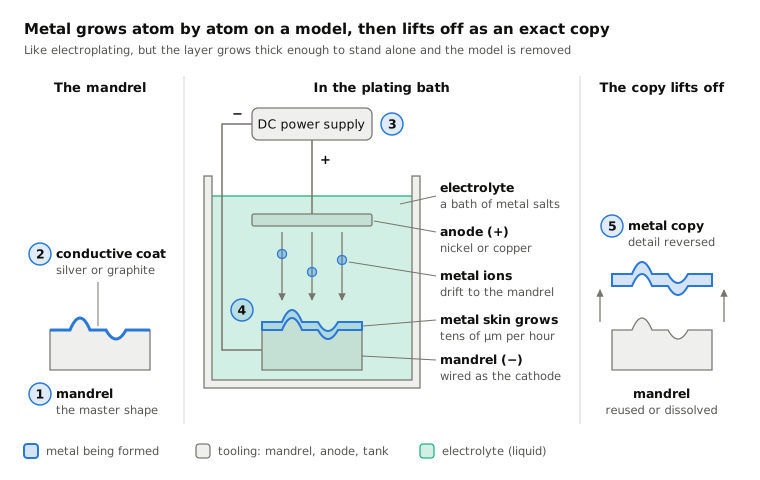
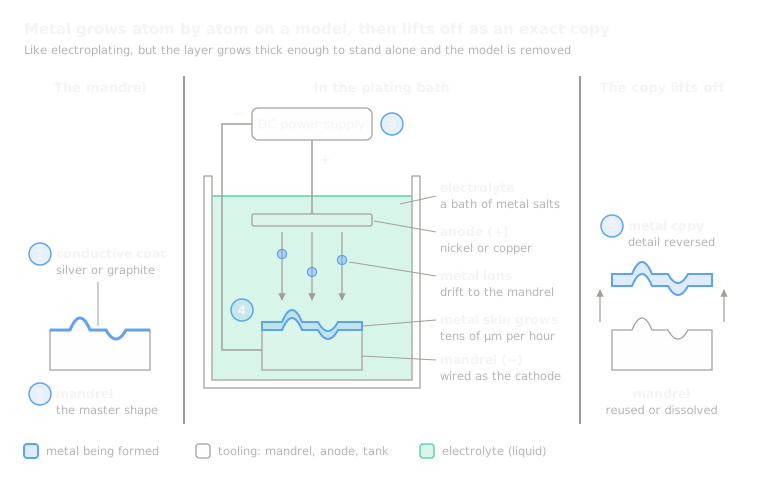 11.7ElectroformingPlating grown thick on a model, then lifted offOpen the lesson
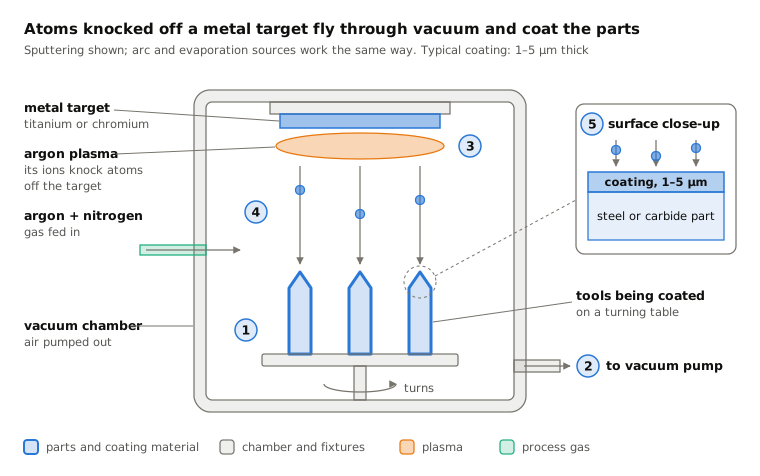
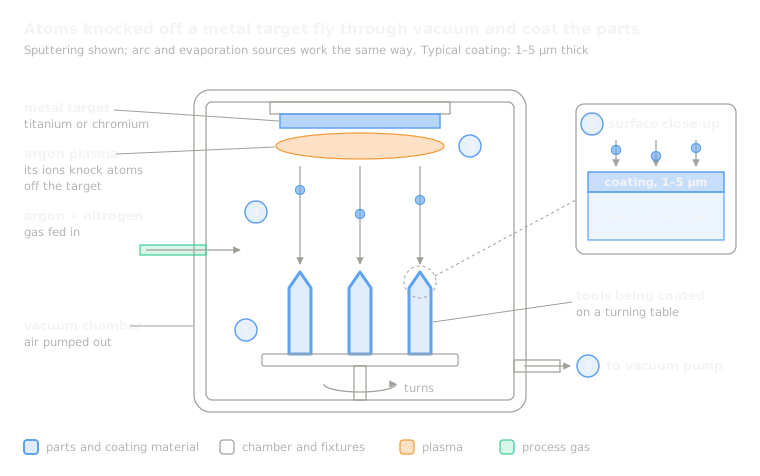 11.8PVD coating (thin films in vacuum)Atoms knocked off a target coat parts in vacuumOpen the lesson
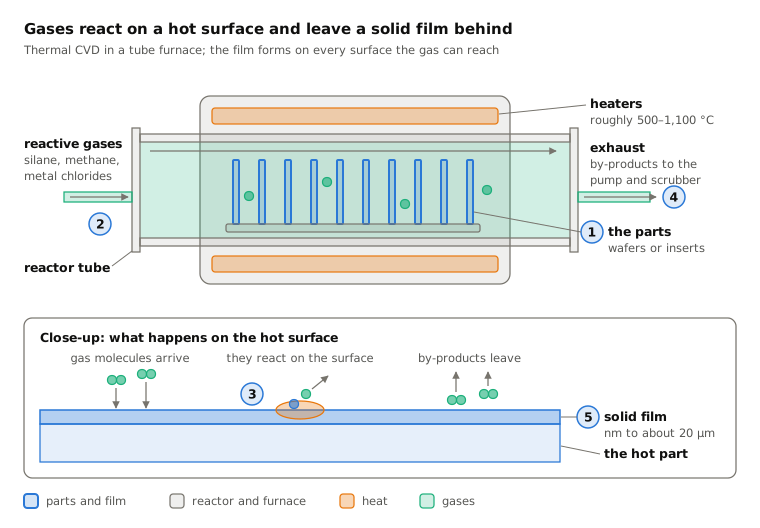
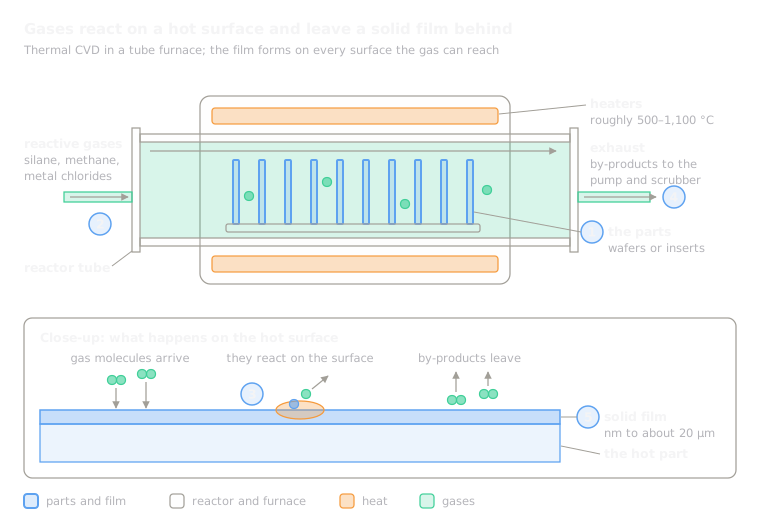 11.9CVD coatingGases react on a hot surface and leave a filmOpen the lesson
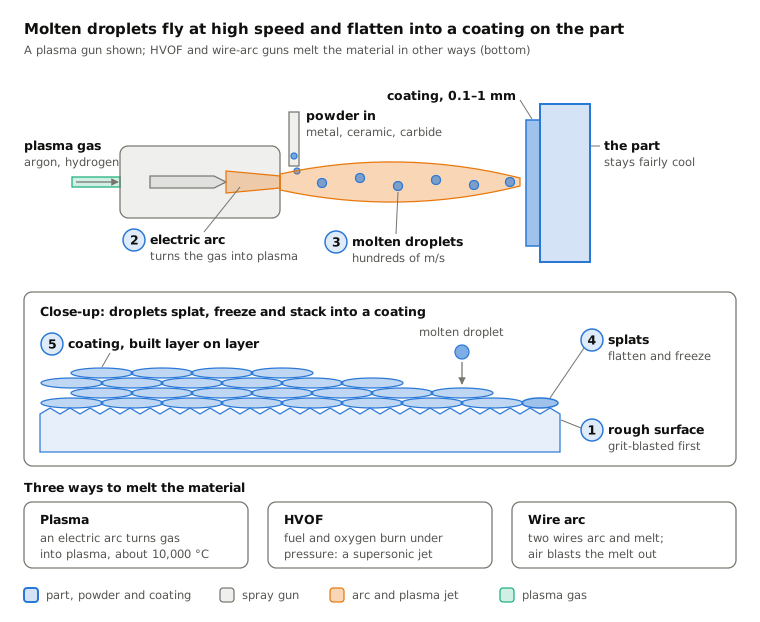
 11.10Thermal spraying (plasma, HVOF, arc)Melted droplets fired at a part stack into a layerOpen the lesson
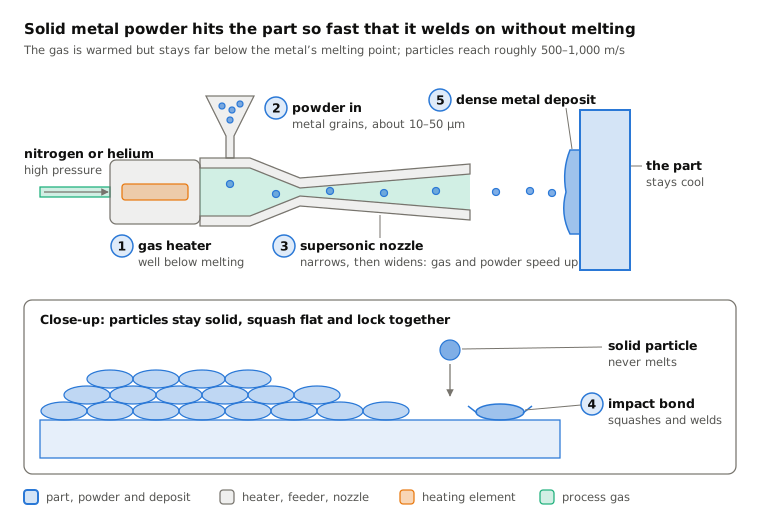
 11.11Cold spraySolid metal grains weld on by sheer speedOpen the lesson
Try it
Put AI to work in your CAD.
Model parts, generate drawings and automate the repetitive work inside your CAD software.