

Powder coating
Charged dry powder clings to the part, then melts in an oven
Powder coating sprays a dry, colored powder onto metal and bakes it into a hard, smooth skin. Many bicycle frames, garden chairs and washing machines are finished this way. It gives a thicker, tougher coat than liquid paint, and it uses no solvents.
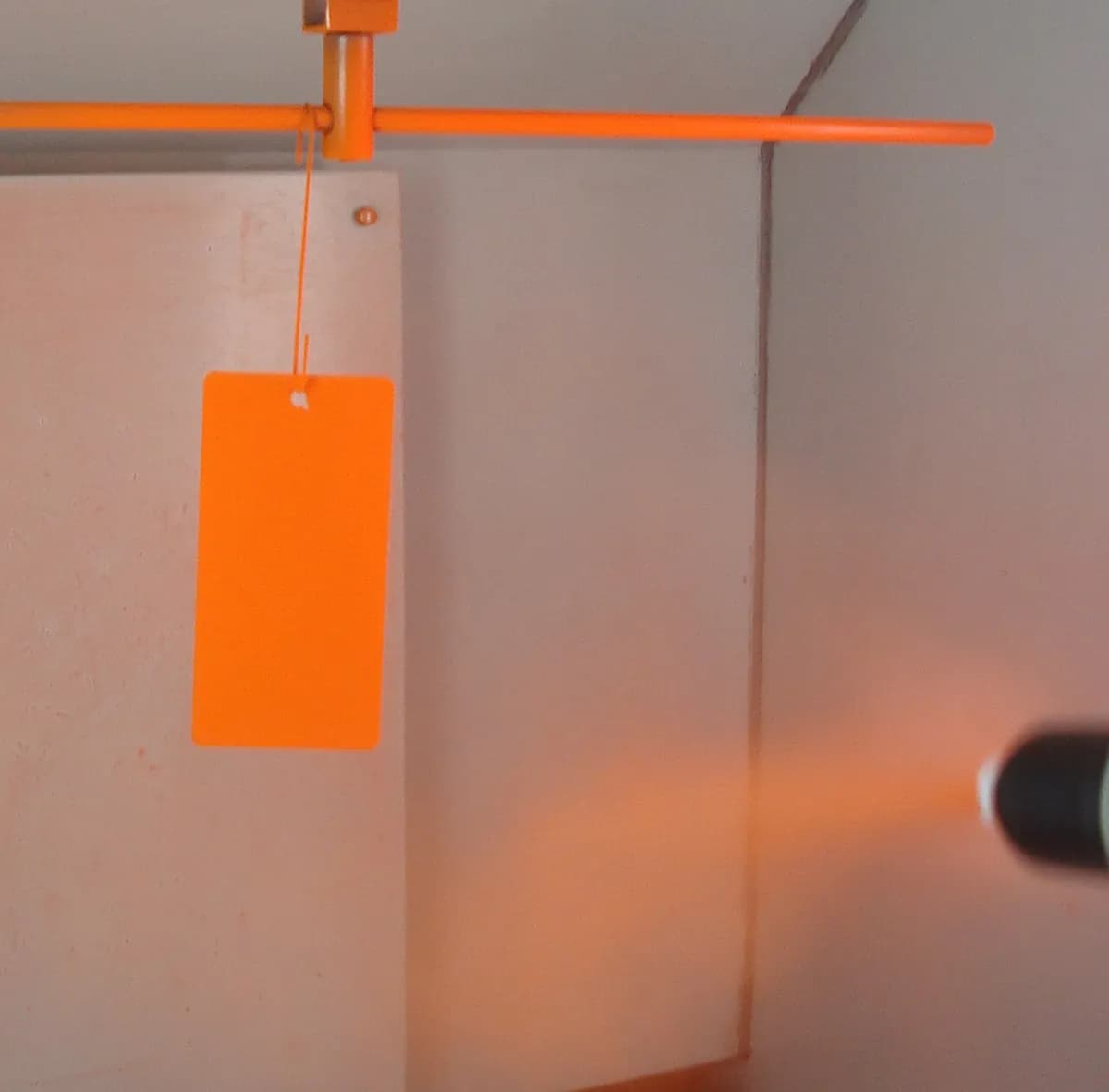
How it works
Clean and pretreat. Parts hang on hooks from an overhead conveyor and pass through washing tanks or sprays. A conversion coating (a thin phosphate or zirconium layer made in a chemical bath) helps the powder stick and slows rust. The parts are then dried.
Fluidize and pump the powder. The powder is finely ground resin, pigment and hardener, roughly as fine as flour. Air blown up through the hopper makes it flow like a liquid, and a pump sends it through a hose to the gun.
Charge the powder. An electrode at the gun tip runs at high voltage, typically tens of kilovolts. It charges the air around it, and the powder grains pick up a negative charge as they pass.
Spray onto the grounded part. The part is grounded (electrically connected to earth) through its hook, so it attracts the charged grains. They follow the electric field lines, even around edges to the back (wrap-around), and cling the way a rubbed balloon clings to a wall.
Recover the overspray. Grains that miss are pulled into a recovery unit (a cyclone and filters) and sent back to the hopper. With recovery, often 90% or more of the powder ends up on parts.
Cure in the oven. At about 160–200 °C for 10–20 minutes, the grains melt, flow together and cross-link (form permanent chemical bonds, like epoxy glue setting). The part leaves the oven, cools and is ready to handle.
Most powders are thermosets (plastics that set permanently when heated): epoxy for indoor parts, polyester for outdoor ones because it resists sunlight. Thermoplastic powders such as nylon simply melt and refreeze. They are often applied by dipping a hot part into a fluidized bed of powder.
Key facts
- Materials
- Epoxy, polyester, hybrid, polyurethane or nylon powders; applied mostly to steel and aluminum, since the part must conduct electricity and survive the oven
- Typical parts
- Bicycle frames, garden furniture, appliance panels, car wheels, shelving, window frames
- Part size
- From small brackets to parts several meters long; the oven sets the limit
- Precision
- Film typically 50–100 µm thick and less even than liquid paint; coats thinner than about 40 µm are hard to apply
- Surface finish
- Gloss, satin or matte, plus textured and metallic effects; a slight orange peel is common
- Batch size it suits
- From a few parts in a job shop to conveyor lines running all day
- Tooling and machine cost
- A hobby gun and small oven cost hundreds of dollars; an automated line with pretreatment and oven roughly hundreds of thousands to millions
- Speed
- Spraying takes seconds to a few minutes per part, curing about 10–20 minutes; conveyor lines move parts continuously
Strengths and limits
Strengths
- Thick, tough, chip-resistant coat in a single pass
- No solvents and almost no VOC (volatile organic compound) emissions
- Overspray can be collected and reused
- Wraps around edges and onto the back of parts
Limits
- Needs an oven, so heat-sensitive parts such as most plastics and wood are hard to coat
- Thin coats are hard to apply and tend to show orange peel
- Color changes are slow, because the booth and guns must be cleaned
- Deep inside corners resist coating (the Faraday cage effect: the electric field cannot reach in)
Where it's used
- AutomotiveWheels, chassis parts, springs, brackets
- AppliancesWashing machine and fridge panels, oven cavities, dishwasher racks
- ArchitectureAluminum window frames, facade panels, railings, fences
- FurnitureGarden chairs and tables, office desks, metal shelving
- Sports and leisureBicycle frames, gym machines, playground equipment
- ElectricalElectrical cabinets, light fittings, transformer housings
How to recognize it
- A thick, even coat with softly rounded edges; corners never look razor-sharp.
- A slight orange-peel texture, or a deliberate fine-grain texture on outdoor furniture and machines.
- A small bare or thin spot where the part hung from its hook.
- Very hard to chip; when it does fail, it tends to peel off in sheets rather than flake.
Compare with
Watch it
Xometry · The basic idea: charged powder, grounded part, oven cure
AkzoNobel Powder Coatings · What the powder is made of, and how it is applied and cured
Testrite OEM & Testrite Aluminum · A real conveyor line: pretreatment, spray booth and oven
Coating Equipment Technology, Inc · A hand gun close-up showing powder wrapping around a part
See real photos
- Wikipedia: Powder coating — photos of electrostatic spraying and coated parts
- Wikimedia Commons photo search
Remember
- Powder coating is paint without solvent: charged dry powder clings to a grounded part, then melts into a film in an oven.
- It gives a thick, tough coat in one pass, and unused powder can be reused.
- The part must conduct electricity and survive about 200 °C, so it is mainly for metal.
More in Coatings and surface finishing
All 100 processes
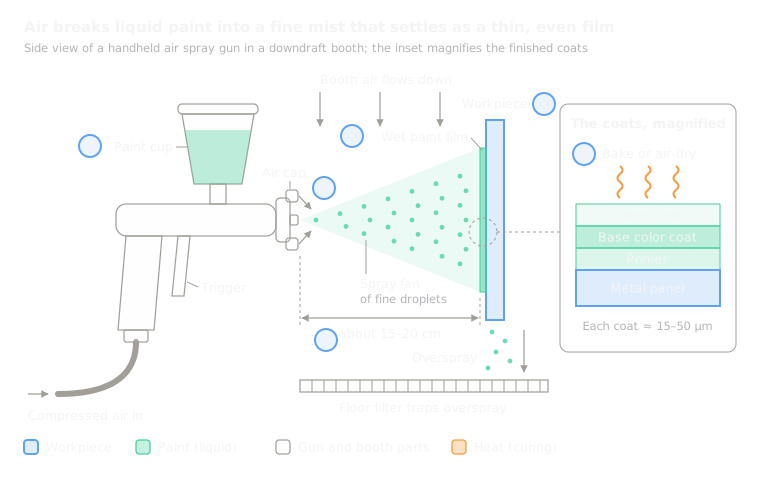 11.1Spray paintingLiquid paint atomized into a fine mist that dries or curesOpen the lesson
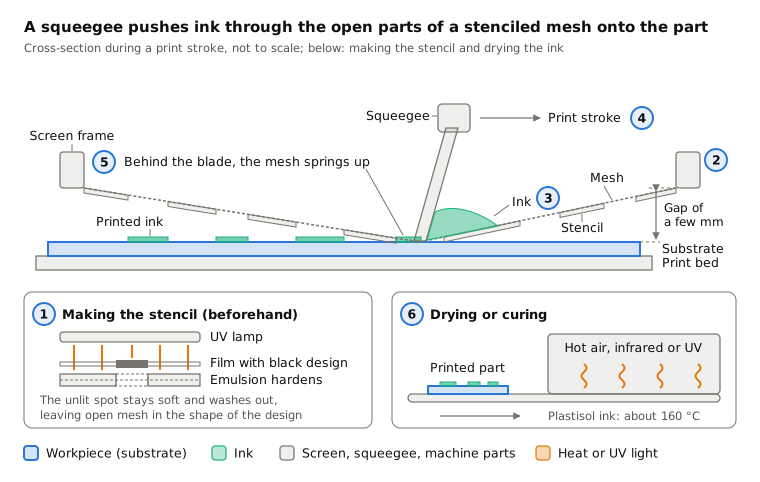
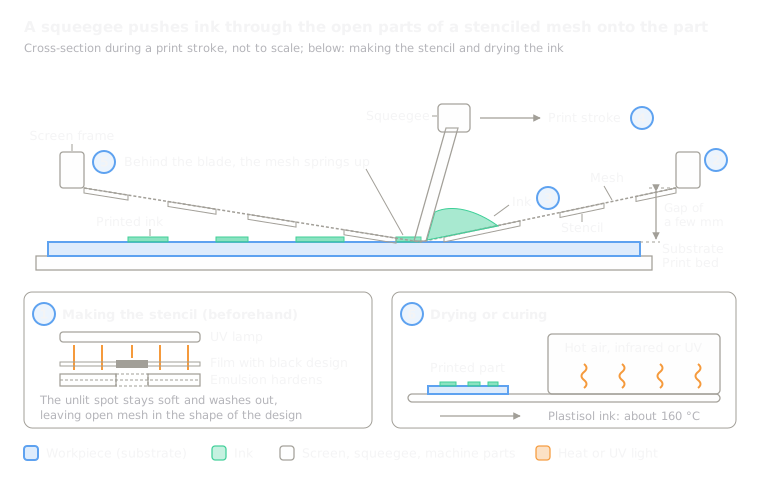 11.3Screen printingInk pushed through a mesh stencilOpen the lesson
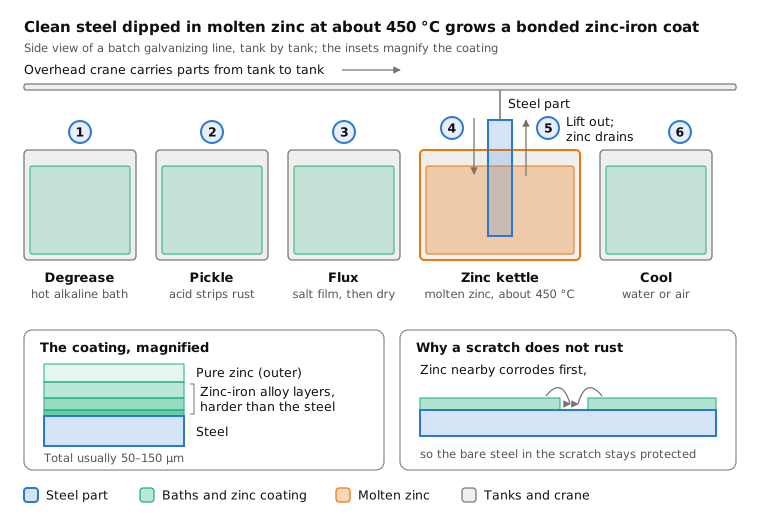
 11.4Hot-dip galvanizingSteel dipped in molten zinc forms a bonded zinc layerOpen the lesson
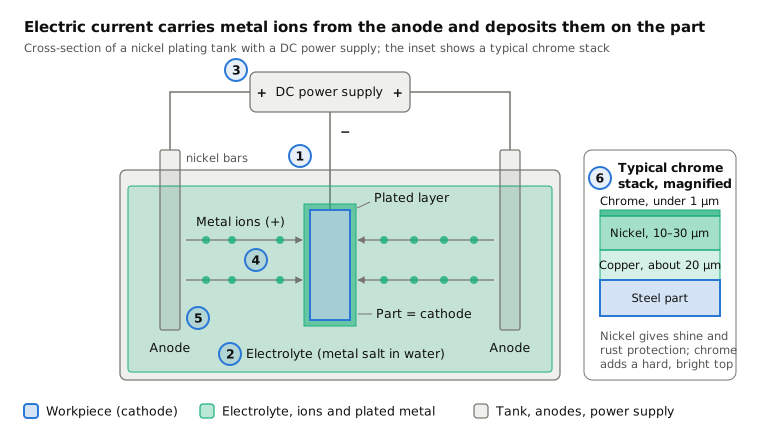
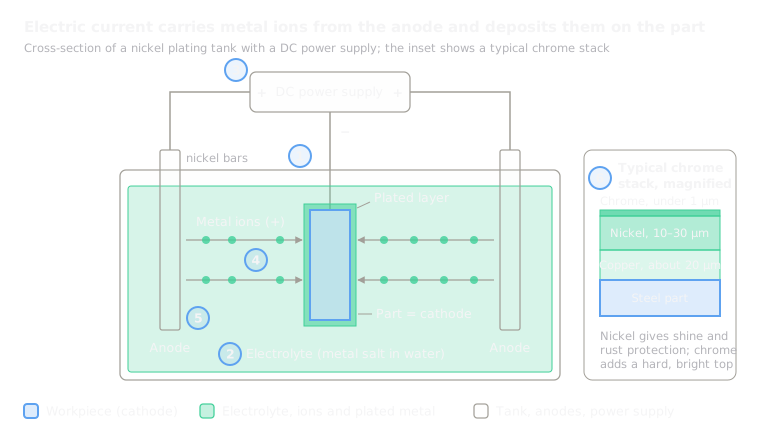 11.5Electroplating (chrome, nickel, zinc)Electric current deposits metal from a bathOpen the lesson
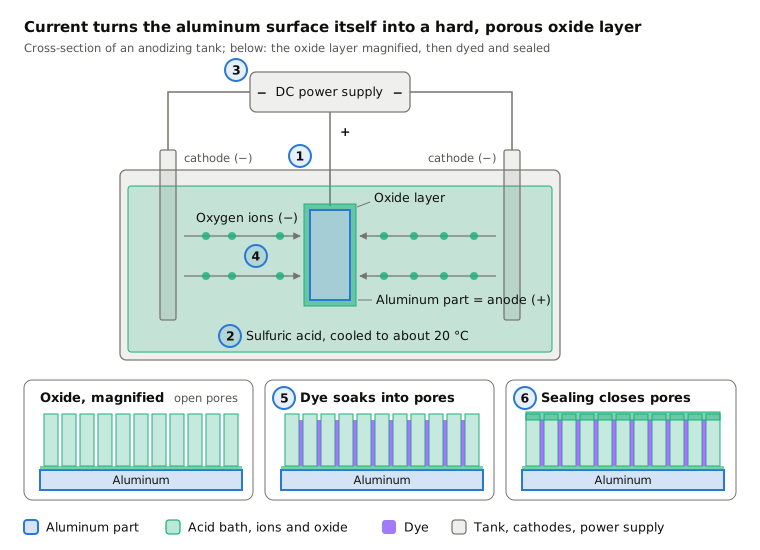
 11.6AnodizingCurrent grows a hard oxide out of aluminum itselfOpen the lesson
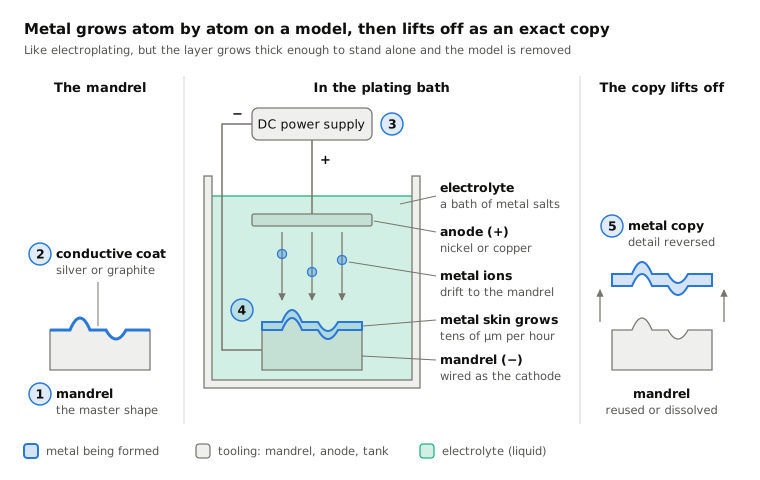
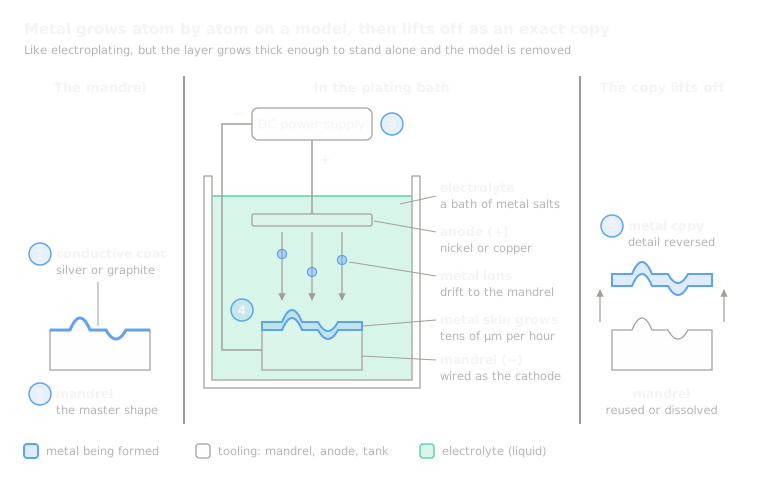 11.7ElectroformingPlating grown thick on a model, then lifted offOpen the lesson
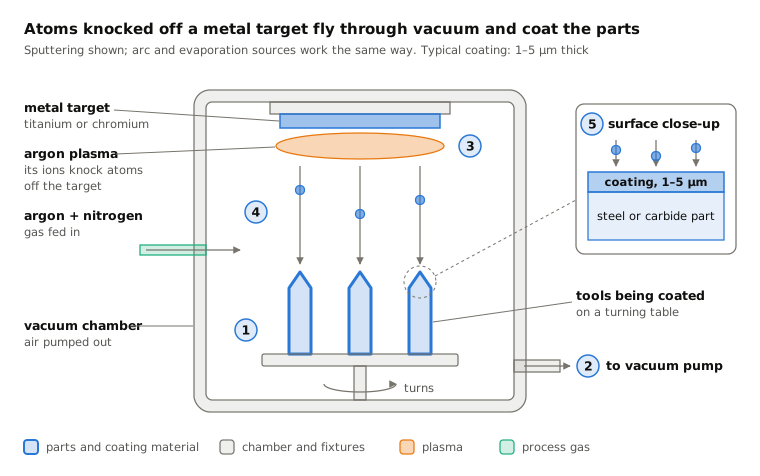
 11.8PVD coating (thin films in vacuum)Atoms knocked off a target coat parts in vacuumOpen the lesson
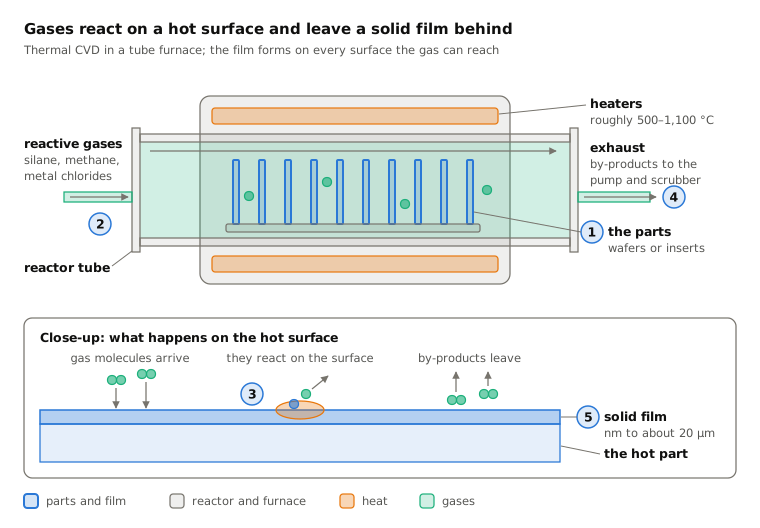
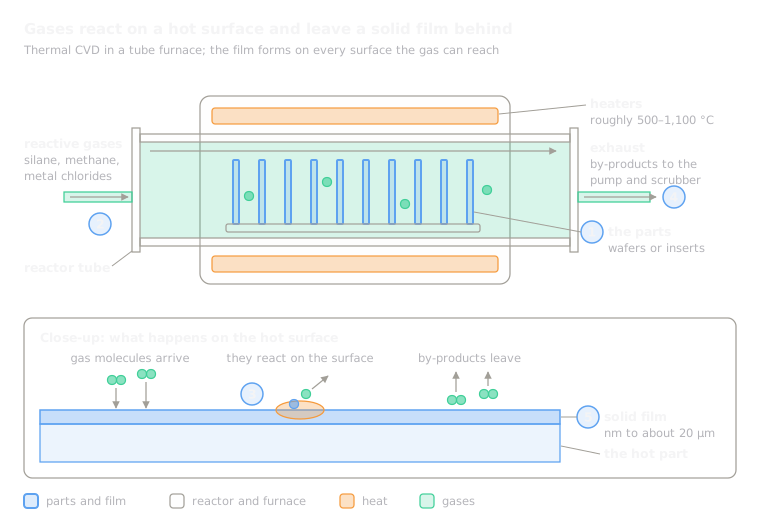 11.9CVD coatingGases react on a hot surface and leave a filmOpen the lesson
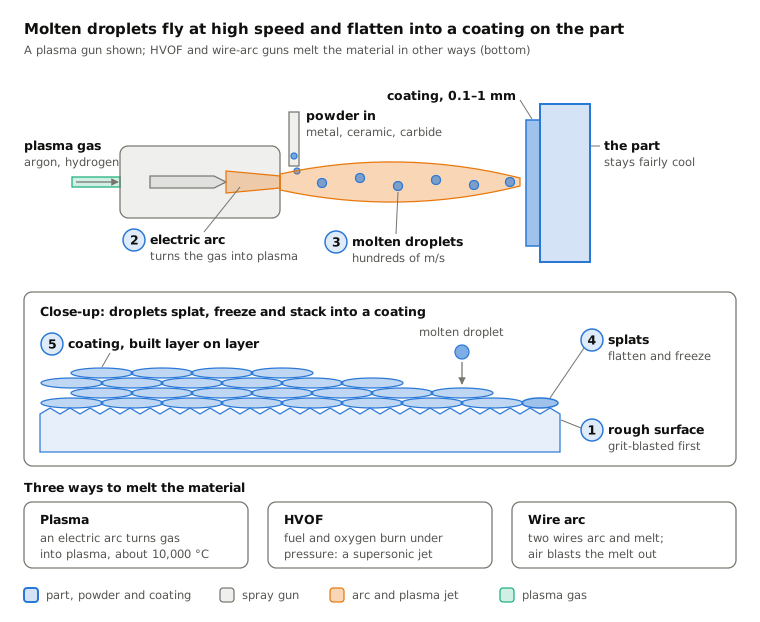
 11.10Thermal spraying (plasma, HVOF, arc)Melted droplets fired at a part stack into a layerOpen the lesson
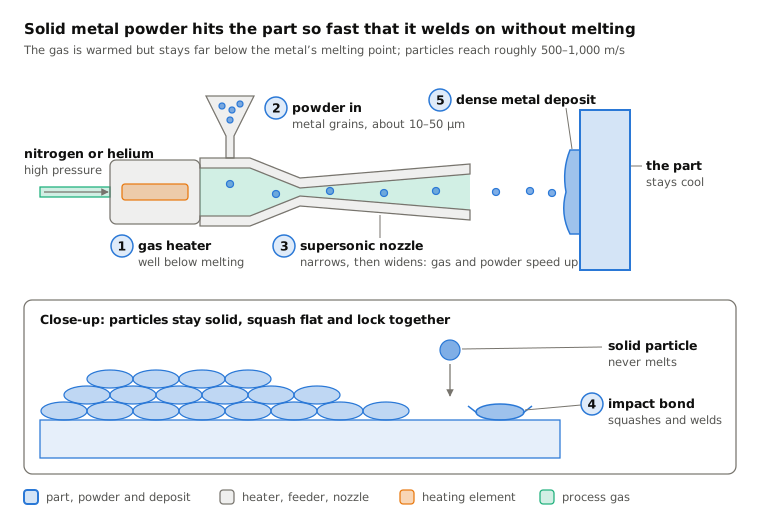
 11.11Cold spraySolid metal grains weld on by sheer speedOpen the lesson
Try it
Put AI to work in your CAD.
Model parts, generate drawings and automate the repetitive work inside your CAD software.