

Superfinishing and polishing
Fine stones or buffs remove the last microscopic peaks
Superfinishing and polishing are the gentlest abrasive steps: they take an already ground surface and shave off its last microscopic peaks. Superfinishing makes bearing rollers and crankshaft journals run smoother and last longer; polishing gives taps, watch cases and medical implants their mirror shine. Both remove only a few micrometers or less.
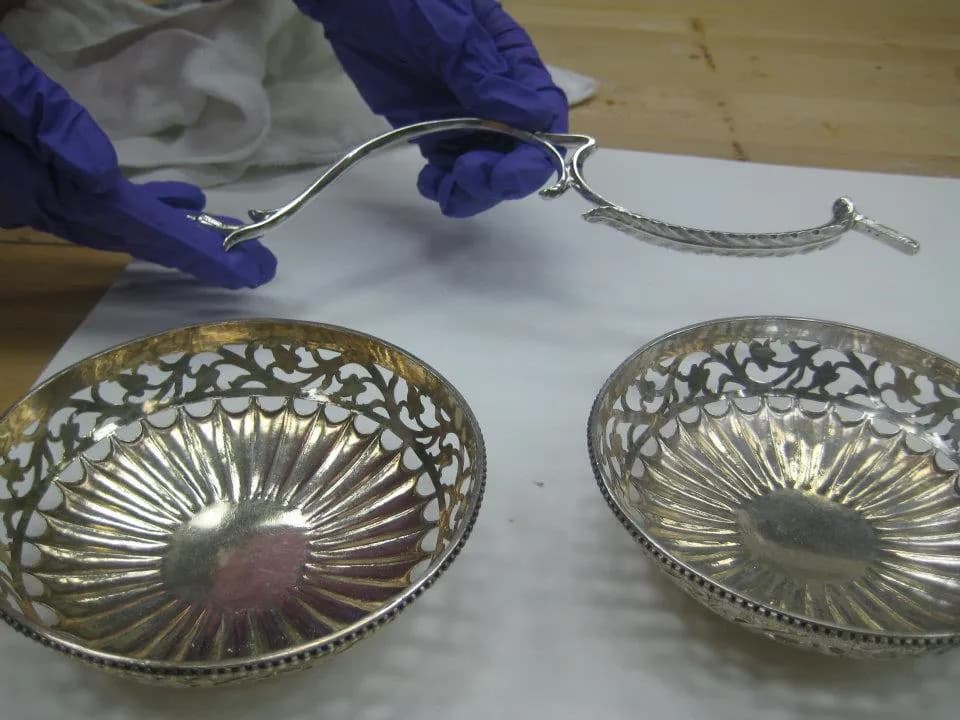
How it works
Start from a ground surface. The part arrives already ground to size. Under a microscope its surface is still a field of tiny peaks and scratches.
Press a fine stone lightly. In superfinishing, a stone or abrasive film with very fine grit (tiny abrasive particles) is pressed gently against the turning part.
Oscillate fast. The stone shakes back and forth in short, rapid strokes, so its grains cross the old grinding marks and slice off the peaks.
Let it stop by itself. As the peaks disappear, the stone starts to ride on a film of oil and cutting almost stops. The valleys stay, and they later hold lubricant.
Polish for shine. For looks, a spinning cloth wheel (a buff) loaded with compound (fine abrasive in a wax bar) is pressed on the part, through finer and finer grades, until it reflects like a mirror.
Key facts
- Materials
- Hardened steels, stainless steel, brass, aluminum, chrome-plated parts, precious metals
- Typical parts
- Superfinishing: bearing races and rollers, crank and cam journals, piston rods. Polishing: almost any shape, flat or curved
- Part size
- From watch parts to rolls and rods several meters long
- Precision
- Superfinishing removes about a micrometer and barely changes size; polishing targets looks, not dimensions
- Surface finish
- Superfinishing can reach roughness around Ra 0.01–0.1 µm; polishing gives a mirror finish
- Batch size it suits
- Superfinishing: mass-production lines. Polishing: one-offs by hand to automated or robotic lines
- Tooling and machine cost
- Stones, films, buffs and compounds are cheap consumables; automated machines are a significant investment
- Speed
- Superfinishing: seconds to under a minute per surface. Polishing: seconds by machine to hours by hand
Strengths and limits
Strengths
- Very smooth surfaces that cut friction, wear and noise in bearings and shafts
- Superfinishing keeps the valleys, which hold oil
- Little heat, so the hardened surface is not damaged
- Polishing makes parts attractive and easier to clean
Limits
- Cannot fix size or shape errors; the part must already be ground accurately
- Superfinishing needs dedicated heads or machines for each type of part
- Hand polishing is slow, skilled work and can round off sharp edges
- Polishing dust and used compound must be extracted and handled
Where it's used
- BearingsBall and roller races, rollers
- AutomotiveCrankshaft and camshaft journals, shock absorber rods
- MedicalHip and knee implants, surgical instruments
- Consumer goodsWatch cases, jewelry, faucets, cookware
- HydraulicsPiston rods and seal surfaces
How to recognize it
- A superfinished journal looks bright but slightly satin, with no visible grinding lines.
- A polished part reflects your face like a mirror, often with faint swirl marks in raking light.
- Rounded, softened edges on decorative metal parts hint at buffing.
- On bearings, the running track is noticeably brighter than the ground faces around it.
Compare with
Watch it
Supfina · A clear manufacturer explainer of the principle
Cutting Tool Engineering · Superfinishing bearing parts in production
Balu Forge Industries Ltd · Abrasive finishing of crankshaft journals in a factory
Avid Welder · Hand polishing through finer and finer grits to a mirror
See real photos
- Wikipedia: Superfinishing — the principle and its through-feed and plunge variants, overview with photos
- Wikipedia: Polishing (metalworking) — grits, buffing wheels and compounds, with photos
- Wikimedia Commons photo search
Remember
- These steps remove only the last microscopic peaks of an already ground surface.
- Superfinishing improves function: smoother running, longer life, oil kept in the valleys.
- Polishing improves looks: a mirror finish built up through finer and finer abrasives.
More in Machining
All 100 processes
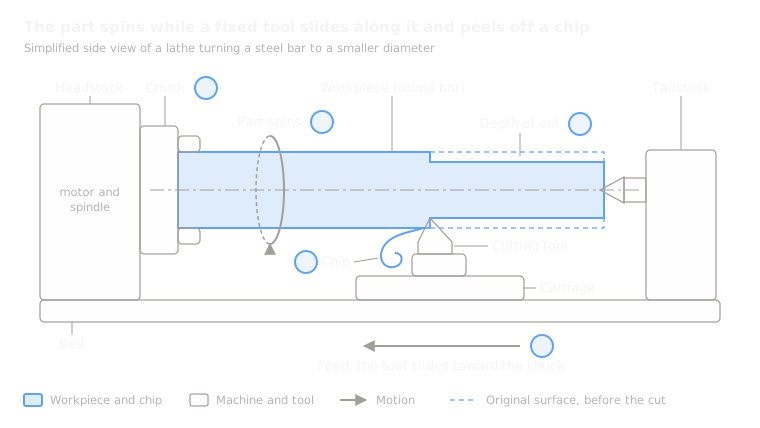 5.1ShortTurning (lathe)The part spins; a single-point tool cuts itOpen the lesson
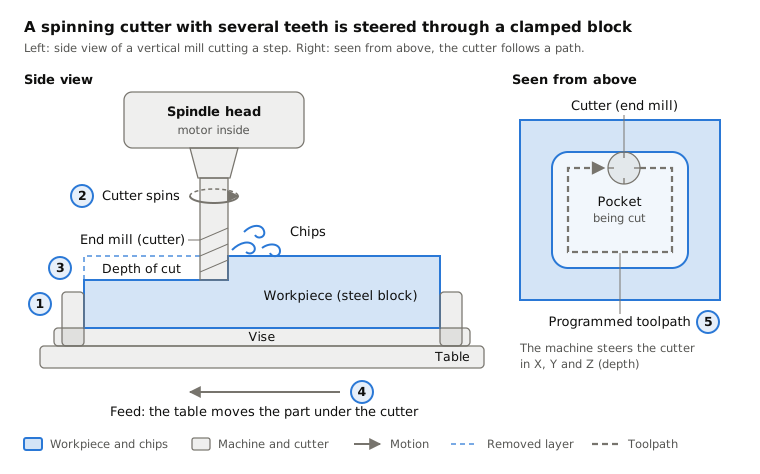
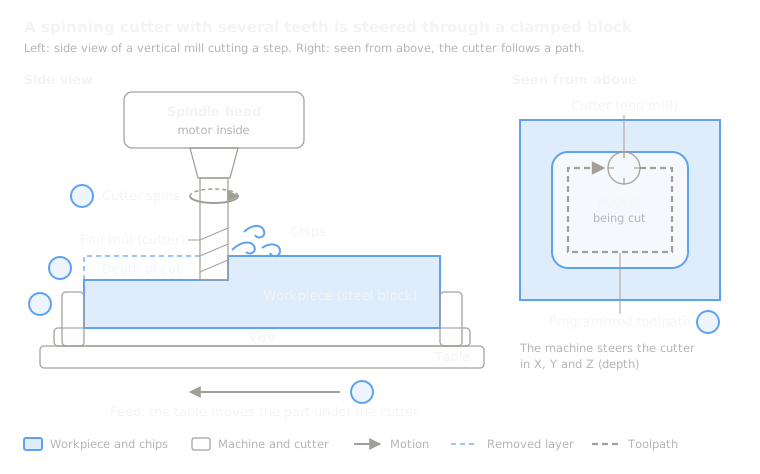 5.2ShortMillingA spinning multi-edge cutter moves over a fixed partOpen the lesson
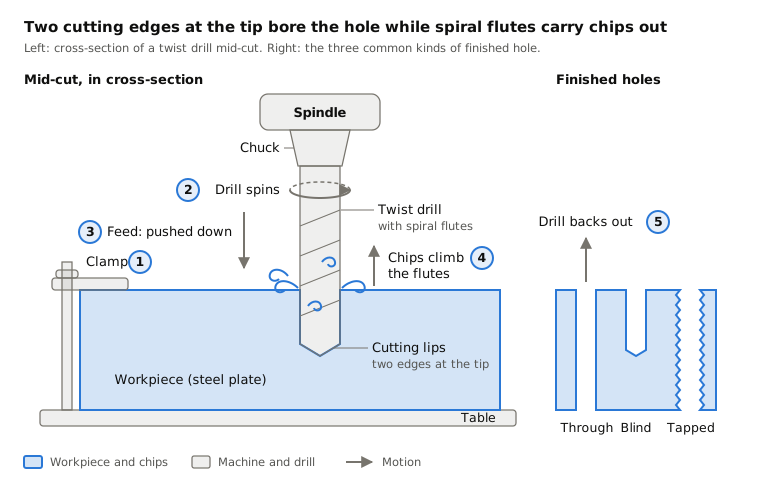
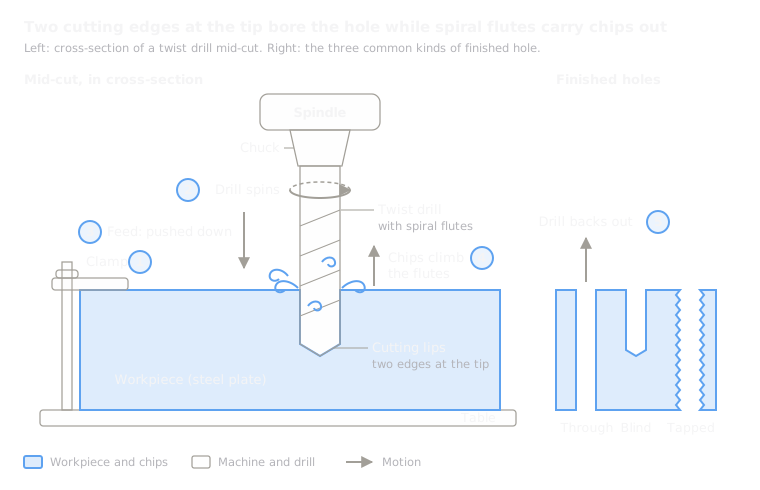 5.3ShortDrillingA spinning twist drill plunges into the partOpen the lesson
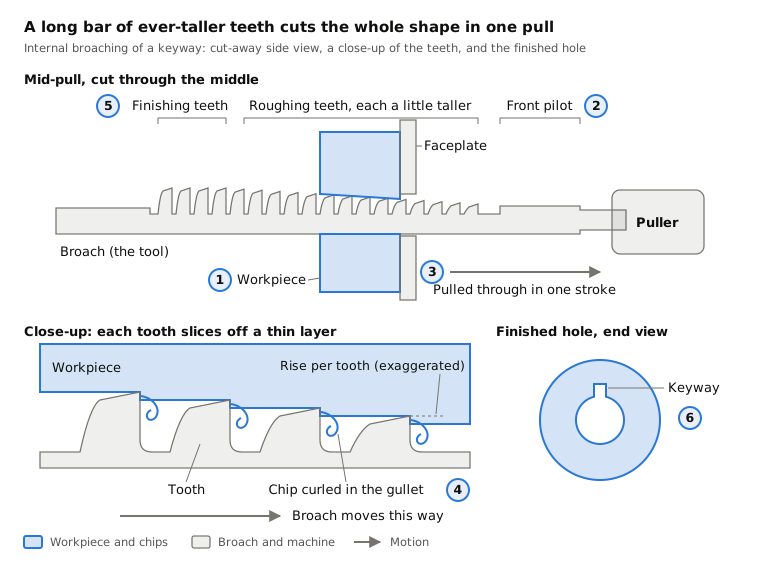
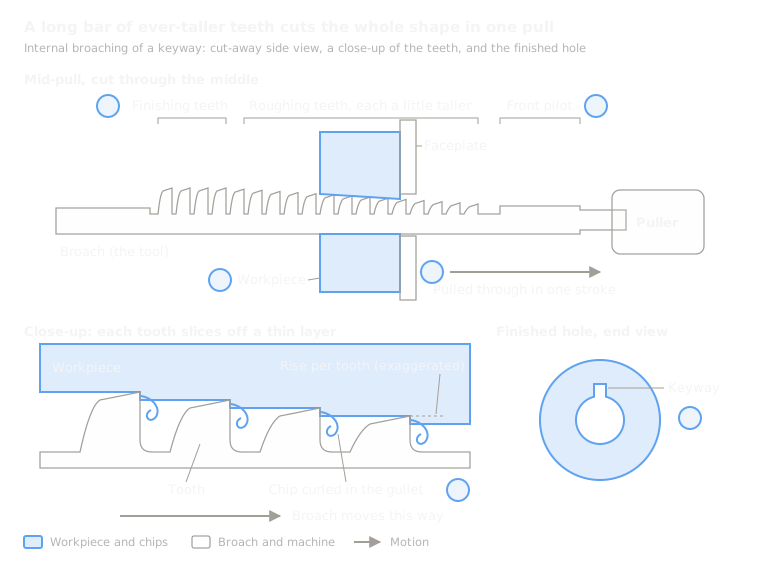 5.4BroachingA long toothed bar is pulled through or across in one strokeOpen the lesson
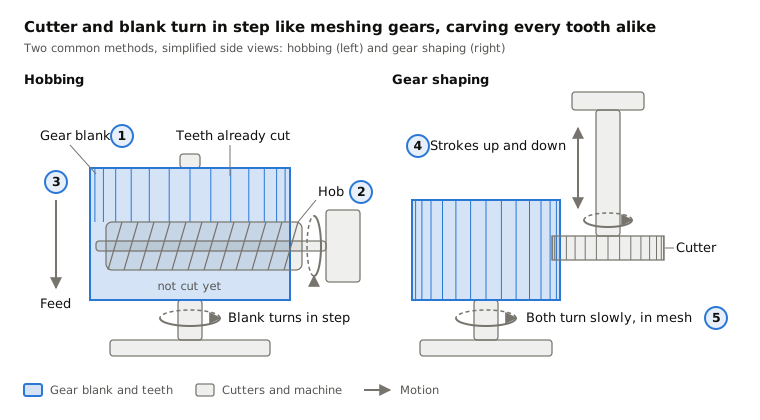
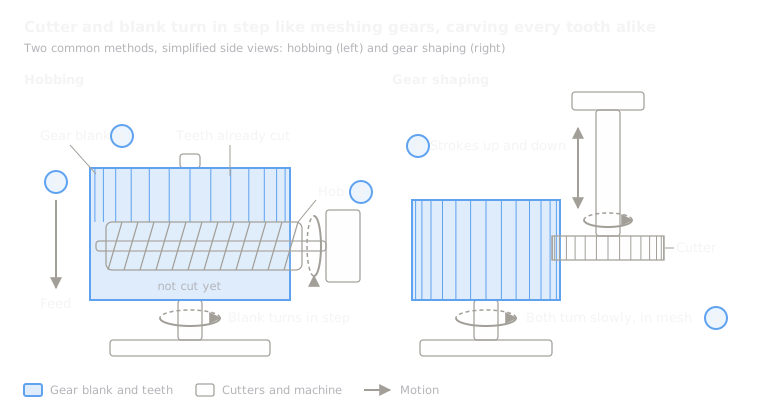 5.5Gear cutting (hobbing, shaping)Hobs or shaper cutters generate gear teethOpen the lesson
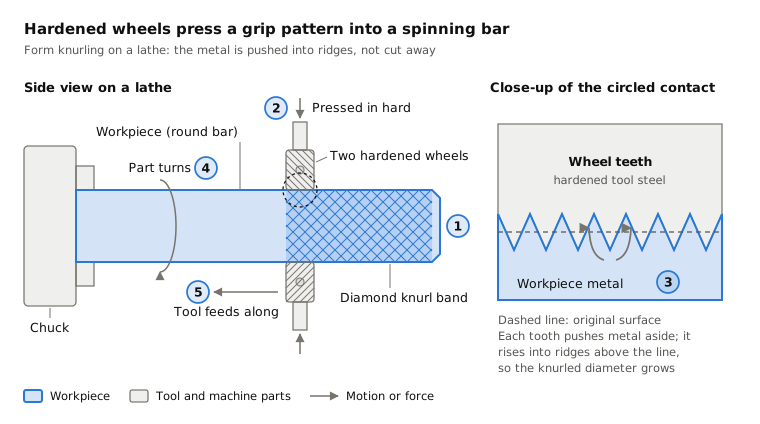
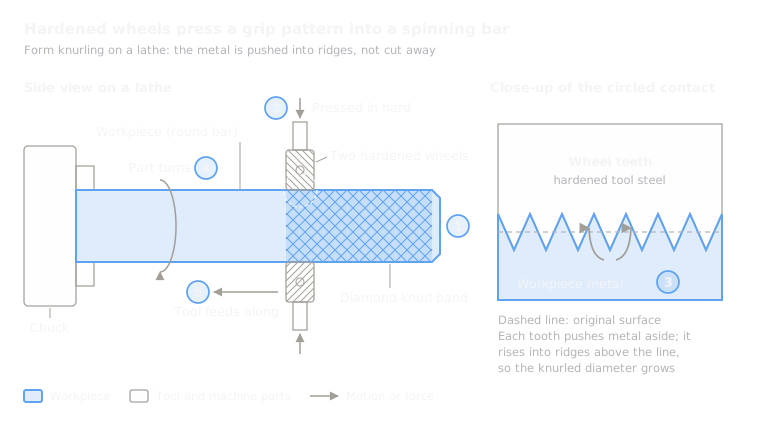 5.6KnurlingHardened wheels press a grip pattern into a turning partOpen the lesson
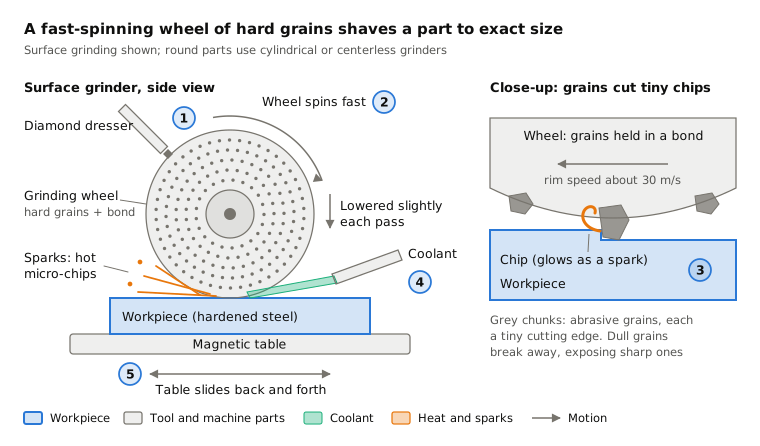
 5.7GrindingA fast wheel of hard grains shaves the surfaceOpen the lesson
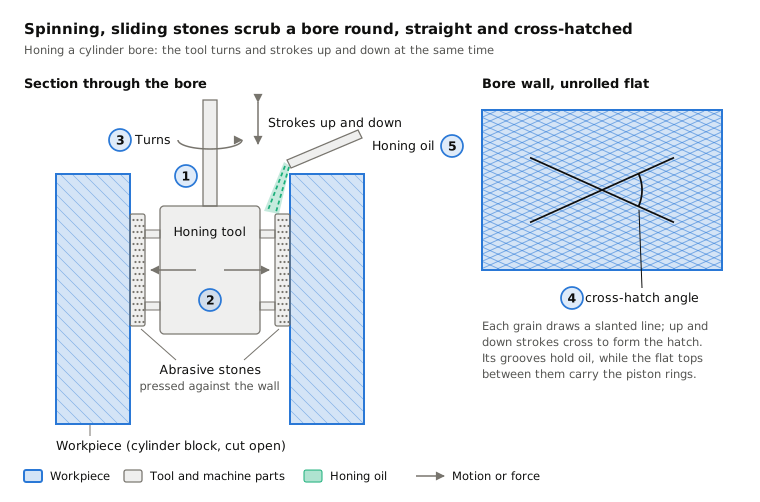
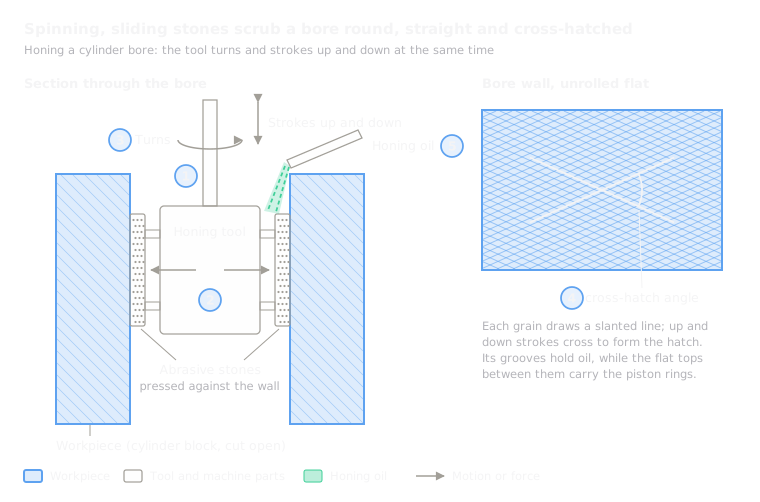 5.8HoningStones turn and stroke inside a boreOpen the lesson
Try it
Put AI to work in your CAD.
Model parts, generate drawings and automate the repetitive work inside your CAD software.