

Gear cutting (hobbing, shaping)
Hobs or shaper cutters generate gear teeth
Gear cutting gives a round blank its teeth. In the two main methods, the cutter and the blank turn together as if they were gears already meshing, so every tooth comes out with the same precise curved profile. The gears in a car gearbox, a cordless drill or a wind turbine are made this way.
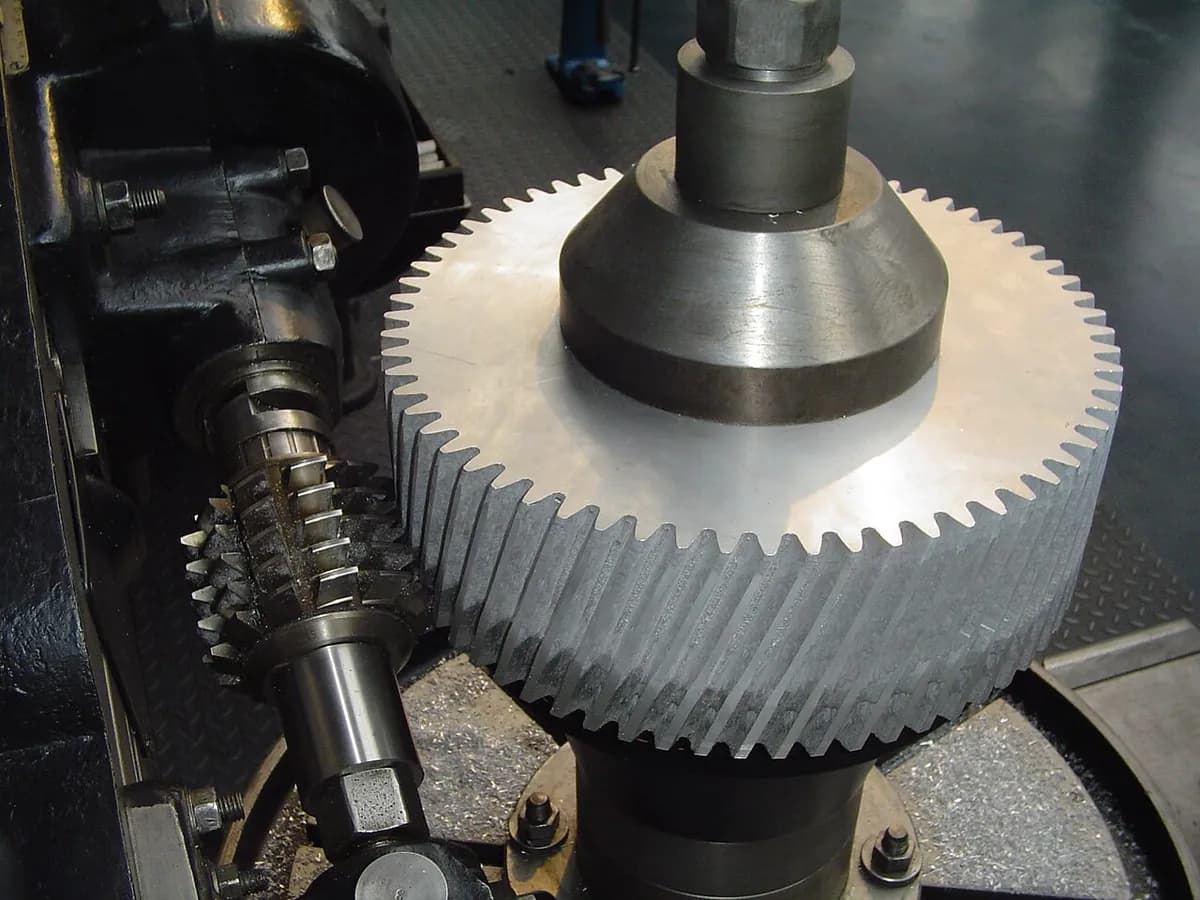
How it works
Mount the blank. A gear blank (a disk already turned to size, with a center hole) is clamped on the machine's rotating work spindle.
Hobbing: spin hob and blank in step. The hob (a cutter shaped like a worm screw, with many cutting teeth) spins while the blank turns at a fixed ratio, like a worm driving its gear.
Feed across the face. The hob slowly travels along the blank's axis. Every tooth space is cut a little on each turn, so all the teeth grow together.
Gear shaping: stroke up and down. For gears hobbing cannot reach, a gear-shaped cutter moves up and down like a planer, cutting on each down stroke.
Roll slowly in mesh. Between strokes, cutter and blank both turn a little, as if meshing, until all teeth are formed. Shaping can cut internal gears and teeth right next to a shoulder (a step on the part).
After cutting, gears for cars and machines are usually heat treated (hardened), and precise ones are then ground or honed.
Key facts
- Materials
- Steels (most gears), cast iron, bronze, brass, aluminum, plastics
- Typical parts
- Spur and helical gears (straight or slanted teeth), sprockets, splined shafts, worm wheels
- Part size
- From watch gears a few millimeters across to wind turbine and mining gears several meters across
- Precision
- Typically AGMA 8–10 or ISO grade 7–9 after hobbing, roughly 0.01–0.03 mm tooth errors; grinding reaches about ISO 4–5
- Surface finish
- Typically Ra 1.6–3.2 µm (Ra = average roughness; 1 µm is a thousandth of a millimeter) on the tooth flanks
- Batch size it suits
- Single gears to millions; one hob cuts any tooth count of the same tooth size
- Tooling and machine cost
- Hobs and shaper cutters cost hundreds to thousands of dollars; CNC gear machines cost hundreds of thousands
- Speed
- Seconds to about a minute per small car gear; many hours for a gear meters across
Strengths and limits
Strengths
- Accurate, consistent tooth shapes on every tooth
- One hob serves many gear sizes with the same tooth size
- Hobbing is fast and continuous, ideal for volume
- Shaping reaches internal and cluster gears
Limits
- Dedicated, costly machines
- Hobbing cannot cut internal gears or teeth next to a shoulder
- Shaping is slower, because half of each stroke cuts nothing
- Hardened gears still need grinding for the highest precision
Where it's used
- AutomotiveGearbox gears, differential gears, starter and pump gears
- EnergyWind turbine gearboxes, large industrial drives
- MachineryReducers, conveyors, machine tool drives
- Consumer goodsPower tools, kitchen mixers, bicycle and motorcycle sprockets
- AerospaceHelicopter transmissions, engine accessory gearboxes
How to recognize it
- Identical teeth with curved (involute) flanks, the profile that lets gears roll smoothly together.
- Fine marks running across each tooth face, along the direction the hob traveled.
- An internal gear or a gear sitting right against a shoulder points to shaping rather than hobbing.
Compare with
Watch it
ProdMach · A beginner comparison of hobbing and shaping
Evolvent Design · Close shots of a spur gear being hobbed in a workshop
Gleason Corporation · Production hobbing on a modern machine, with chamfering
Liebherr · A very large gear hobbing machine at work
See real photos
- Wikipedia: Gear cutting — overview of hobbing, shaping, broaching, milling and finishing methods
- Wikipedia: Hobbing — photo of a hob and a hobbing machine
- Wikimedia Commons photo search
Remember
- Gear teeth are generated: the cutter rolls with the blank like a mating gear.
- Hobbing is continuous and fast; shaping strokes up and down and reaches internal gears.
- Most precise gears are cut soft, hardened, then ground.
More in Machining
All 100 processes
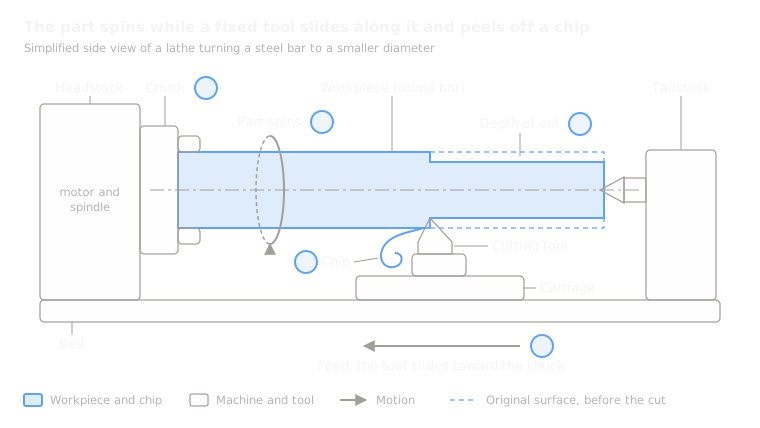 5.1ShortTurning (lathe)The part spins; a single-point tool cuts itOpen the lesson
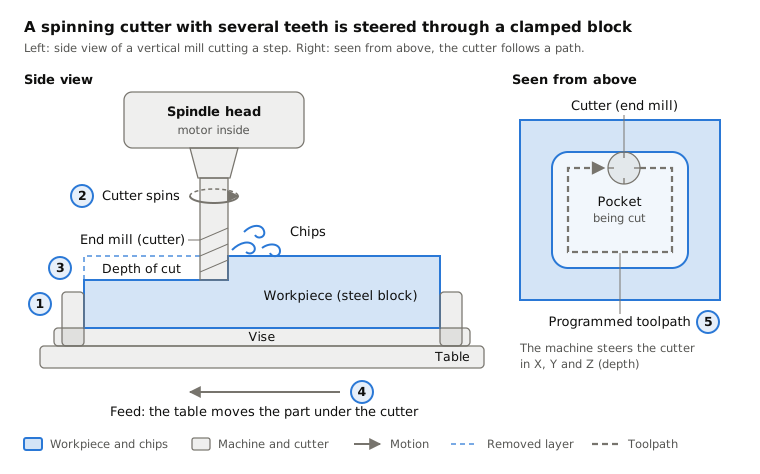
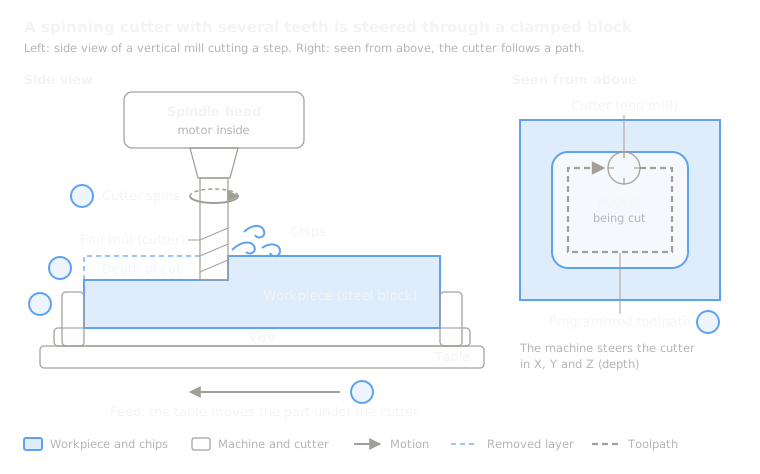 5.2ShortMillingA spinning multi-edge cutter moves over a fixed partOpen the lesson
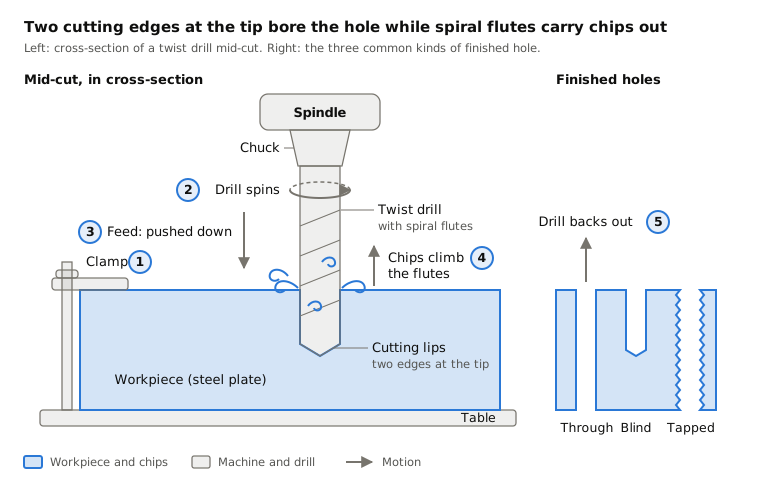
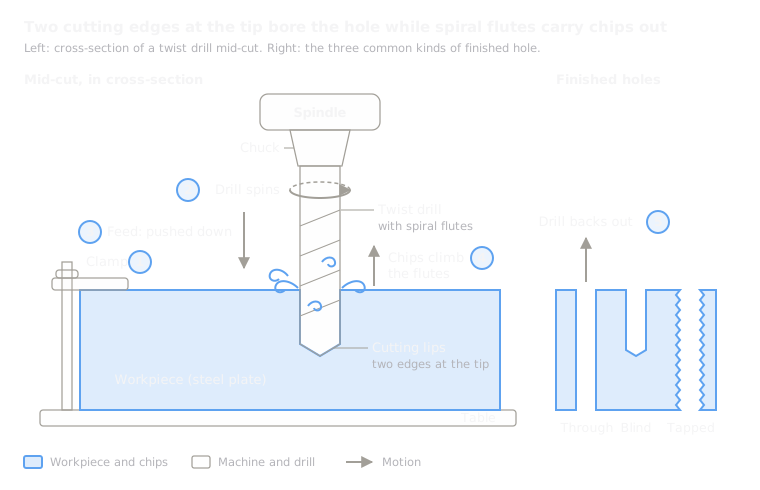 5.3ShortDrillingA spinning twist drill plunges into the partOpen the lesson
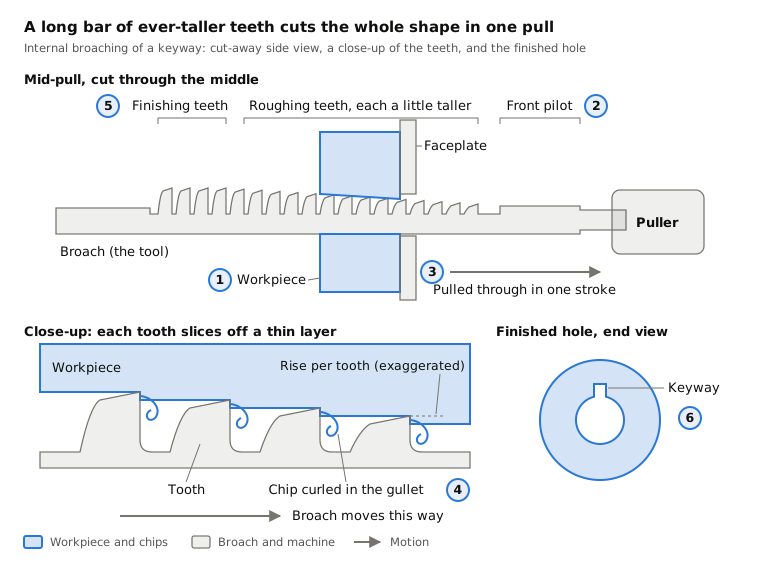
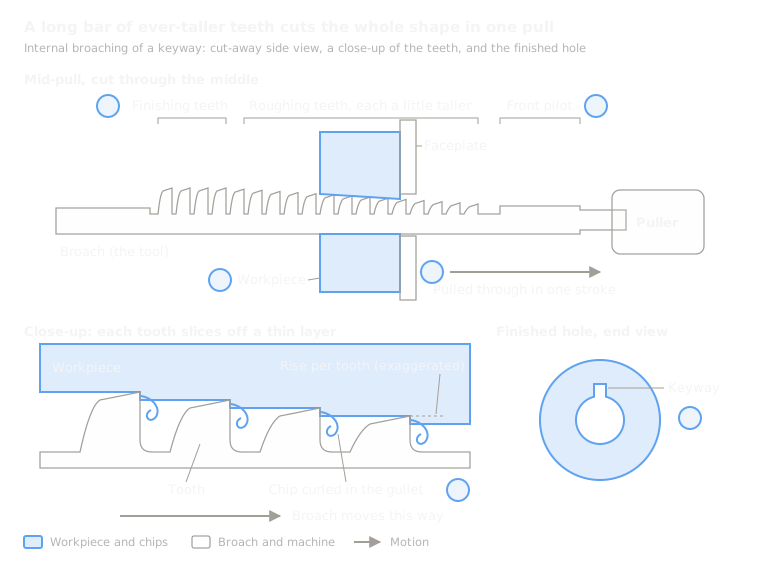 5.4BroachingA long toothed bar is pulled through or across in one strokeOpen the lesson
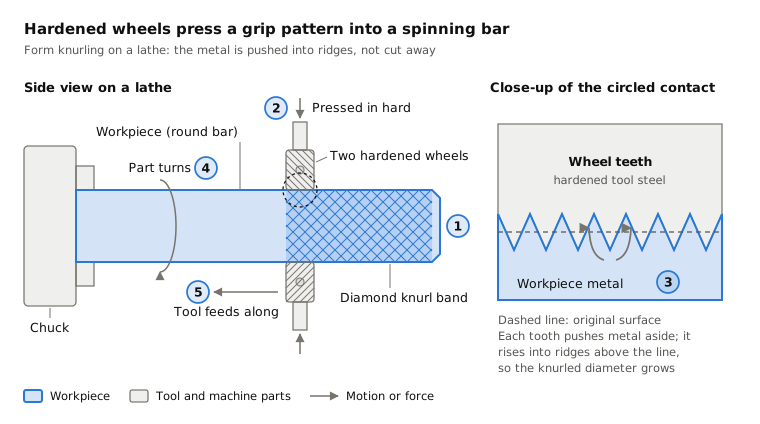
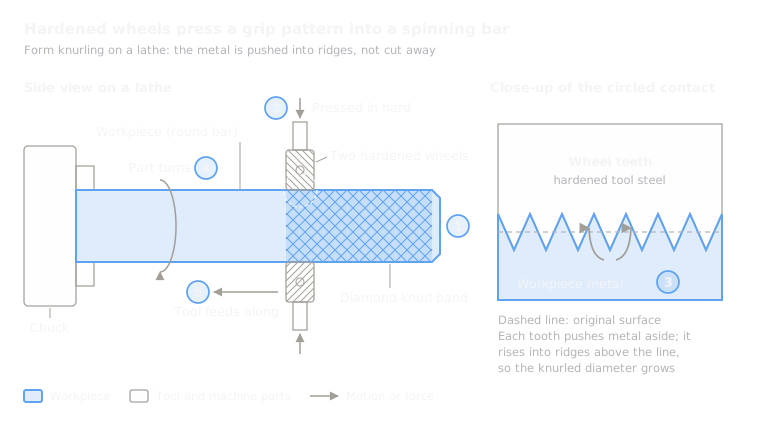 5.6KnurlingHardened wheels press a grip pattern into a turning partOpen the lesson
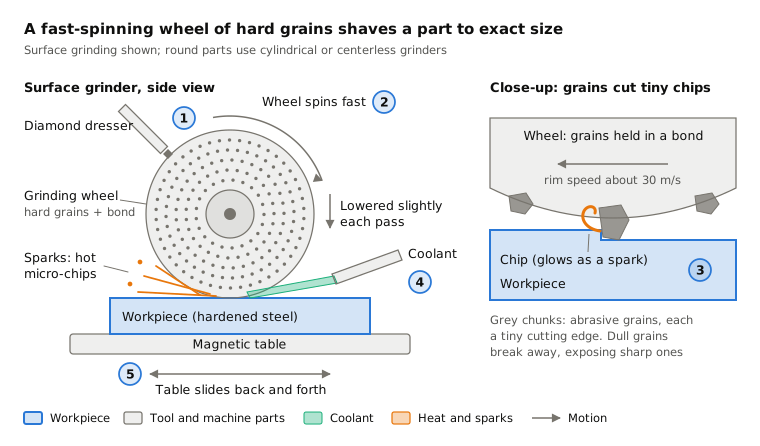
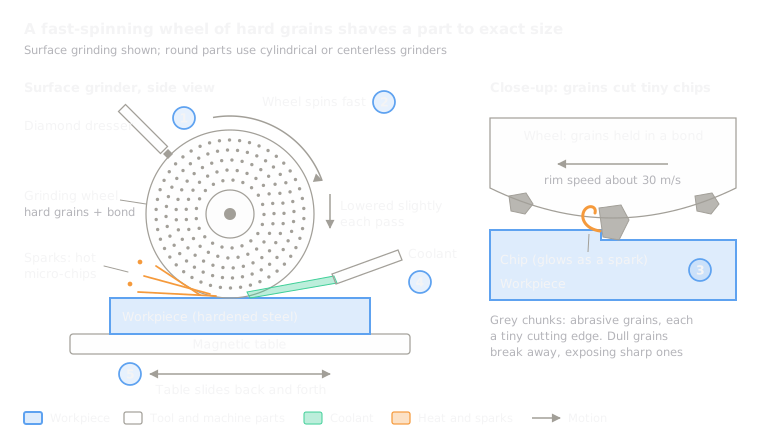 5.7GrindingA fast wheel of hard grains shaves the surfaceOpen the lesson
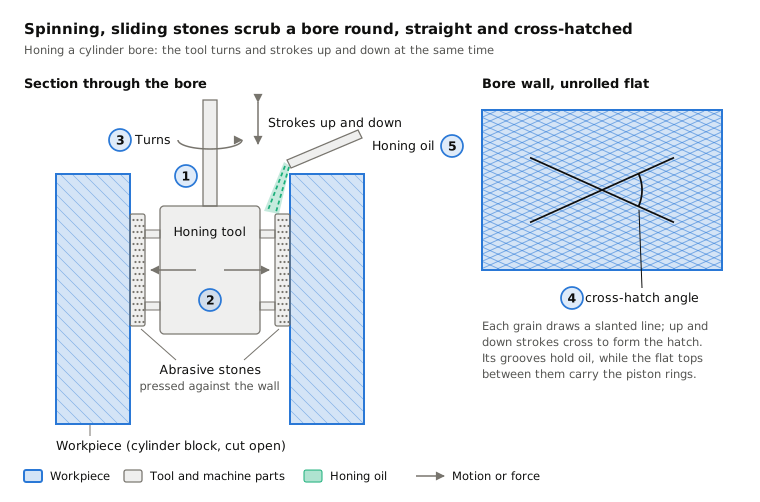
 5.8HoningStones turn and stroke inside a boreOpen the lesson
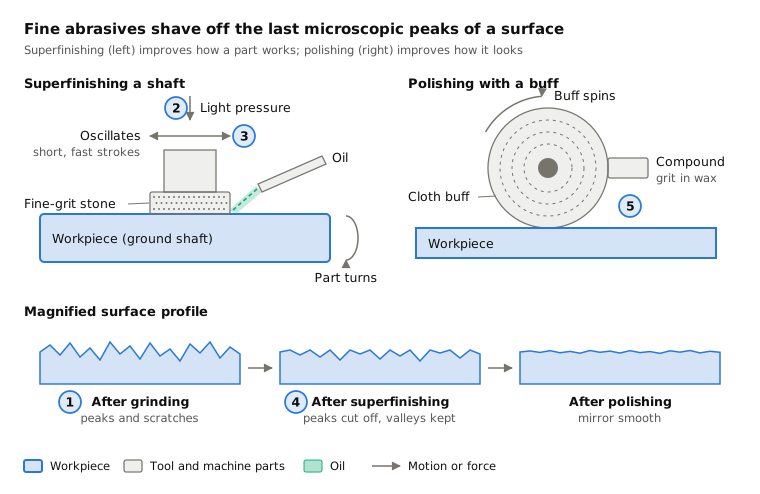
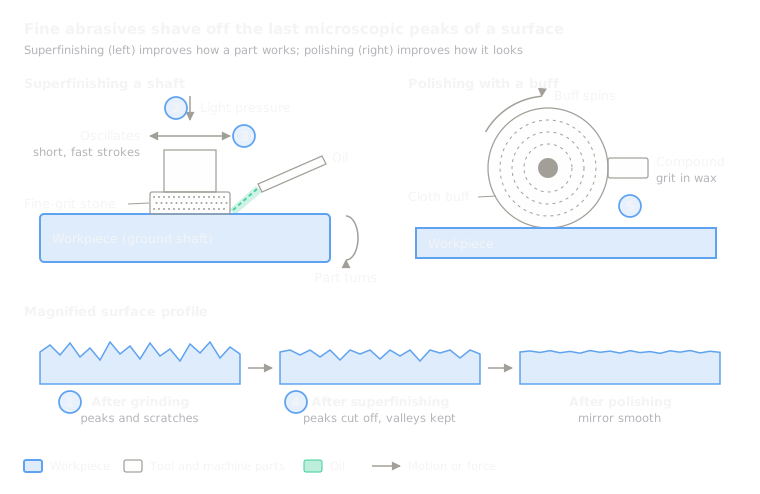 5.9Superfinishing and polishingFine stones or buffs remove the last microscopic peaksOpen the lesson
Try it
Put AI to work in your CAD.
Model parts, generate drawings and automate the repetitive work inside your CAD software.