

Electromagnetic forming
A magnetic pulse throws metal onto a fitting, without contact
Electromagnetic forming (EMF) shapes metal with a pulse of magnetism instead of a tool that touches it. A coil fed with a split-second burst of current repels an aluminum or copper part, hard enough to crush a tube onto a fitting. The same physics lets hobbyists shrink a coin, and lets carmakers join aluminum tubes to steel parts without welding.
How it works
Charge the capacitors. A capacitor bank (a fast-releasing store of electric charge) is charged to several kilovolts, typically storing a few to tens of kilojoules.
Fire the switch. A fast switch (a spark gap or a high-power thyristor) connects the bank to the work coil, a few turns of heavy, well-insulated copper.
Send a current pulse. Tens to hundreds of thousands of amps rush through the coil for about 10–100 microseconds. The sudden magnetic field induces eddy currents (swirling currents induced in a conductor) in the tube, flowing the opposite way.
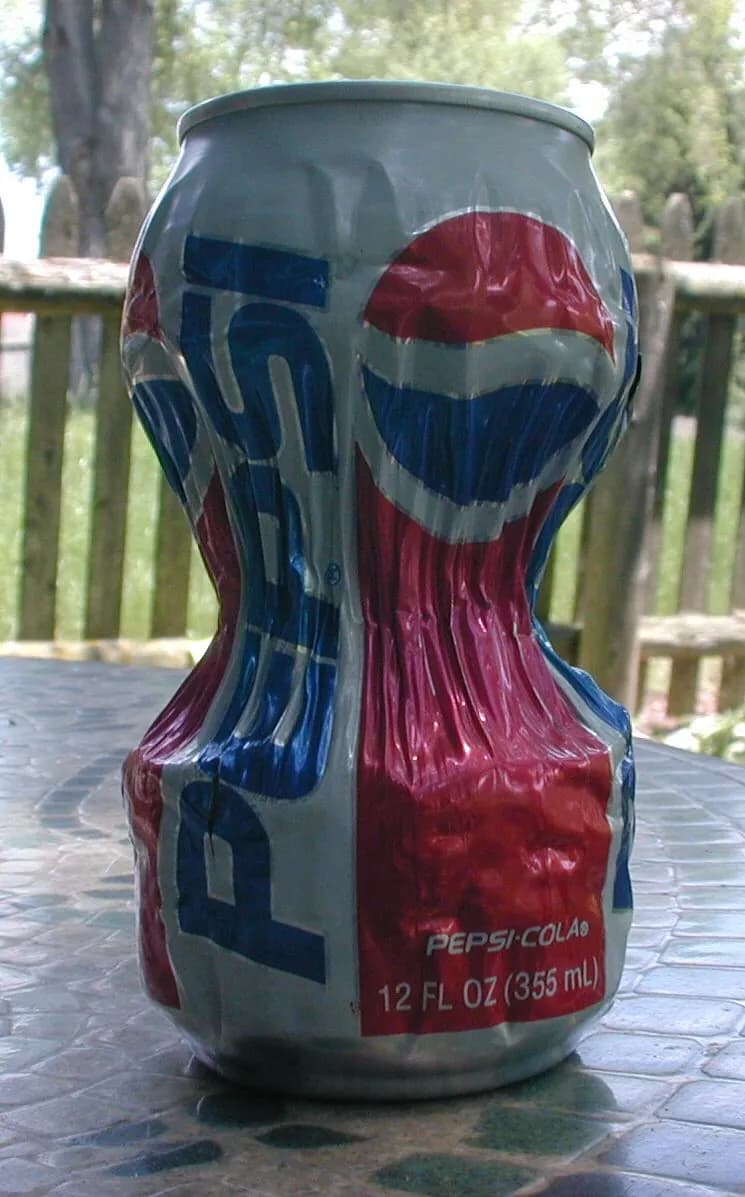
Let the push do the work. Opposite currents repel each other, so a strong magnetic pressure throws the tube wall away from the coil at roughly 100–300 m/s. The coil never touches the part.
Impact and lock. The wall slams onto the fitting and into its grooves, making a tight joint in microseconds. With enough speed the two metals can even weld (magnetic pulse welding).
Key facts
- Materials
- Good electrical conductors: aluminum, copper, brass; steel and poor conductors need adaptations or a conductive "driver" sheet
- Typical parts
- Tubes crimped onto fittings, cable lugs, drive shafts with end fittings, sheet details pressed into a one-sided die
- Part size
- Mostly tubes and sheet areas up to a few hundred millimeters, set by the coil and the stored energy
- Precision
- Very repeatable; the shape is set by the fitting or die, often within about ±0.1 mm on crimp diameters
- Surface finish
- No tool marks from the coil; the formed face copies the fitting or die
- Batch size it suits
- Medium to high series once coil and settings are tuned
- Tooling and machine cost
- Pulse machines typically cost hundreds of thousands of dollars; coils wear out and are replaced
- Speed
- Forming takes microseconds; with loading, a cycle takes a few seconds
Strengths and limits
Strengths
- No contact: no tool marks and no lubricant
- Extremely fast and very repeatable
- Joins dissimilar materials, such as aluminum to steel, without heat
- High speed lets metal stretch further, with little springback
Limits
- Works best on good conductors such as aluminum and copper
- High voltage demands strict electrical safety
- Coils suffer huge forces and wear out
- Limited to fairly thin walls and modest part sizes
Where it's used
- AutomotiveDrive shafts, frame joints, air-conditioning lines
- AerospaceTorque tubes and control rods joined to end fittings
- ElectricalCrimped cable lugs and connectors
- Heating and coolingCopper-to-aluminum refrigerant tube joints
How to recognize it
- A tube shrunk smoothly and evenly into the grooves of a fitting, all the way around.
- No tool marks, dents or jaw prints where the crimp is.
- Often aluminum or copper joined to steel or plastic with no weld bead or adhesive.
Compare with
Watch it
Physics Girl · A clear explanation, with slow-motion footage of a coin shrunk by a pulsed coil
Physics Girl · How violent the magnetic push is, seen in slow motion
Chaotic Good · The hardware: capacitors, switch and coil of a pulse machine
Greg Benoit · An early aerospace use: tubes joined to end fittings by EMF
See real photos
- Wikipedia: Electromagnetic forming — principle, materials, crimping and welding; almost no photos
- Wikimedia Commons photo search
Remember
- A current pulse in a coil pushes away a nearby conductor: no tool ever touches the part.
- The whole forming happens in microseconds, at speeds of hundreds of meters per second.
- Best for aluminum and copper tubes crimped onto fittings, even of a different metal.
More in Sheet and tube forming
All 100 processes
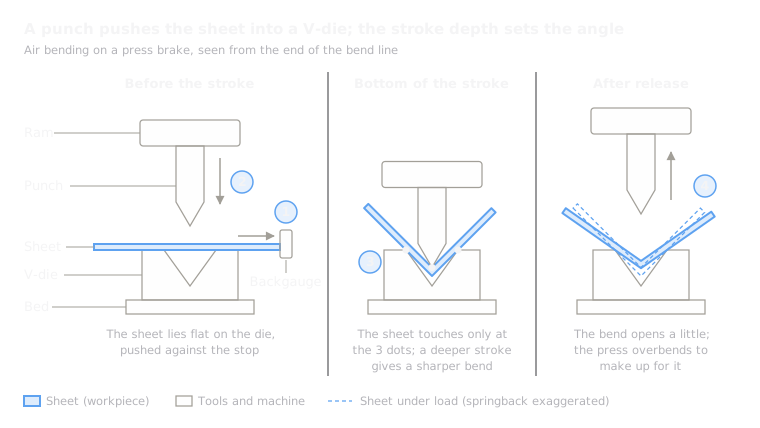 4.1Sheet metal bendingA press brake folds sheet along straight linesOpen the lesson
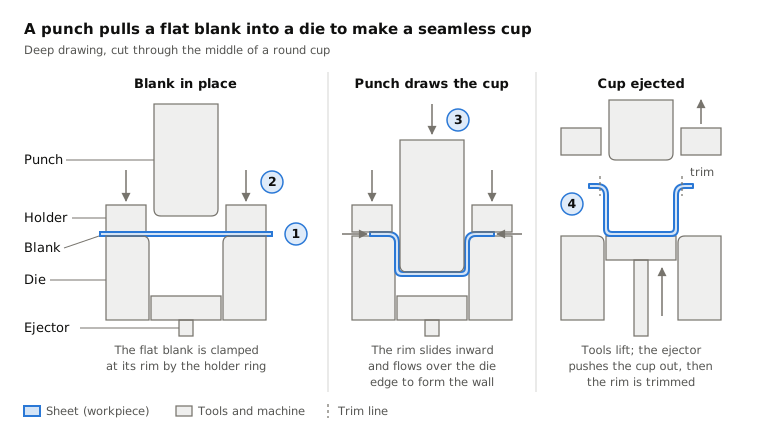
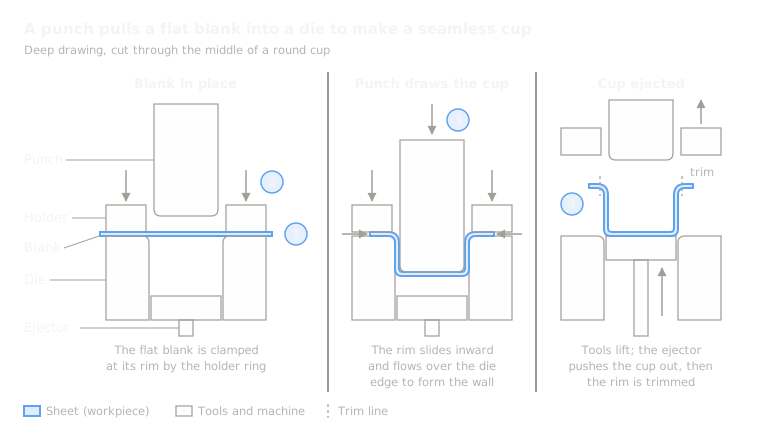 4.2ShortStamping and deep drawingMatched dies cut and press sheet into shape, often in a secondOpen the lesson
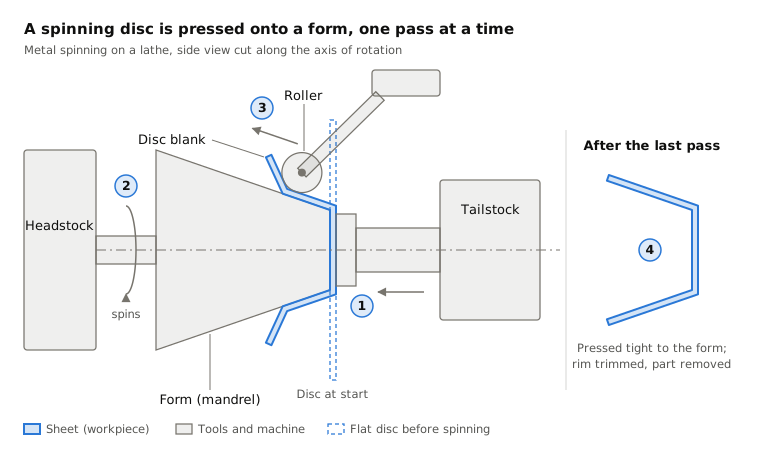
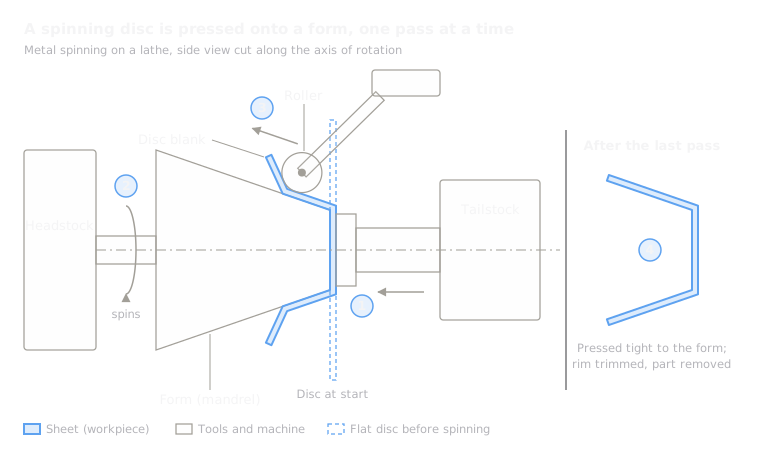 4.3Metal spinningA roller presses a spinning disc over a formOpen the lesson
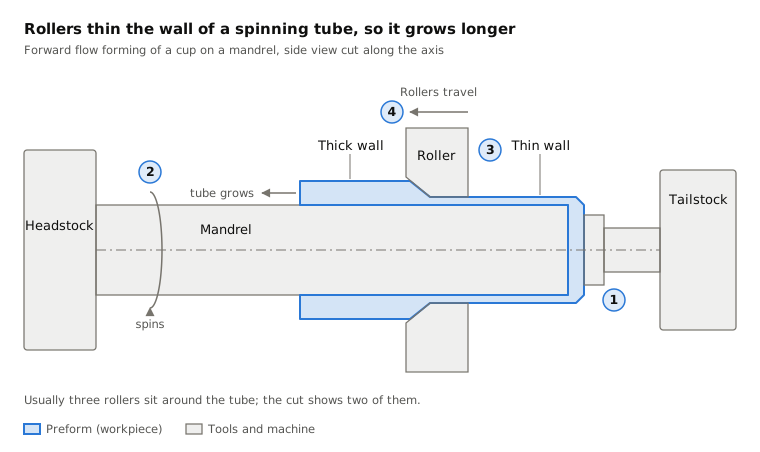
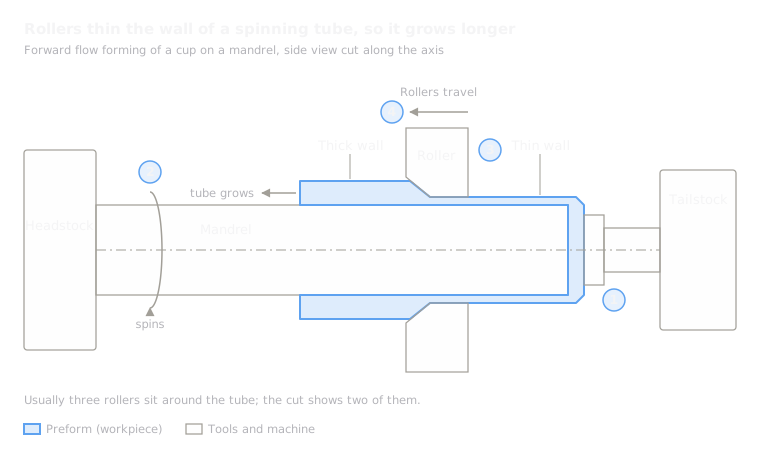 4.4Flow formingRollers stretch a spinning tube thinner and longer over a mandrelOpen the lesson
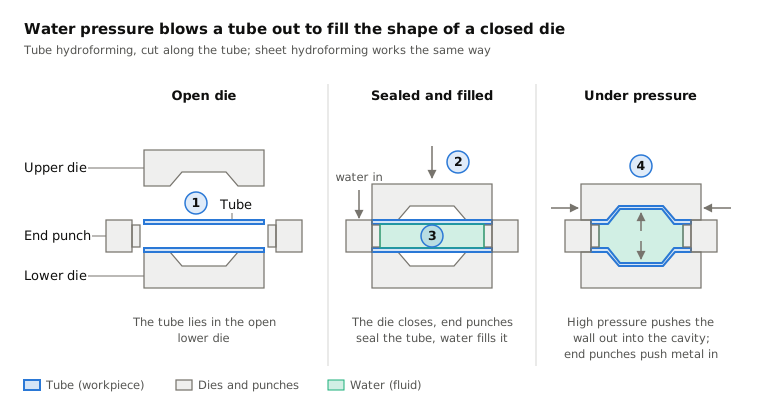
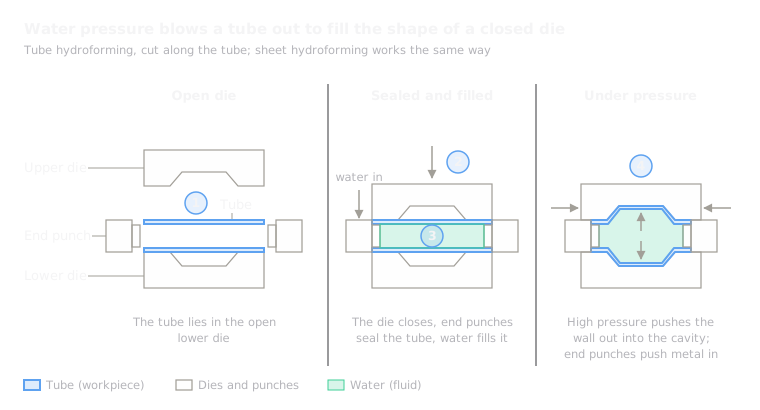 4.5HydroformingFluid pressure pushes tube or sheet into a dieOpen the lesson
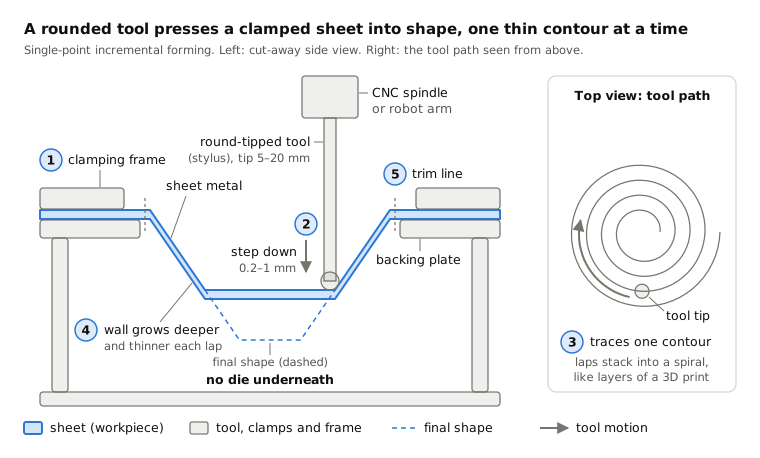
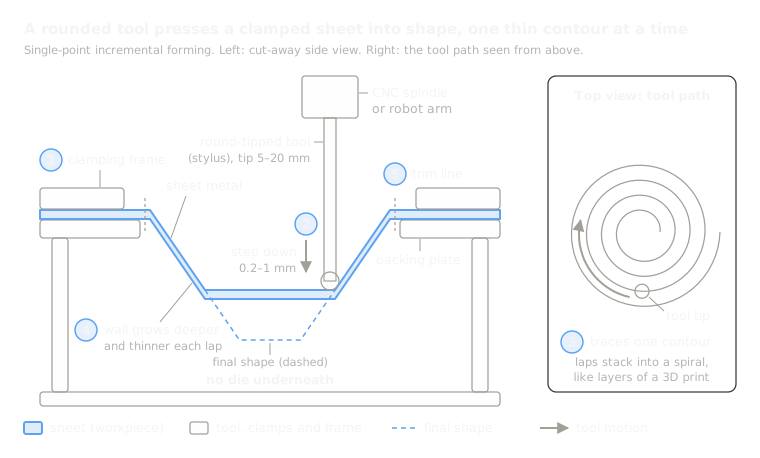 4.6Incremental sheet formingA round tool traces contours into clamped sheet, with no dieOpen the lesson
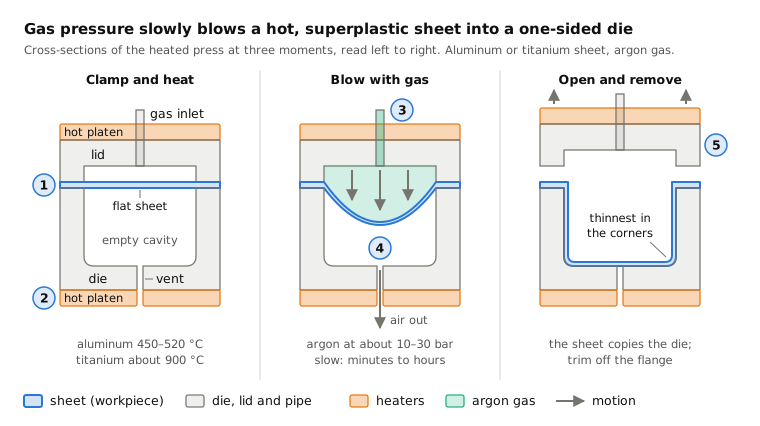
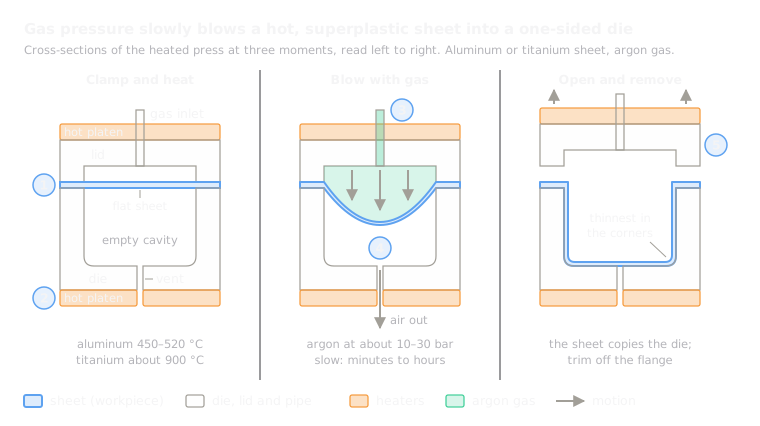 4.7Superplastic formingHot gas blows a superplastic sheet into one dieOpen the lesson
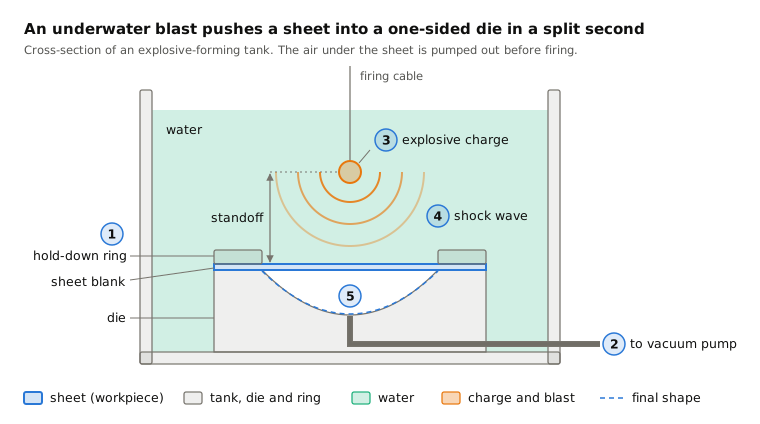
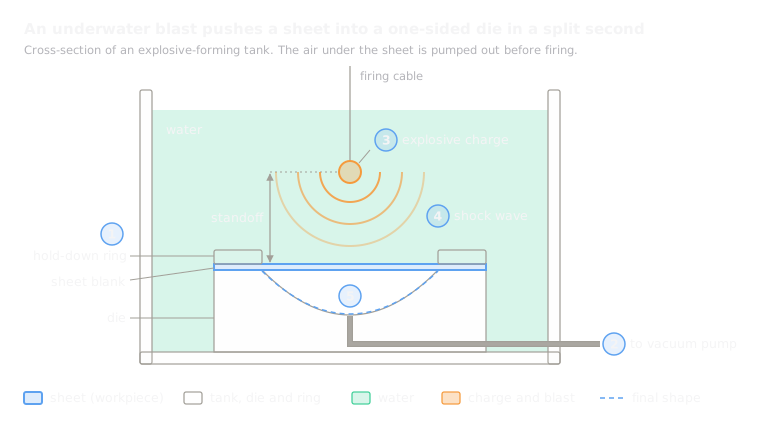 4.9Explosive formingAn underwater blast pushes sheet into one dieOpen the lesson
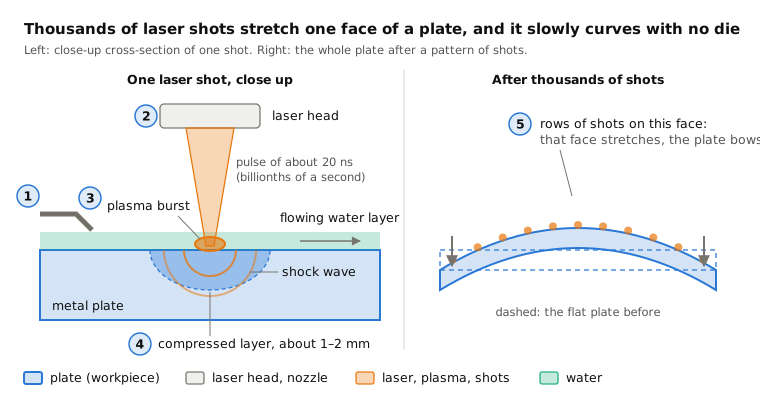
 4.10Laser peen formingLaser shots stretch one face so a plate curvesOpen the lesson
Try it
Put AI to work in your CAD.
Model parts, generate drawings and automate the repetitive work inside your CAD software.