

Sheet metal bending
A press brake folds sheet along straight lines
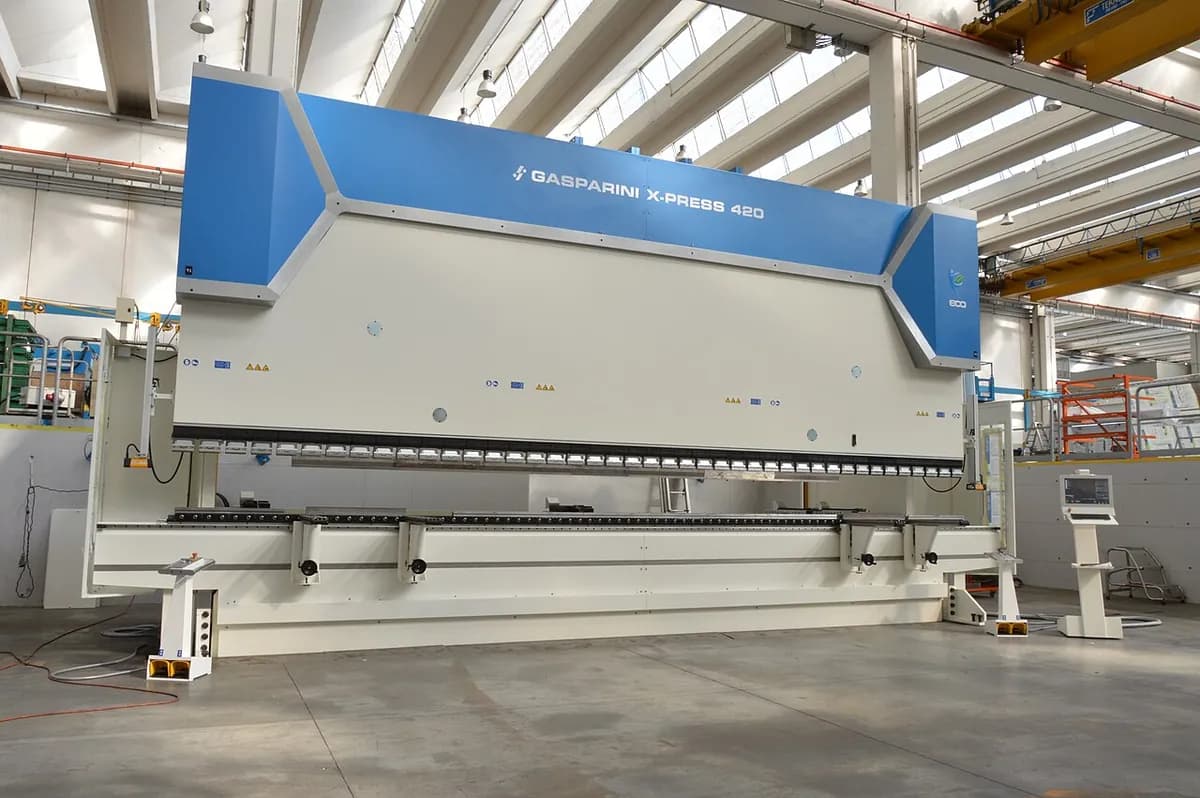
Sheet metal bending folds a flat sheet along a straight line to make an angle, a channel or a box. Your computer case, an electrical cabinet and a shelf bracket were all bent this way. Most bending happens on a press brake, a long, narrow press built for the job, using cheap standard tools.
How it works
Set the sheet. You lay the flat blank (the sheet, already cut to size) across the V-die, the lower tool with a V-shaped groove. Then you slide it back against the backgauge, a set of stops that fixes where the bend line falls.
Press. The ram (the press brake's moving upper beam) drives the punch, the upper tool, down along the bend line. Hydraulic cylinders or electric servo motors supply the force, often tens to hundreds of tonnes.
Bend in the air. In air bending, the most common method, the sheet touches only the punch tip and the two edges of the V. The deeper the punch goes, the sharper the angle, so one tool set can make many angles.
Release. When the punch lifts, the metal springs back a few degrees; this springback is the elastic part of the bend recovering. So the press bends slightly past the target, then you turn the part for its next bend.
Key facts
- Materials
- Steel, stainless steel, aluminum, copper and brass sheet, typically about 0.5 to 6 mm thick; heavy press brakes bend plate over 20 mm
- Typical parts
- Brackets, enclosures, cabinets, chassis, channels, panels, ducts
- Part size
- From small clips to bends about 3 to 4 m long on common machines; linked (tandem) machines go longer
- Precision
- Angles about ±0.5° to ±1° and flange lengths about ±0.2 mm on a CNC (computer-controlled) press brake
- Surface finish
- Same as the incoming sheet; the die edges can leave faint lines beside the bend
- Batch size it suits
- One-offs to tens of thousands of parts; much bigger runs often move to stamping
- Tooling and machine cost
- Standard punches and dies: hundreds to a few thousand dollars; CNC press brakes: roughly tens of thousands to several hundred thousand dollars
- Speed
- A few seconds per bend; a part with several bends takes about a minute including handling
Strengths and limits
Strengths
- No dedicated mold: standard tools make many shapes
- Quick to set up, so prototypes and small batches stay cheap
- Sheet thickness stays almost unchanged
- A CNC press brake repeats each bend accurately
Limits
- Only straight bends; curved 3D shapes need stamping or other processes
- Springback must be corrected, more so in high-strength steel and aluminum
- Too tight an inside radius cracks the outside of the bend
- Short flanges and holes close to a bend distort; every bend is a separate stroke
Where it's used
- Electronics and ITServer racks, computer cases, electrical cabinets
- ConstructionFlashing, trim, door frames, cable trays
- TransportTruck bodies, trailer parts, brackets, battery boxes
- MachineryMachine guards, frames, control-box housings
- Home and officeAppliance panels, kitchen hoods, steel shelves, office furniture
How to recognize it
- Straight, crisp folds with a small, even inside radius, often close to the sheet thickness.
- The same thickness everywhere, even at the corners: the metal was folded, not stretched.
- Small notches or gaps at box corners where two flanges meet (bend reliefs), instead of a seamless corner.
- Faint lines on the outer face, parallel to the bend, left by the die edges.
Compare with
Watch it
Muniac LLC · The basic principles of bending, explained for beginners
WoodchuckTinman · Hands-on press brake use: tooling and the backgauge
Adam Deuling · Real shop-floor bending on a CNC press brake
SigmaTEK Systems, LLC · How a bent part unfolds into a flat blank: bend allowance and K-factor
See real photos
- Wikipedia: Press brake — photos of hydraulic and mechanical press brakes and their backgauge
- Wikipedia: Bending (metalworking) — diagrams of air bending, bottoming, coining and springback
- Wikimedia Commons photo search
Remember
- A punch presses the sheet into a V-die; in air bending, stroke depth sets the angle.
- Metal springs back a little, so the press always bends slightly past the target.
- Cheap standard tools make bending ideal for straight folds, from one-offs to large batches.
More in Sheet and tube forming
All 100 processes
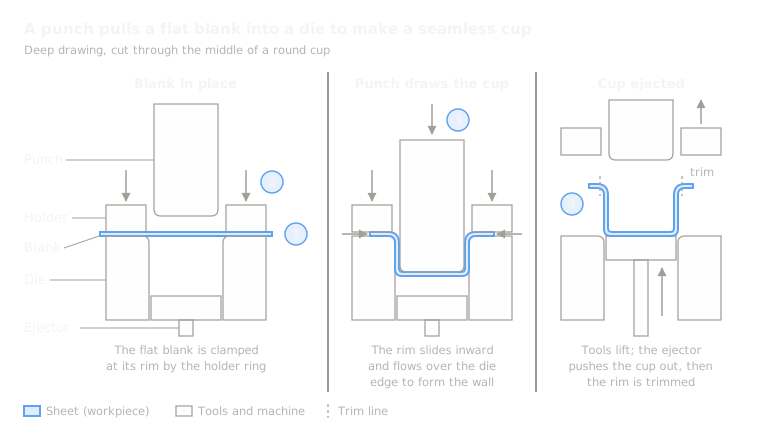 4.2ShortStamping and deep drawingMatched dies cut and press sheet into shape, often in a secondOpen the lesson
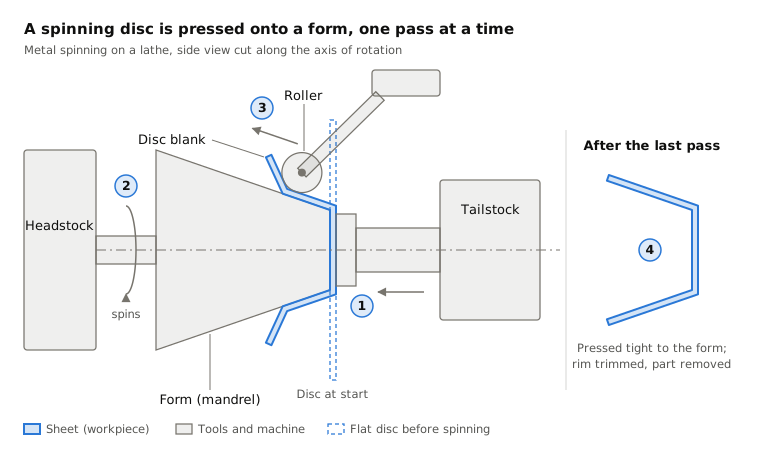
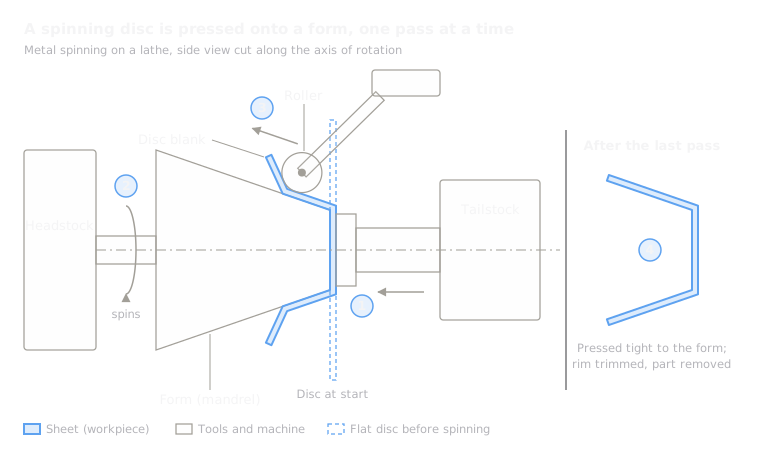 4.3Metal spinningA roller presses a spinning disc over a formOpen the lesson
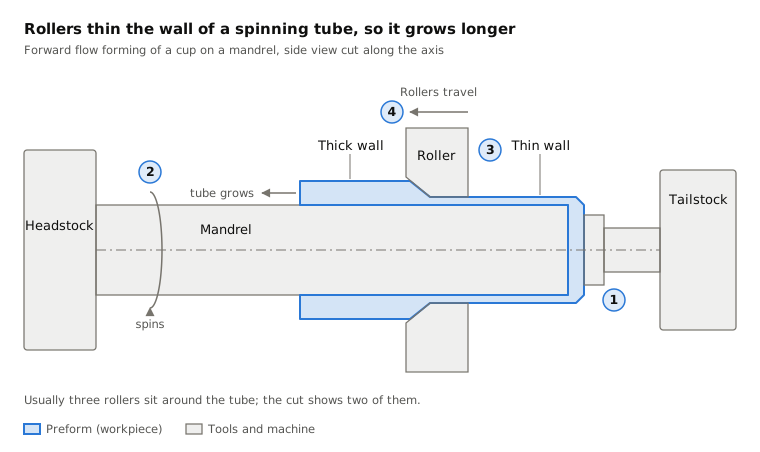
 4.4Flow formingRollers stretch a spinning tube thinner and longer over a mandrelOpen the lesson
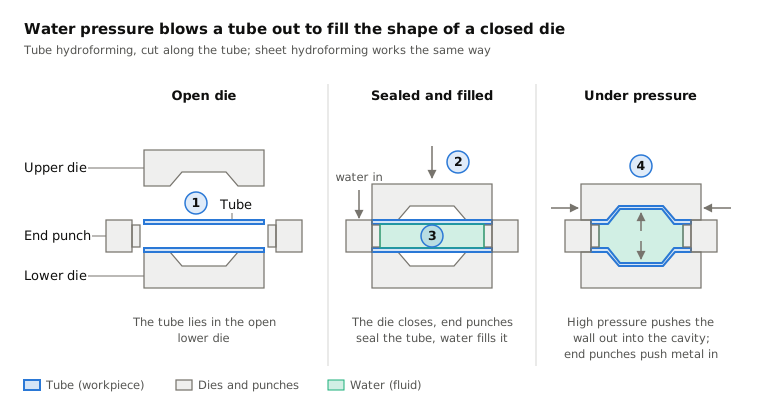
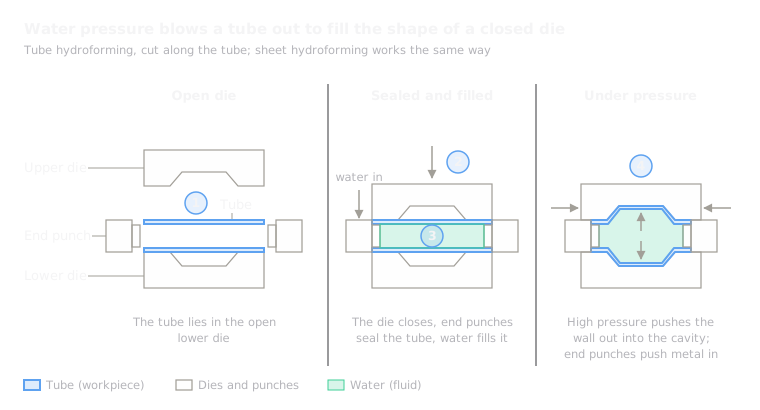 4.5HydroformingFluid pressure pushes tube or sheet into a dieOpen the lesson
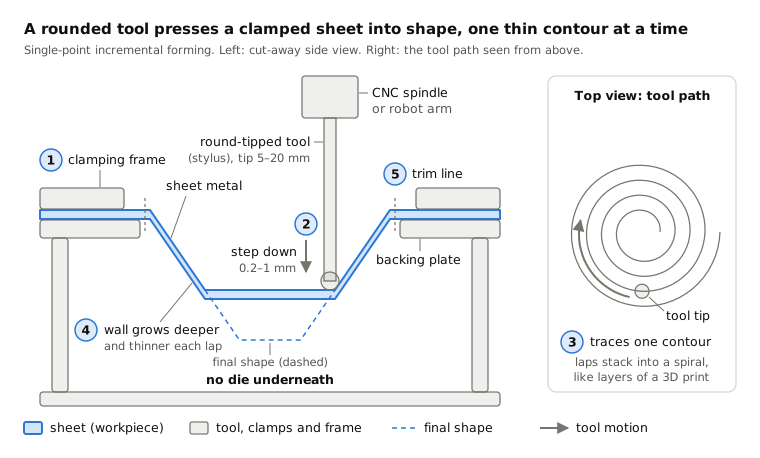
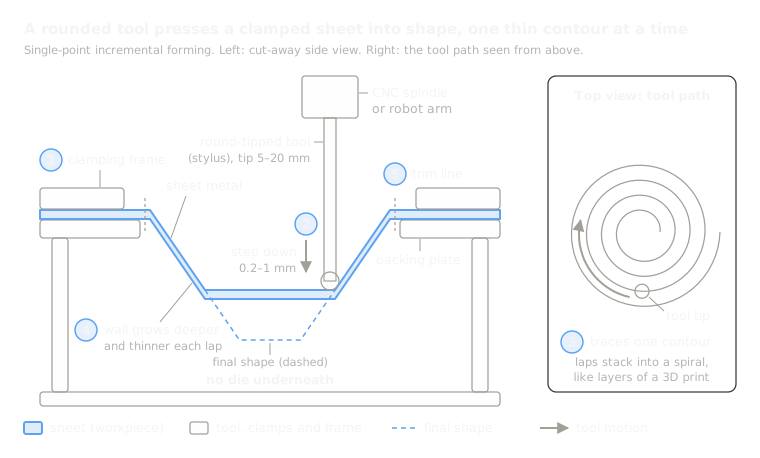 4.6Incremental sheet formingA round tool traces contours into clamped sheet, with no dieOpen the lesson
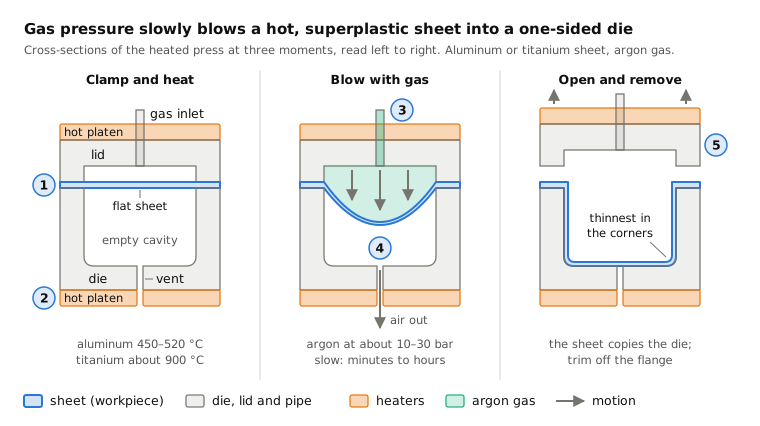
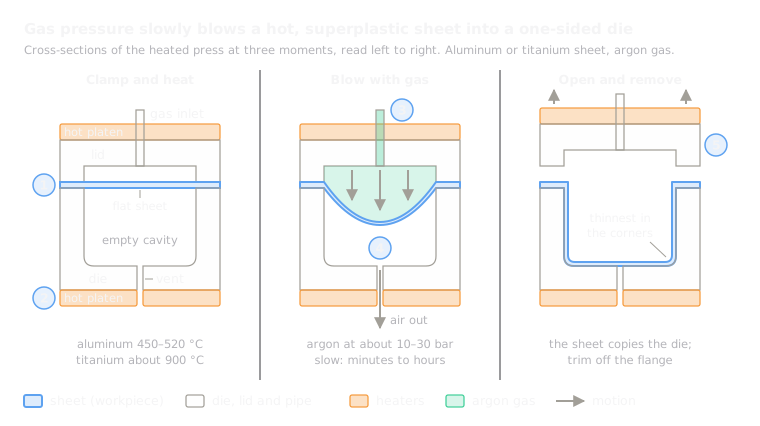 4.7Superplastic formingHot gas blows a superplastic sheet into one dieOpen the lesson
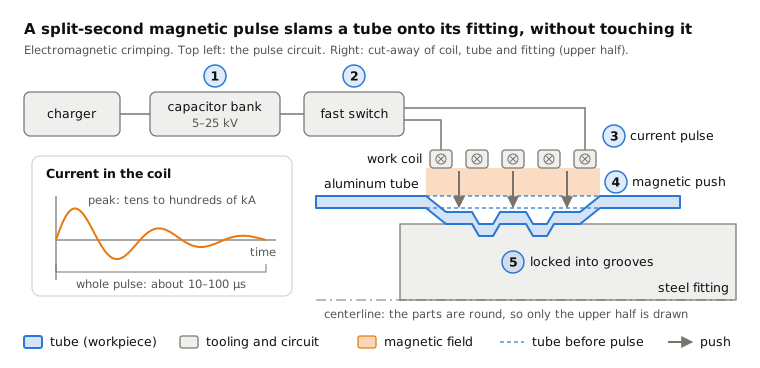
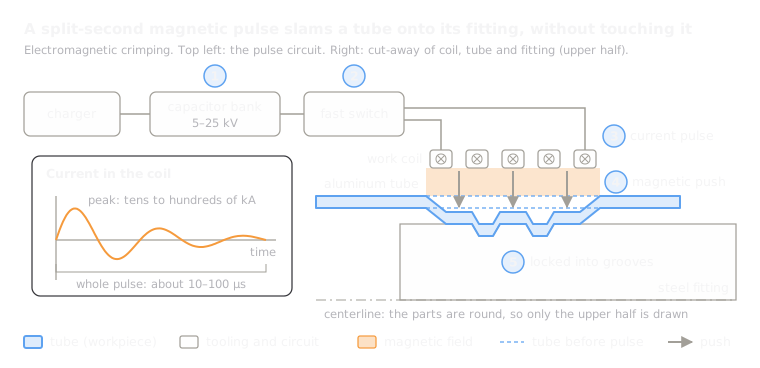 4.8Electromagnetic formingA magnetic pulse throws metal onto a fitting, without contactOpen the lesson
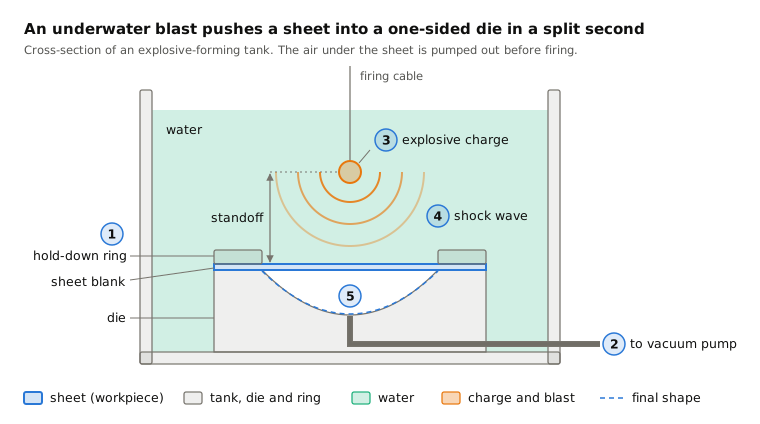
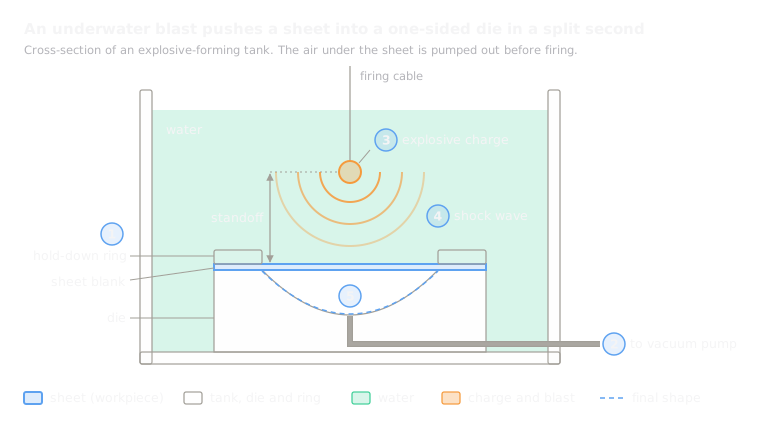 4.9Explosive formingAn underwater blast pushes sheet into one dieOpen the lesson
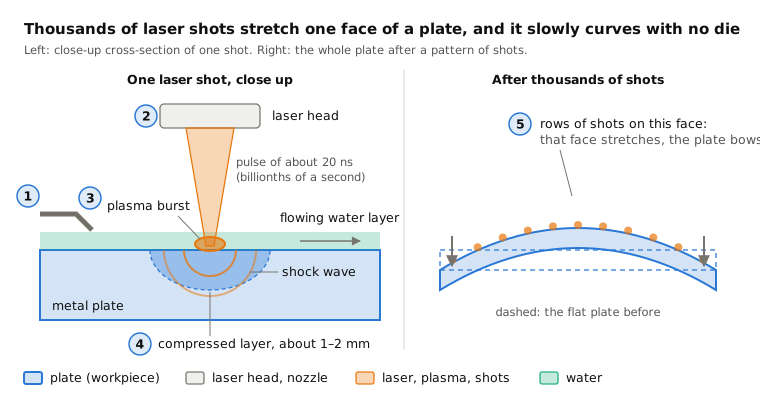
 4.10Laser peen formingLaser shots stretch one face so a plate curvesOpen the lesson
Try it
Put AI to work in your CAD.
Model parts, generate drawings and automate the repetitive work inside your CAD software.