

Metal spinning
A roller presses a spinning disc over a form
Metal spinning shapes a spinning metal disc into a round, hollow part by pressing it onto a form, a bit like shaping clay on a potter's wheel. Lamp shades, stainless-steel bowls, the bells of brass instruments and rocket nose cones can all be made this way. The tooling is cheap, so it suits prototypes and small batches of round parts.
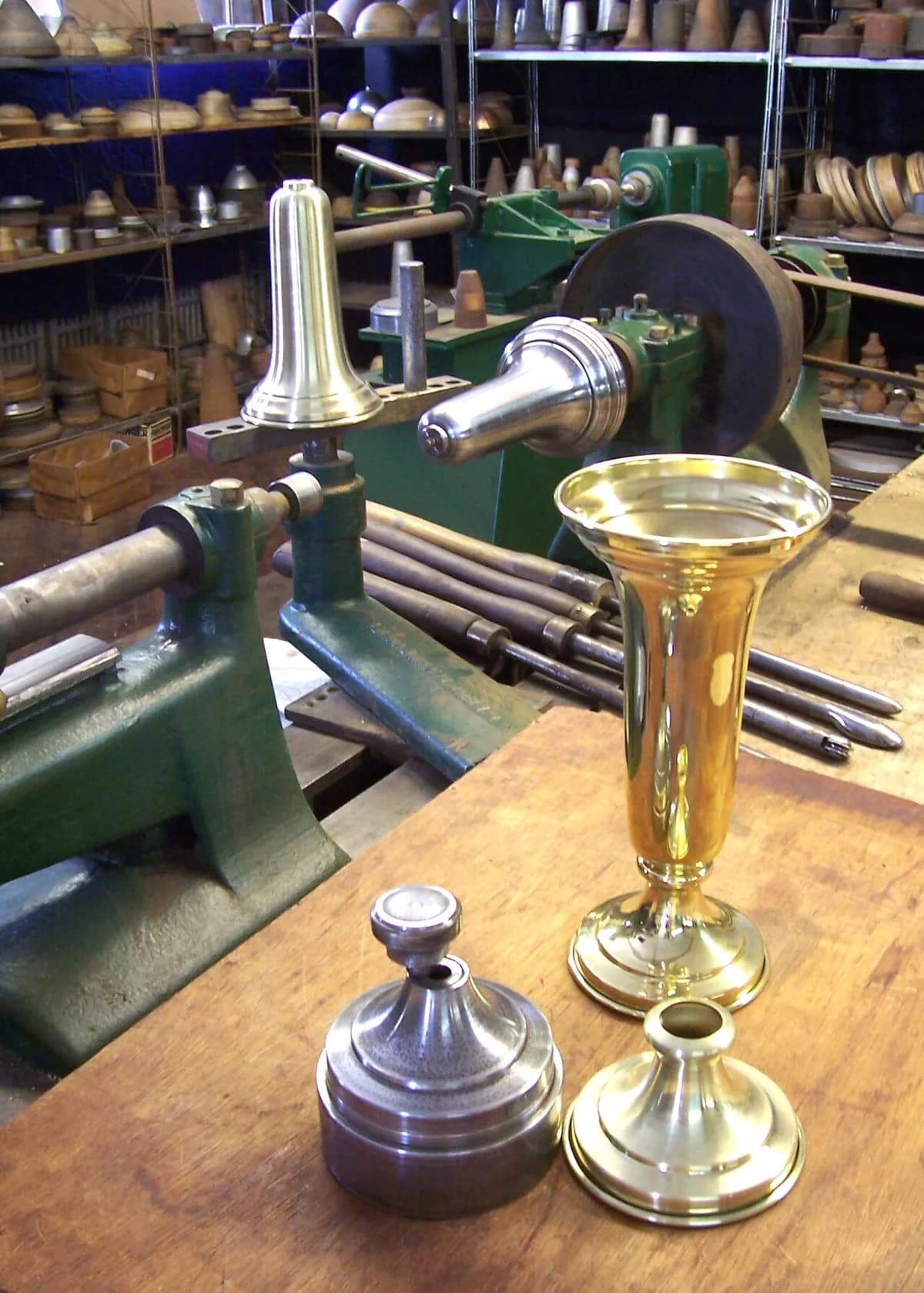
How it works
Clamp. A flat disc (the blank) is clamped between the form, a solid shape called a mandrel, and a pad on the tailstock. The tailstock is the lathe's movable end support.
Spin. The headstock motor spins the form, the disc and the pad together, typically at a few hundred to a few thousand revolutions per minute.
Press in passes. A rounded roller, or a long lever tool in hand spinning, pushes on the spinning disc. It sweeps over the metal again and again, laying it a little closer to the form each pass.
Finish and trim. The last passes press the metal tight onto the form. The ragged rim is trimmed, often on the same machine, and the part comes off.
Key facts
- Materials
- Aluminum, copper, brass, low-carbon and stainless steel; also titanium and nickel alloys. Typically about 0.5 to 6 mm thick; heavy CNC machines spin much thicker plate
- Typical parts
- Cones, domes, bowls, cylinders, lamp reflectors, tank ends, nose cones, instrument bells
- Part size
- Diameters from a few centimeters to several meters
- Precision
- About ±0.1 to ±0.5 mm, depending on size and on hand versus CNC (computer-controlled) spinning
- Surface finish
- Smooth, with faint circular tool lines that are often polished away
- Batch size it suits
- One-offs to a few thousand parts; CNC spinning also handles larger runs
- Tooling and machine cost
- Forms from a few hundred to a few thousand dollars, often wood or plastic for prototypes; CNC spinning machines cost hundreds of thousands of dollars
- Speed
- Minutes per part by hand; under a minute to a few minutes on CNC
Strengths and limits
Strengths
- Low tooling cost; a form can be made in days
- Seamless parts with no welds
- A design change only needs a new form
- Works from small to very large diameters
Limits
- Only round shapes (symmetric about the axis)
- Slower per part than stamping at high volume
- Hand spinning depends on a skilled spinner
- Wall thickness varies a little; tight tolerances need CNC or extra machining
Where it's used
- LightingLamp shades and reflectors
- Kitchen and cateringBowls, pots, funnels, mixing bowls
- MusicBells of trumpets and other brass instruments
- Aerospace and defenseNose cones, engine inlet lips, pressure-vessel domes
- Industry and HVACTank ends, hoppers, fan housings, duct parts
How to recognize it
- A perfectly round part with a smooth, flowing profile: a cone, dome or bowl.
- Fine concentric rings or a faint spiral on the surface, left by the roller.
- A trimmed or rolled rim at the opening, and sometimes a small center mark where the tailstock pad pressed.
- No seam or weld anywhere.
Compare with
Watch it
James Thurman · A beginner overview of spinning a disc over a mandrel
EMS Metalworking Machinery · How a CNC spinning machine works and which parts it makes
HANDY: HandymanClub.com · Hand spinning a bowl with a lever tool, close up
Metal Craft Spinning and Stamping Ltd. · A part formed pass by pass on a CNC machine
See real photos
- Wikipedia: Metal spinning — spinning lathes, tools and spun parts
- Wikimedia Commons photo search
Remember
- A roller presses a spinning disc onto a form, a little more each pass.
- It makes seamless round parts only, from cones to domes and bowls.
- Cheap forms make it ideal for prototypes and small batches.
More in Sheet and tube forming
All 100 processes
 4.1Sheet metal bendingA press brake folds sheet along straight linesOpen the lesson
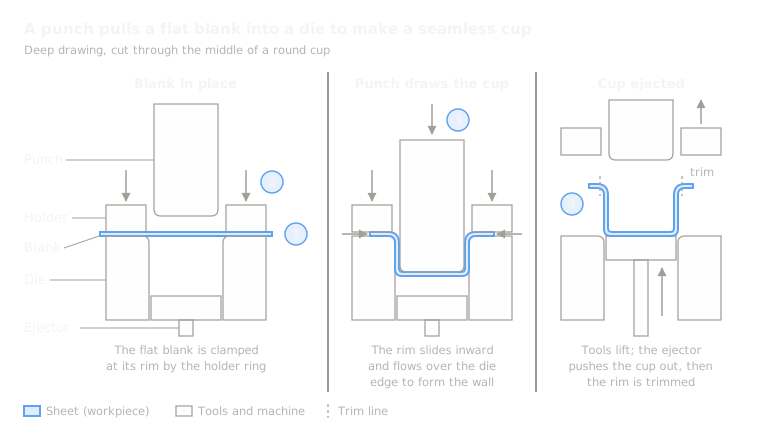 4.2ShortStamping and deep drawingMatched dies cut and press sheet into shape, often in a secondOpen the lesson
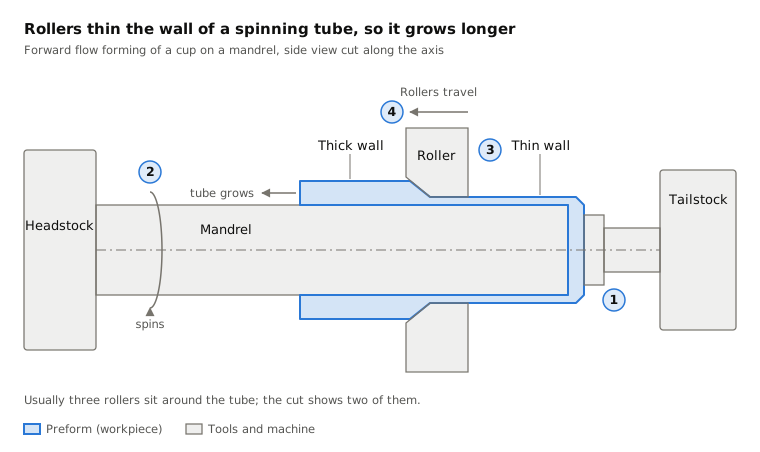
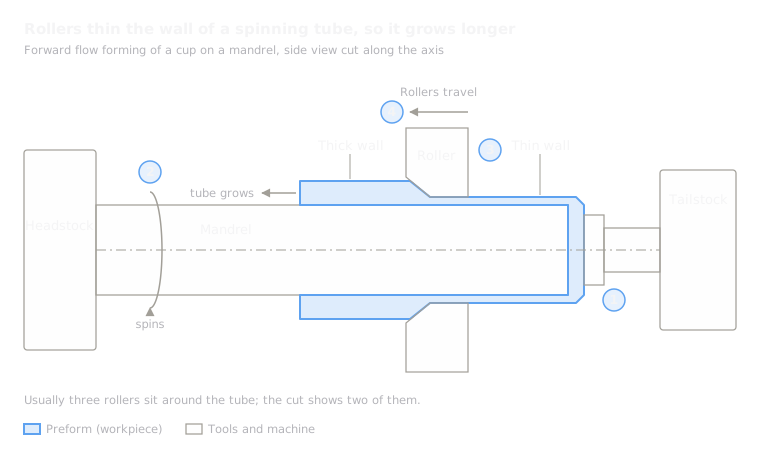 4.4Flow formingRollers stretch a spinning tube thinner and longer over a mandrelOpen the lesson
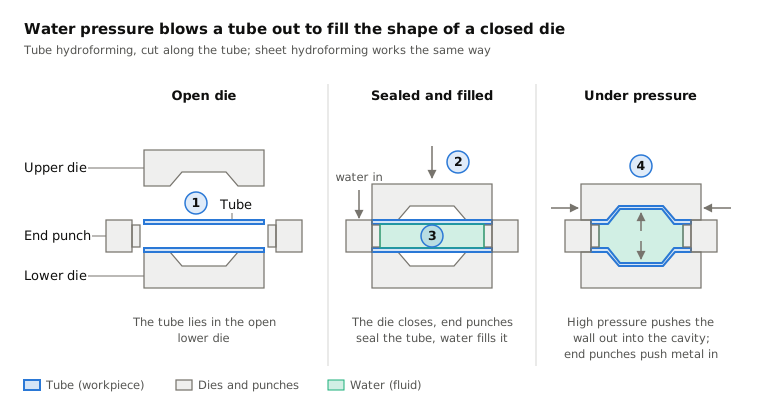
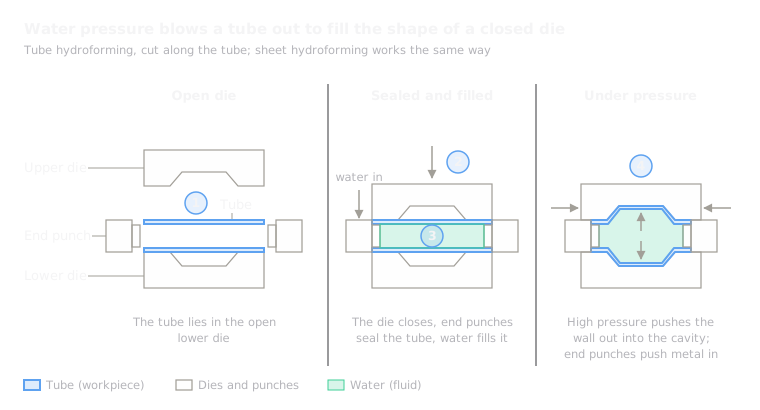 4.5HydroformingFluid pressure pushes tube or sheet into a dieOpen the lesson
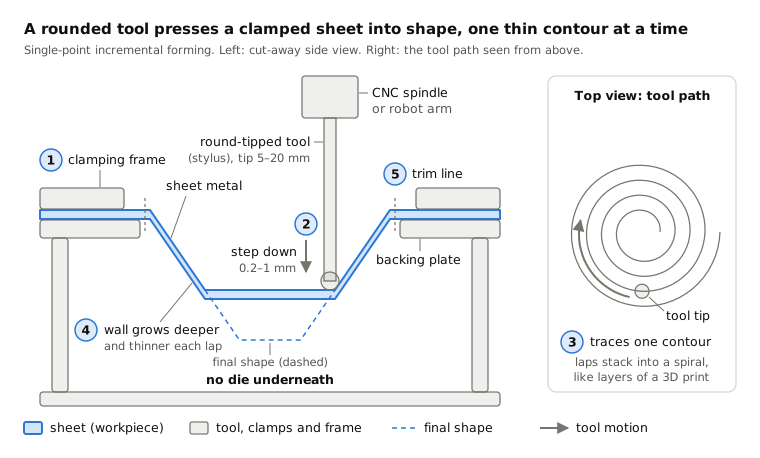
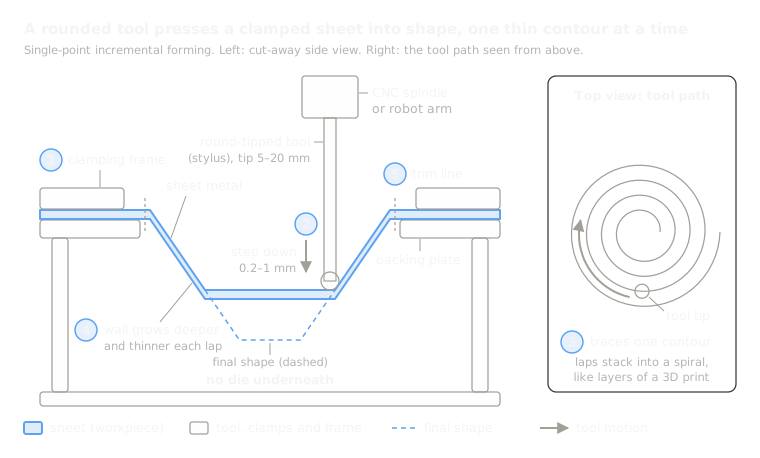 4.6Incremental sheet formingA round tool traces contours into clamped sheet, with no dieOpen the lesson
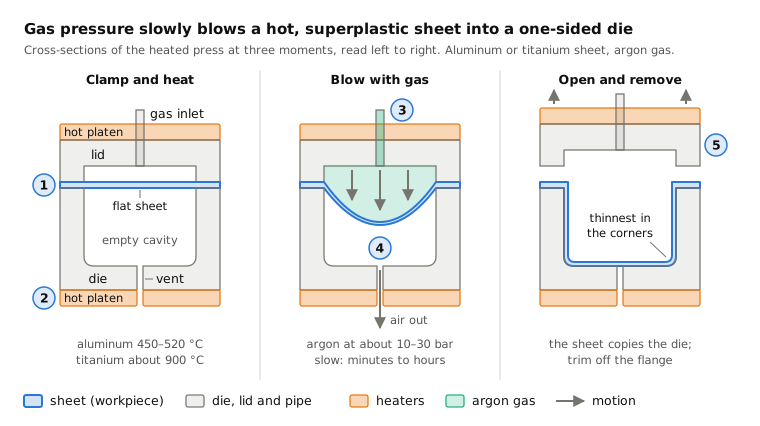
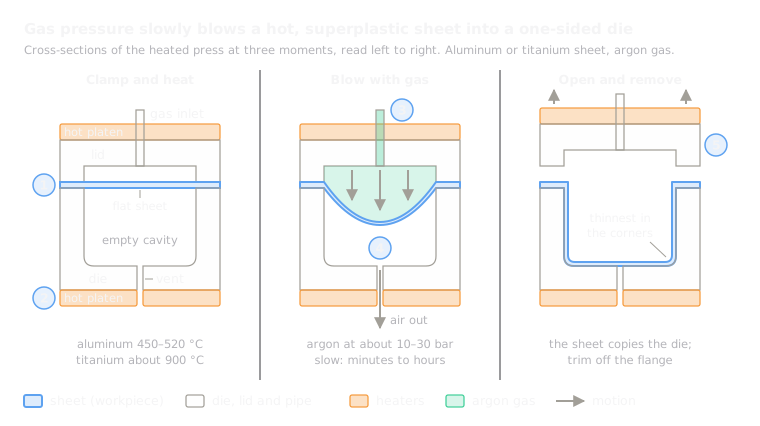 4.7Superplastic formingHot gas blows a superplastic sheet into one dieOpen the lesson
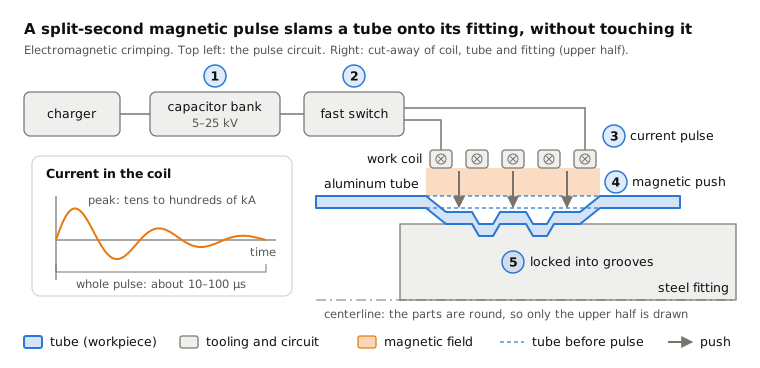
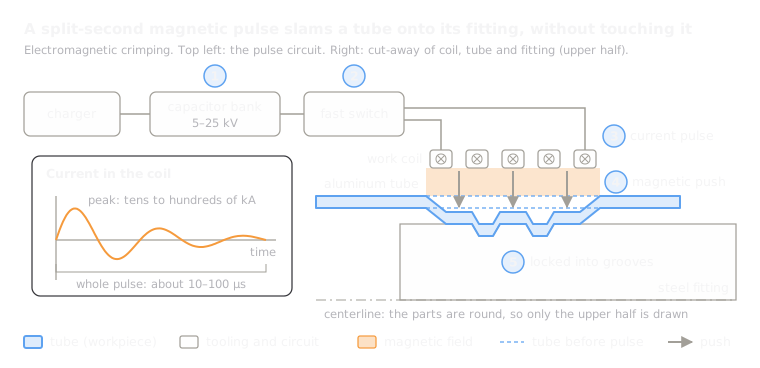 4.8Electromagnetic formingA magnetic pulse throws metal onto a fitting, without contactOpen the lesson
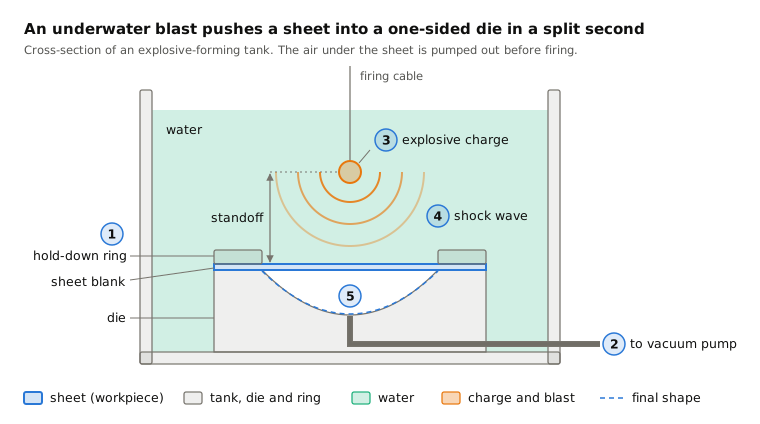
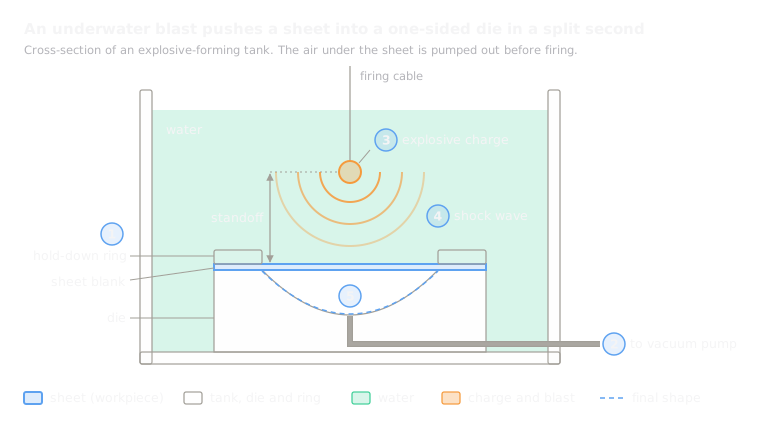 4.9Explosive formingAn underwater blast pushes sheet into one dieOpen the lesson
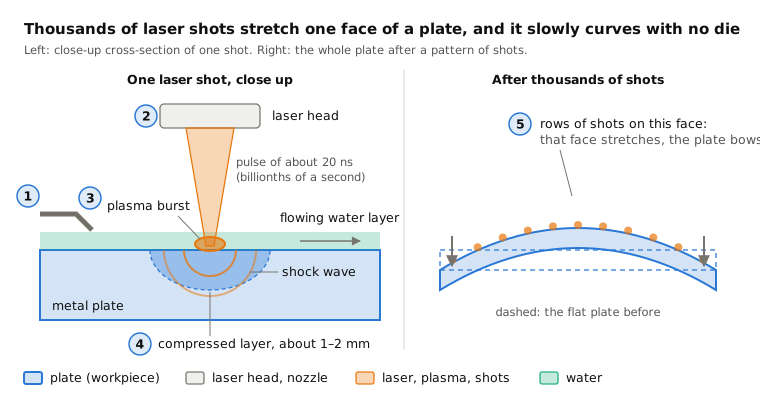
 4.10Laser peen formingLaser shots stretch one face so a plate curvesOpen the lesson
Try it
Put AI to work in your CAD.
Model parts, generate drawings and automate the repetitive work inside your CAD software.