

Thread rolling and tapping
Press a thread onto a blank, or cut or press one in a hole
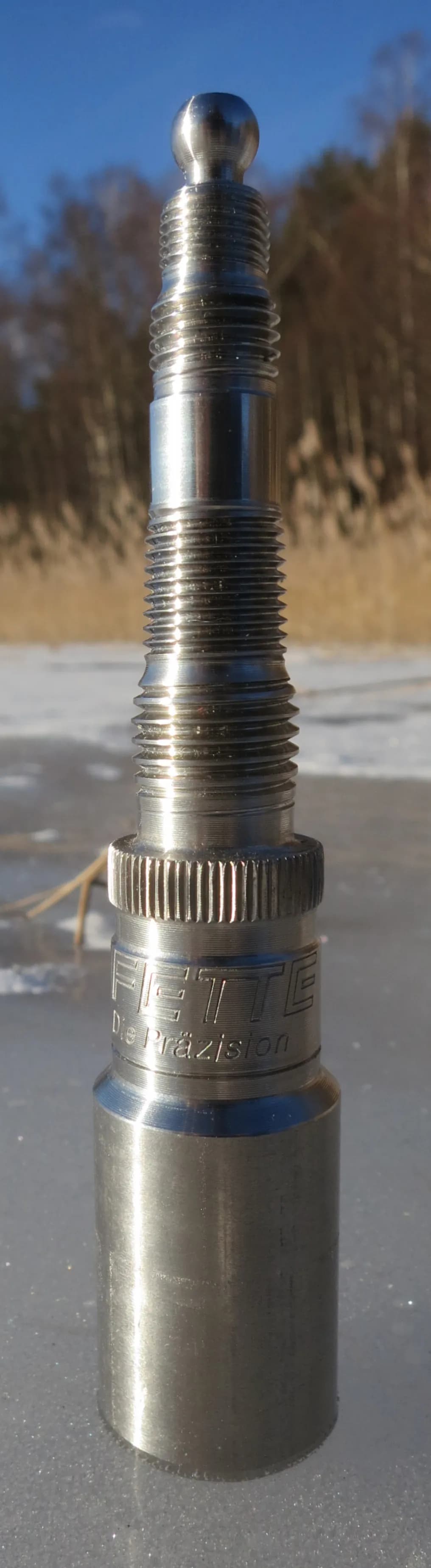
Thread rolling presses the thread onto a screw blank between grooved dies, without cutting away any metal. Tapping makes the matching thread inside a hole, with a tool called a tap. Together they finish the screw story: wire (3.4), head (3.5), and now the thread.
How it works
Feed the blank. A headed blank from cold heading (lesson 3.5) drops between two hardened steel dies. Their faces carry slanted ridges shaped like the thread.
Roll it. One die stays still while the other slides past it. The blank rolls between them, and the ridges press into its surface; the metal flows up between the ridges to form the crests.
Out comes a screw. In a single pass, typically a fraction of a second, the thread is complete. No metal is removed, so the outside of the thread ends up larger than the original blank.
Drill the hole. For an inside thread, you first drill a hole slightly smaller than the thread size (the tap drill size).
Turn the tap in. The tap (a hardened screw-shaped tool) is turned and fed into the hole. A cutting tap cuts the thread and makes chips; a form tap has no cutting edges and presses the thread into the wall instead.
Back it out. The tap is reversed and unscrewed, leaving the inside thread ready for a bolt.
Key facts
- Materials
- Rolling: ductile metals such as steels, stainless steel, aluminum, brass, titanium. Tapping: almost any machinable metal or plastic
- Typical parts
- Screws, bolts, studs, threaded rods (rolled); threaded holes in engine blocks, housings, nuts (tapped)
- Part size
- Rolled threads from about 1 mm to tens of millimeters; taps from under 1 mm to about 50 mm, bigger ones cut by other means
- Precision
- Thread tolerance classes typically hold sizes to a few hundredths of a millimeter
- Surface finish
- Rolled threads: smooth and shiny. Cut threads: slightly rough, with tool marks
- Batch size it suits
- Rolling: thousands to millions. Tapping: from one hole by hand to millions on automatic machines
- Tooling and machine cost
- Rolling dies: hundreds to thousands of dollars a pair. Taps: a few to tens of dollars each
- Speed
- Rolling: often hundreds of parts per minute. Tapping: seconds per hole on a machine
Strengths and limits
Strengths
- Rolled threads are stronger: the grain follows the thread and the surface is work-hardened
- No chips and no wasted metal in rolling and form tapping
- Very fast and cheap per part
- Taps are cheap and work on almost any machine or by hand
Limits
- Rolling needs ductile metal and a precisely sized blank
- Rolling suits outside threads; holes need tapping instead
- Taps can break in the hole, especially small ones, and are hard to remove
- Cutting taps leave chips that must be cleared, especially in blind holes
Where it's used
- FastenersScrews, bolts, studs, threaded rods
- AutomotiveWheel studs, engine bolts, tapped holes in engine blocks and gearboxes
- AerospaceHigh-strength bolts with rolled threads for fatigue resistance
- MachineryTapped mounting holes in frames, housings and brackets
- PlumbingThreaded fittings and pipe ends
How to recognize it
- Rolled threads: crests that are smooth and shiny, sometimes with a faint seam at the very top.
- Rolled threads: the thread's outside is wider than the plain shank next to it.
- Cut threads (taps or lathes): fine tool marks, and sometimes small burrs at the start of the thread.
- Form-tapped holes: a smooth thread with no chip marks, often with a tiny split line at each crest.
Compare with
Watch it
Haas Automation, Inc. · Tap types, tap drill sizes and tapping on a CNC machine
Mr. G-Code Machining · Cutting and form tapping side by side
TeskerMFG · A thread rolling machine at work
TR Fastenings · A fastener factory rolling threads at speed
See real photos
- Wikipedia: Threading (manufacturing) — thread cutting and rolling methods, with photos
- Wikipedia: Tap and die — taps, dies and cross-sections of cut and form taps
- Wikimedia Commons photo search
Remember
- Thread rolling presses a thread onto a blank between grooved dies, with no chips.
- Tapping makes the matching thread inside a drilled hole, by cutting or by pressing.
- Rolled threads are stronger than cut ones because the metal's grain follows the thread.
More in Bulk forming
All 100 processes
 3.1ShortForging (open-die and closed-die)Squeeze hot metal between flat or shaped diesOpen the lesson
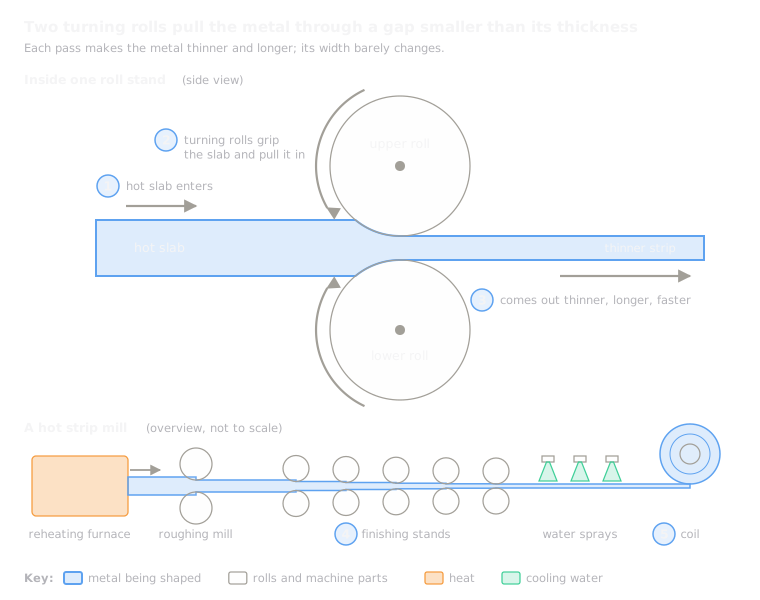 3.2RollingPull metal through the gap between turning rollsOpen the lesson
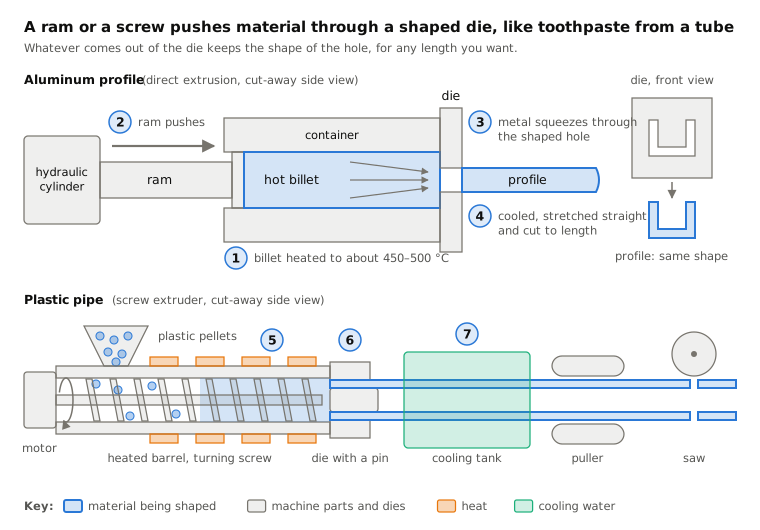
 3.3Extrusion (aluminum profiles and plastic pipes)Push metal or plastic through a shaped dieOpen the lesson
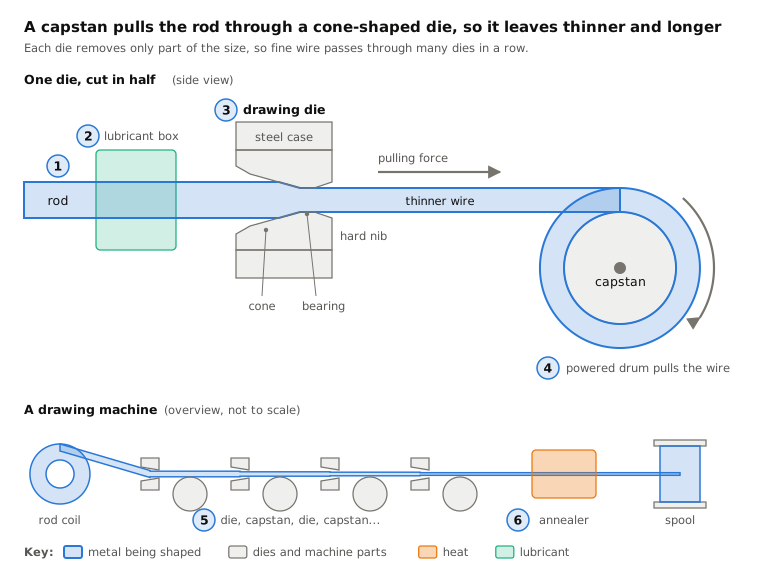
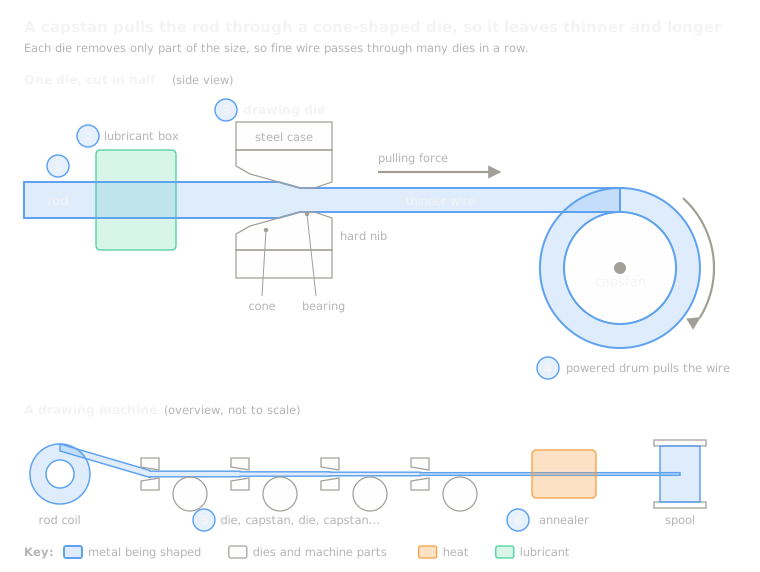 3.4Wire drawingPull a rod through ever-smaller diesOpen the lesson
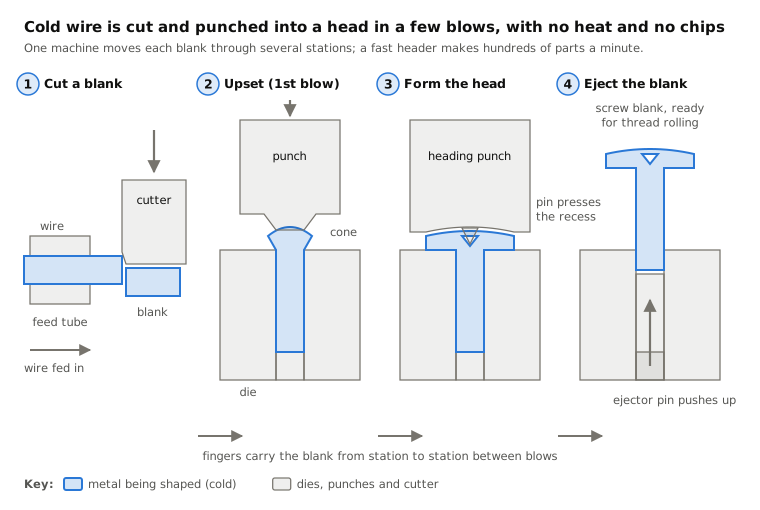
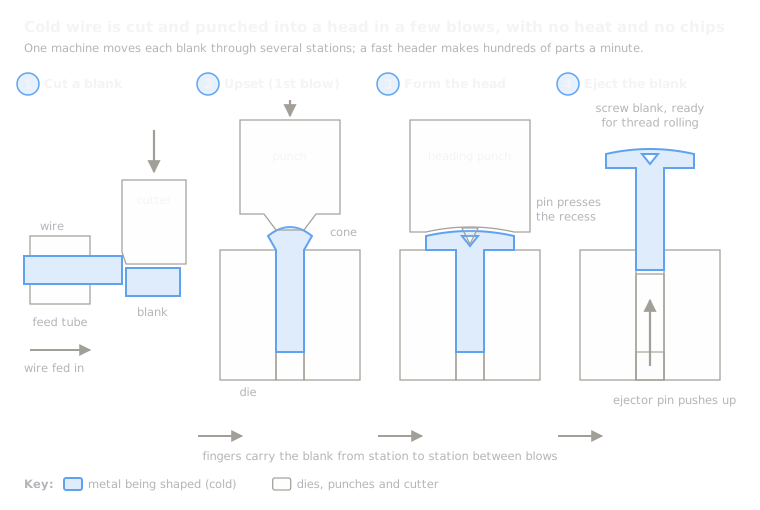 3.5Cold headingCut wire into blanks and punch a head, coldOpen the lesson
Try it
Put AI to work in your CAD.
Model parts, generate drawings and automate the repetitive work inside your CAD software.