

Waterjet cutting
Very high-pressure water, usually with abrasive, erodes a cut
Waterjet cutting slices material with a hair-thin stream of water pushed through a tiny jewel at enormous pressure. Mixed with fine garnet sand, the jet cuts steel, titanium, stone and glass; pure water alone cuts foam, rubber and even food. Because nothing gets hot, the edge keeps its original properties, which makes waterjet the cutter for materials that heat would damage.
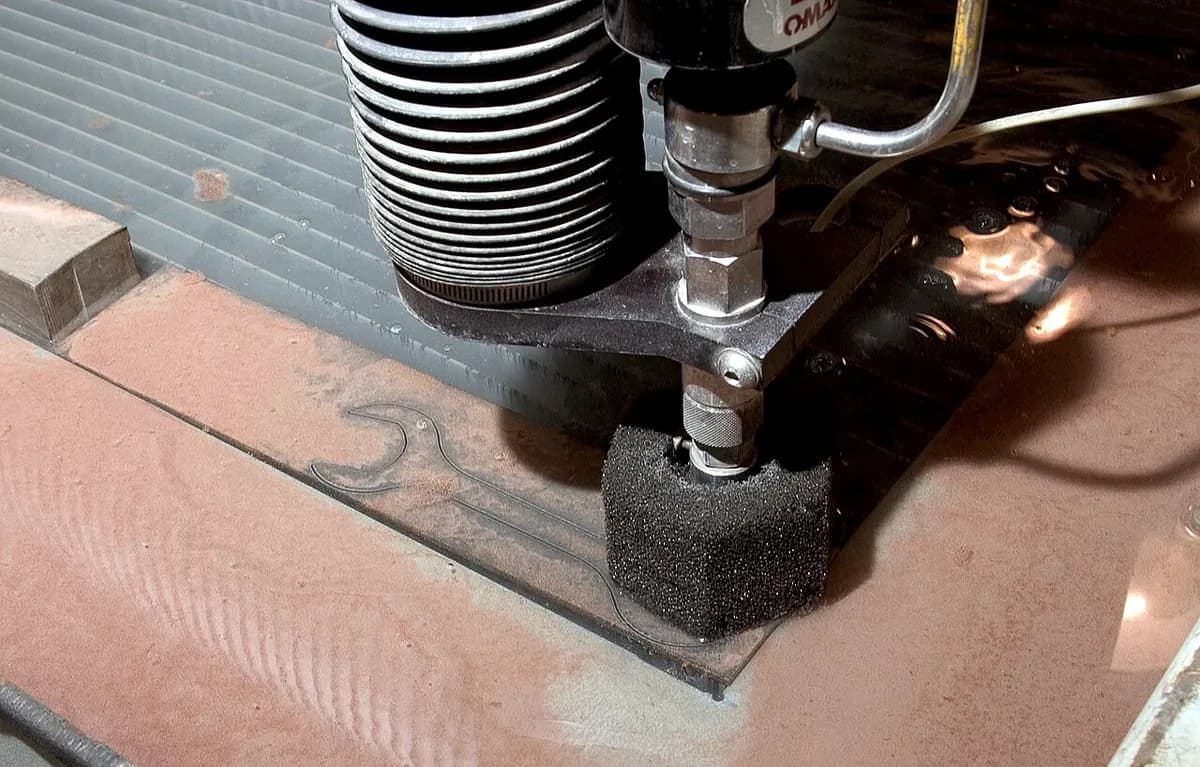
How it works
Pressurize. A pump, usually an intensifier (a piston pump that multiplies pressure), raises water to about 4,000 bar (60,000 psi), some machines even higher.
Make the jet. The water passes through an orifice: a sapphire, ruby or diamond jewel with a hole a few tenths of a millimeter wide. Pressure turns into speed, up to about 900 m/s.
Add abrasive. The fast jet crosses a mixing chamber and sucks in garnet sand from a hopper, the way a spray bottle draws up liquid.
Aim and erode. A long, hard mixing tube (or focusing tube) straightens the mix into a jet about 1 mm wide. Millions of grains strike the work and erode a narrow kerf (the cut slot) through it.
Catch the jet. Below the work, a tank of deep water slows the spent jet and collects the used sand and debris.
Follow the path. The CNC moves the head along the outline. The jet bends back at the bottom of thick cuts, so the machine slows at corners to keep them sharp.
Key facts
- Materials
- Almost anything: steel, titanium, aluminum, stone, glass, ceramics, composites (abrasive); foam, rubber, textiles, paper, food (pure water)
- Typical parts
- Flat profiles, gaskets, stone countertops and inlays, glass panels, aerospace brackets
- Part size
- Tables up to several meters; metal up to roughly 150 mm thick
- Precision
- Often about ±0.1 mm; thick parts show a slight taper
- Surface finish
- Matte, sand-blasted look; smooth near the top, faint wavy lines near the bottom; no heat-affected zone
- Batch size it suits
- One part to medium series
- Tooling and machine cost
- No tooling; machines from tens to several hundred thousand dollars, plus garnet and pump upkeep
- Speed
- Slower than laser or plasma; thick metal can take minutes per meter of cut
Strengths and limits
Strengths
- No heat: no warping, hardening or burned edges
- Cuts almost any material, including stone, glass and composites
- Thick parts, up to roughly 150 mm of metal
- One machine cuts many materials without tool changes
Limits
- Slower and costlier per meter of cut than thermal methods
- Garnet, pump seals and orifices are costly consumables
- Kerf of about 1 mm and a slight taper in thick parts
- Wet and noisy; parts must be dried and the tank cleaned of sludge
Where it's used
- AerospaceTitanium and composite parts that heat would damage
- Stone and glassKitchen countertops, floor inlays, glass panels and mosaics
- Machine shopsThick plate blanks, prototypes, hard alloy parts
- AutomotiveInterior carpets, headliners and seals (pure water)
- FoodPortioning cakes, candy bars and frozen fish (pure water)
- Gaskets and foamRubber gaskets, foam packaging inserts
How to recognize it
- A matte, finely sand-blasted cut face with no heat tint at all.
- Faint curved lines near the bottom of thick cuts, bending backward from the cut direction.
- A slight taper: the cut is often a touch wider at the top than at the bottom.
- Intricate shapes in stone or glass, such as floor inlays, that no saw could make.
Compare with
Watch it
Fireball Tool · The basics of a waterjet table, for beginners
Waterjet Channel - Daniel Adair · The pump, orifice, mixing tube and catcher tank explained
Secrets of Everyday Things · Why pressure alone is not enough to cut steel
OMAXCorp · A tilting head that corrects the taper, up close
See real photos
- Wikipedia: Water jet cutter — overview with a diagram of an abrasive cutting head (orifice, garnet, mixing tube)
- Wikimedia Commons photo search
Remember
- Pressure becomes speed at a tiny jewel orifice; garnet sand gives the jet its cutting power.
- No heat, so it cuts stone, glass, composites and heat-sensitive metals cleanly.
- Slower and wetter than laser or plasma, with about 1 mm kerf and slight taper.
More in Cutting and non-traditional machining
All 100 processes
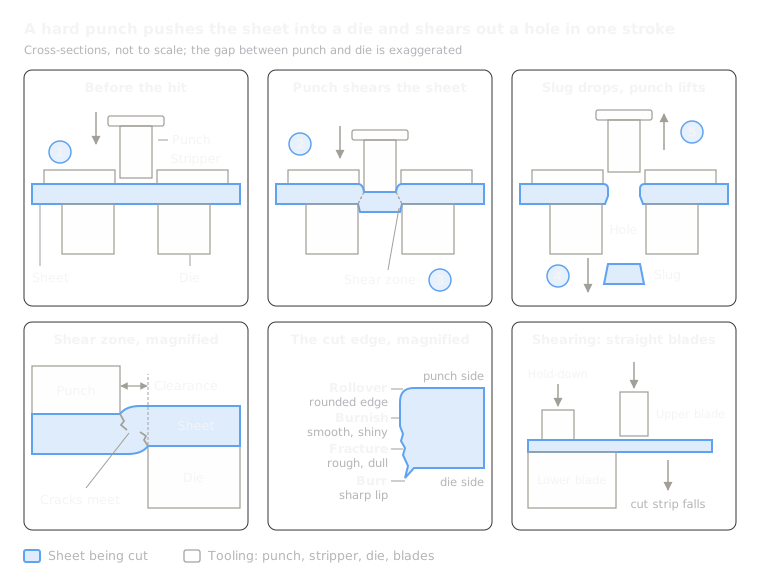 6.1Punching and shearingA punch shears shapes out of sheet against a dieOpen the lesson
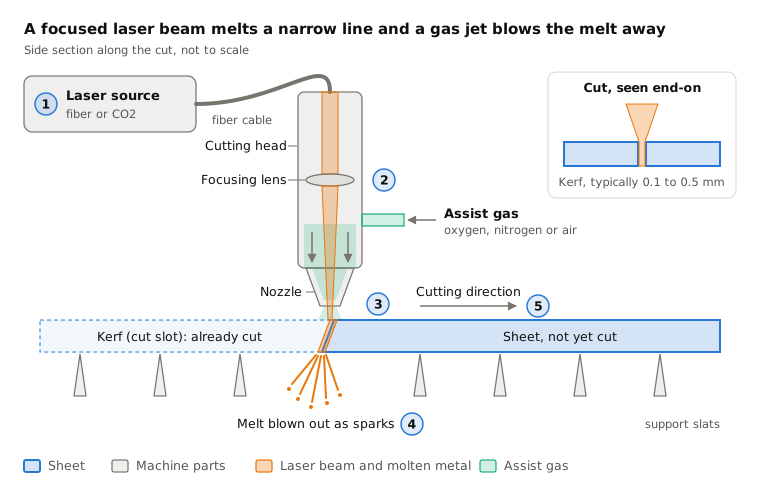
 6.2Laser cuttingFocused light melts or vaporizes a narrow cutOpen the lesson
 6.3Plasma cuttingA superheated gas jet melts through conductive plateOpen the lesson
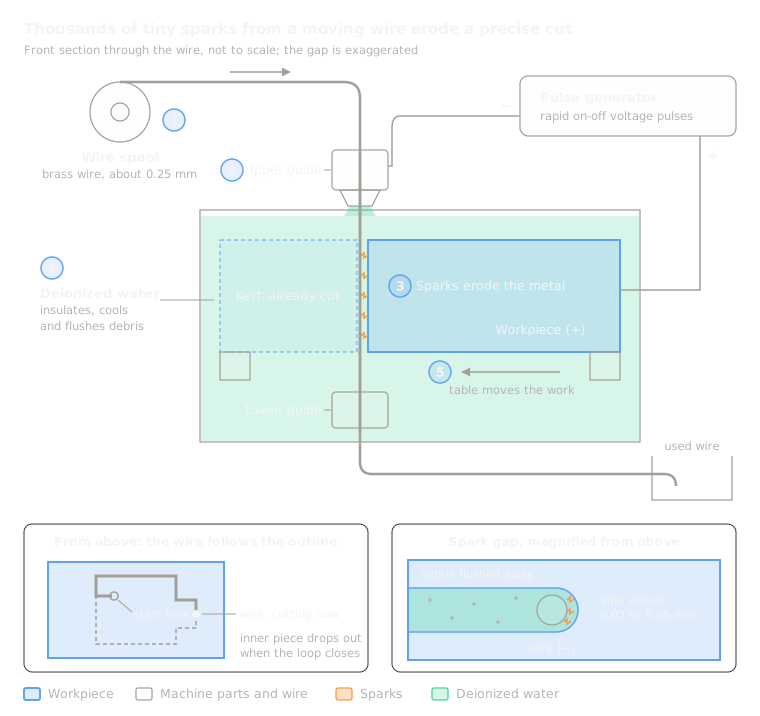 6.5Wire EDMSparks from a thin moving wire cut through-profilesOpen the lesson
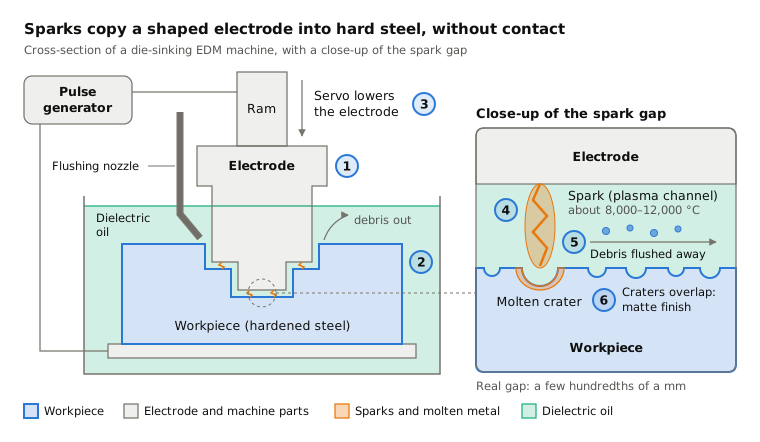
 6.6Sinker EDMSparks copy a shaped electrode into a blind cavityOpen the lesson
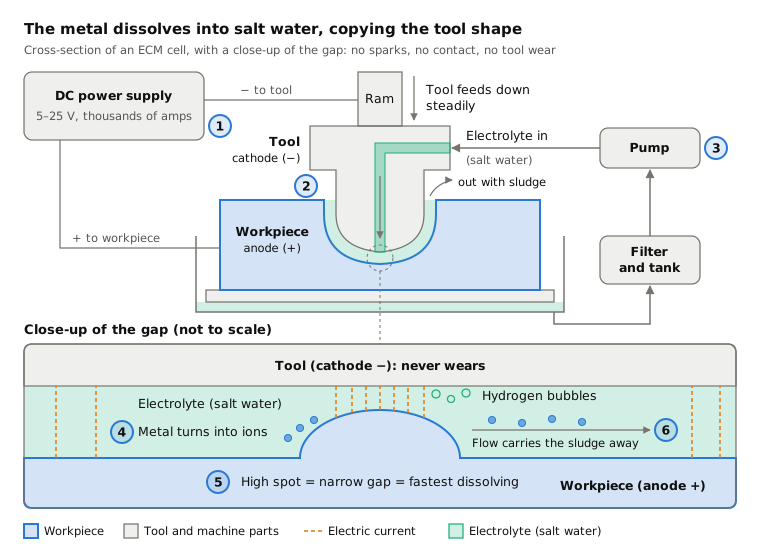
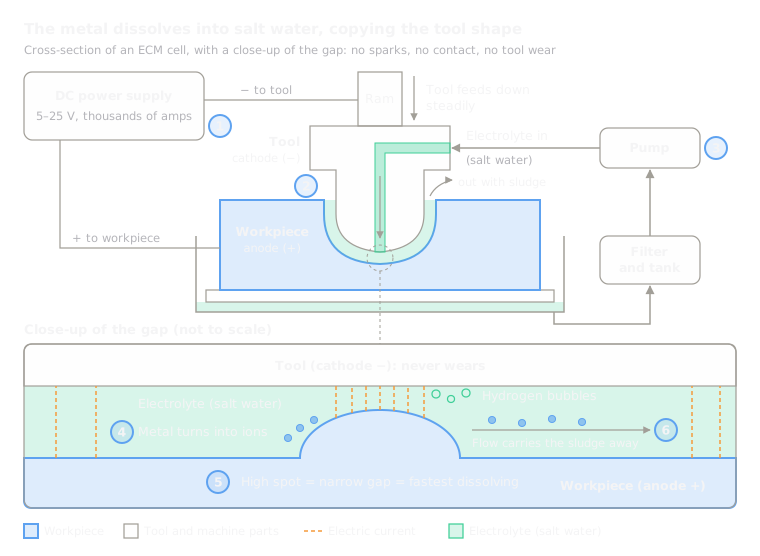 6.7Electrochemical machining (ECM)Electrolysis dissolves metal in the shape of the toolOpen the lesson
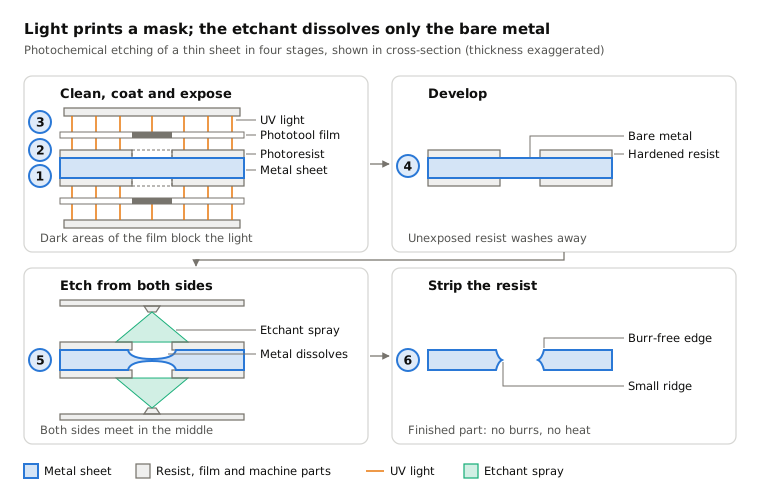
 6.8Chemical machining and photochemical etchingA light-printed mask lets an etchant dissolve only bare metalOpen the lesson
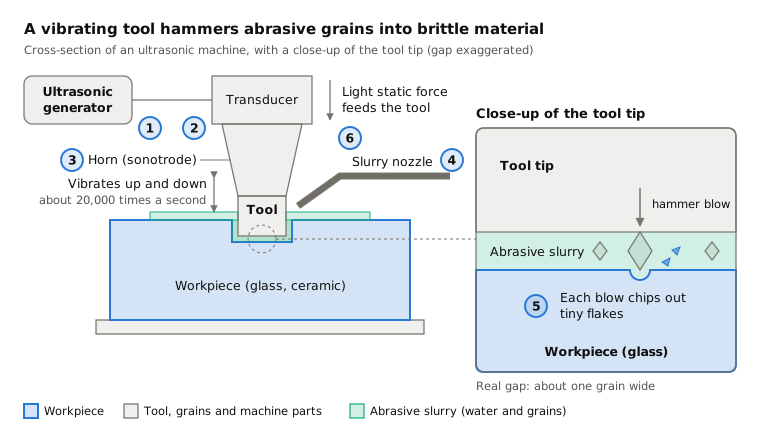
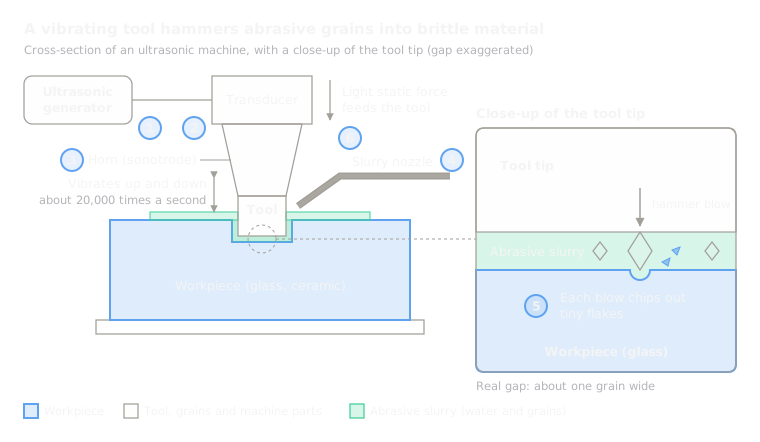 6.9Ultrasonic machiningA vibrating tool hammers abrasive grains into the surfaceOpen the lesson
Try it
Put AI to work in your CAD.
Model parts, generate drawings and automate the repetitive work inside your CAD software.