

Rotational molding
Powder coats a hot, turning mold
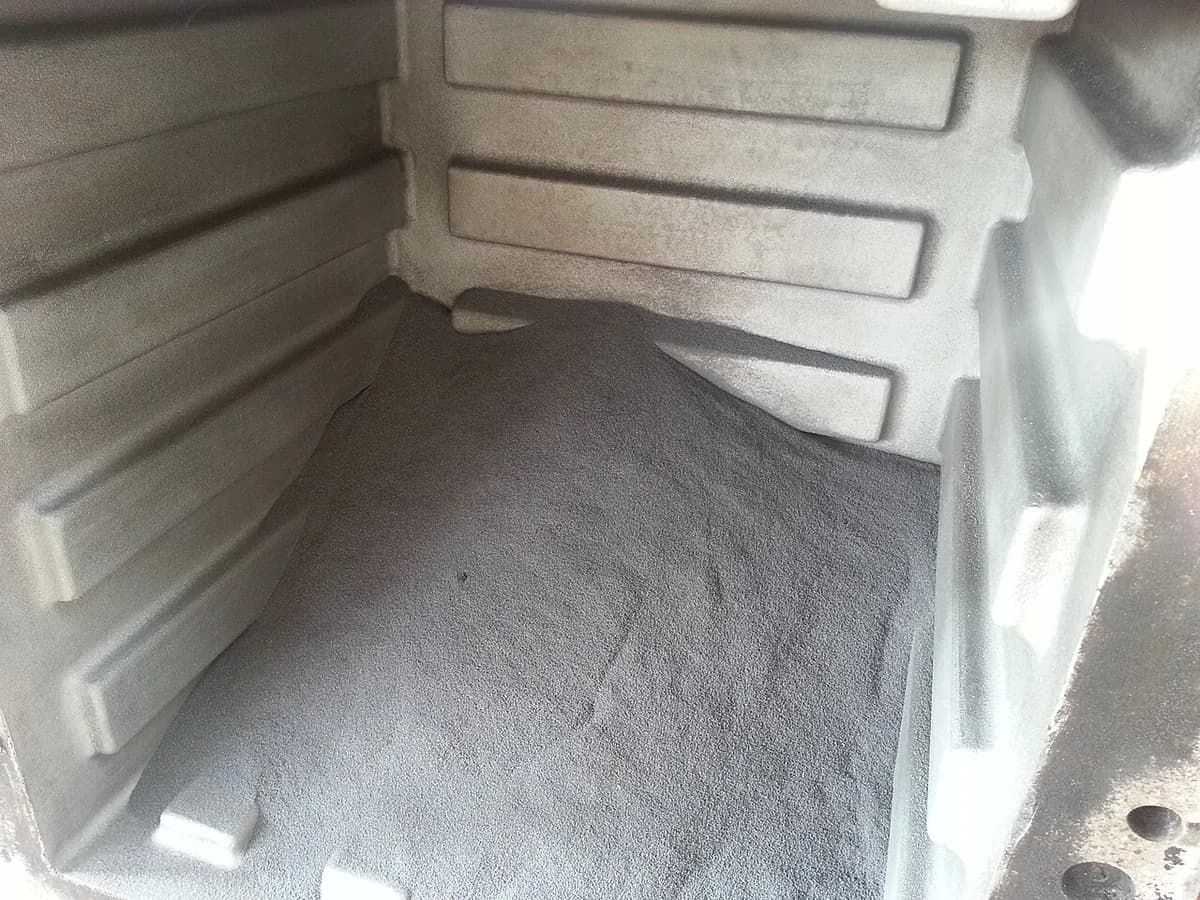
Rotational molding (rotomolding) puts plastic powder inside a hollow metal mold, then heats the mold while turning it slowly on two axes. The melting powder coats the inside walls evenly, like chocolate coating the inside of an egg mold. Water tanks, kayaks and playground slides are made this way, often in one seamless piece.
How it works
Load. A measured amount of plastic powder (or liquid plastic) is poured into one half of a thin metal mold, and the mold is closed. The weight of powder sets the wall thickness.
Heat and turn. The mold moves into an oven, typically about 250–400 °C, and turns slowly on two axes at once. The powder tumbles over the hot walls, melts and sticks to them layer by layer.
Cool. The mold leaves the oven and keeps turning while fans or a water mist cool it. The plastic hardens into an even shell.
Unload. The mold opens and the hollow part is lifted out. Machines often carry several molds on arms, so one is loading while another heats and a third cools.
There is no pressure involved, so molds can be thin sheet metal or cast aluminum, and the part has very little built-in stress.
Key facts
- Materials
- Mostly polyethylene powder; also polypropylene, nylon and PVC (as a liquid paste)
- Typical parts
- Water and fuel tanks, kayaks, playground slides, traffic barriers, road cones, large bins
- Part size
- From a few liters to tanks of tens of thousands of liters
- Precision
- Loose: typically about ±1 mm or more on larger parts, because the plastic shrinks freely
- Surface finish
- Outside copies the mold; the inside is rougher and never touches a tool
- Batch size it suits
- Tens to thousands of parts a year per mold
- Tooling and machine cost
- Molds from a few thousand to tens of thousands of dollars; machines from tens of thousands to several hundred thousand dollars
- Speed
- Slow: typically 20–90 minutes per cycle, depending on size and wall thickness
Strengths and limits
Strengths
- Very large hollow parts in one seamless piece
- Cheap, simple molds; low risk for small batches
- Even walls with thick, strong corners
- Almost no internal stress; metal inserts and double walls possible
Limits
- Long cycles, so cost per part is higher at high volume
- Few plastics work well; mostly polyethylene
- Precision is loose and fine details are soft
- Wall thickness cannot change much from place to place
Where it's used
- Water and chemicalsRainwater tanks, septic tanks, chemical containers
- LeisureKayaks, canoes, coolers
- PlaygroundsSlides, tunnels, play panels
- Road and safetyTraffic barriers, cones, bollards
- Industry and agricultureLarge bins, hoppers, fuel tanks for machines
How to recognize it
- A large hollow part with no seam and evenly thick walls, often 3–10 mm.
- Rounded, slightly thicker corners and a matte, slightly orange-peel surface.
- A rough inside surface that was never touched by a tool.
- A small vent tube hole or plug, left to let air in and out of the mold.
Compare with
Watch it
Joseph Whitaker DT · A simple classroom-style explanation
RotationalMolders · A camera inside the turning mold shows the powder melting onto the walls
Ecosure · The full process, step by step, in a factory
Skill Footage · Raw factory footage of large water tanks being molded
See real photos
- Wikipedia: Rotational molding — machine and part photos, with a process diagram
- Wikimedia Commons photo search
Remember
- Powder in, heat while turning on two axes, cool, open: a hollow part with no seam.
- No pressure means cheap molds and huge parts, but slow cycles.
- Best for big, tough, hollow items made in tens to thousands.
More in Molding plastics and rubber
All 100 processes
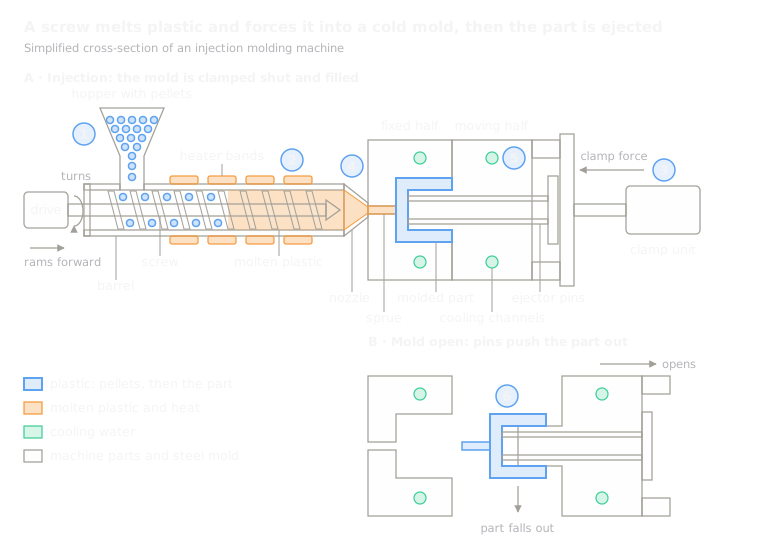 2.1ShortInjection moldingMelt forced into a closed steel moldOpen the lesson
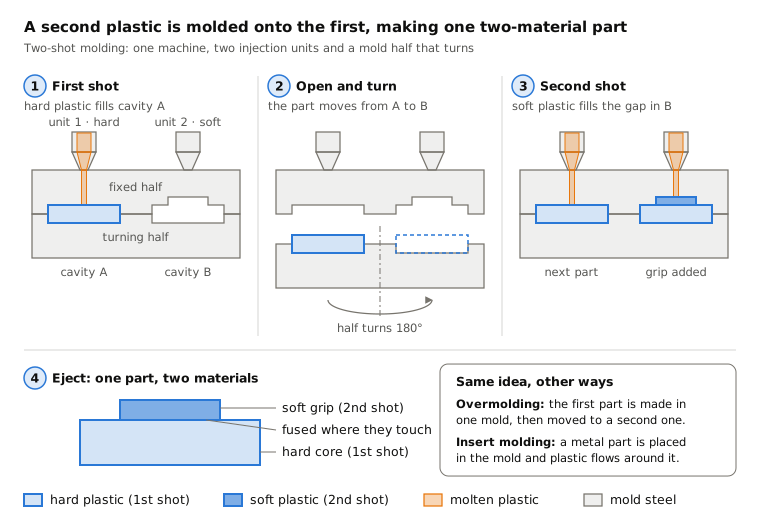
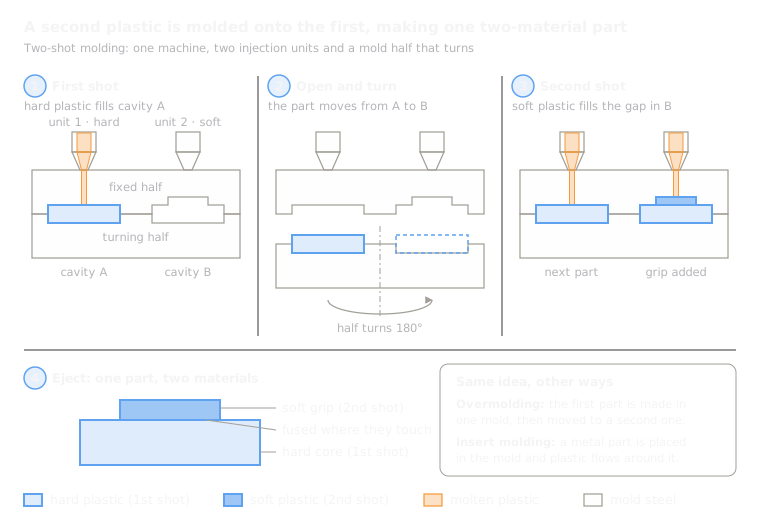 2.2Overmolding and two-shot moldingA second plastic molded onto the firstOpen the lesson
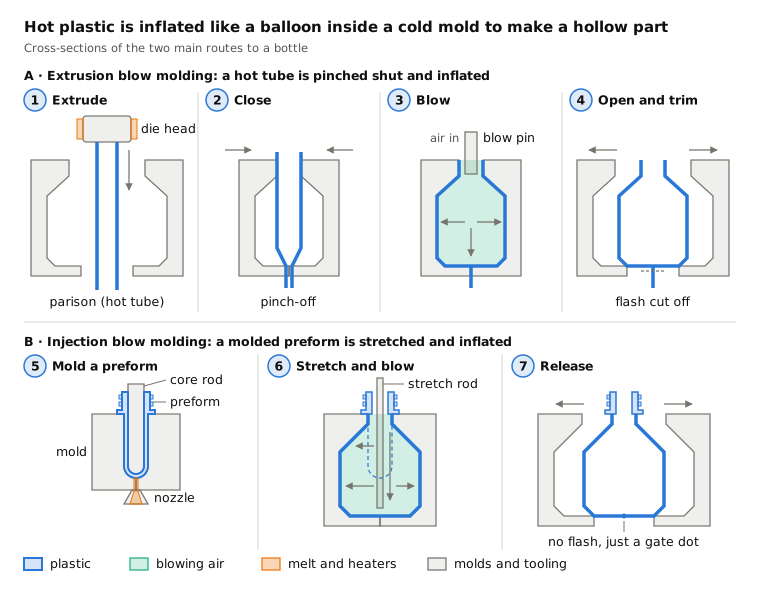
 2.3Blow molding (extrusion and injection blow molding)Hot tube or preform inflated in a moldOpen the lesson
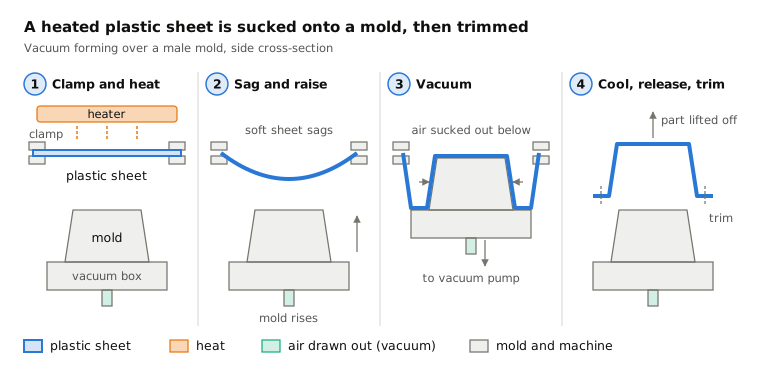
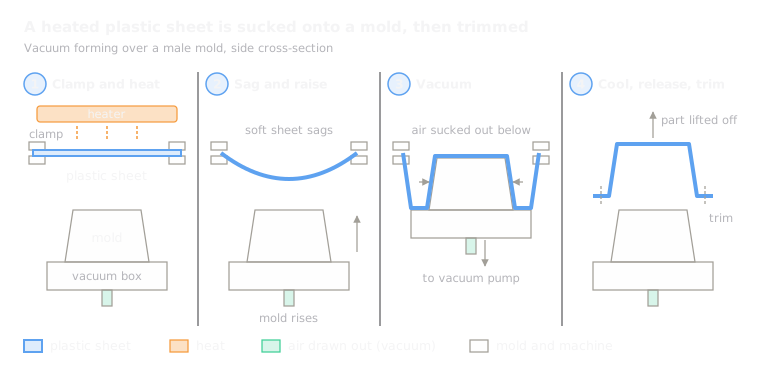 2.4ThermoformingHeated sheet sucked onto a moldOpen the lesson
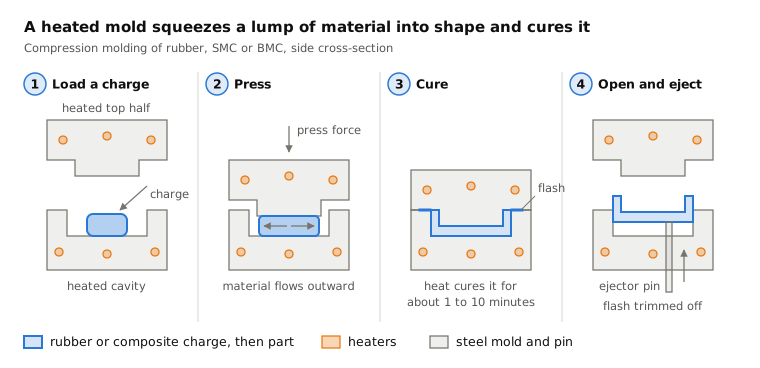
 2.6Compression molding (SMC, BMC, rubber)A charge pressed and cured in a hot moldOpen the lesson
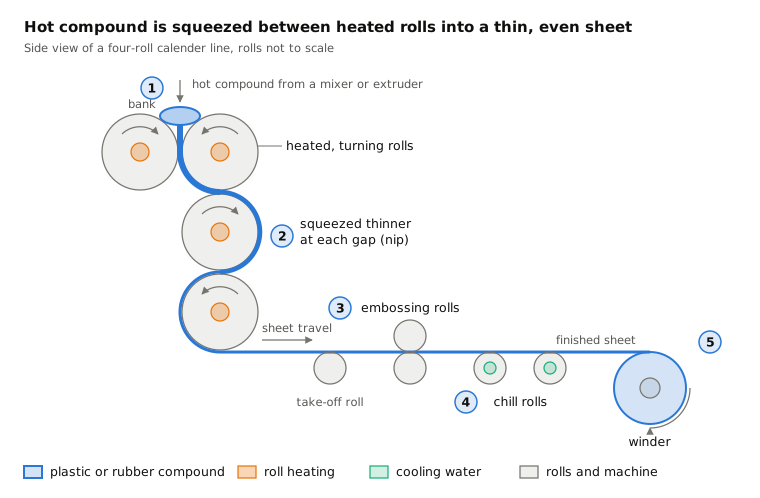
 2.7CalenderingCompound squeezed into sheet between rollsOpen the lesson
Try it
Put AI to work in your CAD.
Model parts, generate drawings and automate the repetitive work inside your CAD software.