

Compression molding (SMC, BMC, rubber)
A charge pressed and cured in a hot mold
Compression molding places a measured lump of material in a hot, open mold, then closes the mold and squeezes it until it fills the shape and hardens. It is the classic way to make rubber seals and gaskets, and fiber-reinforced car panels. The material cures (sets permanently by a chemical reaction) instead of simply cooling.

How it works
Load a charge. A weighed lump of material, called the charge, is placed in the heated lower mold. It can be raw rubber, SMC (sheet molding compound: sheets of resin with chopped glass fibers) or BMC (bulk molding compound: a putty-like resin and fiber mix).
Press. A hydraulic press lowers the heated upper half. The pressure, typically tens to a few hundred bar on the part, makes the material flow out and fill every corner of the cavity.
Cure. The press holds the mold shut at typically about 140–180 °C. Heat triggers cross-linking (chemical bonds that join the molecules into one network), so the part sets for good. A thin film of excess material, the flash, squeezes out at the joint.
Open and eject. The press opens and an ejector pin pushes the part out. The flash is trimmed off, by hand, by tumbling in freezing conditions for rubber, or by machining for composites.
Because the material barely travels, long glass fibers stay intact, which gives SMC and BMC parts high strength for their weight.
Key facts
- Materials
- Rubbers (natural, EPDM, silicone, fluoroelastomer); thermoset composites SMC and BMC; also melamine and phenolic resins
- Typical parts
- O-rings, gaskets, keypads, car body panels, truck hoods, electrical boxes, melamine dishes
- Part size
- From small seals of a few grams to car panels over a meter long
- Precision
- Typically about ±0.1 to ±0.3 mm; thickness depends on the flash at the joint
- Surface finish
- Copies the mold; SMC panels can come out smooth enough to paint as car body parts
- Batch size it suits
- From hundreds to hundreds of thousands of parts
- Tooling and machine cost
- Molds cheaper than injection molds for the same size, from a few thousand dollars for rubber to hundreds of thousands for large SMC panels; presses from tens of thousands to millions of dollars
- Speed
- Typically 1–10 minutes per cycle, set by the cure time
Strengths and limits
Strengths
- Simple, robust molds with no runners or gates
- Little material waste; keeps long fibers intact
- Large, strong, stiff composite parts
- Works with thick and filled rubbers and thermosets
Limits
- Slower cycles than injection molding
- Flash must be trimmed from every part
- Hard to make very complex shapes, deep thin ribs or tight tolerances
- Charges must be weighed and placed, often by hand
Where it's used
- AutomotiveHoods, tailgates and body panels in SMC; rubber seals, bushings and grommets
- ElectricalSwitch boxes, meter housings, insulators in BMC
- IndustrialO-rings, gaskets, diaphragms, valve seals
- ConsumerSilicone keypads, kitchen mats, melamine plates
- AerospaceHigh-strength composite brackets and fittings
How to recognize it
- Rubber parts with a thin ridge or trimmed edge along one line, where the flash was removed.
- No gate mark or sprue, since material was never injected.
- On SMC panels, a slightly speckled or fiber-patterned back side and thick, even walls.
- A hard, heat-resistant feel: the part will char rather than melt when heated.
Compare with
Watch it
Elastech Solutions · A beginner explanation of rubber compression molding
Sofeast · The steps and vocabulary, filmed in a factory
IDI Composites · From an SMC charge to a finished composite part
Taitian Press · A giant 4,500-tonne press making car parts
See real photos
- Wikipedia: Compression molding — process diagram and the main mold types
- Wikipedia: Sheet moulding compound — the SMC material and its production line
- Wikimedia Commons photo search
Remember
- Load a charge, press, cure with heat, eject and trim the flash.
- It shapes materials that set by chemistry: rubbers and fiber-filled thermosets.
- Simple molds and long fibers, but slower cycles than injection molding.
More in Molding plastics and rubber
All 100 processes
 2.1ShortInjection moldingMelt forced into a closed steel moldOpen the lesson
 2.2Overmolding and two-shot moldingA second plastic molded onto the firstOpen the lesson
 2.3Blow molding (extrusion and injection blow molding)Hot tube or preform inflated in a moldOpen the lesson
 2.4ThermoformingHeated sheet sucked onto a moldOpen the lesson
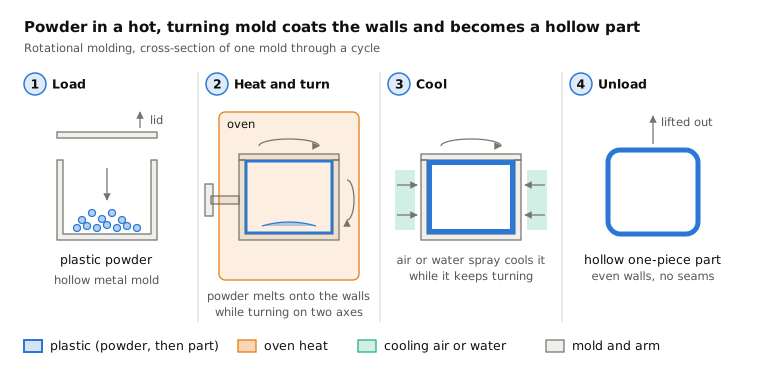
 2.5Rotational moldingPowder coats a hot, turning moldOpen the lesson
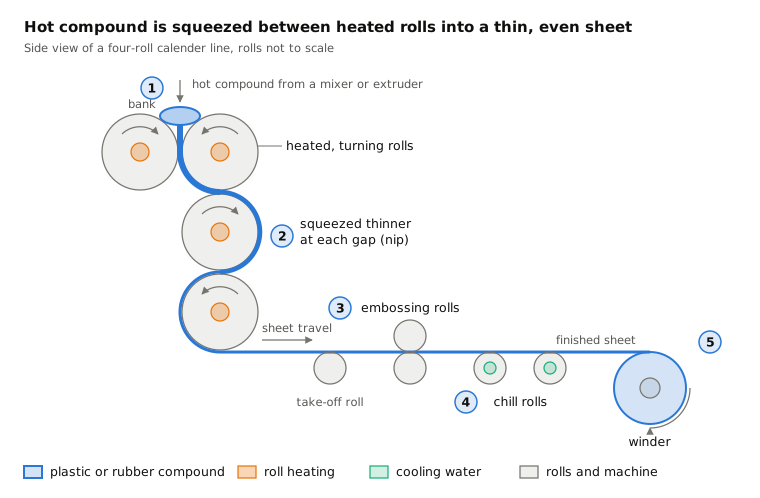
 2.7CalenderingCompound squeezed into sheet between rollsOpen the lesson
Try it
Put AI to work in your CAD.
Model parts, generate drawings and automate the repetitive work inside your CAD software.