

Blow molding (extrusion and injection blow molding)
Hot tube or preform inflated in a mold
Blow molding makes hollow plastic parts by inflating soft, hot plastic inside a cold mold, like blowing up a balloon inside a box. Almost every plastic bottle, from shampoo to soda, is made this way. It is fast and cheap per part, but it only makes hollow shapes.
How it works
Extrude. An extruder (a heated screw, as in lesson 3.3) pushes molten plastic through a ring-shaped die. A hot hanging tube comes out, called the parison.
Close. The two halves of a cold mold close around the parison. They pinch its bottom shut, and the tube is cut free at the top.
Blow. Compressed air, typically about 5–10 bar, enters through a blow pin. It inflates the parison against the mold walls, where the plastic cools and sets.
Open and trim. The mold opens and the container comes out. The excess plastic squeezed out at the pinch-off (the flash) is trimmed off and recycled.
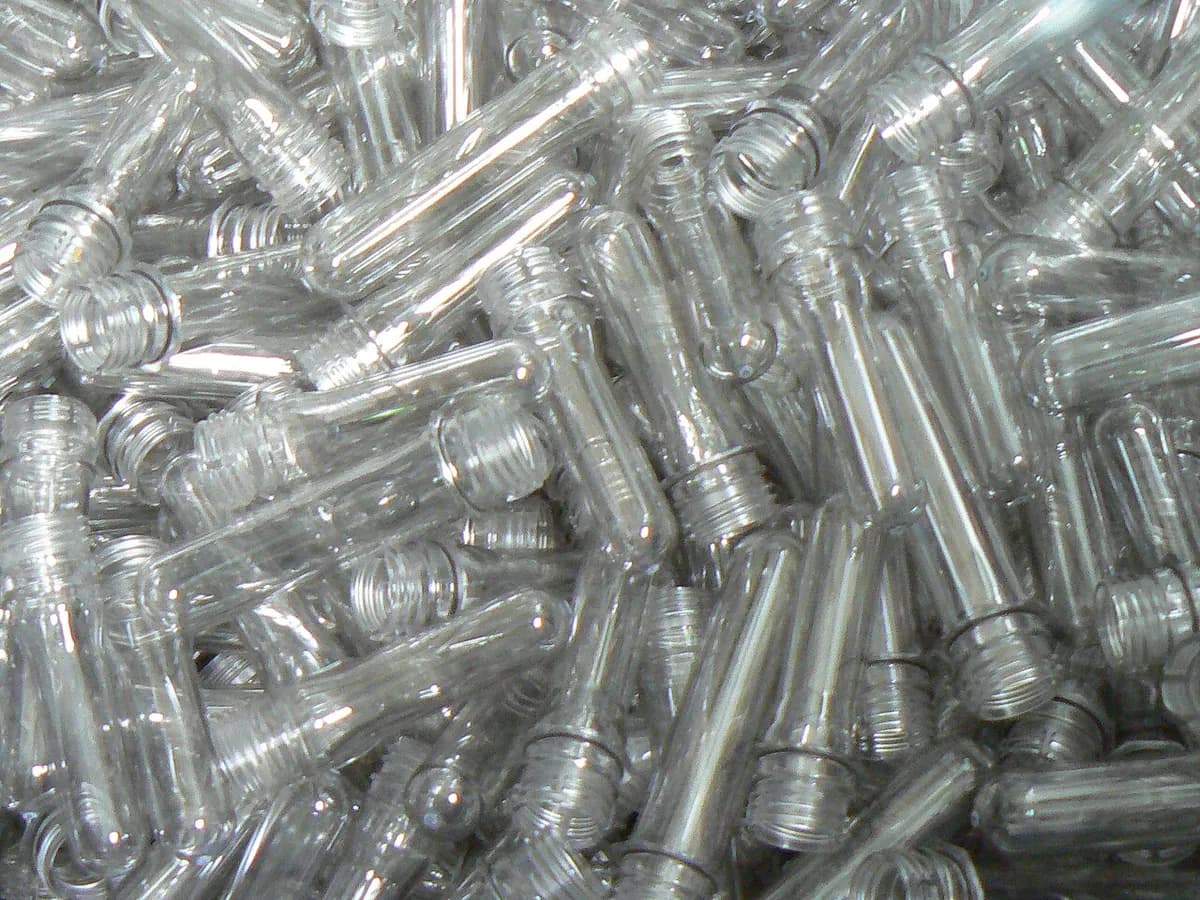
Mold a preform. Injection blow molding starts from a preform: a small, thick test tube injection molded around a core rod. Its threaded neck already has its final shape.
Stretch and blow. The warm preform goes into the bottle mold. For PET drink bottles a stretch rod first pushes it down, then air at up to about 40 bar inflates it. This is called stretch blow molding.
Release. The mold opens and the bottle comes out with no flash to trim. A small gate dot stays at the center of the base.
Many PET bottles are made in two separate steps: preforms are molded in one plant, then reheated with infrared lamps and blown near the filling line.
Key facts
- Materials
- Polyethylene (HDPE) and polypropylene for extrusion blow molding; PET for drink bottles by stretch blow molding; also PVC and polycarbonate
- Typical parts
- Bottles, jerry cans, fuel tanks, watering cans, air ducts, drums
- Part size
- From pill bottles of a few milliliters to tanks of about 1,000 liters (extrusion)
- Precision
- Outer shape typically within about ±0.3 to ±0.5 mm; necks tighter; wall thickness varies from place to place
- Surface finish
- Smooth or textured outside, copied from the mold; no tool ever touches the inside
- Batch size it suits
- Tens of thousands to many millions of parts
- Tooling and machine cost
- Molds are cheaper than injection molds because pressures are low (often aluminum, a few thousand to tens of thousands of dollars); machines from tens of thousands to millions of dollars for high-speed PET lines
- Speed
- Small bottles every few seconds per cavity, large tanks a few minutes; big PET machines make tens of thousands of bottles per hour
Strengths and limits
Strengths
- The practical way to make one-piece hollow containers fast
- Molds cost less than injection molds
- Light, thin walls and very high output
- Hollow handles, tanks and odd shapes possible (extrusion)
Limits
- Only hollow parts; wall thickness is hard to control precisely
- Extrusion blow molding leaves flash to trim and a pinch-off scar
- The inside shape is not controlled; no sharp internal features
- Injection and stretch blow molding need a preform mold too, so they suit high volumes
Where it's used
- BeveragesPET water and soda bottles
- HouseholdDetergent and shampoo bottles, watering cans
- AutomotiveFuel tanks, air ducts, washer-fluid tanks
- Medical and pharmaPill bottles, eye-drop bottles
- IndustrialJerry cans, drums, 1,000-liter bulk containers
How to recognize it
- Extrusion blow molding: a raised line or scar across the bottom (the pinch-off), and a parting line up both sides.
- Hollow handles that are part of the container, as on milk jugs and jerry cans.
- Injection or stretch blow molding: a small dot at the exact center of the base (the gate) and no pinch-off line.
- PET bottles: a thick, crisp neck with a ring under the threads, above a thin stretched body.
Compare with
Watch it
Spectra Packaging · Parison, mold closing, blowing and trimming, step by step
PLASTOTECH · How a preform on a core rod is molded, then blown
Sidel · A PET preform stretched and blown into a bottle
Bekum Group · A large extrusion blow molding machine at work
See real photos
- Wikipedia: Blow molding — how extrusion, injection and stretch blow molding work; few photos
- Wikimedia Commons photo search
- Wikimedia Commons: PET preforms — the test-tube preforms before blowing
Remember
- Blow molding inflates hot plastic inside a cold mold to make hollow parts.
- Extrusion blow molding starts from a hanging tube and leaves flash; injection blow molding starts from a molded preform and leaves none.
- PET drink bottles are stretched and blown from preforms, tens of thousands per hour.
More in Molding plastics and rubber
All 100 processes
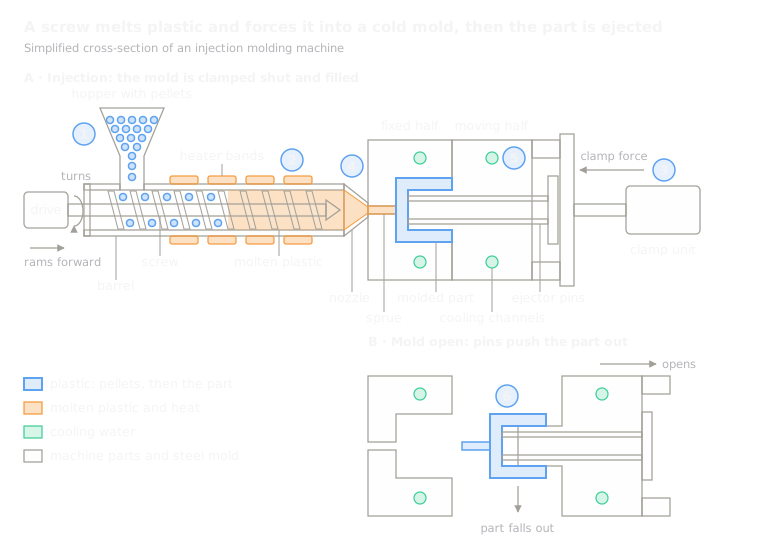 2.1ShortInjection moldingMelt forced into a closed steel moldOpen the lesson
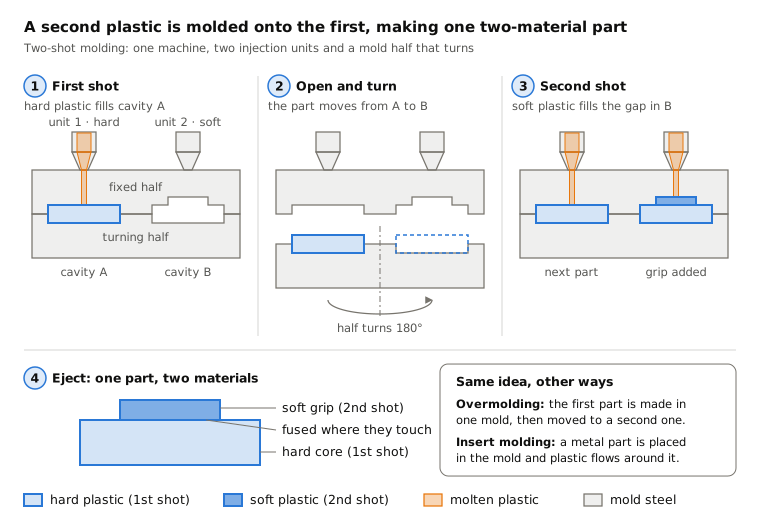
 2.2Overmolding and two-shot moldingA second plastic molded onto the firstOpen the lesson
 2.4ThermoformingHeated sheet sucked onto a moldOpen the lesson
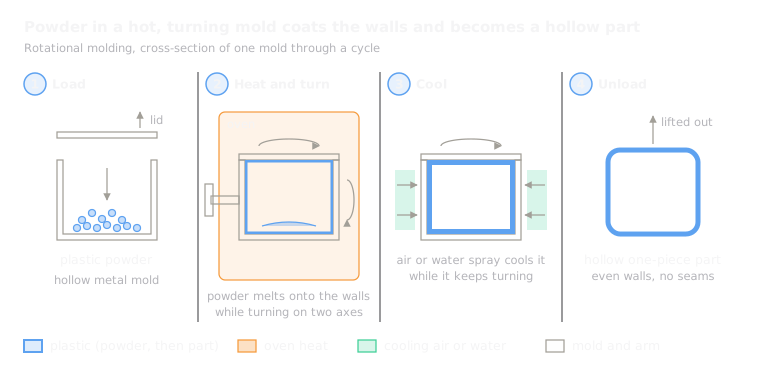 2.5Rotational moldingPowder coats a hot, turning moldOpen the lesson
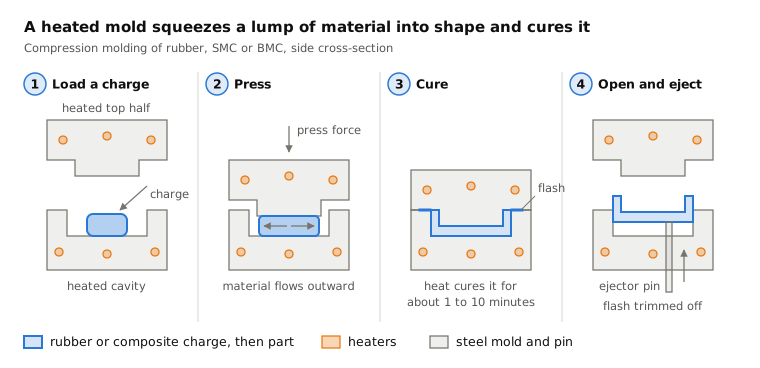
 2.6Compression molding (SMC, BMC, rubber)A charge pressed and cured in a hot moldOpen the lesson
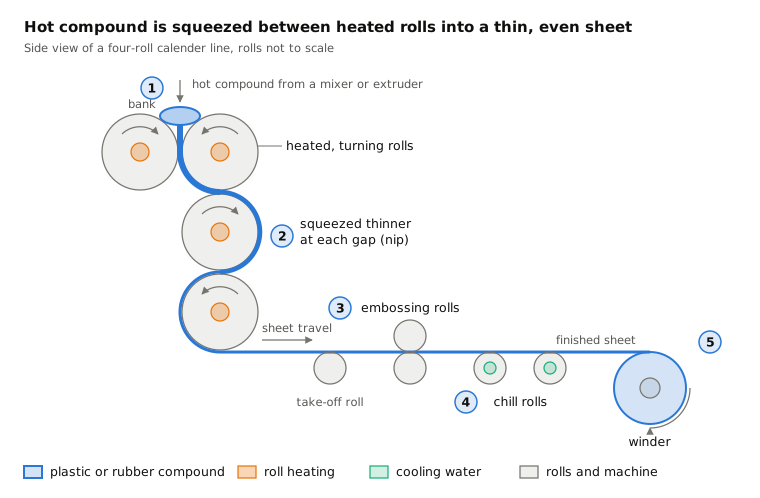
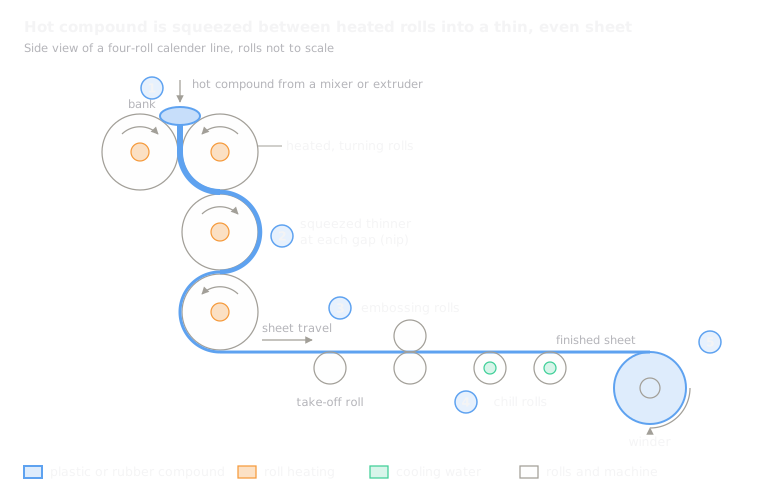 2.7CalenderingCompound squeezed into sheet between rollsOpen the lesson
Try it
Put AI to work in your CAD.
Model parts, generate drawings and automate the repetitive work inside your CAD software.